Reversing Copper Oxidation with an Axe (Step by Step)
Understanding Copper Oxidation in Minecraft
Copper blocks in Minecraft introduce a dynamic element to building and decoration, as they naturally undergo a process of oxidation over time. This gradual transformation changes the appearance of copper, evolving from its initial vibrant, reddish-orange hue to a distinct, weathered green. Understanding this process is key to effectively managing the aesthetic of your copper constructions.
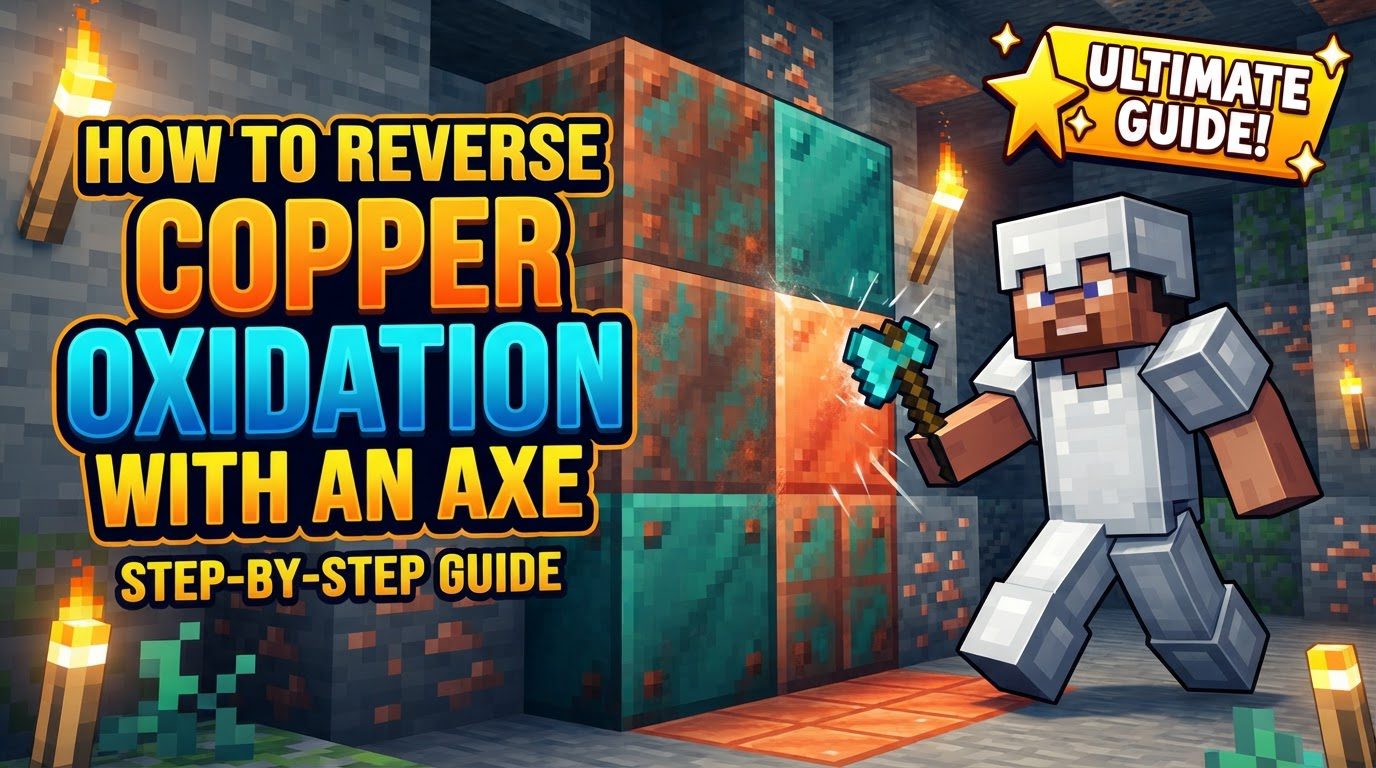
The oxidation process occurs in four distinct stages, each representing a progressive level of weathering. These stages are:
- Copper Block: This is the initial, unoxidized state. Freshly placed copper blocks exhibit their bright, metallic appearance.
- Exposed Copper Block: As time passes, copper begins to show early signs of oxidation, becoming slightly duller and starting to develop a faint greenish tint.
- Weathered Copper Block: The oxidation progresses further, with the copper taking on a more pronounced green color, indicating significant exposure to the elements.
- Oxidized Copper Block: This is the final stage, where the copper has fully oxidized, presenting a deep, rich green color that is often associated with aged copper structures in the real world.
While this natural progression adds a layer of realism and visual interest to your builds, players often desire to control this process, either to stop it at a specific stage or to reverse it entirely. Fortunately, Minecraft provides a straightforward method for players to intervene in this natural cycle, primarily through the use of an axe.
The Axe: Your Tool for Oxidation Control
The axe is an indispensable tool for any player looking to manage the oxidation state of their copper blocks. Its primary function in this context is to reverse the oxidation process, allowing you to restore copper to an earlier stage of weathering. This mechanic offers precise control over the visual aging of your copper creations.
Here’s how an axe interacts with copper oxidation:
- Stage Reversal: Using an axe on an oxidized copper block will reverse its oxidation by exactly one stage. For instance, an Oxidized Copper Block will revert to a Weathered Copper Block. Similarly, a Weathered Copper Block will become an Exposed Copper Block, and an Exposed Copper Block will return to its original Copper Block state. This one-stage-per-click mechanism means that achieving a completely unoxidized block from a fully oxidized one will require multiple applications of the axe.
- Handling Waxed Copper: Copper blocks can be waxed to prevent further oxidation. If you attempt to use an axe on a copper block that has been waxed, the axe will first remove the wax coating. This action makes the copper block susceptible to oxidation once again and allows for subsequent scraping to deoxidize it. It’s important to be mindful of this, as accidentally unwaxing a block can lead to unintended re-oxidation if not re-waxed promptly.
- Axe Type and Efficiency: When it comes to deoxidizing copper, all axe types function identically in terms of speed and effectiveness. Whether you use a wooden axe, a stone axe, an iron axe, a diamond axe, or a netherite axe, the rate at which they revert the oxidation stage is the same. The main difference between these axe types for this specific task lies in their durability cost. Higher-tier axes, such as diamond or netherite, will last much longer before breaking or requiring repairs, making them more practical for large-scale deoxidation projects where many blocks need attention.
The axe essentially acts as a scraping tool, gently removing the oxidized layer to reveal the less weathered copper beneath. This manual control gives players the power to maintain their copper builds at any desired stage of oxidation, or to fully restore them to their pristine condition.
Step-by-Step Process: Deoxidizing Copper with an Axe
Reversing copper oxidation with an axe is a straightforward process that requires minimal preparation. Follow these steps to effectively deoxidize your copper blocks:
- Equip an Axe: Begin by selecting any type of axe from your inventory and holding it in your main hand. Ensure it is the active item in your hotbar.
- Approach the Copper Block: Move close to the oxidized copper block that you wish to deoxidize. Make sure you have a clear line of sight and are within reach of the block.
- Activate the Axe: While aiming at the copper block, right-click (or use the equivalent “use item” button on your specific platform, such as L2 on PlayStation, LT on Xbox, or left-click on mobile devices with the “use item” button) to apply the axe to the block. You will see a visual effect indicating the oxidation layer is being scraped off.
- Repeat as Necessary: Each successful right-click will revert the copper block to the previous stage of oxidation. For example, if you start with an Oxidized Copper Block, the first click will turn it into a Weathered Copper Block. To reach the Copper Block (unoxidized) stage from a fully oxidized block, you will need to click the block three times in total. Continue clicking until the copper block reaches your desired level of oxidation.
This method allows for precise, stage-by-stage control, giving you the flexibility to stop the deoxidation process at any point that best suits your build’s aesthetic.
Maintaining Your Copper: The Power of Waxing
Once you’ve achieved the perfect oxidation stage for your copper blocks, the next crucial step is to prevent them from re-oxidizing. This is where waxing comes into play, offering a permanent solution to maintain your desired copper appearance.
- Preventing Re-oxidation: To stop a copper block from continuing its oxidation process, you need to apply a honeycomb to it. Simply hold a honeycomb in your hand and right-click (or use the equivalent “use item” button) on the copper block. This action will “wax” the block, creating a protective coating.
- Permanent Preservation: Waxed copper blocks will not oxidize further, regardless of how much in-game time passes. This ensures that the appearance you’ve carefully cultivated with your axe will remain exactly as you left it.
- Immunity to Lightning: An additional benefit of waxing copper blocks is that they become immune to deoxidation caused by lightning strikes. Unwaxed copper can be completely deoxidized by lightning, but waxed copper is unaffected, adding another layer of protection to your designs.
- Strategic Waxing: You can control the final appearance of your copper builds by stopping the oxidation process at any of the four stages with wax. This means you can have a mix of unoxidized, exposed, weathered, and fully oxidized copper in your builds, each permanently preserved at its chosen stage. This allows for incredibly detailed and varied architectural designs.
- Survival Considerations: For survival players who may not have a steady or easily accessible source of honeycomb, regular maintenance with an axe is the primary method to control oxidation. This involves periodically scraping your copper blocks to revert any unwanted oxidation that has occurred since your last intervention. While more labor-intensive, it’s a perfectly viable method for managing copper aesthetics without wax.
Waxing is an essential technique for long-term preservation and aesthetic control of copper in Minecraft, offering peace of mind that your efforts in deoxidizing will not be undone by the passage of time.
Common Mistakes to Avoid
While reversing copper oxidation with an axe is straightforward, certain misunderstandings or oversights can lead to frustration or unintended results. Being aware of these common mistakes can help you manage your copper effectively:
- Expecting Instant Deoxidation: A frequent misconception is that an axe will completely deoxidize a copper block in one go, instantly reverting an Oxidized Copper Block to an unoxidized Copper Block. Remember that an axe only reduces oxidation by one stage per click. Fully deoxidizing a completely green block requires three separate clicks. Patience and repeated application are key.
- Forgetting to Wax After Desired Stage: Once you’ve painstakingly scraped your copper block to its desired oxidation level, it’s easy to forget that it will continue to oxidize over time if left unwaxed. Always apply a honeycomb to the block immediately after reaching your preferred stage to prevent it from re-oxidizing and ensure its appearance remains constant.
- Accidentally Unwaxing a Copper Block: If you’re not careful and use an axe on an already waxed copper block, it will remove the wax coating. This action makes the block susceptible to oxidation again. While this is not a permanent mistake, as you can simply re-wax the block with another honeycomb, it can be an annoying oversight if you’re trying to maintain a specific look. Always confirm the block’s state before applying an axe, especially if it’s already waxed.
By avoiding these common pitfalls, you can ensure a smoother and more efficient process for managing the oxidation of your copper blocks, leading to more satisfying and enduring builds in Minecraft.
Beyond the Axe: The Impact of Lightning
While the axe is your primary tool for manual deoxidation, it’s worth noting that environmental factors can also play a role. Lightning strikes, for example, have a unique effect on copper blocks.
- Complete Deoxidation: When lightning strikes an unwaxed copper block, it will completely deoxidize it, reverting it instantly to its unoxidized Copper Block state, regardless of its previous stage. This is a powerful, albeit unpredictable, method of deoxidation.
- Area of Effect: Lightning strikes may also affect nearby copper blocks, potentially deoxidizing several blocks in the immediate vicinity of the strike. This can lead to interesting, naturally varied patterns of oxidation if you choose to incorporate this mechanic into your designs. However, it’s important to remember that this method is largely uncontrollable and can be disruptive if you’re aiming for a uniform look without waxing.
Understanding all the mechanics that influence copper oxidation, including both manual tools like the axe and environmental factors like lightning, provides a comprehensive view of how to interact with this versatile building material in Minecraft.
Tags:
YOU MAY ALSO LIKE...