Attracting Bees for Pollination
Understanding Bees and Their Role in Crop Enhancement
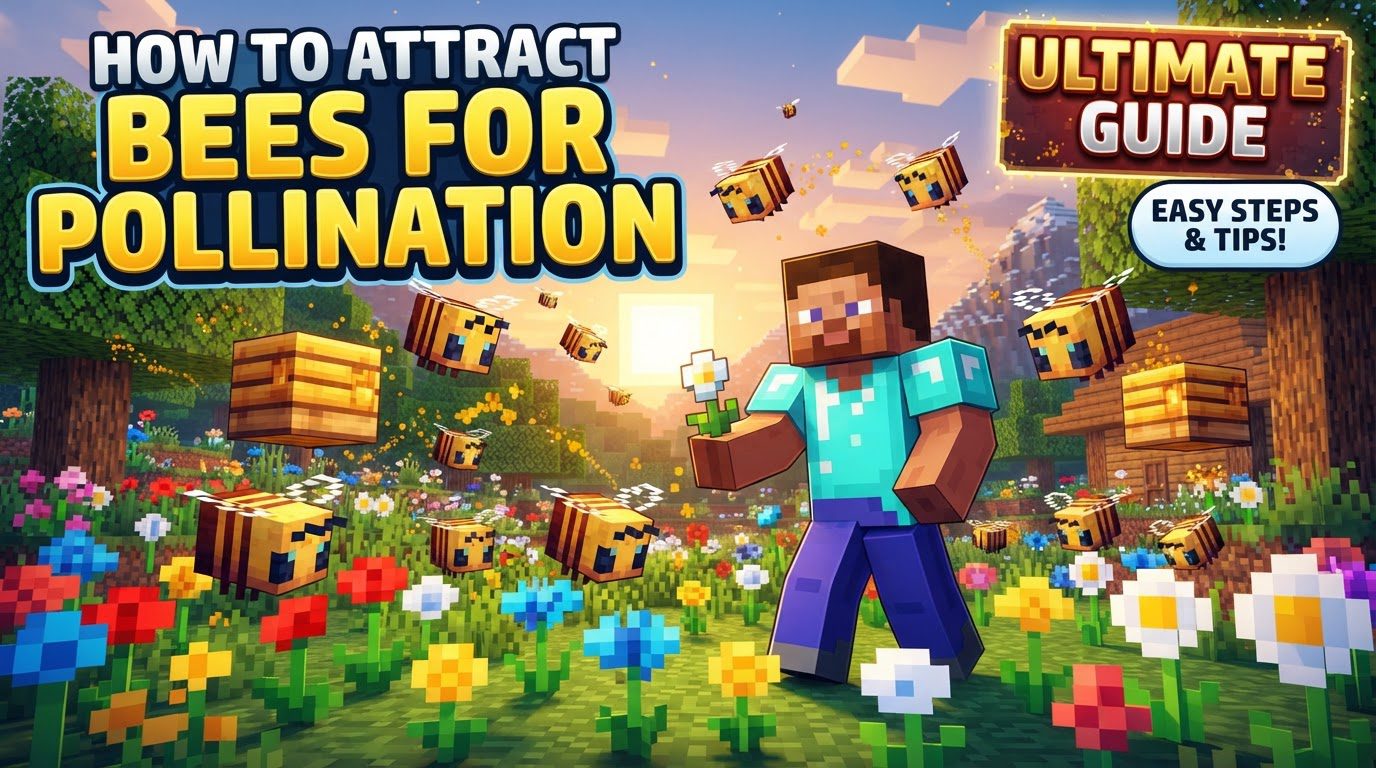
Bees in Minecraft are not just charming creatures; they are invaluable allies for any farmer looking to optimize their crop production. Understanding their behavior and environmental needs is crucial for successfully attracting them for pollination. These industrious insects offer a renewable and automatic method to accelerate crop growth, performing a function similar to bone meal but without the need for constant resource expenditure. By integrating bees into your farming strategy, you can significantly boost the efficiency and yield of your agricultural endeavors.
Key Mechanics of Bee Pollination
To effectively utilize bees for pollination, it’s essential to grasp their core mechanics and interactions within the game world. These behaviors dictate how bees collect pollen, pollinate crops, and contribute to honey production.
- Bees are naturally drawn to various types of flowers to collect pollen. This attraction extends to a diverse range of flowering blocks, including flowering azaleas, flowering azalea leaves, mangrove propagules, pink petals, cherry leaves, spore blossoms, and chorus flowers. Any of these can serve as a vital pollen source for your bees.
- Once a bee successfully gathers pollen from a flower, its appearance subtly changes; distinct pollen spots will become visible on its abdomen, signaling that it is ready to pollinate.
- The true benefit of bees for farming lies in their ability to pollinate crops. A pollen-carrying bee, on its journey back to its home nest or hive, possesses the remarkable capability to pollinate up to ten individual crops. For this to occur, the bee must fly directly over the plant, specifically within a range of one to two blocks directly above it. Crucially, the bee must also have a valid home hive or nest established to initiate this pollination process.
- The act of pollination by a bee directly advances the growth stage of the affected crops. This effect is akin to the rapid growth induced by using bone meal, providing a consistent and automatic boost to your farm’s productivity.
- Beyond crop growth, bees also play a role in honey production. Upon returning to their nest or hive, they deposit the collected pollen, which contributes to increasing the honey level of their dwelling. This dual function makes bees valuable for both farming and resource gathering.
- It is important to note environmental factors that affect bee activity. Bees are sensitive to weather and time; they will not venture out of their hive or nest during periods of rain or throughout the night. Planning your farm and bee management around these limitations is key to maximizing their efficiency.
Step-by-Step Process for Attracting Bees
Implementing a bee-powered farm involves several distinct steps, from acquiring bees to optimizing their environment for maximum pollination.
- Find or create bee housing: The first step in establishing a bee-powered farm is to secure bee housing. You can either locate natural bee nests, which frequently appear near oak and birch trees, particularly in flower forests or plains biomes, or you can craft your own beehives. Crafting a beehive requires three honeycombs and six wood planks of any type.
- Acquire bees: Once you have housing, the next step is to acquire bees. Naturally generated nests typically contain three bees. To move wild bees to your desired location, you can hold any type of flower to lure them. Alternatively, for a safer and more permanent relocation solution, use a Silk Touch tool to mine a bee nest that contains bees. This allows you to pick up the entire nest, bees included, and place it at your base without disturbing them.
- Breed bees (optional): Breeding bees is an optional but effective way to expand your bee population. By feeding two bees any type of flower, they will enter a “love mode” and produce a baby bee. These baby bees will mature into adults over approximately 20 minutes, a process that can be accelerated by feeding them additional flowers.
- Plant flowers: For pollination to occur, you must strategically plant flowers. These flowers need to be placed directly adjacent to or within your farm plots. Critically, ensure that all flowers intended for bee interaction are planted directly in the ground; bees will completely ignore flowers placed in pots.
- Position hives/nests: Proper positioning of your bee housing is vital for an efficient pollination setup. Place your bee nests or crafted beehives relatively close to both your crops and your flowers. A highly effective strategy involves elevating your hives slightly above the level of your crops. With flowers planted at crop level, bees will naturally fly downwards to collect pollen and then ascend back towards their elevated hive, thereby flying over and pollinating crops during their flight path.
- Create an enclosure (optional but recommended): Creating an enclosure around your bee farm is an optional but strongly recommended measure. An enclosed area helps prevent bees from flying too far away, getting lost, or despawning. This ensures they remain focused on your farm and contribute consistently to crop growth.
Important Tips for Efficient Bee Pollination
Maximizing the effectiveness of your bee farm requires attention to detail and strategic planning. Consider these important tips:
- Proximity is key: To ensure optimal pollination, it is paramount that flowers are positioned closely to both your bees and the crops you wish to pollinate. A compact design minimizes travel time and maximizes bee activity over your farm.
- Strategic flower placement: Consider placing your flowers on the side of the farm opposite to where your bee hives or nests are located. This encourages bees to fly across the entire farm to reach the flowers, ensuring they pass over and pollinate a greater number of crops on their journey.
- Multiple flowers: For the most efficient operation, aim to plant at least one flower per bee within your farm area per game day/night cycle. This ensures that each bee has ample opportunities to collect pollen and contribute to crop growth.
- Enclosed space: As mentioned previously, an enclosed farm environment is highly beneficial. By containing your bees, flowers, and crops within a defined space, you create a controlled ecosystem where bees can operate with maximum effectiveness, reducing the chance of them straying or becoming unproductive.
- Automatic harvesting (for honey/honeycomb): When it comes to collecting resources from your hives, a simple yet crucial tip is to place a campfire directly below the hive. The smoke from the campfire will pacify the bees, preventing them from becoming hostile and attacking you when you collect honey bottles or honeycomb using shears.
- The End dimension: For those seeking ultimate efficiency in honey production, consider building a honey farm in The End dimension. This dimension lacks a day/night cycle and experiences no rain, meaning bees can work continuously without interruption, offering unparalleled productivity for honey and honeycomb harvesting.
Common Mistakes to Avoid
To ensure your bee farm operates smoothly and effectively, be aware of these common mistakes that can hinder their productivity or even lead to problems:
- Potted flowers: A frequent oversight is placing flowers in pots. Bees will completely ignore flowers that are in pots; for them to collect pollen, flowers must be planted directly in the ground, allowing for proper interaction.
- Obstructed hive entrances: Bees require clear access to their homes. If the entrance of a hive or nest is blocked by any solid block, bees will be unable to exit, rendering them trapped and unproductive. Always ensure hive entrances are free from obstructions.
- Too many bees, not enough hives: Each bee hive or natural bee nest can only accommodate a maximum of three bees at a time. If you have more bees than available hive spots, the excess bees may not be able to return home, potentially leading to them becoming lost or despawning. Plan your housing according to your bee population.
- Flowers too far: If your pollen-providing flowers are situated too far away from your bee housing, bees might get distracted, lose their way, or simply not bother to make the long journey back to the farm after collecting pollen. Keep flowers and hives in reasonable proximity for consistent activity.
- Harvesting without precautions: Attempting to harvest honey or honeycomb from a hive without taking proper precautions will provoke the bees. They will become hostile and attack the player. Always place a campfire beneath the hive before harvesting to ensure the bees remain docile and prevent unwanted aggression.