

Triggering Goat Ramming Safely — A Quick Guide
Minecraft’s unique and often quirky creatures add depth to its world, and among them, the goat stands out with its distinctive ramming behavior. While seemingly aggressive, this mechanic is not only a source of amusing interactions but also a method for obtaining a useful item: the goat horn. Understanding how to trigger a goat’s ram safely and effectively is key to mastering this interaction. This guide will delve into the core mechanics, provide a step-by-step process for horn farming, offer crucial tips, and highlight common pitfalls to avoid, ensuring your goat-related endeavors are both productive and safe.
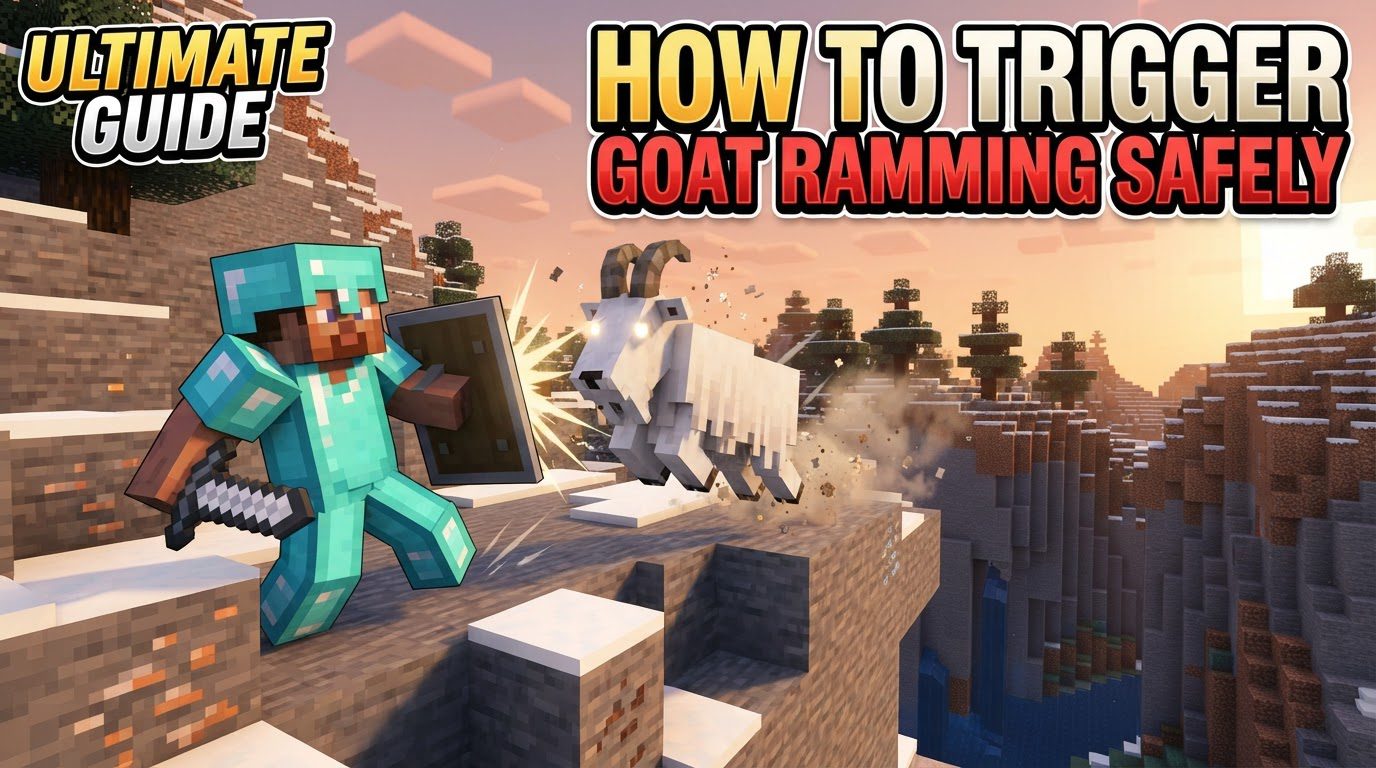
Understanding Goat Ramming Mechanics
To safely interact with goats and utilize their ramming ability, it’s essential to first grasp the underlying mechanics that govern their behavior. Goats are particular about when and whom they choose to ram, and these conditions are crucial for successful horn acquisition.
- Targeting Conditions: Goats specifically target stationary mobs or players. They have a detection range of up to 16 blocks. The duration a target must remain still varies significantly: normal goats require a target to be stationary for 30 to 300 seconds, while the rarer screaming goats are much more impatient, initiating a ram after only 5 to 15 seconds of their target remaining still.
- Path and Ground Requirements: For a goat to initiate a ram, it needs a minimum of 5 solid blocks of ground beneath it to build momentum. Furthermore, there must be a completely clear path between the goat and its intended target. Any obstruction, even a small one, can prevent the charge.
- Elevation Consistency: Goats are also particular about elevation. They will only ram a target if they are at roughly the same height, specifically within a +/- 1 block vertical difference. Significant elevation changes will deter them from charging.
- Ramming Impact: When a goat successfully rams a target, it delivers a powerful knockback effect. Adult goats will send their target flying back 9 blocks, while baby goats, despite their size, still manage a respectable 4.5 blocks of knockback. It is important to note that this ramming action does not inflict any direct damage to the target.
- Goat Horn Drops: The primary reason many players seek to trigger goat ramming is to obtain goat horns. A goat horn is dropped if, and only if, a goat rams into certain naturally occurring solid blocks after missing its intended target. These specific blocks include: stone, coal ore, copper ore, iron ore, emerald ore, logs (any type), and packed ice. Goats do not regrow their horns; each individual goat can drop a maximum of two horns throughout its existence.
- Exclusion Zones: It is critical to remember that goats will not exhibit their ramming behavior under all circumstances. They will not ram players or mobs if the game is set to Creative mode or if the difficulty is set to Peaceful. Ensure you are playing on at least Easy difficulty to experience goat ramming.
Step-by-Step Guide to Obtaining Goat Horns
With a solid understanding of goat mechanics, we can now outline a safe and effective process for farming goat horns. This method prioritizes both player safety and horn yield.
- Locate Goats: Your first step is to find goats. They are exclusively found in mountain biomes, specifically snowy slopes, jagged peaks, and frozen peaks. These biomes are often characterized by their high elevation and rugged terrain.
- Construct an Enclosure: Once you’ve found a goat, the next step is to build a secure enclosure. The walls of this enclosure are crucial; they must be made of the specific horn-dropping blocks listed earlier (e.g., stone, logs). The enclosure should be spacious enough to allow the goat to charge, but confined enough to keep it contained.
- Lure the Goat: To get a goat into your prepared enclosure, the easiest method is to hold wheat in your hand. Goats are attracted to wheat, and they will follow you if you hold it. Lead the goat carefully into the enclosure, then seal it off.
- Become the Target: Inside the enclosure, position yourself strategically. To initiate a ram, you must stand perfectly still. The goat will then begin its countdown, eventually targeting you as its stationary victim. Be mindful of the time required for normal versus screaming goats.
- Dodge the Ram: This is the most critical safety step. As the goat charges towards you, and just before it makes contact, quickly move out of the way. The goal is to make the goat miss you and instead ram directly into the solid wall of your enclosure. This precise timing is key to both your safety and horn acquisition.
- Collect the Horns: If the goat successfully rams one of the designated horn-dropping blocks after missing you, it will drop a goat horn. Collect the dropped horn(s) promptly. Remember that each goat can only drop two horns in its lifetime, so after two successful ram-and-miss events, that particular goat will no longer yield horns.
Important Tips for Efficient and Safe Ramming
Optimizing your horn farming process and ensuring your safety can be greatly enhanced by incorporating these practical tips.
- Utilize Screaming Goats: If you encounter a screaming goat, prioritize it for horn farming. Their significantly shorter stationary target requirement (5-15 seconds) means they will ram much more frequently than normal goats, drastically speeding up your horn collection efforts.
- Build a Long Corridor: When designing your enclosure, consider incorporating a long, straight corridor. This design provides you with a longer charging path for the goat, giving you more time to react and dodge out of the way safely before the goat makes contact. This increased reaction time minimizes the risk of being knocked back.
- Consider Automation: For more advanced players, automating horn farms is a viable option. This can be achieved by using stationary targets that are not players. Examples include armor stands or even chickens placed in boats. By positioning these stationary targets strategically, you can trigger goats to ram into specific horn-dropping blocks without needing direct player intervention, making the process hands-free and highly efficient.
- Understand Goat Temperament: Always remember that goats are neutral mobs. They will not spontaneously attack you. They only become aggressive and initiate a ram if you remain stationary for their required cooldown period, thus becoming their designated target. This understanding allows you to control when and if you trigger their ramming behavior, enhancing your safety.
Common Mistakes to Avoid
Preventing errors is just as important as following the correct steps. Being aware of these common mistakes will save you time, effort, and potential peril.
- Incorrect Game Mode or Difficulty: Attempting to trigger goat ramming while playing on Creative mode or Peaceful difficulty will be fruitless. Goats simply will not ram under these conditions, regardless of your efforts to stand still. Always play on at least Easy difficulty.
- Unsuitable Ramming Blocks: A frequent mistake is failing to provide the specific horn-dropping solid blocks for the goat to hit. If a goat rams into dirt, cobblestone (not ore), or any other non-listed block, it will not drop a horn. Ensure your enclosure walls are made of stone, ore blocks, logs, or packed ice.
- Obstructed Ramming Path: Goats require a clear and unobstructed path to their target. Placing non-solid blocks such as pressure plates, slabs, glass, or even open trapdoors in the goat’s direct line of sight or charge path will prevent it from initiating a ram. Ensure the path is entirely clear.
- Significant Elevation Differences: For a goat to ram, it needs to be at a similar height to its target (within +/- 1 block). If there’s a substantial elevation difference between you and the goat, it will often hinder their ramming behavior, causing them to wander or simply ignore you.
- Moving During the Cooldown: Goats require a target to be perfectly stationary for a specific duration (5-300 seconds, depending on the goat type) before they will initiate a ram. Moving even slightly during this cooldown period will reset the timer, preventing the goat from charging and delaying your progress.
- Getting Hit by the Ram: While goats inflict no direct damage, getting hit by their ram results in significant knockback (9 blocks for adults). This can be incredibly dangerous, especially in the mountainous biomes where goats spawn, as it can lead to severe fall damage from high cliffs or even send you into hazards like lava. Always prioritize dodging the charge.
By adhering to these guidelines and understanding the nuances of goat behavior, you can safely and efficiently engage with these fascinating creatures, turning their quirky aggression into a reliable source of valuable goat horns for your Minecraft adventures.
Tags:
YOU MAY ALSO LIKE...


