Triggering an End Crystal Explosion Safely, Explained
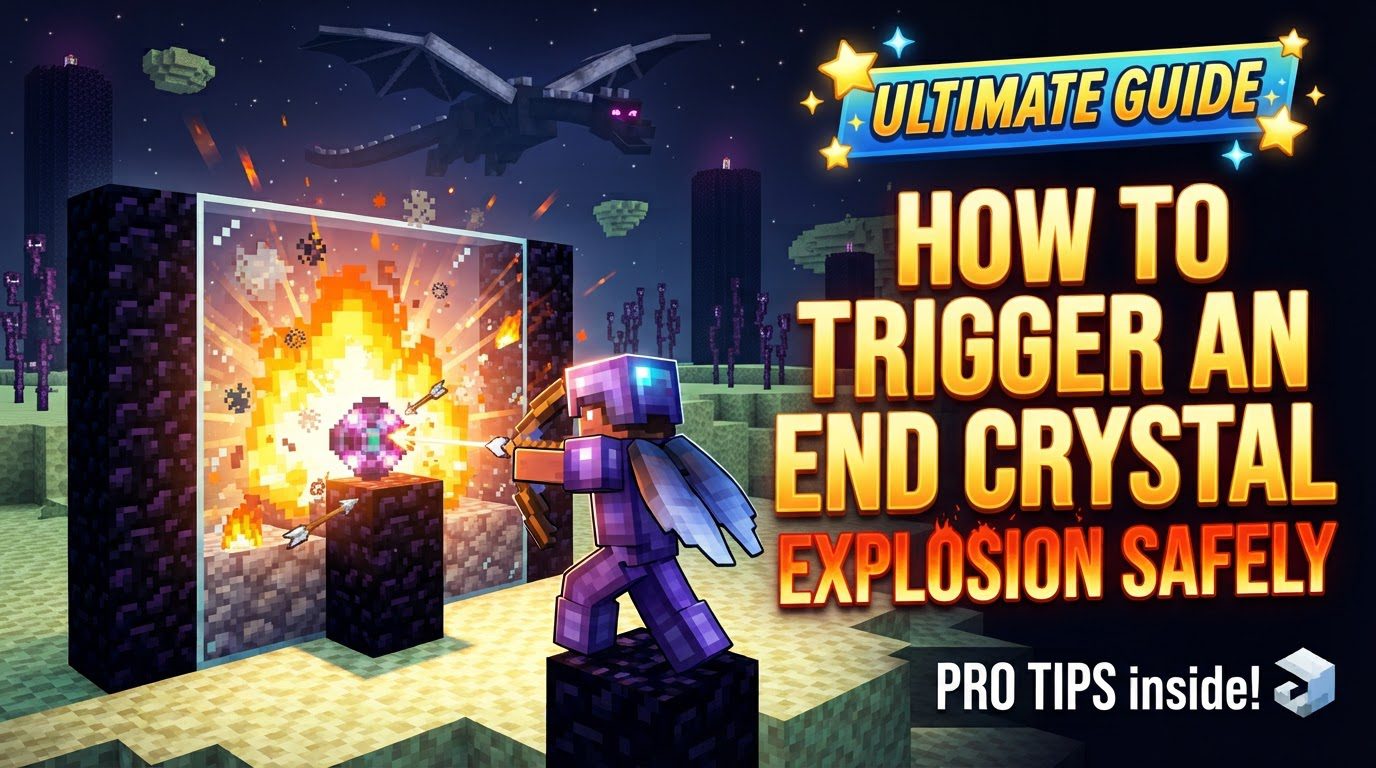
End crystals in Minecraft are potent and volatile entities, primarily known for their role in the Ender Dragon boss fight and their application in advanced combat strategies, particularly in Player vs. Player (PvP) scenarios. Understanding how to trigger their explosions safely is paramount, as mishandling them can lead to instant death, even for well-equipped players. This comprehensive guide, based purely on their inherent mechanics, will walk you through the safest methods for interacting with end crystal explosions, whether you aim to remove them, utilize their destructive power, or simply relocate them.
Understanding End Crystal Mechanics
Before attempting any interaction with end crystals, it is crucial to grasp their fundamental properties and how they behave. These mechanics dictate every safe and unsafe interaction.
- Explosion Trigger: End crystals are inherently unstable. They will explode upon taking any amount of damage. This damage can originate from a wide variety of sources, including a simple punch from a player, a projectile like an arrow, a snowball, or even a trident. This low threshold for detonation means caution is always necessary.
- Placement Restrictions: End crystals cannot be placed just anywhere. Their structure requires a stable, unmovable base, which in Minecraft translates to them only being placeable on top of obsidian or bedrock blocks. This limits their strategic placement but also provides a predictable foundation for their use.
- The Neutralizing Power of Water: One of the most critical safety mechanics involves water. When water is placed directly over or around an end crystal, it completely neutralizes its blast effect. This means that if an end crystal explodes while submerged in water, it will not cause any damage to players within its radius, nor will it destroy any surrounding blocks. This property is indispensable for controlled detonations and block preservation.
-
Player Protection Measures:
- Blast Protection Armor: Wearing armor enchanted with Blast Protection is a primary defense. The higher the enchantment level, the more explosion damage is reduced. Ideally, Blast Protection IV on all armor pieces provides significant mitigation.
- Shields (Java Edition): In Java Edition specifically, a shield can be used to block the damage from an end crystal’s explosion, offering a momentary defense if positioned correctly. This mechanic is not universal across all game editions.
- Hitbox Vulnerability: An important, yet often overlooked, detail is how explosion damage is applied to a player’s hitbox. Explosion damage to players is significantly higher when it impacts the bottom half of the player’s hitbox compared to the top half. This knowledge can be leveraged for strategic positioning to minimize self-damage during detonations.
- Chain Reactions: End crystals can trigger a limited chain reaction. If one end crystal explodes, any other end crystals located within an approximate radius of 11 to 15 blocks will also detonate. However, these secondary explosions are terminal; they will not, in turn, trigger further chain reactions from other crystals. This means a controlled chain can occur, but it won’t spiral out of control indefinitely.
- Mob Griefing Game Rule (Bedrock Edition): In Bedrock Edition only, changing the `mobGriefing` game rule to `false` will prevent end crystals from destroying blocks upon explosion. It is crucial to note that this rule does not apply to Java Edition, where end crystals will always destroy blocks unless submerged in water. Furthermore, this rule only prevents block destruction and does not prevent player damage from the explosion.
Safe Detonation Scenarios and Step-by-Step Processes
Different objectives require different approaches to safely trigger an end crystal explosion.
To Remove an Unwanted End Crystal Without Block Damage:
This method is ideal for clearing out end crystals from an area without causing environmental destruction, such as in the End dimension after defeating the Ender Dragon, or when tidying up a build.
-
Step 1: Place Water Over or Around the End Crystal.
The first and most critical step is to completely submerge the end crystal in water. This can be achieved by placing a water source block directly on top of the crystal or by surrounding it with water flow. Ensure the crystal is fully enveloped by water, as this is the mechanism that neutralizes its destructive power.
-
Step 2: Shoot the Crystal with a Bow and Arrow from a Safe Distance, or Use Another Ranged Projectile.
Once the crystal is safely submerged, use a ranged item to trigger its explosion. A bow and arrow is a common choice, but snowballs or tridents will also work. The “safe distance” here is less about avoiding explosion damage (as the water neutralizes it) and more about ensuring you don’t accidentally punch the crystal before the water is in place, or to maintain a comfortable distance while testing the water’s coverage.
To Detonate for Player Damage (e.g., PvP) While Minimizing Self-Damage:
This advanced technique is often employed in PvP combat to deal significant damage to opponents while mitigating the self-inflicted damage. It leverages the hitbox vulnerability mechanic.
-
Step 1: Dig Down One Block Directly Beneath Where the End Crystal Will Be Placed.
Before placing the end crystal, create a small pit. Digging down one block creates a trench or a lower standing point for the player. This is crucial for positioning yourself relative to the crystal.
-
Step 2: Place the End Crystal.
Place the end crystal on the block directly above your head, which will be at ground level, or one block above the pit you just dug. Remember, it must be placed on obsidian or bedrock.
-
Step 3: Stand in the Lower Block and Detonate the Crystal with a Ranged Attack.
Once the crystal is in place, stand inside the one-block-deep pit. From this lower position, detonate the crystal using a ranged attack (e.g., a snowball or an arrow). Because a significant portion of your player’s vulnerable bottom hitbox is protected by being below the explosion’s direct impact point, and potentially shielded by the surrounding blocks, this significantly reduces the damage you receive, allowing you to survive explosions that would otherwise be fatal.
To Move an End Crystal Safely:
Sometimes, an end crystal needs to be relocated for strategic purposes, such as setting up a larger explosion trap or clearing a path. End crystals cannot be picked up once placed, so they must be pushed.
-
Step 1: Use Pistons to Push the End Crystal Away to a Desired Detonation Site.
Pistons are the only mechanism that can move an end crystal without triggering its explosion. Carefully set up a piston array to push the crystal horizontally or vertically to your chosen location. This requires precision to avoid accidentally damaging the crystal during the pushing process.
-
Step 2: Once at a Safe Distance, Detonate Using a Ranged Attack or by Submerging It in Water First.
After the end crystal has been successfully moved to its new, desired detonation site, proceed with its detonation. If block preservation is desired, submerge it in water before using a ranged attack. If environmental destruction is acceptable or desired, simply detonate it from a safe distance with a ranged projectile, ensuring you are well clear of the blast radius.
Essential Safety Tips for Handling End Crystals
Beyond the specific step-by-step processes, several general safety practices should always be adhered to when dealing with end crystals.
- Always wear armor with Blast Protection enchantments (ideally Blast Protection IV) to significantly reduce incoming damage from explosions. This is your primary line of defense against unexpected detonations.
- Keep a Totem of Undying in your off-hand as a last resort. This invaluable item will automatically consume itself to save you from fatal damage, providing a crucial second chance if things go wrong.
- Utilize ranged items like bows, snowballs, or tridents to trigger the explosion from a safe distance. This minimizes your exposure to the blast and is a fundamental aspect of safe handling.
- Submerging the crystal in water before detonation is crucial for protecting surrounding blocks. If you value your environment or build, never detonate an end crystal outside of water.
Common Mistakes to Avoid
Ignoring these warnings can have dire consequences, ranging from minor setbacks to instant death.
- Being too close to the end crystal when it explodes without adequate protection. The blast radius is substantial, and without Blast Protection armor, a Totem of Undying, or proper positioning, you risk immediate elimination.
- Punching the crystal directly when unprotected or not strategically positioned. A direct punch is the fastest way to detonate a crystal, but it also places you at immediate, point-blank risk, often leading to instant death.
- Not using water when block preservation is desired. End crystals are highly destructive. Failing to submerge them in water will result in significant terrain damage and the loss of valuable blocks.
- Underestimating the explosion power. This is perhaps the most critical mistake. End crystals can instantly kill a player even in full Netherite armor if not handled correctly. Their power is not to be trifled with, and respect for their destructive potential is key to survival.
By understanding these mechanics and adhering to these safety protocols, you can confidently interact with end crystals, harnessing their power for your strategic advantage while minimizing personal risk and environmental damage.
Tags:
YOU MAY ALSO LIKE...