Fixing a Resource Pack That Fails to Load, Explained
7
views ❘
3 hours ago
Understanding Key Mechanics of Resource Packs
Resource packs are fundamental to customizing the visual and auditory experience in Minecraft. However, they can sometimes fail to load due to various underlying issues. Understanding the core mechanics of how these packs function is the first step toward effective troubleshooting.
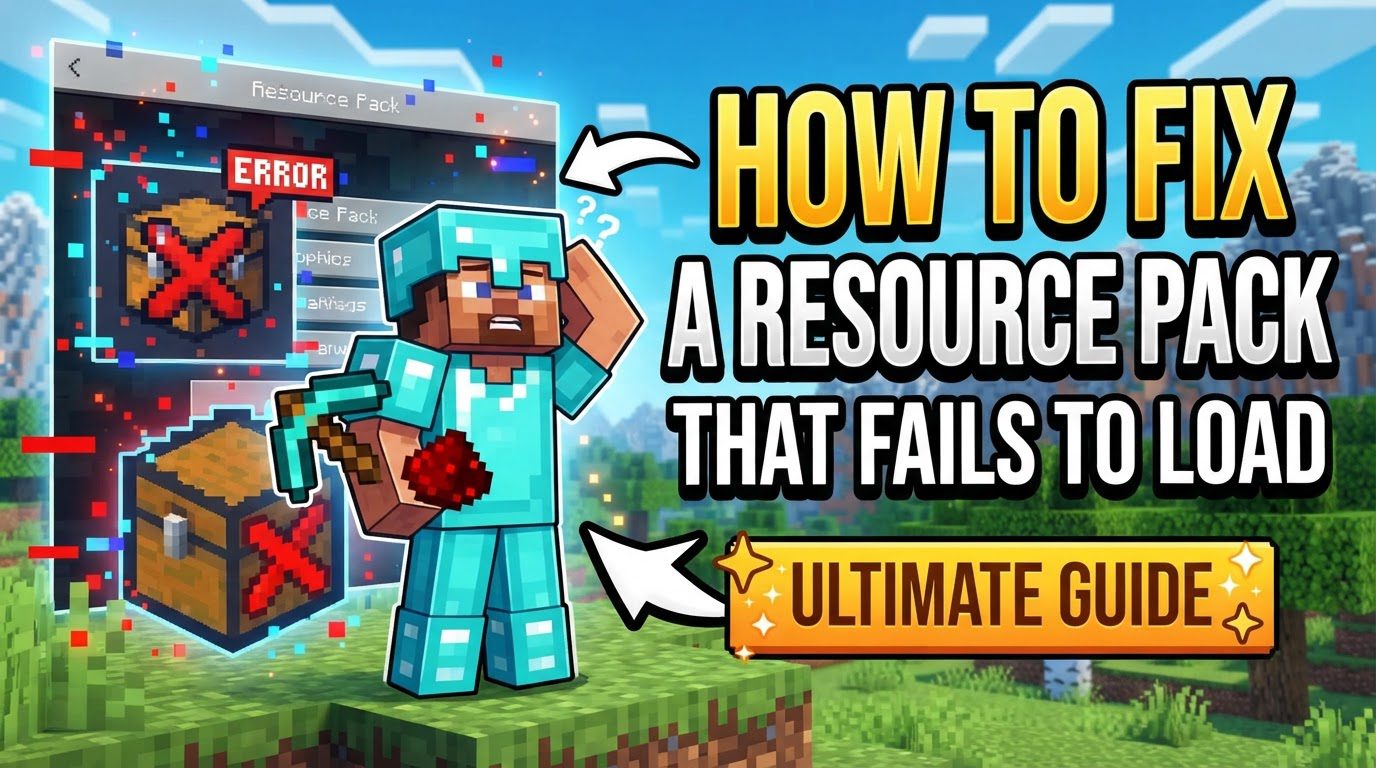
- Version Compatibility: One of the most common reasons a resource pack fails to load is a mismatch in game versions. A resource pack is designed for a specific Minecraft version, and using one that is either too old or too new for your current game client will likely lead to loading failures. In the resource pack selection menu, incompatible packs often appear in red, signaling that they cannot be properly utilized.
- File Structure: The internal organization of a resource pack is critical. For Minecraft to recognize and load a pack, its main components must be located at the root of the .zip file. Specifically, the
assetsfolder and thepack.mcmetafile must be directly inside the compressed archive, not nested within an additional folder. An incorrect file structure will prevent the game from detecting the pack’s contents. pack.mcmetaFile: This small but essential file dictates crucial information about the resource pack, most notably itspack_formatnumber. This number must correspond precisely to your Minecraft game version. If thepack.mcmetafile has incorrect formatting, is corrupted, or specifies an incompatiblepack_formatnumber, the game will not load the pack.- Load Order: When you use multiple resource packs simultaneously, their order in the active packs list matters significantly. Minecraft loads these packs from the bottom up. This means that any conflicting assets (e.g., two packs trying to change the same texture) will be resolved by the pack positioned higher in the list, which will override the assets from packs lower down. An improper load order can lead to unexpected visual glitches or missing textures.
- Mod Conflicts: The presence of certain Minecraft modifications can sometimes interfere with resource pack loading. Mods such as Optifine, Fabric, Forge, or Sodium, especially if they are outdated or incompatible with your game version, can cause conflicts. These conflicts arise when mods attempt to alter the same game assets or rendering processes that resource packs also modify. Specific mods like Continuity are known to cause issues, sometimes requiring additional compatibility mods like Indium.
- Memory Allocation: High-resolution texture packs, particularly those with resolutions like 512×512 pixels or higher, demand substantial amounts of computer memory (RAM) to load and render effectively. If Minecraft is not allocated sufficient RAM in your launcher settings, attempting to load such packs can result in game crashes, freezing, or outright loading failures with “Resource Reload Failed” errors.
- File Naming Conventions: Within a resource pack, especially for custom content, adhering to proper file naming conventions is important. Using uppercase letters, spaces, or special characters in file and folder names can sometimes lead to issues, particularly on different operating systems or with certain game versions. It’s best practice to stick to lowercase letters and underscores for consistency and compatibility.
Step-by-Step Troubleshooting Process
When a resource pack fails to load, a systematic approach to troubleshooting can help pinpoint and resolve the issue. Follow these steps methodically:
- Update Everything: Begin by ensuring all relevant components are up-to-date. This includes your Minecraft game client, the resource pack itself (always download the latest version available for your game), and any installed mods (such as Optifine, Forge, Fabric, or Sodium). Compatibility across all these elements is paramount for smooth operation.
- Check
pack.mcmeta: This file is a frequent culprit.- Locate the
pack.mcmetafile inside your resource pack’s main folder (if it’s unzipped) or by opening the .zip file directly with an archive program. - Verify that the
pack_formatnumber within this file matches your specific Minecraft version. For instance, Minecraft 1.21 typically requires apack_formatof 34. - If necessary, edit the
pack.mcmetafile using a plain text editor like Notepad++ to correct thepack_formatnumber. Save the changes and ensure the file remains correctly named and placed.
- Locate the
- Verify File Structure: Incorrect nesting is a common mistake. Open your resource pack’s .zip file. The
assetsfolder and thepack.mcmetafile must be immediately visible at the top level of the archive. If they are nested inside another folder (e.g.,MyPack.zip/MyPack/assets/...), you’ll need to extract the contents of that inner folder and re-zip them directly into a new archive. - Test Packs Individually: If you’re attempting to load multiple packs, isolate the problem. Remove all resource packs from your
.minecraft/resourcepacksfolder. Then, add them back one by one, testing Minecraft after each addition. This process will help you identify which specific pack is causing the failure. - Check Resource Pack Menu: Within Minecraft, navigate to Options -> Resource Packs. Ensure the problematic pack is moved from the left-hand column (available packs) to the right-hand column (selected packs). Remember that packs displayed in red in this menu are typically incompatible with your current game version and will not load.
- Read Logs: When issues persist, Minecraft’s game logs can provide invaluable diagnostic information. Locate the
latest.logfile in your.minecraft/logsfolder. Open it with a text editor and search for keywords like “error” or “fail” to find specific messages that indicate the root cause of the resource pack loading failure. - Address Mod Conflicts: If you are using any mods, temporarily remove them from your mods folder to see if the resource pack loads without them. If the pack loads successfully, you’ve identified a mod conflict. Specifically, if you use the Continuity mod and experience issues, try removing it or installing Indium if you are also using Sodium.
- Reinstall Resource Pack: Sometimes, the resource pack file itself might be corrupted during download or transfer. Delete the problematic pack from your
resourcepacksfolder and redownload it from a trusted, reputable source. - Increase Allocated RAM: For resource-intensive, high-resolution packs, insufficient memory can be the bottleneck. Go into your Minecraft launcher settings and increase the amount of RAM allocated to the game. An allocation of 4-8 GB is often sufficient for most high-resolution texture packs.
- Clean Reinstallation (Last Resort): If all else fails, a complete clean reinstallation of Minecraft might be necessary. Before proceeding, ensure you back up your
savesfolder to preserve your worlds. Then, delete your entire.minecraftfolder. Allow the Minecraft launcher to download a fresh copy of the game files, and then try adding your resource pack again.
Important Tips for Resource Pack Management
Adopting best practices can prevent many common resource pack issues:
- Download from Trusted Sources: Always obtain resource packs from reputable websites and creators. This minimizes the risk of downloading corrupted files, incorrectly formatted packs, or even malicious content.
- Enable File Extensions: In your operating system settings, ensure that file extensions (e.g.,
.zip,.txt) are visible. This helps you correctly identify and manipulate files, preventing mistakes like renaming a file but not changing its actual extension. - Use
.zipFormat: When creating or re-packaging a resource pack, always use the.ziparchive format. Other formats like.raror.7zare not natively supported by Minecraft for resource packs. - Lowercase Naming: For all internal folders and file names within your resource pack, consistently use lowercase letters. This avoids potential compatibility issues across different operating systems and game versions.
- Convert Audio Files: If your resource pack includes custom sounds, ensure that any
.mp3files are properly converted to the.oggformat. Simply renaming the file extension will not convert the audio and will result in the sound not playing. - Server Resource Packs: If you’re playing on a multiplayer server that offers a custom resource pack, check your server settings. Ensure that “Server Resource Packs” is set to “Enabled” or “Prompt” to allow automatic download and application of the server’s pack.
Common Mistakes to Avoid
Being aware of common pitfalls can save you significant troubleshooting time:
- Version Mismatch: A frequent error is attempting to use a resource pack that was designed for a completely different Minecraft version than the one you are currently playing. Always double-check compatibility.
- Incorrect Folder Structure: Zipping a folder that contains the actual resource pack folder (e.g.,
MyPack.zip/MyPack/assets/...) instead of directly zipping theassetsfolder andpack.mcmetafile is a common mistake that prevents the pack from being recognized. - Outdated Mods: Running old versions of mod loaders like Optifine, Fabric, or Forge can lead to conflicts with newer game versions or resource packs, causing loading failures or crashes.
- Insufficient RAM: Forgetting to allocate enough memory to Minecraft, especially when using high-resolution resource packs, often results in game crashes or the dreaded “Resource Reload Failed” error.
- Ignoring Error Messages: Overlooking or not checking the Minecraft game logs for specific error details is a missed opportunity. These logs often contain precise information that can pinpoint the exact problem.
- Conflicting Packs: Activating multiple resource packs that modify the same game assets without managing their load order correctly can lead to unexpected visual issues or parts of packs not loading as intended.
- Renaming, Not Converting: A common error with audio files is merely changing a file’s extension from
.mp3to.oggwithout actually converting the audio format. This will not make the sound playable in Minecraft.
Click to rate this post!
[Total: 0 Average: 0]