Crafting the Terra Blade Equivalent Using Tinkers’ Construct
Crafting the Ultimate Melee Weapon: A Tinkers’ Construct Terra Blade Equivalent
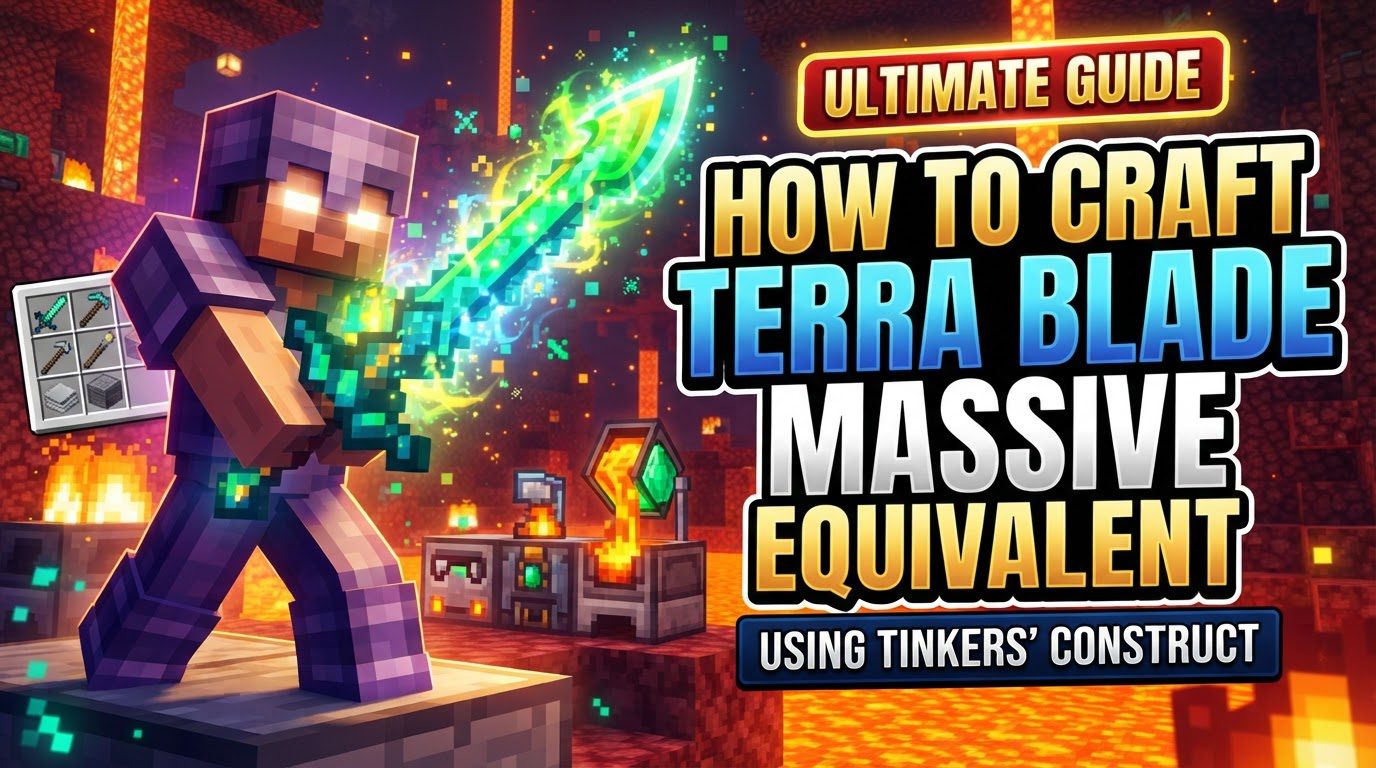
In the expansive world of Minecraft, the concept of a “Terra Blade” often evokes images of a powerful sword that projects formidable energy. While Tinkers’ Construct does not feature swords that inherently shoot projectiles, it offers unparalleled customization to craft a melee weapon equivalent in raw power and utility. This guide will walk you through creating a devastating sword, focusing on maximizing damage, durability, and beneficial traits to rival any legendary blade.
Understanding Tinkers’ Construct Mechanics
Before diving into specific recipes, it’s crucial to grasp the fundamental mechanics of Tinkers’ Construct. Tools and weapons in this mod are not single items but rather assemblies of multiple parts. Each part contributes unique base statistics such as damage, durability, and attack speed, along with special traits. Once assembled, these tools can be further enhanced through the application of various modifiers, which add extra damage, improved durability, unique effects, or utility. The primary determinant of a sword’s base damage is the material used for its blade.
It’s important to note that while Tinkers’ Construct swords excel in melee combat, any desired ranged capabilities are handled by separate, highly modifiable bows, arrows, or shurikens. All assembly and modification processes take place at either a Tool Station or, for more advanced modifications, a Tinker’s Anvil.
Step-by-Step Guide to Crafting Your Equivalent
1. Choose Your Weapon Base
The first decision involves selecting the type of weapon you wish to craft. Each base offers a different balance of stats and inherent abilities:
- Cleaver: This weapon often boasts the highest base damage among single-target melee options. It also inherently applies the “Beheading” trait, making it excellent for farming mob heads from defeated enemies. Its main drawback can be a slower attack speed, which will need to be addressed later.
- Longsword: A versatile choice, the Longsword provides a good balance between damage output and attack speed, making it a reliable option for general combat.
- Rapier: For those who prioritize speed and precision, the Rapier is ideal. It excels at armor penetration and features faster attacks, which can be particularly advantageous during boss encounters where sustained, quick damage is key.
2. Select Materials for Each Part
The materials chosen for each component are paramount, as they dictate the base stats and traits of your weapon. Strategic material selection is key to building a powerful tool.
- Blade/Head (Highest Damage Impact):
- Manyullyn: A top-tier choice renowned for its exceptionally high base damage, making it a cornerstone for any high-power weapon.
- Ardite: Another excellent option, offering substantial damage.
- Netherite: If available within your modpack, Netherite provides superior stats, including high damage and durability.
- Supremium: Originating from the Mystical Agriculture addon, Supremium can provide even more impressive statistics, pushing your weapon’s capabilities further.
- Guard/Binding/Tool Rod (Traits & Modifiers): These parts are crucial for adding utility and extra modifier slots.
- Bone: Utilizing Bone for one of these parts grants the “Fractured” trait, which significantly increases damage dealt to targets that are at full health. This trait synergizes incredibly well with a high-damage blade, allowing for powerful opening strikes.
- Paper: An invaluable material, Paper adds an extra modifier slot to your tool. This is crucial for maximizing the number of upgrades and enhancements you can apply to your weapon.
- Thaumium: If you are integrating Thaumcraft, using Thaumium for multiple parts can also provide additional modifier slots, similar to Paper, but often requiring a complete set of Thaumium components for the full benefit.
3. Assemble Your Weapon
Once you have selected your desired weapon base and the materials for each of its components, head to a Tool Station or a Tinker’s Anvil. Combine the chosen parts in the assembly interface to forge your base weapon. This initial assembly sets the foundation for all subsequent enhancements.
4. Apply Modifiers at a Tinker’s Anvil
This is where your weapon truly begins to take shape as a “Terra Blade equivalent.” Modifiers are applied using various items at a Tinker’s Anvil. Prioritize these modifiers for maximum effect:
- Damage Enhancement:
- Nether Quartz: Apply as much Nether Quartz as possible. Each piece significantly boosts the weapon’s damage. While the effectiveness of each subsequent application may diminish, it remains the primary way to stack raw damage.
- Durability and Repair:
- Moss: Essential for sustainability, Moss grants passive auto-repair to your weapon, slowly restoring its durability over time.
- Reinforced: Applying Reinforced modifiers (up to Reinforced V) provides a chance to ignore durability drain with each use. At Reinforced V, your tool becomes effectively unbreakable, eliminating any concerns about wear and tear.
- Attack Speed:
- Redstone: Crucial for balancing high-damage weapons, Redstone modifiers increase attack speed. This is especially beneficial for slower weapons like Cleavers, making them more practical and efficient in combat.
- Special Effects:
- Fiery (Blaze Powder): Infuses your weapon with fire, adding fire damage to your attacks and setting enemies ablaze.
- Lapis: Adds the “Luck” modifier, which functions similarly to the Looting enchantment, increasing the chance of better item drops from defeated mobs.
- Beheading (Wither Skeleton Skulls): If your weapon doesn’t already have it (like a Cleaver), applying Wither Skeleton Skulls increases the chance of mob head drops.
- Extra Modifiers: Beyond using Paper or Thaumium parts, you can often gain additional modifier slots by applying specific rare items. These can include a Dragon’s Head, Skeleton Skull, Bug and Quill, Music Disc, Earth Crystal, Golden Apple, Diamond, Netherite Ingot, and Netherite Scrap. Note that some of these may only be applicable once per tool.
Important Tips for Optimization
- Material Synergy: Always consider how material traits complement each other. For instance, pairing Bone’s “Fractured” trait with a high-damage Manyullyn blade maximizes initial strike damage, making it perfect for quickly dispatching powerful foes or groups.
- Embossment: This advanced technique allows you to transfer a material’s trait to a different part of your tool without using that material for the part itself. For example, you can emboss Paper’s extra modifier slot onto a different part. To emboss, you typically need a Gold Block, a Blue, Green, and Magma Slime Crystal, and the desired tool part. This is invaluable for gaining beneficial traits like extra modifiers while retaining the primary material choice for other stats.
- Ranged Option: Remember that Tinkers’ Construct swords do not shoot projectiles. If you desire ranged capabilities akin to the Terra Blade, dedicate resources to crafting a separate, heavily modified bow and specialized arrows, or potent shurikens. These can be imbued with similar damage and special effect modifiers (e.g., Fiery, Pierce) to complement your powerful melee weapon.
Common Mistakes to Avoid
- Expecting Direct Projectiles: The most significant misconception is expecting your Tinkers’ Construct sword to fire projectiles. The “equivalent” focuses on maximizing melee damage and utility. Ranged attacks are handled by dedicated ranged weapons.
- Ignoring Modifier Limits: Every tool has a finite number of modifier slots. Plan your upgrades meticulously. Utilize materials like Paper or Thaumium early in the crafting process to expand your modification potential.
- Neglecting Durability: A high-damage weapon is useless if it breaks constantly. Always integrate a durability solution, whether it’s passive repair from Moss or the outright invincibility provided by Reinforced V.
- Forgetting Attack Speed: A weapon with exceptionally high damage but an incredibly slow attack speed can be impractical in fast-paced combat. Balance damage with attack speed by applying Redstone modifiers to ensure your weapon is both powerful and efficient.
- Suboptimal Quartz Application: While Nether Quartz is vital for damage, the amount of damage added can decrease with each subsequent application. Prioritize establishing a strong base damage from your blade material before dedicating all available modifier slots to quartz. A balanced approach yields the best results.
By following this comprehensive guide, you can craft a Tinkers’ Construct melee weapon that stands as a true equivalent to the legendary Terra Blade, ready to face any challenge Minecraft throws your way with unparalleled power and versatility.
Tags:
YOU MAY ALSO LIKE...