Setting Up a Nickname System for Players
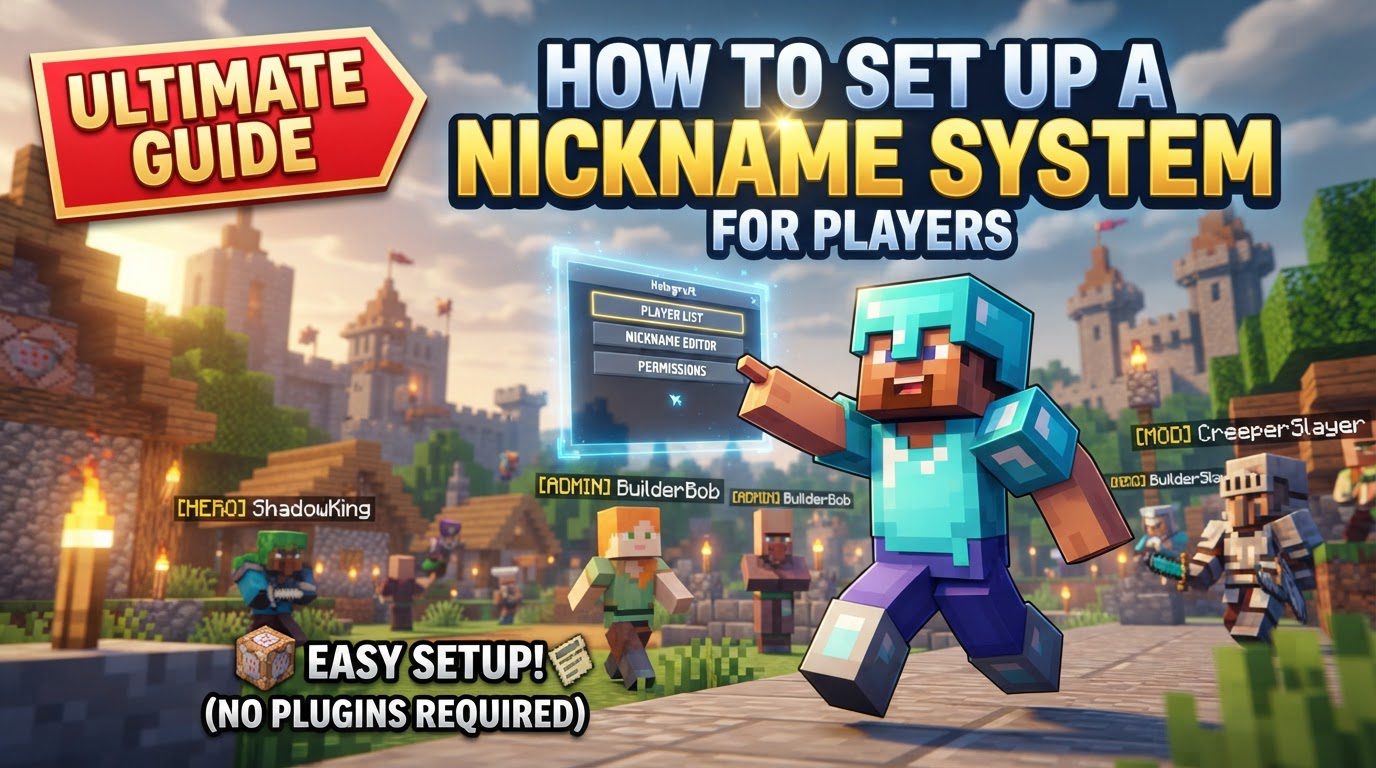
Setting up a nickname system on a Minecraft server allows players to personalize their in-game identity, enhancing the social experience and providing greater flexibility. Server owners typically implement these systems using specialized plugins or modifications designed for this purpose. These tools empower players to customize their display names, which are visible to others across various aspects of the game.
Key Mechanics of Nickname Systems
A well-implemented nickname system goes beyond a simple name change in chat; it integrates the new identity consistently throughout the game world. Understanding these core mechanics is crucial for effective setup and management:
- Comprehensive Identity Consistency: Nickname systems are designed to apply the chosen name across numerous in-game contexts. This includes chat messages, the player list (tab list), the nametags displayed above players’ characters, custom join and leave messages, death messages, and even scoreboards. The goal is to ensure that a player’s chosen nickname is their primary identifier in most, if not all, visible interactions.
- Skin Override Capabilities: Some advanced nickname plugins offer an additional layer of customization by allowing players to override their default Minecraft skin. This means a player can not only change their name but also appear with a different visual identity, further enhancing their personalized presence on the server.
- Robust Administrative Controls: A core feature of any effective nickname system is a suite of administrative tools. These tools provide server staff with the ability to set nicknames for other players, clear existing nicknames, query a player’s current nickname, and generally manage the system. This ensures that server administrators can maintain order and assist players as needed.
- Persistence Across Sessions: Nicknames are generally designed to be persistent. Once a player sets a nickname, it remains active even after server restarts or when the player disconnects and reconnects. This eliminates the need for players to re-set their nickname each time they join the server.
- Permission-Based Control: To maintain server integrity and prevent misuse, nickname systems incorporate permission-based control. This allows server administrators to precisely define who can use nickname commands. Furthermore, permissions can be granular, enabling control over specific features, such as whether players can use colored text, bold formatting, or other special characters in their nicknames.
Step-by-Step Process for Setting Up a Nickname System
Implementing a nickname system involves a series of straightforward steps, from selecting the right software to configuring its advanced features:
- Select a Plugin:
The first crucial step is to choose a nickname plugin that is compatible with your specific Minecraft server software and game version. Popular server software platforms include Paper, Spigot, Bukkit, and Fabric. Examples of widely used nickname plugins include “Nickname” by NotAyaan, “NickNamer+”, “FastNick”, or the built-in nickname functionality within comprehensive plugins like EssentialsX. Always check the plugin’s documentation for compatibility with your server version.
- Download Plugin Files:
Once you’ve identified a suitable plugin, proceed to download its `.jar` file(s) from a reputable source, such as SpigotMC, BukkitDev, or Modrinth. It is very important to note that some plugins, especially more complex ones, may require additional “dependency” plugins to function correctly. These dependencies must also be downloaded and installed alongside the main nickname plugin.
- Install Plugin:
After downloading, locate your Minecraft server’s root directory. Inside this directory, you will find a folder typically named
plugins. Place all the downloaded `.jar` files, including any dependencies, directly into thispluginsfolder. Ensure the files are not nested within subfolders unless specifically instructed by the plugin’s documentation. - Restart Server:
For the newly installed plugin to be properly loaded and activated, you must restart your Minecraft server. While some server software allows for an in-game
/reloadcommand, a full server restart is generally recommended for optimal stability and to ensure all plugin components initialize correctly. - Configure Permissions (if applicable):
If your server uses a permissions management plugin, such as LuckPerms, you will need to grant players and staff the necessary permissions to use the nickname commands. Permissions are typically structured hierarchically. For instance, players might need
nickname.set.selfto change their own nickname, while administrators would requirenickname.set.otherto modify other players’ names. Specific permissions may also be needed for features like colored nicknames (e.g.,essentials.nick.colorsif using EssentialsX). - Use Commands:
Once the plugin is installed and permissions are set, players and staff can begin using the nickname commands:
- To set your own nickname: The most common commands are
/nick <nickname>or/nickname <nickname>. - To set another player’s nickname (administrator only): Typical commands include
/nick set <player> <nickname>or/nick <player> <nickname>. - To remove a nickname: Use
/nick clearor/nick resetfor yourself. For another player, administrators would use/nick clear <player>. - To add colors and formatting: Players with the appropriate permissions can use Minecraft’s color codes (e.g.,
&6for gold,&bfor aqua) and formatting codes (e.g.,&lfor bold) directly within the nickname command, such as/nick &6My&bNick.
- To set your own nickname: The most common commands are
- Customize Settings (Optional):
Most nickname plugins generate a configuration file (often
config.yml) within their dedicated folder inside thepluginsdirectory after the first server restart. Editing this file allows you to fine-tune various aspects of the system. This might include adjusting message formats, controlling how nametags are displayed, defining allowed characters in nicknames, or setting default behaviors.
Important Tips for a Seamless Nickname System
- Verify Compatibility: Always double-check that your chosen nickname plugin is fully compatible with your specific Minecraft server software (e.g., Paper, Spigot, Fabric) and the exact game version your server is running. Incompatibility can lead to crashes or unexpected behavior.
- Manage Permissions Carefully: Implement a robust and precise permissions system. Control exactly which players can utilize nickname features, especially those that allow for colored or formatted text, or the ability to change other players’ names. This prevents abuse and maintains server order.
- Review Configuration Files: Take the time to customize the plugin’s configuration files. This allows you to align the nickname system with your server’s unique aesthetic and functional requirements, including how chat messages appear and how nametags behave.
- Install Dependencies: Before starting your server, always check if your chosen nickname plugin requires any additional “dependency” plugins. These must be installed alongside the main plugin for it to function correctly and avoid errors.
- Adjust Chat Configuration: If your server utilizes a separate chat management plugin (e.g., EssentialsChat, DeluxeChat), ensure it is properly configured to display player nicknames or display names rather than their original Minecraft usernames. This ensures consistent identity across the server.
Common Mistakes to Avoid
Even with careful planning, certain pitfalls can hinder the successful implementation of a nickname system:
- Incorrect File Placement: A frequent mistake is failing to place the plugin’s `.jar` files directly into the server’s
pluginsfolder. Placing them in a subfolder or elsewhere will prevent the server from loading them. - Missing Dependency Plugins: Forgetting to install all necessary dependency plugins is a common cause of non-functional nickname systems. The main plugin will often fail to load or throw errors without its required companions.
- Not Restarting/Reloading: Expecting a plugin to work immediately after installation without a server restart (or at least a proper
/reloadcommand) is a common oversight. Plugins need to be initialized by the server. - Permission Configuration Errors: Players being unable to use nickname commands, particularly for features like colored text, often stems from improperly set permissions. For example, if using EssentialsX, the permission
essentials.nick.colorsis frequently required for players to use color codes in their nicknames. - Plugin Conflicts: Running multiple plugins that attempt to manage nicknames or player display names simultaneously can lead to unexpected behavior. One plugin might override another, or they might interfere, causing glitches. For instance, a dedicated nickname plugin might conflict with EssentialsX’s built-in
/nickcommand if both are active and configured to manage the same aspects. - Allowing Duplicate Nicknames: If not managed by the plugin or server rules, allowing multiple players to use the exact same nickname can cause significant confusion. This can lead to issues with player identification, targeting commands, and general communication.
- “Failed to Verify Username” Error: While not a direct nickname setup error, this issue can arise in conjunction with player identity. This error typically occurs when a player’s client fails to authenticate with Mojang’s servers. It can also happen if a player’s actual Minecraft username was recently changed, or if non-premium (cracked) players attempt to join a server set to
online-mode=true. Disablingonline-modeinserver.propertiescan allow non-premium players to join, but this carries significant security risks for your server.