Fixing OpenGL Errors on Linux Systems
Understanding OpenGL Errors in Minecraft on Linux
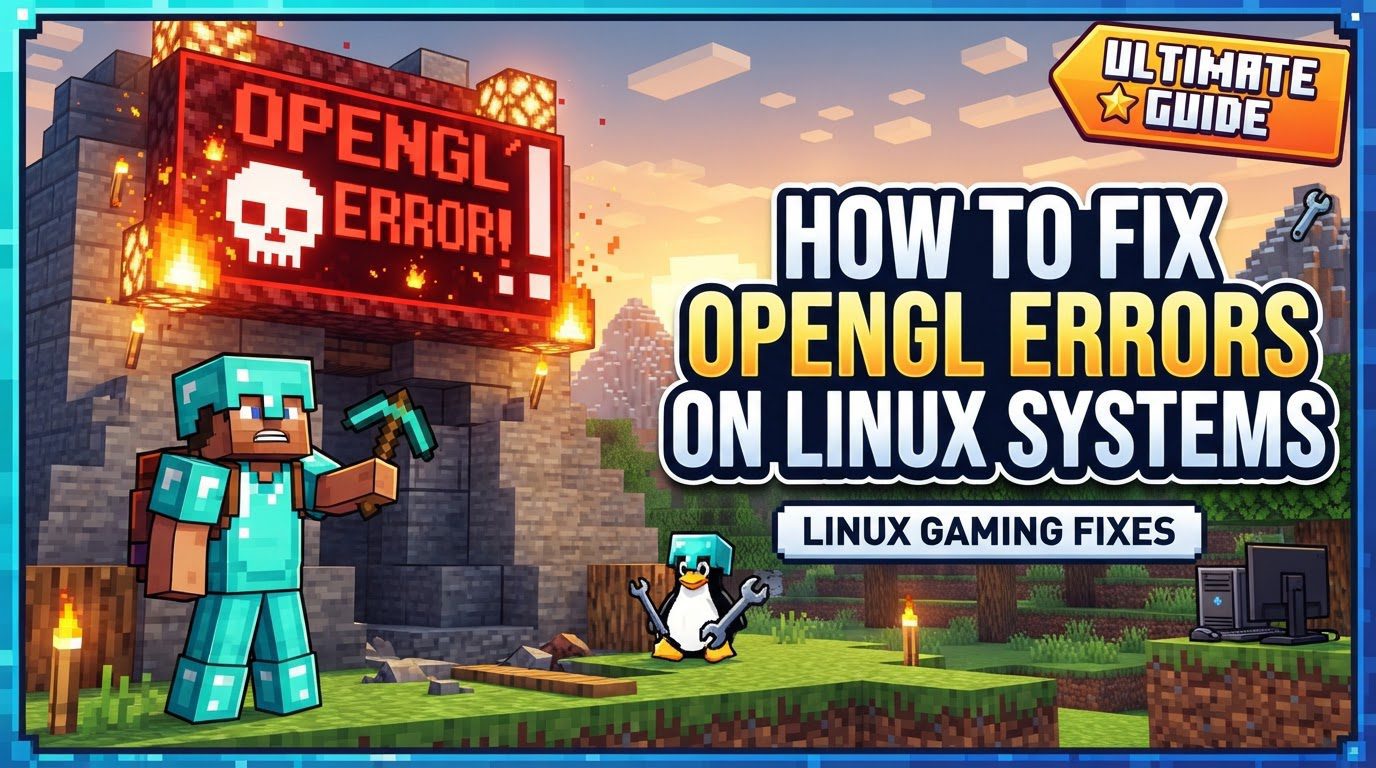
When playing Minecraft on a Linux system, encountering OpenGL errors can be a frustrating experience. These errors often prevent the game from launching, cause crashes, or lead to significant graphical glitches. Resolving them typically requires a systematic approach, addressing various components from graphics drivers to in-game settings. This comprehensive guide will walk you through the necessary steps to diagnose and fix OpenGL errors, ensuring a smoother Minecraft experience.
Key Mechanics Behind OpenGL Errors
To effectively troubleshoot OpenGL errors, it’s essential to understand their common root causes:
- Graphics Drivers: The most frequent culprit behind OpenGL errors is outdated or corrupted graphics card drivers. Modern games like Minecraft rely heavily on up-to-date drivers for proper OpenGL functionality and optimal performance.
- OpenGL Support: Minecraft specifically requires a graphics driver that supports OpenGL 2.3 or higher. If your GPU or its installed drivers do not meet this minimum requirement, errors are inevitable.
- Java Version: Minecraft is a Java-based game, and an outdated or incompatible Java version can lead to various issues, including OpenGL errors, by failing to properly interact with the graphics API.
- Third-Party Interferences: External software can conflict with Minecraft’s rendering. This includes game mods, shaders, and even overlays from applications like Discord, AMD, NVIDIA, or Razer Cortex, which can disrupt the OpenGL rendering pipeline.
- Mesa Drivers: For users with AMD graphics cards, specific versions of Mesa drivers have been identified as problematic. For instance, Mesa 23.1 and later versions have been known to cause crashes when used with Minecraft and the Sodium mod, often due to regressions introduced in those versions.
xrandrUtility: Some Linux distributions might lack the `xrandr` utility, which Minecraft uses to query available display modes. Its absence can lead to crashes or “No OpenGL context found” errors.- Hybrid Graphics: Systems equipped with both integrated and dedicated graphics cards (often referred to as hybrid graphics) require careful configuration. If Minecraft isn’t properly directed to use the more powerful dedicated GPU, performance issues and OpenGL errors can arise.
Step-by-Step Troubleshooting Process
Follow these steps to systematically address and resolve common OpenGL errors:
1. Update Graphics Drivers
Keeping your graphics drivers current is paramount for OpenGL stability.
- Identify Your Graphics Card: Determine if you have an NVIDIA, AMD, or Intel graphics card.
- Download Latest Drivers: Visit your graphics card manufacturer’s official website. Download the latest drivers specifically designed for your Linux distribution.
- Install Drivers: Follow the installation instructions provided by the manufacturer. For specific distributions, package managers might be used; for example, on Arch Linux, you might use commands like
pacman -S xf86-video-intelfor Intel or install thenvidiapackage for NVIDIA cards. - Restart System: Always restart your computer after installing or updating graphics drivers to ensure changes take effect.
2. Update Java
An up-to-date Java environment is crucial for Minecraft’s stability.
- Check for Updates: Use your distribution’s package manager to ensure you have the latest Java version. For Debian/Ubuntu-based systems, commands like
sudo apt update && sudo apt upgradewill check and install updates. You can also visitjava.comfor information. - Consider Alternative Builds: If issues persist, try using alternative Java builds such as Azul or OpenJRE, as proprietary JREs can sometimes cause compatibility problems.
3. Adjust In-Game Settings (Minecraft)
Minecraft’s internal settings can sometimes contribute to or mitigate OpenGL issues.
- Access Video Settings: Launch Minecraft and navigate to
Options>Video Settings. - Turn off “Advanced OpenGL”: If this option is available, ensure it is disabled.
- Disable “Show GL Errors”: Go to
Options>Video Settings>Others...and turn this option OFF. This prevents error messages from continuously appearing in your chat, which can be distracting and misleading during troubleshooting. - Modify Graphics Settings: Experiment with various graphics settings. If options like VBOs (Vertex Buffer Objects), Render Region, or Clear Water are enabled, try disabling them to see if it resolves the error.
- Adjust Performance Settings (OptiFine/Sodium): If you are using performance-enhancing mods like OptiFine, go to
Video Settings>Performanceand turn off “Render Regions,” as this setting can sometimes conflict with shaders.
4. Check for xrandr Utility
If you encounter “No OpenGL context found” errors, the `xrandr` utility might be missing.
- Install
xorg-xrandr: Ensure that the `xorg-xrandr` package (or its equivalent for your distribution) is installed. For Debian/Ubuntu, usesudo apt-get install x11-xserver-utils. For Arch Linux, the command issudo pacman -S xorg-xrandr.
5. Manage Mods and Shaders
Third-party additions are common sources of conflict.
- Temporarily Disable: Disable all mods and shaders. Then, re-enable them one by one to pinpoint which specific mod or shader is causing the OpenGL error.
- Update OptiFine: If using OptiFine, always ensure you have the precise version that matches your current Minecraft update to avoid compatibility issues.
6. Environment Variables
Setting specific environment variables can sometimes resolve driver-related issues.
- NVIDIA Users: If experiencing problems, try launching Minecraft with the environment variable
env __GL_THREADED_OPTIMIZATIONS=0. This can often be configured in your game launcher. - AMD Users (Mesa 23.1+ Issues): If you’re an AMD user encountering problems with Mesa 23.1 or later, consider using Zink. This can be enabled by setting the environment variable
MESA_LOADER_DRIVER_OVERRIDE=zink. This setting is often available in launchers like Prism Launcher. - OpenAL Issues: If “No OpenGL context found” errors persist and you suspect OpenAL (audio library) interference, try setting
ALSOFT_DRIVERS=pulseor create a file named~/.alsoftrcwith the contentdrivers=pulse.
7. Downgrade Mesa (Advanced, AMD Users)
In specific cases, particularly for AMD users with RX Vega 64 graphics cards experiencing crashes with Sodium and Mesa 23.1 or later, downgrading Mesa might be necessary.
- Advanced Procedure: This is an advanced step and should only be performed if other solutions fail. It involves rolling back your Mesa drivers to a version prior to 23.1. The exact commands vary by distribution; for Arch Linux, it might involve `sudo pacman -U ` after locating an older package. Exercise caution and understand the risks before proceeding.
Important Tips for Troubleshooting
- Restart First: Before diving into complex troubleshooting, a simple system restart can often resolve temporary glitches or hung processes.
- Dedicated GPU: On hybrid graphics systems, confirm that Minecraft is configured to use the dedicated graphics card rather than the integrated one for optimal performance and OpenGL compatibility.
- OptiFine/Sodium: These performance-enhancing mods can not only improve FPS but also provide more granular control over graphics settings, which can sometimes help in mitigating OpenGL issues.
- Monitor Output: Use commands like
glxinfo | grep -i openglin your terminal to check your current OpenGL status and driver information. This can provide valuable diagnostic clues. - Fresh Reinstall: As a last resort, a complete reinstallation of Minecraft can sometimes fix corrupted game files that might be causing OpenGL errors.
Common Mistakes to Avoid
Being aware of common pitfalls can save you time and frustration:
- Ignoring Driver Updates: Neglecting to keep your graphics drivers updated is a frequent and easily avoidable cause of OpenGL errors.
- Outdated Java: Running an old version of Java can lead to various compatibility issues, including those affecting OpenGL.
- Overlooking Mod Conflicts: Installing numerous mods or incompatible shaders without proper testing can easily introduce new OpenGL errors. Always test additions incrementally.
- Not Disabling Overlays: Third-party game overlays (Discord, NVIDIA ShadowPlay, etc.) can interfere with Minecraft’s rendering. Always disable them when troubleshooting OpenGL issues.
- Using Remote Desktop/Virtual Machines: These environments often lack proper direct OpenGL access and are not suitable for playing Minecraft, as they can block the necessary graphics functionality.
- Forgetting
__GL_THREADED_OPTIMIZATIONS=1: If you have__GL_THREADED_OPTIMIZATIONS=1set globally (e.g., in your shell profile), remember to override it specifically for Minecraft by setting__GL_THREADED_OPTIMIZATIONS=0, as the “threaded optimizations” can sometimes cause issues with certain games or drivers. - Incorrect OptiFine Version: Always ensure that the OptiFine version you install perfectly matches your specific Minecraft update. A mismatch will almost certainly lead to errors.
Tags:
YOU MAY ALSO LIKE...