How to secure your base entrance against zombies
Securing your base entrance in Minecraft is paramount to survival, especially when dealing with the persistent threat of zombies. These relentless foes are attracted to players and villagers, possess the ability to break down certain door types, and can exploit weaknesses in your defenses. A well-designed entrance not only keeps you safe but also allows for peaceful progression within your base. This guide will walk you through comprehensive strategies to fortify your entryway, leveraging zombie mechanics to your advantage.
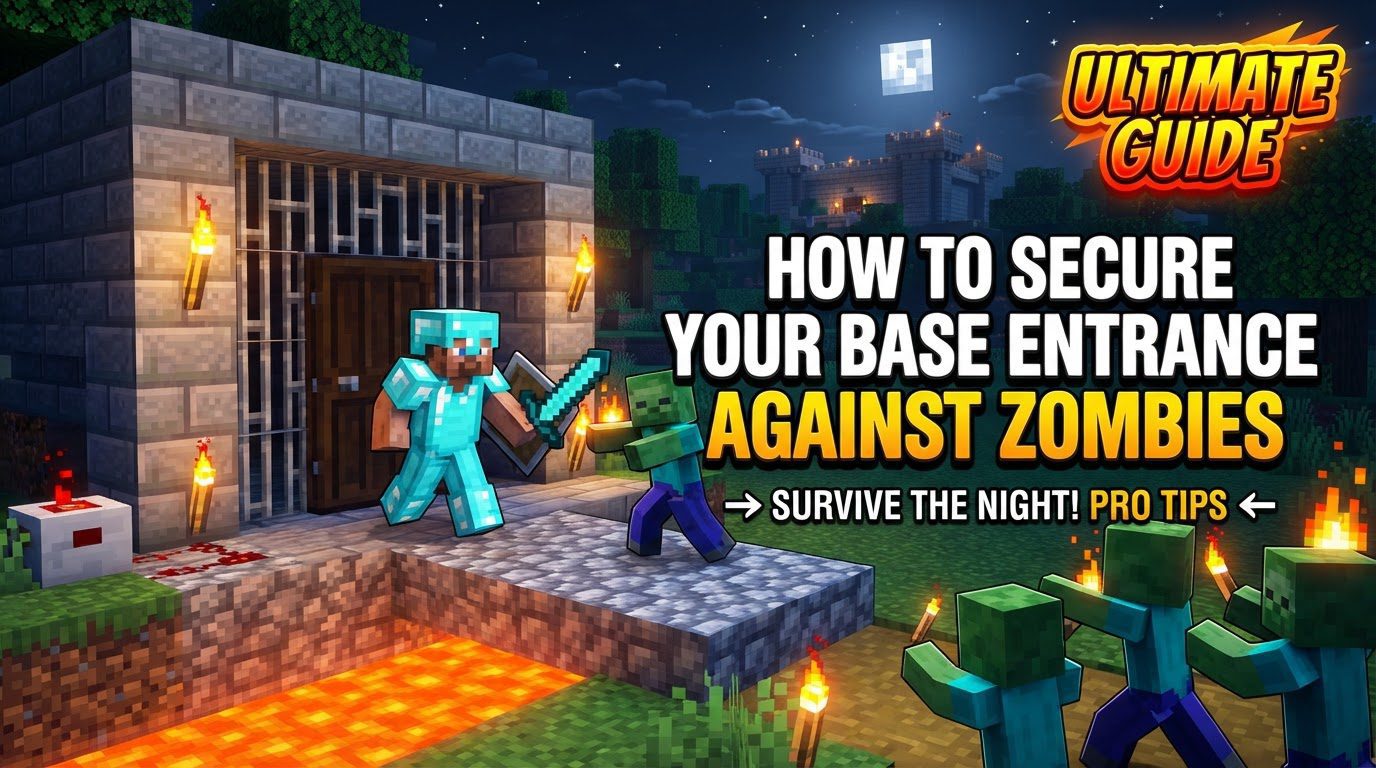
Understanding Zombie Mechanics for Effective Defense
Before constructing your defenses, it’s crucial to understand how zombies operate within the game world. Their behavior dictates the most effective security measures:
- Door Destruction: Zombies can break down wooden doors. This vulnerability is particularly pronounced on Hard difficulty, where they will destroy doors much faster. Iron doors, however, are impervious to their attacks.
- Pathfinding and Attraction: Zombies possess an AI that directs them towards players and villagers. They will actively pathfind around obstacles to reach their targets, making clever use of their environment.
- Light Level Sensitivity: Most hostile mobs, including zombies, require a light level of 0 to spawn. Any area with a light level of 1 or higher will prevent natural hostile mob generation. This is a fundamental principle for base security.
- Climbing Limitations: Zombies, unlike spiders, cannot climb ladders. This limitation can be exploited to create vertical defenses that they cannot bypass.
- Pathfinding Exploitation: Zombie AI can be tricked. They often avoid blocks that cause damage, such as pointed dripstone, or non-solid blocks like open trapdoors, bamboo, or sweet berry bushes. Understanding these avoidance patterns allows for the creation of effective deterrents.
Step-by-Step Entrance Security Measures
Implementing a layered defense strategy is key. Start with these foundational steps to secure your primary entrance:
1. Illuminate the Area
Prevention is the first line of defense. Zombies will not spawn in well-lit areas. Therefore, place torches, lanterns, glowstone, or other light sources generously around your entrance and the immediate perimeter of your base. This prevents hostile mobs from spawning directly at your doorstep, reducing the number of threats you need to actively manage.
2. Choose a Secure Door
Your choice of door is critical, especially given zombies’ ability to break wooden ones:
- Iron Doors: These are the most secure option as zombies cannot break them. To make an iron door functional, you will need to activate it with buttons or pressure plates on both the inside and outside. Place buttons on solid blocks adjacent to the door frame.
- Sideways Wooden Doors: If you prefer the aesthetic or accessibility of wooden doors, a clever trick is to place them sideways. When placed in this manner, they are technically in an “open” state but appear closed. Zombies will not target or attempt to break doors that are already considered open by the game’s mechanics.
3. Elevate the Entrance
A simple yet effective defense is to build your entrance one block above ground level. Zombies primarily target and break the top half of a door. By elevating your entrance, the bottom half of the door, which is what a zombie at ground level would reach, becomes inaccessible to their attack animation. This significantly reduces the vulnerability of even wooden doors.
4. Create a Defensive Barrier
Beyond the door itself, a physical barrier can deter or eliminate approaching zombies:
- Moat System: Dig a moat around your entrance and the immediate base perimeter. This should be at least two blocks wide and four blocks deep.
- Water Moat: Filling the moat with water will create a current that pushes mobs away from your entrance, preventing them from gathering directly at your door.
- Lava Moat: For a more aggressive defense, fill the moat with lava. Zombies falling into lava will take damage and eventually be eliminated, providing both a deterrent and a disposal system.
- Deterrent Blocks: Place specific blocks directly in front of your door to hinder or damage zombies.
- Sweet Berry Bushes: These bushes deal damage to entities walking through them. Cover them with carpets so you can walk over them safely while zombies take damage.
- Pointed Dripstone: When placed on the ground, pointed dripstone acts like a spike trap, damaging any mob that walks over it.
- Open Trapdoors over a Fall Trap: Zombies often perceive open trapdoors as solid ground, especially if they are trying to pathfind to a player. Place open trapdoors over a deep pit (a fall trap) to cause zombies to fall to their demise or take significant damage.
5. Add a “Door Seal” (for Wooden Doors)
If you’ve opted for a wooden door, even a sideways one, this additional layer of defense can buy you time in an emergency. Place a column of sand or gravel blocks directly above the door. Should the door somehow be broken (e.g., by an unexpected game mechanic or a particularly persistent zombie), these gravity-affected blocks will fall, temporarily sealing the entrance and preventing immediate entry for a short period.
Important Tips for Comprehensive Base Security
Securing your entrance is part of a larger strategy for overall base protection:
- Build Defensive Walls: Construct sturdy walls around your entire base. These should be at least three blocks high to prevent zombies from simply walking over them. Consider adding an overhang (e.g., a row of blocks extending outwards at the top of the wall) to deter spiders, which can climb vertical surfaces. Ensure these walls are also well-lit to prevent internal spawns.
- Utilize Water Features: Beyond moats, waterfalls strategically placed over entrances or critical pathways can effectively push mobs away, creating a natural barrier that requires no maintenance.
- Deploy Iron Golems: Iron Golems are powerful, passive defenders that will attack hostile mobs on sight. Place them strategically around your base, particularly near entrances and high-traffic areas. To prevent them from wandering off or flinging mobs into undesirable locations, consider building a trench (two blocks wide, four blocks deep) around their patrol area.
- Use Spawn-Proof Blocks: When constructing roofs and floors, use blocks that mobs cannot spawn on. These include bottom-half slabs, stairs, carpets, glass, or leaves. This ensures that no hostile mobs will spontaneously appear inside your base or on your roof, eliminating a common security oversight.
- Implement Redstone Traps: For advanced defense, integrate redstone traps. This could involve dispensers filled with arrows that fire when a tripwire is activated, or sticky pistons that create retractable barriers to block pathways. These can be activated from a safe vantage point inside your base.
- Plan for Emergencies: Even the best defenses can be breached. Incorporate emergency exits or “panic rooms” within your base. These provide a safe retreat or an alternative escape route if your main entrance is compromised.
Common Mistakes to Avoid
Learning from common pitfalls can save you from costly mistakes:
- Using Only Wooden Doors: Relying solely on standard wooden doors, especially on higher difficulties, is a recipe for disaster. Zombies will inevitably break through, leaving your base vulnerable.
- Insufficient Lighting: Failing to adequately light your base and its perimeter is one of the most common mistakes. This allows hostile mobs to spawn freely, negating many of your other defenses.
- Leaving Gaps or Weak Points: Any unsealed opening, even a small one, in your walls or defenses can be exploited by mobs. Always double-check your construction for unintended entry points.
- Placing Doors at Ground Level: As zombies target the top half of doors, placing a wooden door directly at ground level makes it highly vulnerable. Elevating it by one block is a simple yet crucial defense.
- Underestimating Mob Pathfinding: Mobs can sometimes find unexpected ways around seemingly secure obstacles. Always test your defenses by observing how zombies interact with them. If they find a way through, adjust your design.
- Lack of Layered Defenses: Relying on a single defense mechanism is risky. A single broken door or a bypassed trap can compromise your entire base. Combine multiple strategies – lighting, secure doors, barriers, and active defenders – for robust security.
By understanding zombie mechanics and meticulously applying these layered defense strategies, you can transform your base entrance from a weak point into an impenetrable fortress, ensuring your safety and peace of mind in the world of Minecraft.
Tags:
YOU MAY ALSO LIKE...