Building a Bookshelf Library for Enchanting and Decoration, Explained
An enchanting table is a cornerstone of progression in Minecraft, allowing players to imbue their tools, weapons, and armor with powerful magical bonuses. To unlock the full potential of enchantment, specifically the highest-tier level 30 enchantments, a carefully constructed library of bookshelves is essential. This guide will walk you through the process of building such a library, detailing both the functional requirements for optimal enchanting and aesthetic considerations for a truly magical space.
Understanding Enchanting Mechanics
At its core, enchanting in Minecraft revolves around the interaction between an enchanting table and surrounding bookshelves. The more bookshelves that are correctly positioned, the higher the potential enchantment levels offered. To access the coveted level 30 enchantments, you need exactly 15 bookshelves placed around your enchanting table.
- Placement Proximity: Each individual bookshelf must be positioned precisely two blocks away, laterally, from the enchanting table. This creates a one-block air gap directly adjacent to the table.
- Vertical Alignment: Bookshelves can be placed on the same horizontal level as the enchanting table itself, or they can be one block higher. This flexibility allows for various design possibilities.
- Unobstructed Space: The one-block air gap between the enchanting table and the surrounding bookshelves must remain completely empty. Even transparent blocks, such as torches, carpets, or glass, will block the magical connection between a bookshelf and the enchanting table, effectively deactivating that bookshelf and reducing the maximum enchantment level available.
- Visual Confirmation: When bookshelves are correctly placed and actively contributing to the enchanting table’s power, you will observe distinctive glyph particles flowing from them towards the enchanting table. These particles serve as a clear visual indicator that your setup is functioning as intended.
- Enchantment Level Determination: The specific enchantment levels offered by the table are directly dependent on the number of active, nearby bookshelves (up to a cap of 15) and the particular slot position chosen within the enchanting interface.
Step-by-Step Guide to Building Your Enchanting Library
1. Craft an Enchanting Table
The first step in establishing your enchanting station is to craft the enchanting table itself. This mystical block requires a specific set of rare materials:
- 4 Obsidian: Obtained by mining still lava sources with a diamond pickaxe.
- 2 Diamonds: Mined from diamond ore, typically found deep underground.
- 1 Book: Crafted from paper and leather, or found in chests.
Once you have these components, arrange them in a crafting table in the specified pattern to create your enchanting table.
2. Craft Bookshelves
Bookshelves are the power source for your enchanting table. You will need a total of 15 bookshelves to reach the maximum enchantment level. Each bookshelf requires:
- 3 Books: Each book is crafted from 3 sheets of paper and 1 piece of leather.
- 6 Wood Planks: Any type of wood plank can be used.
To acquire the necessary components for books:
- Paper: Crafted from 3 Sugar Cane, which grows near water.
- Leather: Primarily obtained by defeating cows, but can also drop from horses, donkeys, mules, and llamas.
Given that you need 15 bookshelves, and each bookshelf requires 3 books, you will need a total of 45 books. This translates to 135 sheets of paper (45 * 3) and 45 pieces of leather (45 * 1). Plan your resource gathering accordingly!
3. Place the Enchanting Table
Choose a suitable location for your enchanting library. Consider both accessibility and aesthetics. Once you have your spot, place the enchanting table in the precise center of the area where you intend to build your library.
4. Arrange Bookshelves
This is the most crucial step for maximizing your enchanting potential. You need to place 15 bookshelves around your enchanting table, ensuring the critical one-block air gap is maintained. A common and efficient setup involves creating a 5×5 area with the enchanting table in the very center:
- Place bookshelves on all four sides of the enchanting table, two blocks away.
- Continue placing bookshelves to fill in the corners, maintaining the two-block distance.
- This arrangement often results in a 5×5 square footprint for the bookshelves if you consider the space they occupy, with a 3×3 empty space in the middle for the enchanting table and its immediate surroundings.
Alternatively, you might opt for a design that leaves a gap for an entrance, as long as it still allows for 15 bookshelves to be correctly placed. For instance, you could create a square of bookshelves on all four sides, two blocks away, and then add a second layer of bookshelves on top of the first, ensuring they are still one block higher than the table and two blocks laterally away from it. The key is always the “two blocks away, lateral” rule and the empty gap.
5. Verify Setup
After arranging your bookshelves, observe the enchanting table closely. You should see mystical glyph particles flying from the bookshelves towards the enchanting table. These particles confirm that the bookshelves are active and contributing to the table’s power. If you don’t see particles from all 15 bookshelves, double-check their placement and ensure no blocks are obstructing the one-block air gap.
6. Enchant Items
With your library complete and verified, you are ready to enchant. Open the enchanting table interface. Place the item you wish to enchant (tool, weapon, or armor) into the first slot. In the second slot, place 1 to 3 pieces of Lapis Lazuli, which serves as the magical fuel for the enchantment process. The table will then display three different enchantment options, each with a specific experience level cost. Select the enchantment you desire, provided you meet the experience level requirement, and your item will be imbued with magic.
Important Tips for Your Enchanting Experience
- Experience Level Requirement: To access the highest-level enchantments (level 30), you must have at least experience level 30 yourself. The enchanting table consumes experience points when you enchant an item.
- Manipulating Enchantments: The enchantments offered are pseudo-random. If you don’t like the options presented, you can change them. A common method is to temporarily block some bookshelves by placing torches, carpets, or other blocks in the one-block gap between a bookshelf and the table. This will lower the available enchantment levels, effectively “refreshing” the list of enchantments offered when you remove the obstruction and restore the full 15 bookshelves. Alternatively, you can choose the cheapest enchantment (perhaps for a book or a tool you don’t mind enchanting) to refresh the list of options.
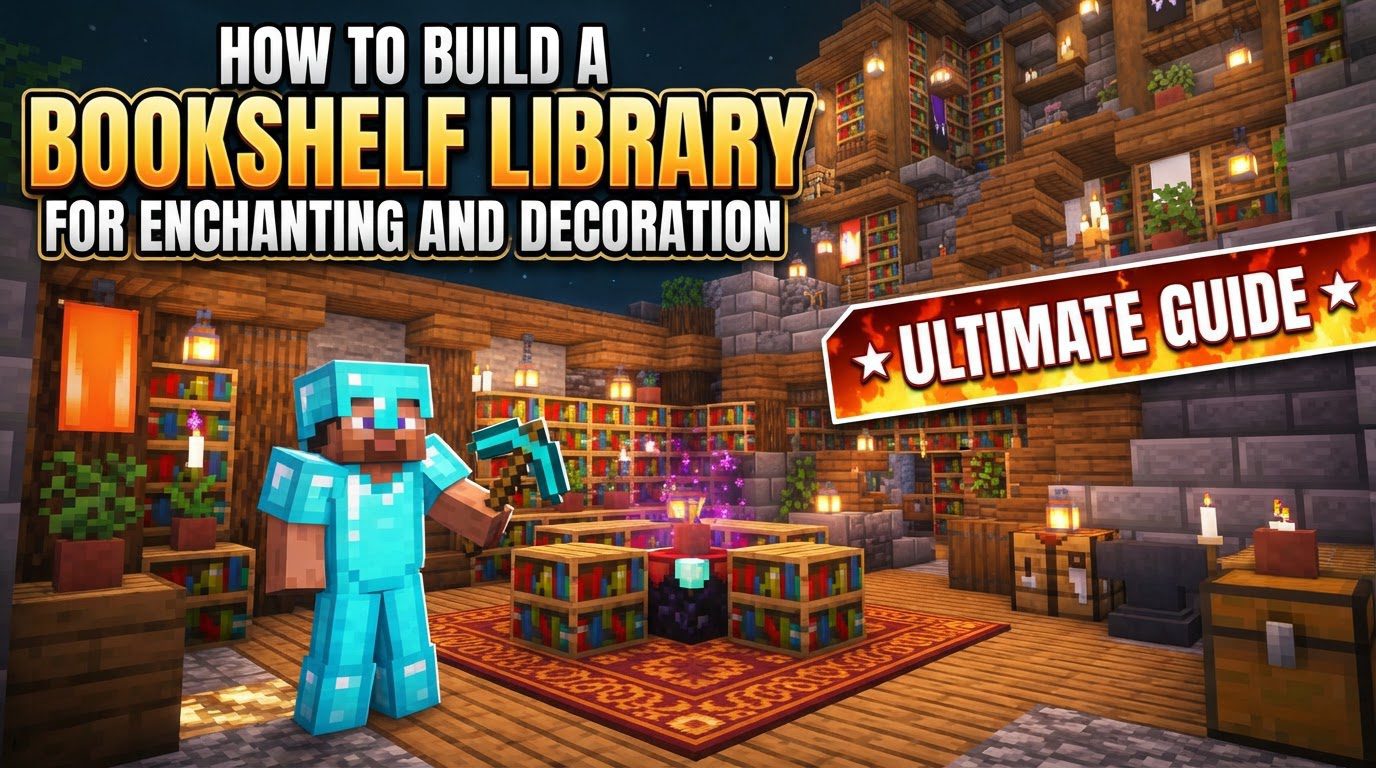
- Aesthetics and Lighting: While functionality is key, consider decorating the area around your enchanting setup to create an immersive and magical atmosphere. Use thematic blocks like chiseled bookshelves, deepslate, or even amethyst. For lighting, use overhead sources such as glowstone, sea lanterns, or shroomlights to illuminate the room without obstructing any of the crucial bookshelf gaps.
- Enchanting Books: You can also enchant plain books. Enchanted books can then be combined with items on an anvil to apply specific enchantments. This allows for greater control over the enchantments on your gear, as you can save powerful enchantments for later use or combine multiple enchantments onto a single item.
- Anvil Mechanics: When combining enchanted items or books on an anvil, always prioritize combining items that have fewer “anvil uses” first. This strategy helps to reduce the overall experience cost of combining and prevents items from becoming “Too Expensive” to further enchant.
Common Mistakes to Avoid
- Not Enough Bookshelves: Failing to place all 15 bookshelves correctly will prevent you from accessing level 30 enchantments. Always confirm the glyph particles from all contributing bookshelves.
- Blocking Bookshelves: This is a very common error. Any block, no matter how transparent (e.g., torches, carpets, glass panes, flowers), placed in the one-block air gap between a bookshelf and the enchanting table will deactivate that bookshelf. Ensure the space is completely empty.
- Insufficient Experience Levels: Even with a perfect 15-bookshelf setup, you need to be at least experience level 30 to select the highest-tier enchantments. Grind for experience before attempting to get the best enchantments.
- Ignoring Random Enchantments: The enchantments offered are pseudo-random. If you don’t see what you want, don’t waste valuable resources on an undesirable enchantment. Instead, choose the cheapest available enchantment (often a level 1 enchantment on a book or a disposable tool) to refresh the list. You can later use a grindstone to remove unwanted enchantments from items and regain some of the experience points spent.
- Not Prioritizing Anvil Enchantments: Inefficiently combining enchantments on an anvil can quickly lead to an item becoming “Too Expensive” to enchant further. Always combine the enchantments in the most cost-effective order, typically by combining items with fewer prior “anvil uses” first.
By following these guidelines, you can construct a highly functional and visually appealing enchanting library, unlocking the full potential of magic in your Minecraft world and empowering your gear to face any challenge the game throws at you.