Building a Multi-farm AFK Island
Building a multi-farm AFK island in Minecraft is a highly effective way to automate resource generation, allowing players to gather vast quantities of items while away from their keyboard. This comprehensive guide will walk you through the essential mechanics, step-by-step construction, important tips, and common pitfalls to avoid when creating your ultimate automated island.
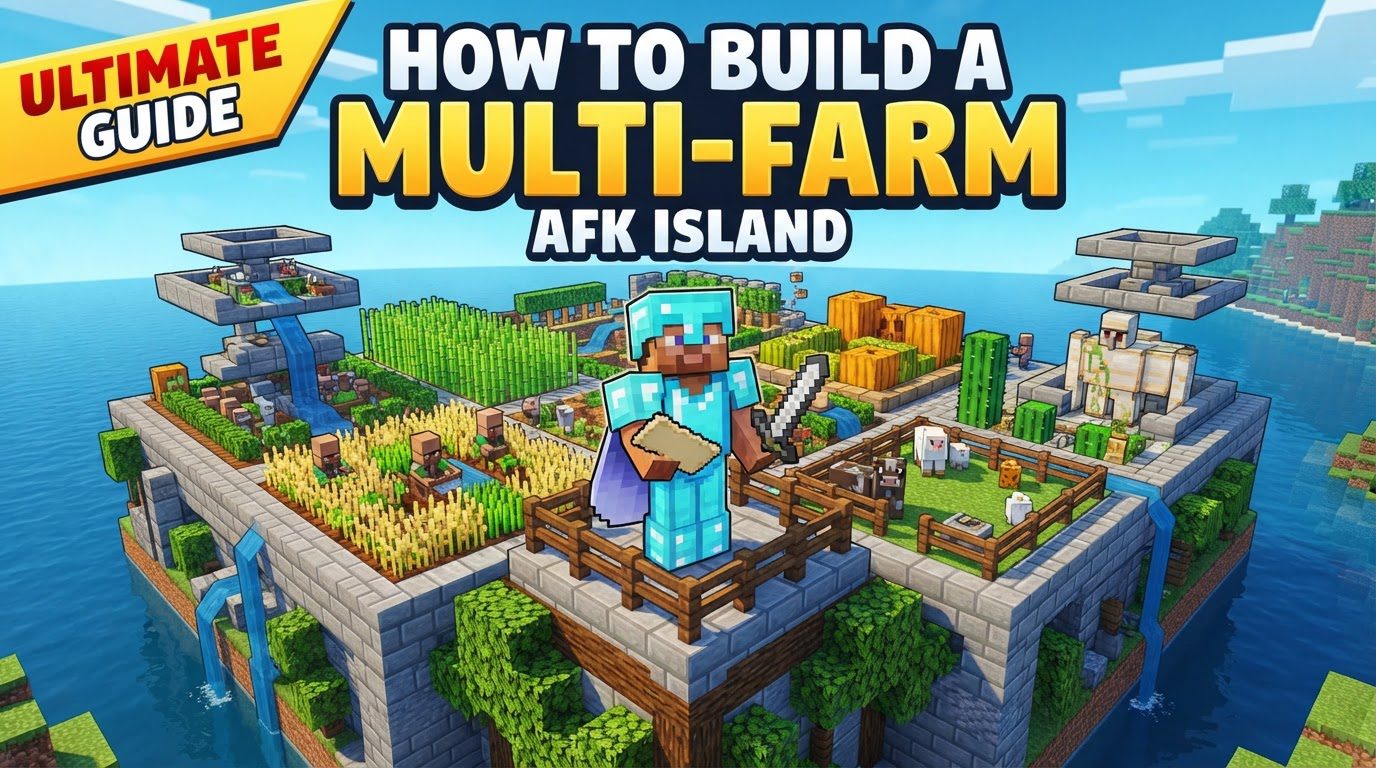
Key Mechanics for AFK Farms
Understanding the fundamental game mechanics is crucial for designing and operating efficient AFK farms. These principles dictate how farms function and interact with the game world.
- Chunk Loading: For any farm to operate autonomously while you are AFK, the game chunks containing that farm must be actively loaded. The most reliable method for continuous operation in the Overworld is to build within “spawn chunks,” which are always loaded when a player is present in the dimension. Alternatively, your AFK spot must be strategically positioned to keep the relevant chunks loaded.
- Mob Spawning Sphere: Mobs, particularly hostile ones, adhere to specific spawning rules. They will only spawn within a certain radius around a player, typically between 24 and 128 blocks. Conversely, mobs will despawn if they move too far away from the player. Your AFK spot must be precisely placed to maximize the spawning rate within your designated farms while ensuring unwanted mobs outside your farms despawn efficiently.
- Mob Cap: Minecraft imposes a limit on the total number of hostile mobs that can exist simultaneously within a loaded area. If this “mob cap” is filled by mobs outside your intended farm, your farm’s efficiency will plummet. Effective multi-farm designs often incorporate “split-density” strategies or meticulous spawn-proofing to guarantee that the mob cap is predominantly filled by the mobs your farm is designed to produce.
- Light Levels: Light plays a critical role in mob spawning and crop growth. Hostile mobs, with few exceptions, require a light level of 0 to spawn. Conversely, most crop farms necessitate adequate light exposure or direct access to the sky for optimal growth. Balancing these light requirements is essential when integrating different farm types.
- Redstone Automation: The backbone of many AFK farms is redstone circuitry. Components such as observers, pistons, dispensers, comparators, and repeaters are used to automate various processes. This includes harvesting crops, shearing animals, dispensing items, or triggering mechanisms for mob crushing. Mastering basic redstone is key to advanced farm automation.
- Item Collection: Efficiently gathering the drops from your farms is paramount. Hoppers are the primary tool for collecting items from blocks or entities and moving them into storage. Hopper minecarts are particularly useful for collecting items across larger areas or where direct hopper placement is impractical due to block constraints.
- Water/Lava Mechanics: These fluids are versatile tools in farm design. Water streams are frequently employed for transporting mobs to a kill chamber, washing harvested crops into collection systems, or even generating resources like cobblestone. Lava can be used for mob dispatch or as a light source.
Step-by-Step Process for Building Your AFK Island
Constructing a multi-farm AFK island requires careful planning and execution. Follow these steps to build a functional and efficient setup.
- Choose a Location: The initial choice of location is critical. Building your island over an ocean biome is highly recommended for mob farms. This minimizes the number of unwanted mob spawns in surrounding areas, which could otherwise fill the mob cap. For farms requiring constant operation regardless of player proximity, being within the spawn chunks offers significant benefits.
- Design Individual Farms: Before commencing construction, plan each specific farm you intend to include. This could range from a basic mob farm to an iron golem farm, a variety of crop farms, or even a fishing farm. Consider the unique mechanics, space requirements, and resource needs of each farm to ensure they can be integrated effectively into your island design.
- Create an AFK Spot: Establish a central AFK platform. This spot is where your character will stand to keep all desired farms active simultaneously. It must be positioned within the active range of all farms, typically 24-128 blocks from the areas where mobs are intended to spawn or crops are meant to grow. Careful placement ensures maximum operational coverage.
- Spawn-Proof Surrounding Areas: This is a crucial step, especially for mob farms. Thoroughly light up or slab/water-log all areas within the mob spawning sphere that are *outside* your intended farms. Preventing unwanted mob spawns from filling the mob cap elsewhere is vital for the efficiency of your dedicated mob farms. Without proper spawn-proofing, your farms will underperform.
- Build Collection Systems: Integrate robust item collection systems for each farm. Utilize hoppers, water streams, and chests to automatically collect and transport all generated items. Design a central storage system on your island where these items can be sorted and stored, ensuring that your farms can run for extended periods without storage becoming a bottleneck.
- Automate with Redstone: Implement the necessary redstone circuits for automated functions. This includes systems for automatic harvesting of crops, efficient mob dispatch mechanisms, or any other farm-specific automation. Ensure your redstone designs are compact and reliable to prevent lag and ensure consistent operation.
- Test and Optimize: Once built, rigorously test each farm individually to confirm it functions as intended. After individual testing, activate all farms together from your AFK spot. Make adjustments as needed, optimizing layouts, redstone timings, and collection routes to maximize efficiency and overall resource generation.
Important Tips for Your AFK Island
Beyond the core steps, these tips can significantly enhance the performance and design of your multi-farm AFK island.
- Build High (for Mob Farms): For optimal rates in mob farms, construct them high in the sky. This strategy moves the farm far away from any other spawnable blocks on the ground, effectively concentrating all potential mob spawns within your farm’s designated spawning platforms.
- Use Specific Blocks: Certain blocks offer unique advantages for particular farms. For instance, using mud can boost the growth rate of sugarcane, while podzol provides a suitable surface for mushroom farms, demonstrating the importance of material choice.
- Tileable Designs: Whenever possible, opt for farm designs that are “tileable.” This means the design can be easily replicated and placed side-by-side without interfering with adjacent units, allowing you to scale up production simply by adding more modules.
- Resource Friendly AFK: If you are playing on a multiplayer server, be mindful of the impact of your AFK farms. Light up surrounding areas to prevent unwanted mob spawns, avoid excessively complex redstone that could cause lag, and consider limiting your AFK time to be considerate of other players and server performance.
- Utilize Hopper Minecarts: For collecting drops over a particularly large area or in situations where direct hopper placement is restricted (e.g., across a wide floor or under a complex mechanism), hopper minecarts running on rails are an incredibly effective and versatile solution.
Common Mistakes to Avoid
Being aware of these common pitfalls can save you significant time and frustration during the construction and operation of your AFK island.
- Not Spawn-Proofing: Failing to adequately illuminate or otherwise prevent mob spawns in areas outside your farm is a critical error. This will allow unwanted mobs to fill the global mob cap, drastically reducing the efficiency and output of your dedicated mob farms.
- Incorrect AFK Spot: The precise placement of your AFK spot is paramount. If it’s too close to your farm, mobs might instantly despawn. If it’s too far, mobs may not spawn at all, or the chunks containing your farm may unload, halting operations.
- Building in River Biomes: River biomes are generally unsuitable for mob farms because mobs typically do not spawn in these areas. Always check the biome of your chosen location before committing to a large-scale mob farm build.
- Inefficient Redstone: Overly complex, poorly timed, or badly optimized redstone circuits can lead to a multitude of problems. This includes causing significant game lag, frequent malfunctions, or simply not performing its intended function efficiently, hindering overall farm performance.
- Ignoring Mob Caps: A common oversight is not understanding the mob cap mechanic. If the mob cap is already filled by entities outside your farm (due to lack of spawn-proofing), your farm will produce very few mobs, if any, leading to severe underperformance.
- Lack of Storage: Without sufficient and expandable storage solutions, your farms will eventually cease production once all collection chests are full. Always plan for ample storage capacity and consider automated sorting systems to manage the influx of items.