

Understanding Minecraft’s New Year-based Version Numbering, Explained
Minecraft, a game renowned for its continuous evolution, is set to introduce a significant change to its version numbering system starting in 2026. This overhaul reflects Mojang’s strategic shift from delivering one or two large, annual content updates to a more dynamic model of frequent “game drops” throughout the year. This new, year-based numbering system is designed to bring greater transparency and organization to how updates are identified and understood across both Java and Bedrock Editions of the game. It aims to provide players, content creators, and mod developers with an immediate understanding of an update’s release timing and its nature, simplifying the often-complex world of Minecraft version compatibility and progression.
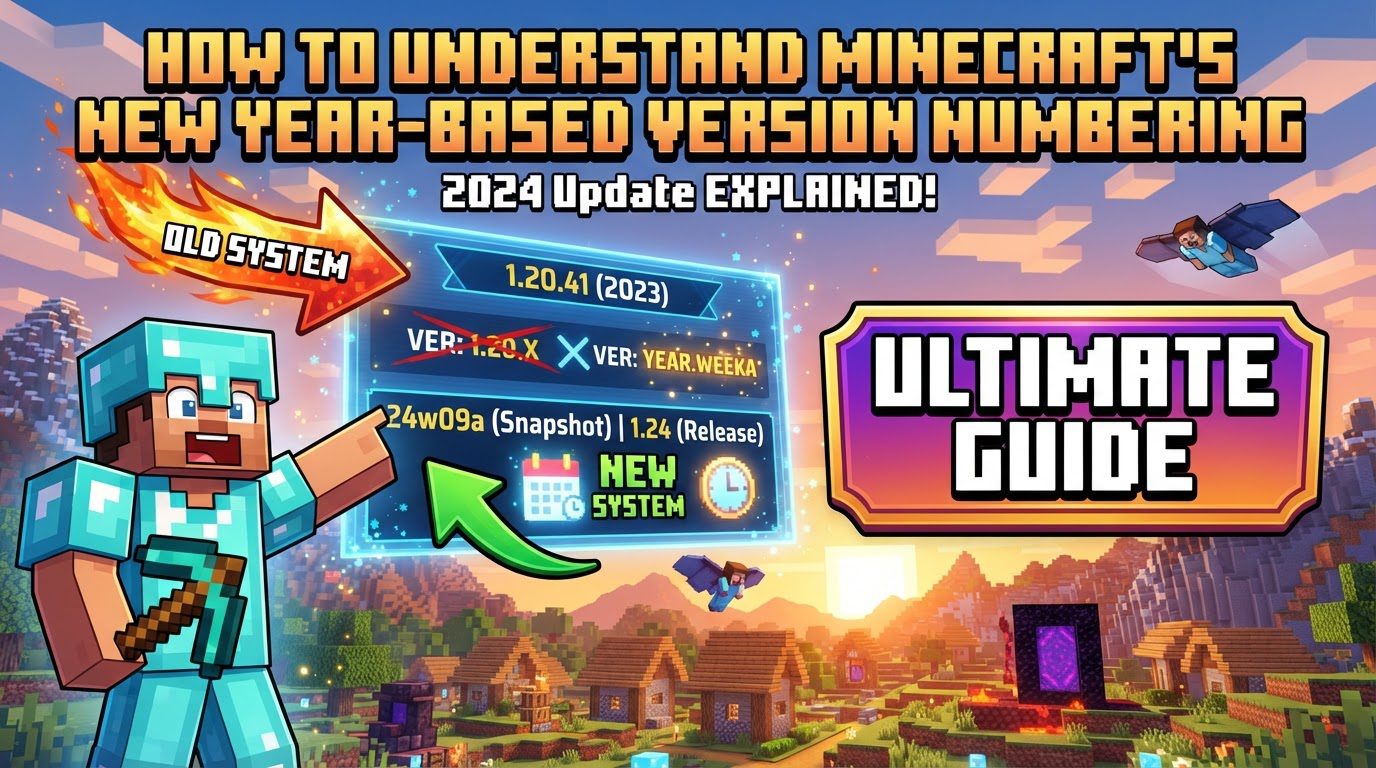
Understanding the New System: Key Mechanics
The core of the new version numbering system revolves around a calendar year prefix, ensuring that every update released from 2026 onwards clearly indicates its year of origin. This fundamental change applies universally to both Minecraft: Java Edition and Minecraft: Bedrock Edition, establishing a common ground for version identification.
- Year Prefix: Beginning in 2026, all version numbers will commence with the last two digits of the calendar year. For instance, any update released in 2026 will have a version number starting with ’26’. This immediate visual cue helps users ascertain the age of an update at a glance.
- Release Number for Game Drops: Following the year prefix, a release number will be used to denote which “game drop” the update represents within that specific year. As Mojang moves towards more frequent, smaller content releases, this number will incrementally identify each significant content package delivered throughout the year. For example, ‘26.1’ would signify the first major game drop of 2026, while ‘26.2’ would be the second.
-
Patch and Hotfix Numbering: The subsequent numbering for patches and hotfixes will diverge between Java and Bedrock Editions due to their distinct development cycles and platform considerations.
- For Java Edition, a third number will typically be appended to indicate a patch or hotfix for a specific game drop. So, ‘26.3.1’ would represent the first patch for the third game drop of 2026. This hierarchical structure allows for precise tracking of minor revisions.
- For Bedrock Edition, hotfixes often increment the second number, leading to higher values in that position. This means that instead of a separate third number, a Bedrock version like ‘25.50’ might represent a release that has undergone multiple micro-updates or hotfixes within its broader content release cycle. This reflects Bedrock’s typically more frequent update cadence across its diverse platforms.
- Streamlined Snapshots: Even the experimental snapshot versions will adopt a more streamlined numbering convention. Instead of the previous ‘YYwWWa/b’ format (e.g., ’25w41a’), snapshots will now include their intended version in their names, such as “25.4-snapshot-1”. This makes it much clearer which future main release a given snapshot is previewing.
Interpreting a Version Number: A Step-by-Step Guide
Understanding the new version numbering system is straightforward once you grasp its components. Let’s break down how to interpret these new identifiers for both Java and Bedrock Editions.
-
Step 1: Identify the Calendar Year (First Two Digits)
- The very first two digits of any new version number, appearing before the first decimal point, will always represent the calendar year in which the update was released. For instance, if you see a version number like 26.1 or 26.45, the ’26’ immediately tells you that this particular update was released in the year 2026. This provides an instant chronological reference point for any new content.
-
Step 2: Determine the Major Release or “Game Drop” (Number After First Decimal)
- The number immediately following the year prefix, and before any subsequent decimal points, indicates the specific major release or “game drop” within that year. This signifies a distinct package of content or features.
- For example, in a Java Edition version like 26.1.3, the ‘.1’ denotes that this is the first major content drop released in 2026. If you encounter 26.5 (Bedrock) or 26.5.0 (Java), the ‘.5’ would indicate it’s the fifth significant content release of that year.
-
Step 3: Identify Patches or Hotfixes (Java Edition Specific)
- For Java Edition, if a third number is present after a second decimal point, it signifies a patch or hotfix specifically for that particular game drop. These are typically minor updates addressing bugs, performance issues, or small adjustments without introducing new major content.
- Consider the Java version 26.3.1. Here, ’26’ is the year (2026), ‘.3’ is the third game drop of that year, and ‘.1’ indicates that this is the first patch released for that third game drop. A subsequent patch for the same game drop would be ‘26.3.2’.
-
Step 4: Understand Bedrock Edition’s Hotfix Convention
- Bedrock Edition handles hotfixes differently. Instead of adding a third number, hotfixes often cause the second number (the “game drop” identifier) to increment to a higher value, even for micro-updates. This means the second number can become quite high, reflecting multiple small updates within a broader release cycle.
- For instance, a Bedrock version might progress from 25.48 to 25.49, and then to 25.50. In this scenario, ’25’ is the year (2025), and the ‘.48’, ‘.49’, ‘.50’ represent sequential updates, where the latter numbers likely include hotfixes or minor adjustments to the general content stream of that period. This pattern reflects Bedrock’s typically more granular and frequent release schedule.
Benefits and Clarity: Why This Change Matters
The introduction of this new year-based version numbering system is not merely a cosmetic change; it’s a strategic move by Mojang designed to significantly enhance clarity and organization across the Minecraft ecosystem. The benefits extend to all members of the community, from casual players to dedicated content creators and mod developers.
- Greater Clarity for All Users: The primary objective of this new system is to provide unparalleled clarity. By embedding the release year directly into the version number, players can instantly identify how recent an update is. This helps in understanding the timeline of content additions and changes within the game.
- Identifying Update Type: The structure of the new numbers also makes it easier to discern the nature of an update. A version like ‘26.1’ clearly signals a major content “game drop,” whereas ‘26.1.1’ (for Java) indicates a patch or hotfix. This distinction is crucial for managing expectations and understanding the scope of changes.
- Streamlined Experience for Creators and Modders: For the vibrant community of Minecraft modders and content creators, this system offers substantial advantages. Knowing the exact release year and the specific game drop allows them to more accurately plan for compatibility updates, develop new content, and troubleshoot issues. It simplifies the process of identifying which game version their creations are compatible with, reducing confusion and effort.
- Enhanced Cross-Edition Understanding: The shared year prefix (e.g., ’26’ for both Java and Bedrock versions released in 2026) is a key feature that will make it simpler to understand which releases are contemporaneous across the two distinct editions of Minecraft. While their subsequent numbering will differ, this common starting point fosters a better overall understanding of the game’s development trajectory.
- Organizational Improvement, Not Gameplay Impact: It is important to emphasize that this change is fundamentally about clarity and organization. It is not expected to significantly alter the player experience itself. The way players interact with the game, build, explore, and create will remain consistent; the difference lies purely in how the updates that bring new content and fixes are labeled and understood.
Navigating the New System: Common Pitfalls to Avoid
While the new year-based version numbering system is designed for clarity, understanding some common misconceptions and differences is crucial for a smooth transition. Being aware of these potential pitfalls will help players, creators, and modders avoid confusion.
- Do Not Confuse Java and Bedrock Numbering After the Year Prefix: One of the most critical distinctions to remember is that while both Java and Bedrock Editions will share the initial year prefix, their subsequent numbering will continue to differ significantly. This is due to their unique development pipelines, release cadences, and platform-specific requirements. For example, ‘26.1.1’ for Java Edition will not have a direct, identical counterpart in Bedrock Edition’s numbering. Always pay attention to the specific edition you are dealing with when looking beyond the initial year.
- Remember That Only Releases From 2026 Onwards Use This System: It is vital to understand that this new numbering convention is forward-looking. Any Minecraft version released before 2026 will retain its traditional ‘1.x.x’ numbering scheme. For instance, the ‘1.20’ or ‘1.21’ updates will not be retroactively renumbered. This means that for a period, players will interact with both the old and new systems, depending on the age of the game version they are referencing or playing. Ensure you do not expect older versions to suddenly conform to the ‘YY.X’ format.
- Understand the Shift to “Game Drops” Over Large Annual Updates: The underlying reason for this numbering change is Mojang’s strategic shift in content delivery. Previously, Minecraft was characterized by fewer, larger annual updates (like “Caves & Cliffs” or “Trails & Tales”). The new system is a direct response to a model of more frequent, smaller “game drops” throughout the year. This means players should adjust their expectations from waiting for one massive content dump to anticipating several, more manageable content additions spread across the calendar. Misunderstanding this philosophical shift can lead to misinterpretations of the version numbers themselves, as each ‘game drop’ number signifies a distinct content release, not just a minor patch.
Tags:
YOU MAY ALSO LIKE...


