

Tropical Fish Variant Combinations
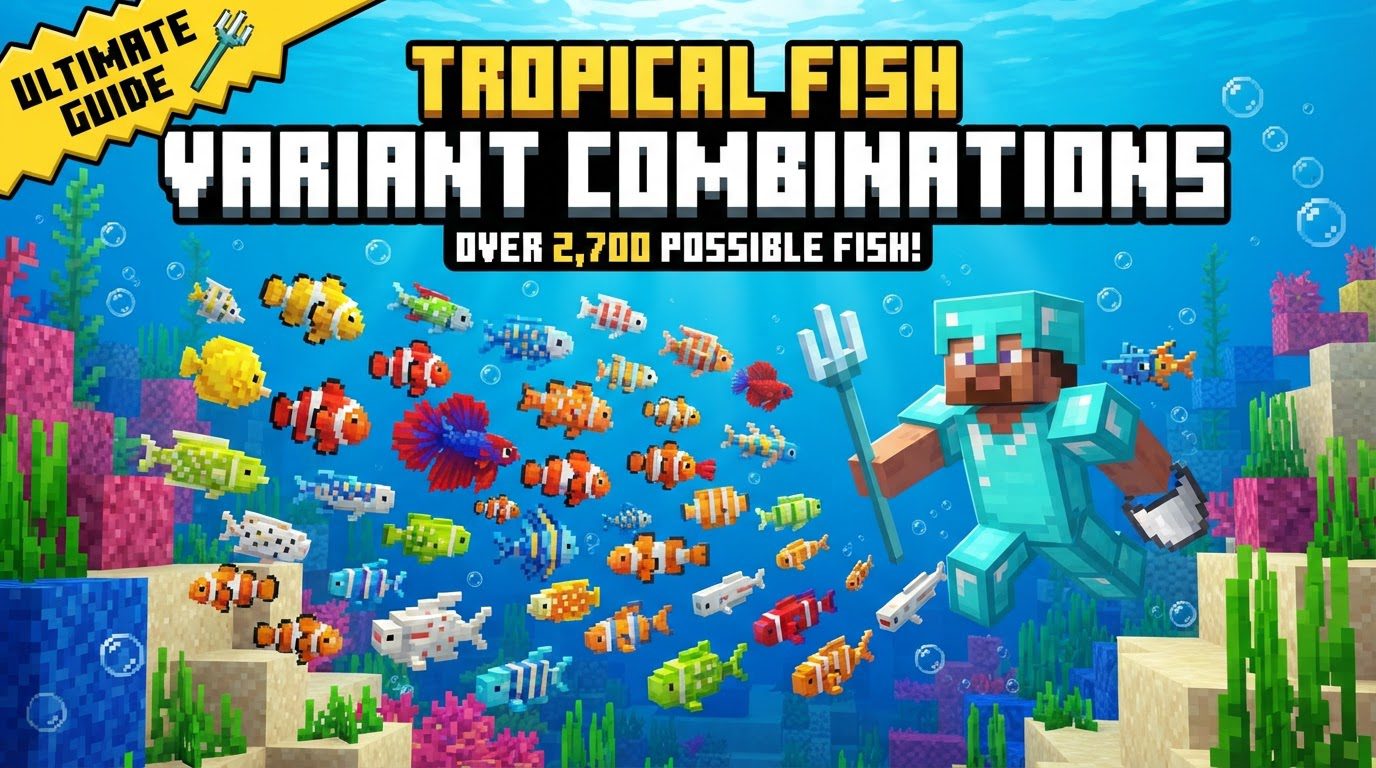
A single tropical fish in Minecraft can have over 2,700 naturally occurring variant combinations, making it one of the most diverse mobs in the game. This incredible variety stems from a sophisticated system of shapes, patterns, and colors, offering players a truly unique visual experience with each encounter. Understanding how these variants are generated and how to collect them is key to appreciating the vibrant aquatic life Minecraft has to offer.
The Unfathomable Depths of Variety
The sheer number of tropical fish variants is a testament to Minecraft’s intricate design. Each tropical fish is a mosaic of specific attributes: two distinct shapes, six unique patterns, 15 possible base colors, and 15 possible pattern colors. When combined, these elements create a staggering potential for diversity. While the theoretical maximum is much higher, the game’s spawning mechanics focus on a practical range, allowing for up to 2,700 naturally occurring combinations that players can discover in the wild.
Interestingly, natural spawns don’t always fully utilize this vast spectrum. A significant majority, approximately 90% of all naturally spawned tropical fish, will appear as one of 21-22 pre-defined, common varieties. This means that only about 10% of the fish you encounter will feature truly random patterns, sizes, and color combinations, making these rarer specimens a delightful find for collectors. It’s also important to note a specific color exclusion: the color black will never appear on any naturally spawned tropical fish, adding to the bright and lively aesthetic of these aquatic creatures.
Despite their colorful appearance and diverse forms, tropical fish are fundamentally passive aquatic mobs. They do not require any feeding to survive, nor do they interact with food items in any meaningful way. This is a critical distinction, especially for players accustomed to breeding other animals in Minecraft. Tropical fish are strictly spawn-based entities; they cannot be bred in Survival mode, making their collection a hunt for naturally occurring variants rather than a husbandry project.
Locating and Capturing Your Aquatic Treasures
Embarking on a quest for tropical fish variants begins with knowing where to look. These vibrant creatures thrive in specific ocean biomes and unique subterranean environments. Your primary hunting grounds will be warm oceans, lukewarm oceans, deep lukewarm oceans, lush caves, and mangrove swamps. Among these, coral reefs found within warm oceans stand out as particularly rich spawning grounds. These colorful underwater ecosystems are not only visually stunning but also offer the highest concentration and diversity of tropical fish, making them an ideal starting point for any collector.
Once you’ve located a tropical fish that catches your eye, capturing it is straightforward. All you need is an empty water bucket. Simply use the empty water bucket on the tropical fish, and it will be instantly captured, transforming your bucket into a “Bucket of Tropical Fish.” The magic of this mechanic is that the bucket preserves the exact variant of the fish, including its shape, pattern, and color scheme. This means you can transport your unique finds back to your base without fear of them changing or despawning.
For those seeking specific or custom variants beyond what nature offers, Minecraft’s command system provides unparalleled control. Players can use the /summon or /give commands, coupled with NBT (Named Binary Tag) data, to generate tropical fish with precise characteristics. This method allows for complete customization of a fish’s size, base color, and pattern color, opening up a world of possibilities for intricate aquarium designs or creative builds. Various online tropical fish generators are available to help players construct these complex commands, simplifying the process of creating their desired variants.
The Art of Collection and Display
Collecting tropical fish is more than just catching them; it’s about curating a vibrant display. Once a tropical fish is captured in a bucket, it gains a special property: it will not despawn. This makes bucketing them essential for creating permanent aquarium displays or keeping rare specimens indefinitely. You can release the fish into a custom-built tank at your base, and it will remain there, showcasing its unique variant for as long as you desire.
To efficiently acquire a wide array of variants, consider establishing a collection area or an outpost near a tropical fish spawning biome, particularly a coral reef in a warm ocean. This proximity will minimize travel time and maximize your chances of encountering new and exciting combinations. As you bucket fish, you can use advanced tooltips (activated by pressing F3+H in Java Edition) to view the specific variant information of the fish inside the “Bucket of Tropical Fish.” This allows for meticulous cataloging and helps you avoid collecting duplicates of common variants when hunting for rarer ones.
When venturing into command-based fish creation, the utility of online generators becomes even more apparent. These tools often provide intuitive interfaces where you can select specific shapes, patterns, and colors, and even adjust the fish’s size. The generator then outputs the precise /summon or /give command, complete with all the necessary NBT data, allowing you to spawn your perfectly customized fish directly into your world. This method is invaluable for map makers, server administrators, or creative players looking to populate their builds with exact aquatic specimens.
Navigating the Waters: Common Pitfalls
Despite their apparent simplicity, tropical fish can lead players down several misleading paths. Avoiding common mistakes will save time and prevent frustration.
- Attempting to Breed: This is by far the most prevalent misconception. Many players, familiar with Minecraft’s breeding mechanics for other mobs, will try to breed tropical fish using various food items. However, as established, tropical fish cannot be bred in vanilla Minecraft. Feeding them items will yield no offspring and is a wasted effort. Their population is solely dependent on natural spawning.
- Misidentifying “Baby” Fish: Some tropical fish naturally spawn at smaller sizes. These can often be mistaken for baby fish, leading players to believe they will grow or that breeding has somehow occurred. These small fish are, in fact, fully adult variants of their species and will not grow any further.
- Using Raw Fish for Axolotls: While tropical fish play a crucial role in axolotl breeding, it’s essential to use a Bucket of Tropical Fish for this purpose. Offering a raw tropical fish item to an axolotl will not trigger breeding. The axolotl specifically requires the live fish from the bucket.
- Ignoring Despawn Mechanics: Naturally spawned tropical fish, like most passive mobs, are subject to despawn mechanics. If a player moves too far away from them, or if the chunk unloads, these fish will disappear. To prevent the loss of a rare or desired variant, it is absolutely necessary to capture it in a water bucket. Only bucketing ensures its permanence in your world.
Understanding these nuances transforms the pursuit of tropical fish from a potentially frustrating endeavor into a rewarding and vibrant aspect of your Minecraft adventures. Whether you’re filling an elaborate aquarium or simply admiring the natural beauty of a coral reef, the diversity of tropical fish offers endless visual appeal.
Tags:
YOU MAY ALSO LIKE...


