

Minecraft Build Ideas for a Town
Many aspiring Minecraft town builders overlook the crucial first step: a coherent vision. Without a clear plan, even the most ambitious projects can devolve into a collection of disparate buildings, lacking the soul and functionality of a true community. Building a captivating Minecraft town is an art form, blending architecture, landscape design, and urban planning into a cohesive, living world.
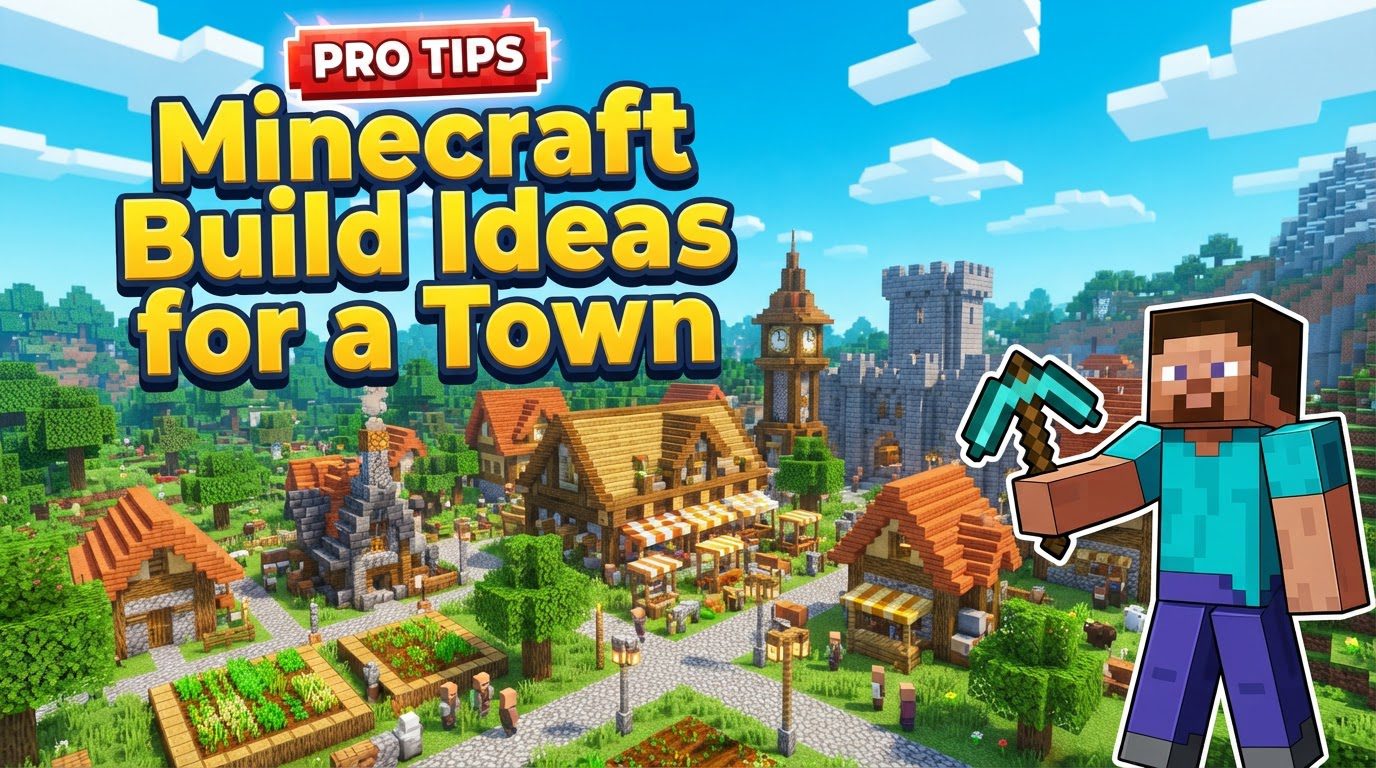
Laying the Groundwork: Strategic Planning and Layout
Before placing a single block, consider the canvas. The **biome** you choose dramatically influences your town’s aesthetic and available resources. A plains biome offers flat land for easy expansion, while a mountain range provides dramatic elevations and natural defenses. Coastal areas invite docks and lighthouses, and dense forests lend themselves to rustic, hidden villages.
Next, define your **town’s layout**. Will it follow a strict grid system, ideal for modern cities or efficient medieval towns? Or will it sprawl organically, with winding paths and irregularly shaped districts, evoking a more natural, evolving settlement? Designate distinct zones: a residential area, a commercial district, an agricultural sector, and perhaps an industrial hub. Plan for roads, public spaces, and future expansion. A simple sketch on paper or a rough outline in-game with wool blocks can save countless hours later.
The Heartbeat of the Town: Essential Structures
Every thriving town needs foundational buildings that serve practical purposes and define its character. Variety is key; avoid repetitive designs for each structure.
- Diverse Housing: From humble one-room cottages to multi-story mansions, apartment blocks, or even unique themed homes (e.g., mushroom houses, treehouses). Vary materials, roof styles, and sizes to reflect different social strata or architectural eras.
- Marketplace & Shops: A central market square with individual stalls for different goods (bakery, butcher, general store, blacksmith, library). Each shop can have a distinct facade and interior, hinting at its trade.
- Civic & Religious Buildings: A grand **Town Hall** for governance, a **Church or Temple** as a spiritual center, and perhaps a **Guard Tower or Barracks** for defense. These often serve as architectural focal points.
- Farms & Resource Hubs: Integrate automated crop farms, animal pens, tree farms, and mining outposts. These can be aesthetically pleasing additions or tucked away for efficiency.
Fostering Community: Public Spaces and Recreation
A town isn’t just buildings; it’s the spaces in between where life happens. These areas encourage interaction and add depth.
- Parks & Gardens: Lush green spaces with benches, fountains, custom trees, and flowerbeds. Pathways winding through them create a sense of tranquility.
- Plazas & Squares: Large open areas, often centered around a statue, monument, or clock tower. These are ideal for public gatherings and festivals.
- Entertainment Venues: A cozy **Tavern or Inn** for weary travelers, an outdoor **Amphitheater** for performances, or even a small **Arena** for friendly competitions.
- Water Features: Rivers, canals, lakes, or even elaborate fountains can break up monotonous terrain and add beauty. If your town is coastal, a **Dock or Harbor** with boats is essential.
The Veins of the Town: Infrastructure and Utilities
Efficient infrastructure makes a town functional and navigable, while also contributing significantly to its aesthetics.
- Roads, Paths & Bridges: Use varied materials like cobblestone, gravel, path blocks, or even concrete for different districts. Incorporate streetlights (lanterns, glowstone, redstone lamps) for safety and ambiance. Elegant bridges can span rivers or ravines, connecting disparate parts of your town.
- Lighting: Beyond basic torches, consider lanterns on posts, glowstone hidden under carpets, redstone lamps activated by daylight sensors, or even custom lampposts. Good lighting deters hostile mobs and enhances visual appeal.
- Walls & Gates: For defense or purely aesthetic reasons, a perimeter wall can define your town’s boundaries. Design impressive gates and watchtowers to control access and make a statement.
- Transportation Systems: Beyond roads, consider minecart tracks for quick travel between distant parts of your town or to resource outposts. Water elevators, Nether portals, and even basic flight paths (if applicable) can be integrated.
The Soul of the Town: Decorative Elements and Details
It’s the small touches that elevate a build from good to great. Pay attention to the details.
- Material Palettes: Avoid building everything from a single block type. Combine wood types, different stone variants (cobblestone, stone bricks, polished diorite), terracotta, concrete, and even glass to add texture and contrast. Experiment with gradients.
- Roofing: Don’t just make flat roofs. Use stairs and slabs to create pitched roofs, gables, dormers, and intricate patterns. Different materials for roofs (e.g., dark oak, terracotta, prismarine) can dramatically alter a building’s look.
- Landscaping & Terraforming: Modify the terrain to suit your vision. Create custom trees, rock formations, waterfalls, or even entire hills. Smooth out jagged edges or add natural imperfections.
- Interior Decor: Populate buildings with furniture (beds, tables, chairs), storage (chests, barrels), lighting, and decorative items. Use armor stands, item frames, banners, and paintings to add personality.
- Clutter & Micro-details: Add barrels, hay bales, flower pots, custom banners, signs, and even small piles of cobblestone or logs to make areas feel lived-in and natural.
Crafting a Narrative: Thematic Cohesion
Give your town a unique identity by adhering to a specific theme. This guides your architectural choices and overall atmosphere.
- Medieval Fantasy: Think castles, stone walls, timber-framed houses, cobblestone paths, and grand cathedrals. Dark oak, stone bricks, and spruce wood are common.
- Modern City: Focus on sleek designs, concrete, glass, steel (iron blocks, blackstone), and efficient layouts. Skyscrapers, modern art, and advanced infrastructure.
- Rustic / Wild West: Use acacia, dirt paths, simple wooden structures, and perhaps a saloon or sheriff’s office. Warm, earthy tones dominate.
- Steampunk: Incorporate copper, iron, intricate redstone contraptions, gears, and airships. A blend of industrial and ornate.
- Underwater / Sky City: Unique challenges require creative solutions with glass, prismarine, and specific lighting.
Beyond the Basics: Maximizing Potential
For the truly dedicated builder, there are always ways to push boundaries.
- Redstone Integration: Automate streetlights, create hidden entrances, design automatic farms, or build complex contraptions that add functionality and wonder to your town.
- Lore & Storytelling: Give each building, district, or even NPC villager a backstory. This adds immense depth and immersion, making your town feel truly alive.
- Community Collaboration: If playing on a server, involve other players. Delegate tasks, encourage unique contributions, and watch your town grow with diverse perspectives.
Building a Minecraft town is a journey, not a destination. It’s an iterative process of planning, building, refining, and expanding. Start with a vision, embrace creativity, and don’t be afraid to experiment. Your unique touch will transform blocks into a vibrant, unforgettable world.
Tags:
YOU MAY ALSO LIKE...


