

Minecraft Trident Farm
Acquiring a powerful trident in Minecraft can be a frustrating endeavor, with some players needing to eliminate over 100 Drowned just to get one to drop, even with enchantments. Fortunately, a well-designed trident farm can transform this rare find into a steady supply, providing one of the game’s most versatile weapons and tools.
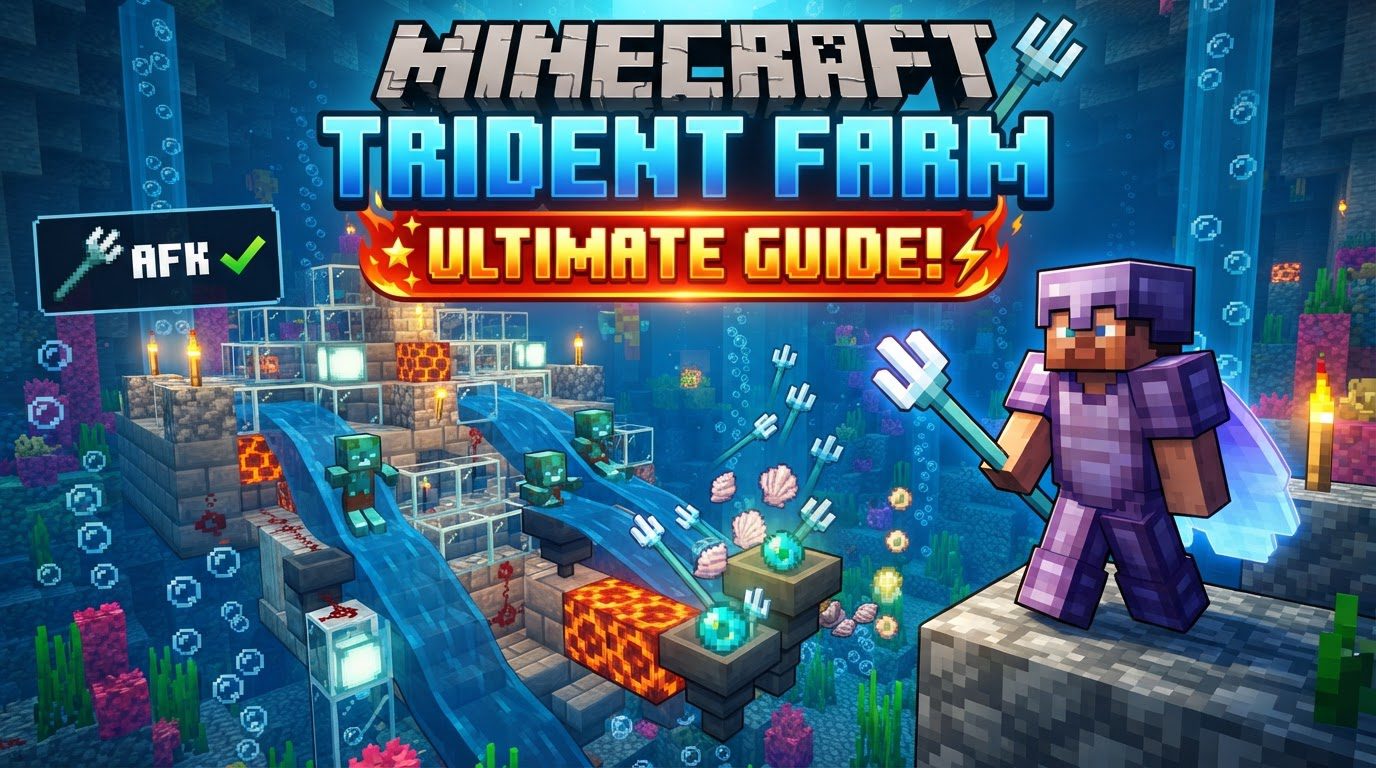
The Elusive Trident: Understanding Its Origins
Tridents are dropped exclusively by Drowned, the aquatic variant of zombies found in Minecraft’s watery biomes. However, not all Drowned carry tridents, and even those that do aren’t guaranteed to drop one upon defeat. This inherent rarity is why building an efficient farm is crucial for any player looking to harness the power of Loyalty, Riptide, or Channeling.
Optimal Biome Selection: The River Advantage
The single most critical factor in a trident farm’s success is its location. While Drowned can spawn in ocean biomes, their spawn rates are significantly higher and occur at any Y-level within a river biome. In contrast, ocean Drowned are largely limited to below Y=58. Building your farm in a river ensures a consistent and abundant supply of potential trident-wielders.
Drop Rates: A Tale of Two Editions
The chances of a Drowned dropping a trident differ notably between Minecraft editions:
- Bedrock Edition: Drowned have a 15% chance to spawn with a trident. With a sword enchanted with Looting III, approximately 1 in every 58 Drowned will drop a trident.
- Java Edition: Drowned have a lower 6.25% chance to spawn with a trident. Even with Looting III, you’ll need to defeat roughly 1 in every 139 Drowned to secure a trident.
This disparity means Bedrock players generally experience faster and more efficient trident farming.
The Mechanics of Mob Spawning and Despawning
For any mob farm to function, understanding Minecraft’s spawning mechanics is paramount. Mobs will only spawn when a player is within 24 to 128 blocks of the spawning area. Being too close (within 24 blocks) or too far (beyond 128 blocks) will halt spawns. Furthermore, Minecraft has a “mob cap” – a limit on how many hostile mobs can exist in the loaded chunks around a player. To ensure your farm is the primary recipient of this cap, you must either:
- Light up all surrounding caves and dark areas within a 128-block radius.
- Build your farm high in the sky, at least 128 blocks above the lowest ground level, effectively isolating it from natural ground spawns.
The Power of Looting III
The Looting III enchantment on your sword is not optional; it’s essential. This enchantment dramatically increases the drop rates of tridents and other valuable items from Drowned, making your farming efforts significantly more rewarding.
Constructing Your Aquatic Gauntlet: A Step-by-Step Blueprint
Building an effective trident farm involves several key components, meticulously designed to maximize Drowned spawns and item collection.
Step 1: Scouting the Perfect River Biome
Begin by locating a wide, unobstructed river biome. The wider the river, the more potential space for your spawning platforms. Consider a location away from dense cave systems if you prefer not to light up extensive areas.
Step 2: Elevating the Spawning Platform
To circumvent the mob cap issue, build your farm high in the sky. A common practice is to construct the main spawning platform around Y-level 200 within your chosen river biome. This platform can be a simple large flat surface or a more complex system utilizing flying machines, ice, and water to create multiple spawning layers. The goal is to maximize the water area where Drowned can appear.
Step 3: Engineering the Funneling System
Once Drowned spawn, they need to be moved to a central collection point. Water currents are the most efficient way to achieve this. Design your spawning platforms so that water flows towards a central drop shaft. Signs can be strategically placed to hold back water in certain areas while allowing Drowned to be pushed over edges and into the funnel.
Step 4: The Killing Chamber
At the bottom of your drop shaft, create a killing chamber. Several methods are viable:
- Fall Damage: Design the drop to be just long enough to reduce Drowned to one hit point, allowing for easy manual kills with a Looting III sword. Hay blocks can be placed at the bottom to soften falls for the Drowned, ensuring they don’t die from fall damage if you prefer to finish them yourself.
- Magma Blocks: For fully automated farms, a floor of magma blocks will slowly kill Drowned, providing hands-free item collection. Be aware that this method does not benefit from Looting III unless the player deals the final blow.
- Player Killing Platform: A simple platform where Drowned are funneled into a confined space, allowing you to stand and strike them with your Looting III sword. This is generally the most efficient for trident drops due to the enchantment.
Step 5: The Item Collection System
Directly beneath your killing chamber, install a system of hoppers that feed into chests. This will automatically collect all dropped items, including tridents, rotten flesh, gold ingots, and nautilus shells, as they fall from the defeated Drowned.
Step 6: Establishing the AFK Zone
Crucially, designate an AFK (Away From Keyboard) spot. This location must be between 24 and 128 blocks away from your Drowned spawning platforms. Standing here will keep the spawning chunks loaded and active, ensuring a continuous stream of Drowned for your farm.
Optimizing Your Haul: Advanced Tips for Trident Farmers
Beyond the basic build, a few expert strategies can significantly boost your farm’s output.
- Prioritize Looting III: Never operate your farm without a Looting III sword for manual kills. The difference in trident yield is substantial.
- Maximum Elevation: Reiterate the importance of building at least 128 blocks above the nearest ground. This is the most reliable way to prevent the mob cap from being filled by unwanted spawns in caves or on the surface.
- Edition-Specific Advantages: If you play Bedrock Edition, embrace its higher spawn and drop rates. Consider incorporating sea turtle eggs into your design, as Drowned are attracted to them, potentially drawing them into your funnel more effectively.
- Player Protection: When engaging Drowned directly, equip robust armor, especially with Respiration III for extended underwater breathing and Depth Strider III for faster movement. A shield and high-quality food are also invaluable.
- Visual Aids: In Java Edition, pressing F3+B will display mob hitboxes. This can help you identify Drowned more easily in murky water and precisely target them or their dropped tridents.
Common Pitfalls: What to Avoid
Even seasoned players can make mistakes that hinder farm efficiency. Be mindful of these common issues:
- Incorrect Biome Selection: Building outside a river biome will drastically reduce Drowned spawn rates, making your efforts largely fruitless.
- Improper AFK Distance: Standing too close or too far from the spawning area will completely halt mob spawns, rendering the farm inactive.
- Unaccounted for Spawns: Failing to light up nearby caves or building too low can lead to other hostile mobs filling the mob cap, preventing Drowned from spawning in your farm.
- Zombie Nautilus Interference: After the “Mounts of Mayhem” update, Drowned can spawn riding Zombie Nautilus. These combinations can get stuck in funneling systems. If using magma blocks for automated killing, the Nautilus will die, allowing the Drowned to proceed. For manual farms, you may need to clear them periodically.
- Build Heightmap Issues: Occasionally, poorly designed roofs or platforms above your spawning area can interfere with the game’s heightmap calculations, subtly impacting spawn rates. Ensure your design is open and clear above the spawning layers.
Beyond the Trident: Extra Loot
While tridents are the primary goal, your farm will also yield other useful resources. You’ll accumulate large quantities of rotten flesh, which can be traded with cleric villagers or used for dog food. Gold ingots are another common drop, valuable for bartering with Piglins. Finally, nautilus shells, required for crafting Conduits, will also flow into your collection system, adding another layer of utility to your aquatic endeavor.
A well-built trident farm is a testament to Minecraft engineering, transforming a rare and powerful weapon into a readily available resource. By understanding the core mechanics and avoiding common pitfalls, you can establish a highly efficient system that keeps you well-equipped for all your aquatic adventures and beyond.
Tags:
YOU MAY ALSO LIKE...


