

Minecraft Farm 3d
When players talk about a “Minecraft Farm 3D,” they’re often referring to one of two distinct, yet equally impactful, concepts within the game: either the architectural strategy of building multi-level, vertical farms to maximize space and efficiency, or a specific resource pack that dramatically enhances the visual appearance of plants by rendering them in three dimensions. Both interpretations contribute significantly to different facets of the Minecraft experience, from optimizing resource gathering to enriching visual immersion.
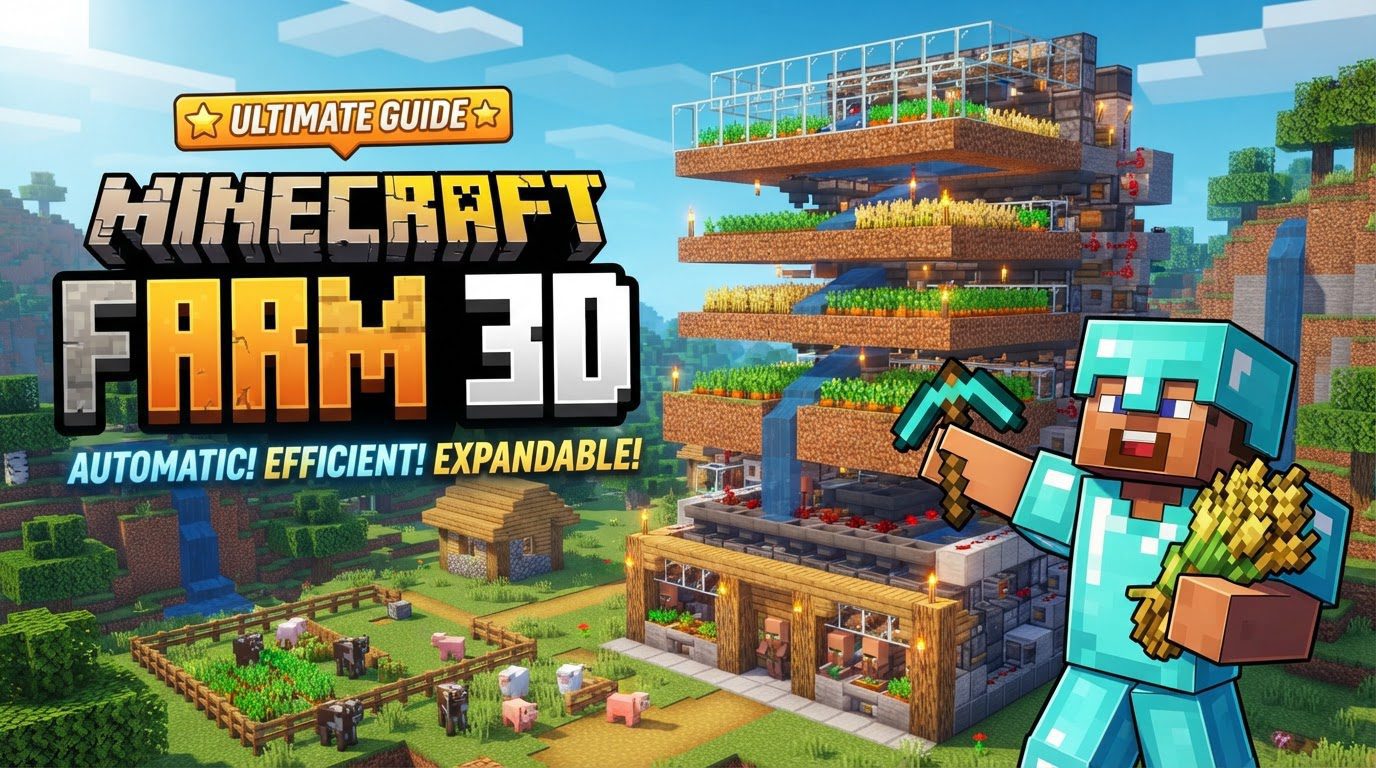
The Architectural Marvel: Vertical and Multi-level Farms
At its core, a vertical or multi-level farm in Minecraft is an ingenious solution to a common problem: how to produce vast quantities of crops without consuming an exorbitant amount of precious ground space. These farms leverage the game’s mechanics to stack layers of cultivation, often incorporating advanced automation to streamline the harvesting process. The “3D” aspect here refers to the farm’s physical structure, extending upwards rather than just spreading across a flat plane.
The Science Behind the Stacks: Core Mechanics
- Water Hydration: The bedrock of any efficient Minecraft farm is water. A single water block possesses the remarkable ability to hydrate farmland up to four blocks away in all cardinal directions. This creates a perfect 9×9 square of hydrated land, with the water block at its center. Understanding this mechanic is crucial for designing farms that ensure every crop receives adequate moisture, leading to faster growth and preventing farmland from reverting to dirt.
- Redstone Automation: For those seeking peak efficiency, Redstone is the answer. Many advanced vertical farms are designed to be fully automatic, utilizing intricate Redstone mechanisms. Pistons can push blocks, breaking mature crops; dispensers can release water flows to wash crops into collection channels; and observers can detect crop growth to trigger these systems. This transforms farming from a manual chore into a passive income stream.
- Villager Assistance: The humble villager, particularly one with a farmer profession, can be an invaluable asset. When provided with seeds and tilled ground within an enclosed area, farmer villagers will diligently plant and harvest crops. They can even replant automatically, making them ideal for truly hands-off farm designs. Strategic placement of hoppers can then collect the items villagers harvest.
- Crop-Specific Requirements: Not all crops are created equal, and their growth conditions vary. For instance, melons and pumpkins require an adjacent open dirt tile (or tilled soil) to spawn their fruit, meaning they cannot grow directly on every block of a tightly packed farm. Sugarcane, conversely, demands a water block directly next to it to thrive. Factoring these unique needs into your design is essential for maximizing yield.
Blueprint for Abundance: Step-by-Step Construction of a Vertical Farm
Building an automated vertical farm is a rewarding project that combines engineering with agriculture. Here’s a general process:
- Choose Location: Select a relatively flat area, ideally close to your base or storage systems. Consider future expansion and ensure there’s enough vertical clearance if you plan for many tiers.
- Establish Water Source: Begin by placing your water blocks. A common strategy is a central water block on each tier, hydrating a 9×9 area of farmland. Encase these water sources to prevent accidental spillage or disturbance.
- Construct Tiers: Build your initial layer of farmland, then create a structure to support subsequent layers above it. This often involves sturdy blocks forming the walls and ceiling of one layer, which then doubles as the floor for the next. Leave sufficient space between layers for crop growth and Redstone mechanisms.
- Implement Redstone for Harvesting: Design your Redstone system. This might involve a row of pistons at the base of each crop, triggered by a lever or observer, to push crops into a water stream. Alternatively, water dispensers can be timed to release water across the farmland, washing mature crops into collection hoppers that lead to chests.
- Incorporate Villagers (Optional but Efficient): If using villagers, create an enclosed space for them on each tier. Ensure they have access to the farmland and a way to deposit harvested items, typically through hoppers beneath their feet or integrated into the collection system. Remember they need a compost bin to take on the farmer profession.
- Lighting: Adequate lighting is paramount. Place torches, glowstone, sea lanterns, or other light sources throughout the farm to maintain a light level of 9 or higher on the farmland. This prevents hostile mob spawns, which can damage your farm or interfere with villagers, and ensures crops grow at their maximum rate.
Cultivating Success: Expert Tips for Your Farm
- Space Efficiency: Always prioritize designs that make the most of every block. Vertical farms excel here, but even within a single layer, thoughtful placement of water and crops can significantly boost yield per square meter.
- Bee Pollination: Introduce bees! Placing beehives or bee nests near your farm, especially with flowers nearby, can increase the growth speed of crops through pollination. This is a passive boost that requires minimal effort once set up.
- Bone Meal: Keep a steady supply of bone meal. While not for automated use in all designs, bone meal is an instant fertilizer that can rapidly accelerate crop growth, perfect for quick harvests or emergency supplies.
- Protection: Safeguard your hard work. Surround your farms with fences, walls, or even glass to prevent unwanted visitors-be it hostile mobs or even other players on a server-from trampling crops or otherwise interfering.
- Crop Rotation: While less critical for soil health in Minecraft than in real life, varying your crop types across different sections or tiers of your farm ensures a diverse supply of resources, from food to brewing ingredients.
Avoiding Common Pitfalls in Vertical Farming
- Inefficient Water Placement: A common oversight is not optimizing water sources. Unhydrated farmland leads to slower growth and can revert to dirt, destroying any planted crops. Always double-check your hydration radius.
- Trampling Crops: Walking or jumping on farmland will cause it to revert to dirt, destroying any crops. Design elevated pathways, use fence gates as access points, or implement water channels for collection to avoid direct contact with farmland.
- Lack of Lighting: Insufficient light levels will not only slow down crop growth but also create spawn points for hostile mobs. These mobs can destroy crops, attack players, or interfere with villagers.
- Ignoring Villager Mechanics: If you’re using villagers, understand their behavior. They need to be able to pathfind to crops, have enough inventory space for seeds, and be correctly contained to prevent them from wandering off or escaping.
The Visual Revolution: The “3D Farm” Resource Pack
Beyond the functional architecture, “Minecraft Farm 3D” can also refer to a purely aesthetic enhancement: the “3D Farm” resource pack. This pack is a visual overhaul designed to elevate the realism and depth of Minecraft’s agricultural and botanical elements. It transforms the often-flat, two-dimensional textures of plants into more intricate, three-dimensional models, breathing new life into your farm and natural surroundings.
Bringing Plants to Life: What the Pack Does
The “3D Farm” resource pack meticulously upgrades the appearance of numerous plants, making them feel more tangible and less like simple sprites:
- Sugar Cane: Instead of appearing as flat, intersecting planes, sugar cane textures are replaced with thick, rounded stems, giving them a more robust and realistic look.
- Flowers: Every flower in the game receives a significant upgrade, featuring detailed 3D petals and leaves that stand out from the block, making gardens and meadows far more vibrant and lifelike.
- Nether Fungi: Even the alien flora of the Nether benefits, with warped and crimson fungi gaining three-dimensional caps and stalks, enhancing the otherworldly atmosphere.
- Mushrooms: Both red and brown mushrooms are rendered with volumetric caps and stems, adding depth and organic feel whether found in dark caves or mushroom biomes.
- Potatoes, Carrots, and Beets: These staple food crops, typically represented by simple sprites, are transformed into actual 3D shapes. You’ll see distinct, rounded potatoes, tapered carrots, and bulbous beets emerging from the soil.
- Sweet Berries: The bushes that bear sweet berries become full and rounded, with individual berries often rendered in 3D, making them look ripe and inviting.
This resource pack doesn’t alter gameplay mechanics or efficiency; its sole purpose is to enhance visual immersion, making your meticulously crafted farms and the natural world around them feel more vibrant and realistic.
Whether you’re stacking layers of automated crop production or simply enjoying the visual fidelity of a 3D sugar cane, “Minecraft Farm 3D” represents a commitment to a richer, more engaging Minecraft experience.
Tags:
YOU MAY ALSO LIKE...


