

Minecraft How to Breed Frogs
The journey to breeding frogs in Minecraft often begins with a simple misunderstanding: that feeding two frogs automatically leads to new froglets hopping around. In reality, the process involves several critical steps, from gathering specific resources to understanding environmental factors that dictate the very color of your future amphibians.
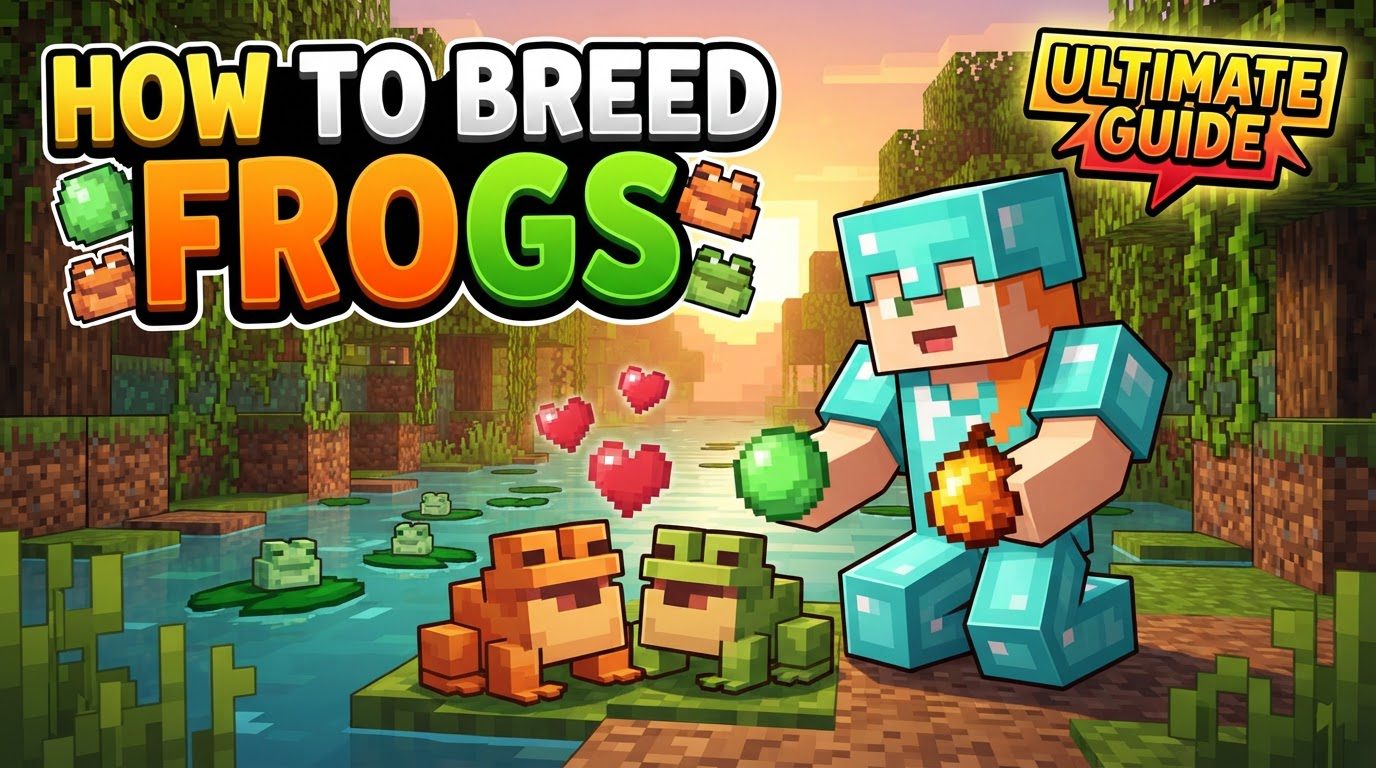
Understanding Minecraft’s Frogs
Frogs are delightful passive mobs that bring life and a unique aesthetic to your Minecraft world. They naturally spawn in groups of two to five within swamp and mangrove swamp biomes. While they might seem like simple creatures, their breeding cycle is surprisingly intricate, leading to tadpoles that can mature into one of three distinct variants: temperate (orange), warm (white), or cold (green). The ultimate color of your adult frog isn’t determined at birth, but rather by the biome temperature where its tadpole matures, adding an exciting layer of strategic planning to your breeding efforts.
The Essential Resource: Gathering Slimeballs
Before you can even think about coaxing two frogs into “love mode,” you’ll need a vital ingredient: slimeballs. These sticky items are the sole food source that will encourage frogs to breed. Obtaining slimeballs requires a bit of effort, as they are dropped by slimes. You can find slimes in a couple of primary locations:
- Swamp Biomes: Slimes frequently spawn in swamp biomes, particularly between layers 50 and 70, provided the light level is 7 or less. This makes swamp biomes a convenient location if you’re already there to find frogs.
- Slime Chunks: Specific, invisible “slime chunks” exist below layer 40 in any biome. If you manage to locate one of these chunks, slimes will consistently spawn there, making for a reliable farm once set up.
Ensure you have at least two slimeballs for your initial breeding pair, and ideally more if you plan to accelerate tadpole growth or breed multiple pairs.
Preparing the Perfect Breeding Ground
A common pitfall for aspiring frog breeders is neglecting the environment. Frogs don’t just lay eggs anywhere; they need specific conditions. To successfully breed frogs and obtain frogspawn, you must ensure there is a suitable water source block with air directly above it nearby. When one frog becomes “pregnant” after breeding, it will actively seek out a valid water source block within a 10-15 block radius to lay its frogspawn. Without this crucial element, your frogs will enter love mode, but no frogspawn will ever appear.
Therefore, before initiating the breeding process, construct a small pond or ensure an existing water body meets these criteria. A single block of still water with an open sky or air block above it is sufficient for the frogspawn to appear.
Initiating Love: The Breeding Ritual
With slimeballs in hand and a prepared breeding area, it’s time to bring your frogs together. The process is straightforward:
- Locate Two Frogs: Find two adult frogs in a swamp or mangrove swamp, or bring them to your prepared breeding area.
- Feed Them: Select your slimeballs and feed one to each of the two adult frogs. Right-click on each frog while holding a slimeball.
- Enter Love Mode: Hearts will immediately appear around the frogs, indicating they have entered “love mode.”
- The Pregnant Frog: One of the frogs will then become “pregnant.” This frog will begin to search for a suitable water block to lay its frogspawn.
- Lay Frogspawn: Once a suitable water block is found, the pregnant frog will lay a single frogspawn block on the surface of the water.
It’s important to note that frogspawn is a unique block that cannot be collected or moved once laid. Attempting to mine it will destroy it, so plan your breeding area carefully.
From Frogspawn to Tadpoles: The Hatching Process
Once the frogspawn has been laid, the waiting game begins. The frogspawn block will remain on the water’s surface for approximately 10 minutes of real-time before hatching. During this period, it’s crucial not to cover the frogspawn with any blocks, as this can prevent it from hatching successfully.
Upon hatching, the frogspawn will disappear, and 2 to 5 tiny tadpoles will emerge into the water. Tadpoles are considered a distinct mob from adult frogs and have their own unique characteristics and requirements.
- Transporting Tadpoles: Unlike frogspawn, tadpoles can be easily transported. By using an empty bucket on a tadpole, you can scoop it up into a “Bucket of Tadpole.” This allows you to move them safely to different locations, which is essential for influencing their eventual frog variant.
- Tadpole Vulnerability: Tadpoles are fragile. They will die if left on land for too long, so ensure they remain in water. Additionally, axolotls, another aquatic mob, are natural predators of tadpoles and will actively attack them. Protect your tadpoles by keeping them away from axolotls.
Guiding Growth: Raising Tadpoles and Cultivating Frog Variants
Tadpoles are not born as frogs; they must mature. After approximately 20 minutes in real-time, a tadpole will grow into a full-sized frog. However, this is where the biome temperature becomes critically important for determining the adult frog’s color:
- Temperate Biomes: If a tadpole matures in a temperate biome (such as a forest, plains, or swamp), it will grow into an orange “Temperate Frog.”
- Warm Biomes: Should a tadpole mature in a warm biome (like a desert, savanna, or jungle), it will transform into a white “Warm Frog.”
- Cold Biomes: Tadpoles maturing in cold biomes (such as snowy tundras, frozen oceans, or mountains) will become green “Cold Frogs.”
This means that if you desire a specific frog variant, you must use a bucket to transport the tadpole to the biome with the corresponding temperature *before* it matures. This is a common mistake players make, expecting the frogspawn’s location to dictate the outcome. Remember, it’s the tadpole’s maturation environment that matters.
You can also accelerate a tadpole’s growth by feeding it slimeballs, just like you would an adult frog. This can be useful if you’re trying to quickly produce a specific frog type or simply grow your frog population faster.
Expert Tips for a Thriving Frog Farm
To maximize your frog breeding success, consider these additional tips:
- Lead Frogs: Holding a slimeball in your hand will make frogs follow you within a 6-block radius. This is incredibly useful for guiding wild frogs to your designated breeding area without needing to resort to leads.
- Protect Your Young: As mentioned, axolotls are a threat to tadpoles. If you have axolotls in your aquatic environment, consider a separate, protected area for your tadpoles to mature.
- Cold Climate Considerations: If you’re breeding tadpoles in cold biomes, be mindful of freezing water. Build a deep pool to prevent the water from turning into ice, which would be detrimental to your tadpoles.
- Breeding Cooldowns: Be aware of breeding cooldowns. On Java Edition, frogs have a 5-minute cooldown before they can breed again. On Bedrock Edition, this cooldown is a much shorter 1 minute. Plan your breeding sessions accordingly.
Troubleshooting: Avoiding Common Breeding Blunders
Even with careful planning, issues can arise. Here are solutions to common problems:
- No Frogspawn Appearing: This is almost always due to improper water conditions. Double-check that the water is a source block (not flowing water) and has an air block directly above it. Also, ensure the pregnant frog has an accessible water block within 10-15 blocks.
- Frogspawn Not Hatching: Frogspawn takes time to hatch, approximately 10 real-world minutes. Be patient. Do not place any blocks over the frogspawn, as this will prevent it from hatching.
- Tadpoles Dying: Tadpoles require water to survive. If they are on land for too long, they will perish. Keep them in water at all times. Also, protect them from axolotls, which will attack them on sight.
- Wrong Frog Type: The most frequent cause of an unexpected frog color is misunderstanding the maturation mechanic. The frog’s color is determined by the biome where the tadpole matures, not where the frogspawn was laid. If you want a specific color, scoop the tadpoles into buckets and release them in the correct biome before they grow into adult frogs.
By understanding these mechanics and avoiding common mistakes, you’ll be well on your way to cultivating a vibrant and diverse frog population in your Minecraft world, adding a touch of amphibian charm to your base.
Tags:
YOU MAY ALSO LIKE...


