

Minecraft How to Breed Bees
Many aspiring beekeepers in Minecraft overlook one crucial detail when attempting to expand their buzzing colonies: the simple flower. While seemingly straightforward, the art of breeding bees hinges entirely on this vibrant block, acting as the sole catalyst for their reproduction. Understanding this fundamental mechanic is the first step towards a thriving apiary, brimming with honey and buzzing with new life.
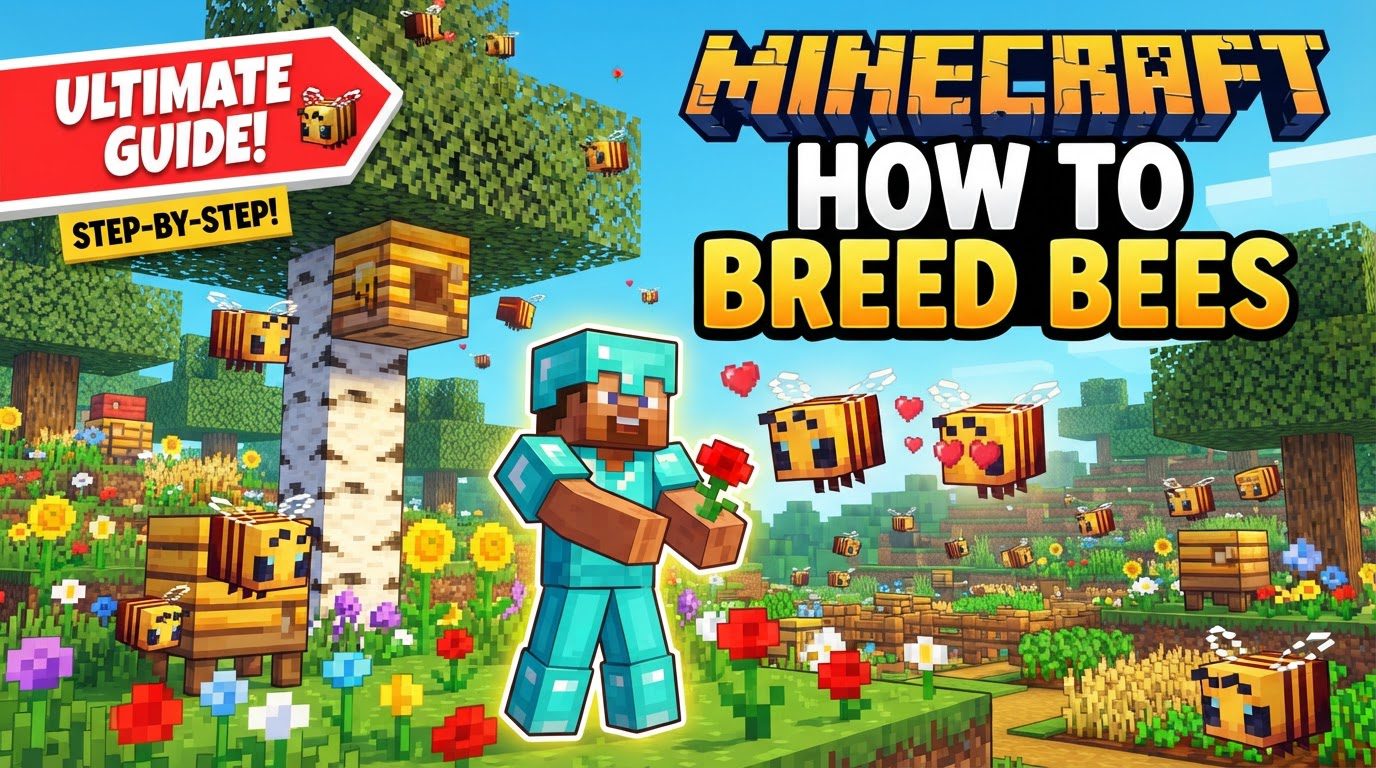
Breeding bees in Minecraft is a surprisingly simple process, yet it’s essential for anyone looking to establish or expand their honey-producing operations. Whether you’re aiming for more honey, greater pollination for your crops, or simply a larger, more active bee farm, knowing how to encourage these flying insects to reproduce is a core skill. This guide will walk you through the precise steps, explain the underlying mechanics, and help you avoid common missteps, ensuring your bee breeding endeavors are a resounding success.
The Buzz of Life: Understanding Core Breeding Mechanics
At its heart, bee breeding in Minecraft is governed by a few key principles. These mechanics dictate how bees enter their reproductive state and what the outcome of a successful breeding attempt will be. Grasping these fundamentals is crucial before you even begin to gather your resources.
- The Floral Catalyst: Bees require flowers to enter what players commonly refer to as “love mode.” Much like other passive mobs in Minecraft, a specific item must be presented to them to trigger their desire to breed. For bees, this item is any type of flower. Without a flower, no amount of coaxing will encourage them to reproduce.
- A New Generation: A successful breeding attempt will always result in the spawning of a baby bee, also known as a bee nymph. This tiny, adorable creature will grow into an adult bee over time, eventually contributing to your colony’s honey production and pollination efforts. The new bee will inherit no special traits from its parents, it will simply be a standard bee.
These two mechanics form the foundation of all bee breeding strategies. Keep them in mind as you prepare to expand your buzzing workforce.
Gathering Your Tools: What You’ll Need
Before you can initiate the breeding process, you’ll need to ensure you have the correct components readily available. Fortunately, the requirements are minimal and easily obtainable within most Minecraft worlds.
- Two Adult Bees: You’ll need a pair of adult bees to serve as the parents for your new offspring. These can be wild bees you’ve found in a flower forest, plains, or sunflower plains biome, or bees you’ve already collected and housed in your own apiary. Ensure they are both adult bees, as baby bees cannot breed. They can be found flying around, collecting pollen, or resting inside a bee nest or beehive.
- Any Type of Flower: This is the crucial item. Minecraft features a wide variety of flowers, including poppies, dandelions, azure bluets, tulips (red, orange, white, pink), oxeye daisies, cornflowers, lily of the valley, sunflowers, and rose bushes. The good news is that any of these flower types will work equally well for breeding bees. There’s no need to search for a specific rare bloom; a handful of common dandelions will suffice perfectly.
Once you have located your two prospective parent bees and gathered a supply of flowers, you are ready to proceed with the breeding ritual.
The Mating Ritual: A Step-by-Step Guide to Breeding Bees
With your bees identified and your flowers in hand, the actual breeding process is quick and visually rewarding. Follow these steps precisely to ensure a successful outcome.
1. Locating Your Future Parents
The first crucial step in expanding your bee population is to identify two adult bees that will serve as the parents for your new generation. These industrious insects can often be found buzzing around flower fields in biomes like plains, forests, or sunflower plains. They typically reside in naturally generated bee nests, which can be found hanging from trees, or in player-crafted beehives. Observe their movements; ensure they are healthy and not agitated before approaching. If they are in a hive, wait for them to emerge or gently encourage them out by breaking the hive (though this will anger them if you don’t use a silk touch tool or a campfire underneath to collect honey first).
2. The Floral Offering
Once you have identified your two bees, ensure you have a flower selected in your hotbar. As mentioned, any type of flower will work. You only need one flower per bee you intend to feed, so having at least two flowers is necessary for one breeding pair.
3. Initiating Love Mode
Approach one of the adult bees while holding a flower in your hand. Right-click on the first bee. You will see a puff of particles, and the bee will consume the flower. Immediately after, approach the second adult bee and right-click on it with another flower. This action is what triggers their “love mode.”
4. Witnessing the Miracle
After both bees have been fed a flower, red hearts will visibly appear around them. These hearts signify that they are now in love mode and are actively breeding. The two bees will briefly come together, and almost instantly, a tiny baby bee will spawn on the ground nearby. This baby bee will be significantly smaller than its parents and will slowly grow into an adult over time. The parent bees will then have a cooldown period before they can breed again.
Nurturing Your Colony: Post-Breeding and General Tips
Successfully breeding bees is just one part of managing a thriving apiary. A few general tips will ensure your newly expanded colony remains productive and healthy.
- Strategic Flower Placement: While flowers are essential for breeding, their utility extends far beyond that. Ensure there are plenty of flowers planted near your bee hives or nests. Bees need flowers to collect pollen, which is then converted into honey. A good supply of nearby flowers means more efficient honey production and provides a constant resource for future breeding endeavors. Bees will actively seek out flowers within a certain radius of their hive.
- Home Sweet Home for All: Bees have a strong homing instinct. After collecting pollen or after a breeding event, they will typically return to their assigned beehive or bee nest. This also applies to their offspring. Baby bees, once spawned, will instinctively follow their parents or find their way back to the nearest available hive, ensuring your colony remains together and doesn’t wander off.
Avoiding the Sting: Common Breeding Mistakes
Even with a clear guide, players can sometimes encounter issues when trying to breed bees. Being aware of these common pitfalls can save you time and frustration.
- The Absent Bouquet: This is by far the most frequent mistake. Bees simply will not breed if they are not given flowers. If you’re right-clicking on bees and nothing is happening, double-check that you are holding a flower and that the bees are adult and not already on a breeding cooldown. Remember, each bee needs its own flower.
- A Home Displaced or Inaccessible: If you are attempting to manage bees within an enclosure or a dedicated farm, the placement of your bee nest or beehive is paramount. Ensure that the hive or nest is correctly placed and, most importantly, accessible to the bees. If the entrance to the hive is blocked by another block, or if the bees cannot pathfind to it easily, they may become confused or agitated. While this might not directly prevent breeding, it can disrupt their overall behavior, making it harder to manage them and potentially causing them to abandon the hive. Ensure there’s clear space around the hive’s entrance for them to fly in and out.
By understanding these mechanics, following the straightforward steps, and avoiding common errors, you’ll find that breeding bees in Minecraft is a rewarding and simple process. Soon, your apiary will be bustling with a growing population, ready to produce all the honey and honeycomb you could ever need.
Tags:
YOU MAY ALSO LIKE...


