

Minecraft Build Ideas Easy
Many Minecraft players, regardless of skill level, often find themselves staring at a blank landscape, wondering where to begin their next creative endeavor. The vastness of the game can be intimidating, but building in Minecraft doesn’t have to start with monumental castles or intricate redstone contraptions. In fact, some of the most satisfying and foundational experiences come from mastering simple, yet effective, build ideas.
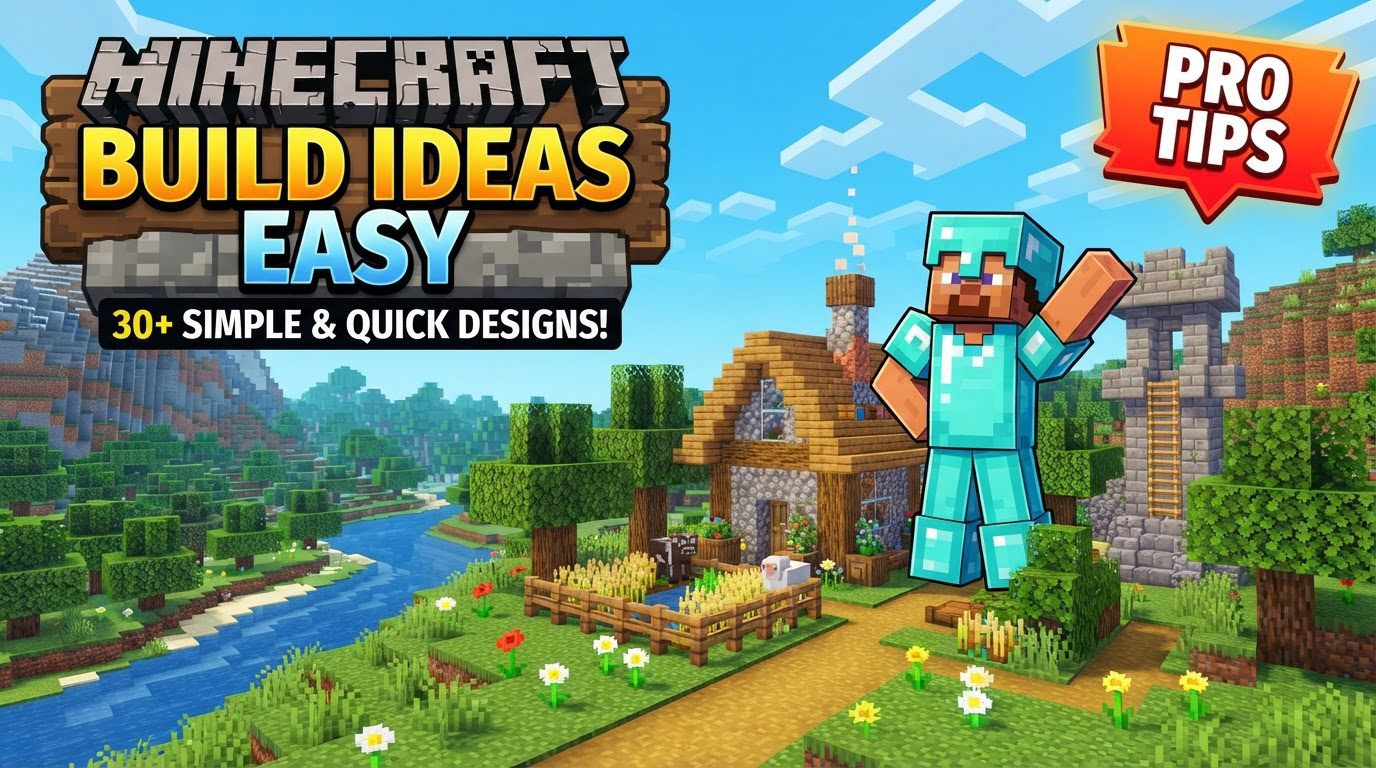
This guide is designed for anyone looking to add structure and charm to their world without needing advanced architectural degrees or an inventory full of rare resources. We’ll explore a variety of easy-to-construct projects that are perfect for beginners, or for seasoned players seeking quick, impactful additions. The beauty of these builds lies in their simplicity, often relying on common blocks and straightforward designs, allowing you to focus on creativity and personal touches rather than complex mechanics.
Establishing Your First Foothold: Simple Starter Homes
A functional and aesthetically pleasing starter home is often the first major project in any survival world. Forget sprawling mansions; an easy starter home prioritizes shelter, basic storage, and a crafting area. The simplest form is a 5×5 or 7×7 cube made of dirt or wood planks. However, even these basic structures can be elevated with minimal effort.
- The Classic Wooden Cabin: Start with a square or rectangular footprint using wood planks. Add a simple gable or pyramid roof using stairs of the same wood type. Incorporate windows (glass panes or simple holes) and a door. For an easy aesthetic upgrade, swap out some plain wall blocks for logs at the corners or as horizontal beams. A small porch with a fence and gate adds character.
- Cobblestone Bunker: Robust and fireproof, a cobblestone house is incredibly practical. Build a basic square, then experiment with depth by recessing windows or adding a small overhang around the roofline. Stone stairs can create a more refined roof than just blocks.
- Underground Dugout: For ultimate simplicity and early game safety, dig directly into a hill or straight down. Carve out rooms, add torches, and reinforce the entrance with a door. This allows you to gather resources for a more elaborate above-ground structure at your leisure.
Remember, the goal is shelter and functionality. You can always expand or rebuild later. Focus on making it your own with small details like a flower pot by the door or a small pathway leading up to it.
Cultivating Your World: Essential & Easy Farms
Farming is crucial for survival and progression, and many efficient farm designs are surprisingly simple. You don’t need complex redstone to get started; manual or semi-automatic farms are incredibly easy to set up.
- Basic Crop Farm: Dig a 9×9 square, place a water source in the center, and hoe the surrounding dirt. Plant wheat, carrots, potatoes, or beetroot. For an easy aesthetic, enclose it with a simple fence and gate, and add torches for light. You can easily stack these in layers for more output.
- Animal Pens: Create fenced enclosures for passive mobs like cows, pigs, sheep, and chickens. Make them large enough to allow for breeding, and provide a water trough (a single water block or a cauldron) and some hay bales for decoration. Remember to feed them their respective breeding items (wheat for cows/sheep, carrots/potatoes for pigs, seeds for chickens) to grow your herd.
- Tree Farm: A simple grid of dirt blocks (at least 2×2 spacing between saplings) allows you to grow trees efficiently. Plant various saplings and chop them down when mature. This is an easy way to ensure a steady supply of wood.
These farms can be expanded and automated later, but starting with these basic setups ensures you have a consistent food supply and resources.
Organizing Your Adventures: Practical Utility Structures
As your world grows, so does your need for organization and specialized stations. These utility builds are straightforward and make your Minecraft life much easier.
- Dedicated Storage Room: Instead of chests scattered everywhere, build a small room lined with chests. Use signs or item frames to label them for easy categorization (e.g., “Stone,” “Wood,” “Ores,” “Food”). This can be a simple 3×3 room with chests on all walls, or a larger space with multiple levels.
- Crafting & Smelting Hub: Consolidate your crafting table, furnaces, blast furnaces, and smokers into one convenient area. A simple alcove or a small shed works perfectly. Add a few chests nearby for raw materials and finished products.
- Enchanting Corner: Once you acquire obsidian and diamonds, set up an enchanting table. Surround it with bookshelves (at least 15 for maximum enchantments). A small, dimly lit room with a few decorative elements can make this a magical space.
- Brewing Stand: A small station with a brewing stand, a cauldron for water, and chests for ingredients (Nether Warts, Blaze Powder, various mob drops) is invaluable for potion making.
These structures don’t need to be grand; their primary purpose is functionality and accessibility, making your resource management more efficient.
Adding Character: Decorative Elements & Small Projects
Once you have your basic necessities covered, easy decorative builds can bring life and personality to your base and surrounding area.
- Pathways & Roads: Connect your different builds with simple pathways using dirt paths, gravel, cobblestone, or even a mix of different blocks. Add lanterns, torches, or glowstone for lighting. Varying block types and adding small bushes or flowers along the edges can make them feel more organic.
- Simple Gardens & Parks: Design small, fenced-off areas with a variety of flowers, tall grass, bushes (leaf blocks), and a water feature. A small pond with lily pads or a fountain made from a single water source block and stairs can be very charming.
- Custom Trees: Break away from the default tree shapes. Build a sturdy trunk using logs, then use leaf blocks (or green wool) to create a more varied, natural-looking canopy. This adds immediate visual interest to any landscape.
- Small Bridges: Span small rivers or ravines with simple arch bridges made of wood or stone. Incorporate fences as railings and add lanterns for a cozy feel.
- Campfire Area: A few logs arranged as seats around a campfire, possibly with a suspended cauldron over it, creates an inviting social spot.
These small additions might seem insignificant, but they collectively contribute to a more lived-in and engaging world.
Foundational Building Principles for Easy Success
Beyond specific ideas, adopting a few simple principles can dramatically improve your easy builds:
- Start Small and Iterate: Don’t try to build a mansion on your first try. Begin with a small, functional structure, then expand or refine it as you gather more resources and ideas.
- Embrace Common Blocks: Wood planks, cobblestone, dirt, and stone are abundant and versatile. Learn to make them look good before moving to rarer materials.
- Use Depth and Texture: Instead of flat walls, push some blocks inwards or outwards. Mix different but complementary blocks (e.g., cobblestone with stone bricks, or different wood types) to add visual interest.
- Lighting is Key: Torches, lanterns, glowstone, and sea lanterns not only prevent mob spawns but also dramatically improve the ambiance of your builds, both inside and out.
- Reference Real-World Examples: Look at pictures of real-world cabins, sheds, or gardens for inspiration. Simplify their designs to fit Minecraft’s blocky aesthetic.
- Don’t Fear Imperfection: Not every block needs to be perfectly symmetrical. Sometimes, a bit of asymmetry or a slightly “worn” look (using mossy cobblestone or cracked stone bricks) adds character.
Taking Easy Builds to the Next Level
Once you’re comfortable with these easy builds, you’ll find that the skills you’ve developed are directly transferable to more complex projects. Understanding basic shapes, material combinations, and the importance of detail will serve as a strong foundation. Experiment with different block palettes, try out more intricate roof designs, or integrate simple redstone mechanisms into your farms and doors. Minecraft is a journey of continuous learning and creativity, and every simple build is a stepping stone to your next grand creation.
Ultimately, the most important aspect of building in Minecraft is to have fun and express yourself. Don’t be afraid to experiment, make mistakes, and rebuild. The blocky canvas is yours to command, and even the simplest ideas can lead to incredibly rewarding experiences.
Tags:
YOU MAY ALSO LIKE...


