

Minecraft Build Ideas House
The most common architectural misstep in Minecraft isn’t a lack of resources or skill; it’s the dreaded “box house.” This simple, unadorned cube, while offering basic shelter, often leaves builders feeling uninspired and their creations looking bland. Yet, crafting a house in Minecraft is far more than just four walls and a roof. It’s an opportunity for creative expression, a functional hub, and a personal sanctuary in a world brimming with adventure and danger.
Understanding the Core Mechanics of Construction
At its core, building a house in Minecraft leverages a straightforward set of mechanics, yet these can be combined in infinitely complex ways. Houses are fundamentally constructed from the vast array of blocks available in the game. These include readily accessible options like wood planks and cobblestone, as well as more refined materials such as stone bricks and transparent glass. Early in the game, players often rely heavily on wood due to its ease of acquisition, making it an excellent material for initial shelters and more ambitious starter homes.
Basic structures typically begin with establishing pillars, commonly extending 4-5 blocks high to provide ample interior space. These pillars are then connected by horizontal beams, forming the skeletal framework of your dwelling. Once the framework is in place, the gaps are systematically filled to form the walls, enclosing the space. This fundamental method allows for structures of varying complexity, from simple single-story designs offering basic protection to elaborate multi-story edifices complete with intricate features like balconies, adding both aesthetic appeal and practical space.
The Blueprint of Your Sanctuary: A Step-by-Step Approach
Embarking on a Minecraft house build is best approached with a methodical process, ensuring both efficiency and a satisfactory outcome. Skipping crucial steps can lead to frustrating revisions later on.
- Planning Your Vision: Before placing a single block, take time to conceptualize. Decide on the overall size of your house, the architectural style you wish to emulate, and its general layout. Will it be compact or sprawling? Modern or rustic? This initial planning phase is crucial for guiding subsequent construction.
- Laying the Foundation: The bedrock of any good build is its foundation. Using a sturdy material, carefully lay out the base of your house. This defines the perimeter and provides a solid starting point for the walls.
- Erecting the Walls: With the foundation set, begin building up the walls. Select your chosen block type and ensure you build to a sufficient height. Remember the 4-5 block high pillar guideline for comfortable interior spaces.
- Crafting the Roof: A roof is essential for enclosing the structure and protecting against the elements and aerial mobs. Roofs can be as simple as a flat surface, more traditional with a sloped design using stairs, or incredibly intricate, incorporating various block types and shapes for a unique silhouette.
- Adding the Finer Details: Once the main structure is complete, it’s time to personalize. Install windows to allow light and views, and place doors for entry and exit. Move inside to add interior elements like furniture, crafting stations, storage chests, and crucial lighting to prevent hostile mob spawns.
Many experienced builders and community resources offer layer-by-layer instructions for a plethora of house designs, which can be an invaluable aid for those seeking specific aesthetics or struggling with complex structural elements.
Elevating Your Build: Advanced Tips for Aesthetic Appeal
Moving beyond basic functionality, several techniques can transform a plain structure into a captivating home. These tips focus on adding visual interest and integrating your house more effectively into the Minecraft world.
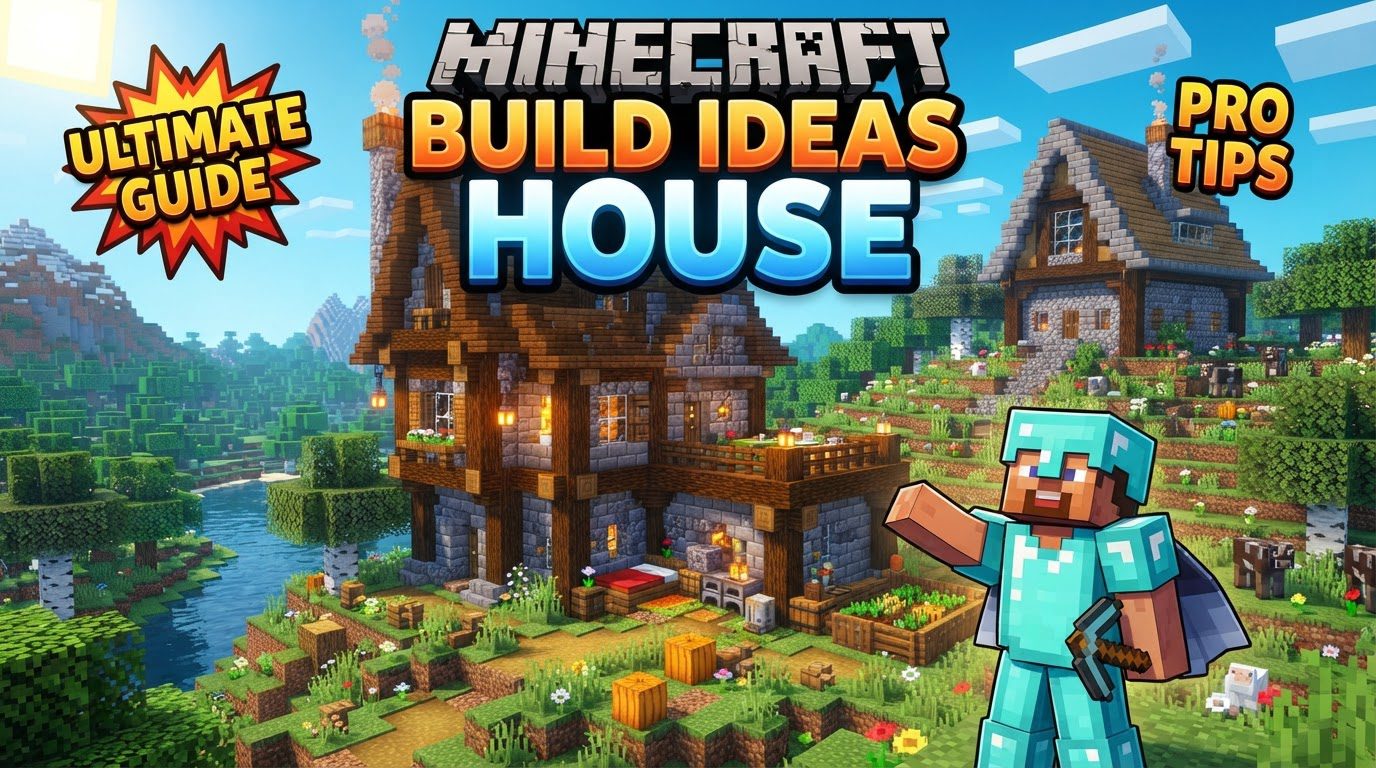
- Vary Materials: Avoid the monotony of a single block type. Use different block types for trim, accents, or even structural elements to break up large surfaces and add texture. For instance, cobblestone walls with wood plank frames, or stone brick foundations with regular stone walls, can create striking contrasts.
- Add Depth: Flat walls are often uninspiring. Introduce depth by incorporating elements that protrude or recede. Windows can be recessed, frames can be built around them, or slight protrusions like bay windows or exterior pillars can break the flatness. This adds shadows and visual complexity, making the build feel more substantial.
- Strategic Lighting: Adequate lighting is not just for aesthetics; it’s a critical safety measure. Ensure sufficient lighting inside and around your house to prevent hostile mob spawning. Torches are the simplest solution, but glowstone, sea lanterns, and even strategically placed lava can offer more integrated lighting solutions and enhance ambiance.
- Functionality Dictates Design: Consider the purpose of each room when designing your layout. A storage room will need ample space for chests, a crafting area might benefit from specific block arrangements for efficiency, and a bedroom should offer a sense of coziness. Designing with functionality in mind ensures your house isn’t just pretty but also practical.
- Seek Inspiration: Don’t limit your creativity to Minecraft’s blocky confines. Look at real-world architecture for structural ideas, roof designs, or even interior layouts. Similarly, exploring other players’ Minecraft builds can spark new ideas and teach you novel building techniques.
Avoiding Common Pitfalls: What Not to Do
While the journey of building is about creative exploration, being aware of common mistakes can save time and prevent disappointment. Rectifying these issues can significantly improve the quality and enjoyment of your Minecraft home.
- Flat, Boxy Designs: As mentioned, simple square or rectangular structures with no architectural variation are a common pitfall. These designs lack character and often feel uninspired. Challenge yourself to add alcoves, differing wall heights, or even irregular shapes to your footprint.
- Lack of Detail: Neglecting interior and exterior details can make even a well-structured house feel unfinished or bland. This includes everything from window sills and roof eaves on the outside to bookshelves, carpets, and potted plants on the inside. Details breathe life into your build.
- Poor Lighting: This is more than an aesthetic issue; it’s a matter of survival. Insufficient lighting inside a house creates dark spots where hostile mobs can spawn, turning your sanctuary into a danger zone. Always ensure every corner is well-lit.
- Monotonous Materials: Relying solely on one type of block for the entire structure is a quick way to create a visually unappealing build. Experiment with combinations of wood, stone, brick, and even rarer blocks to create rich textures and contrasts.
- Ignoring the Surroundings: A house plopped down without consideration for its environment often looks out of place. Integrate your house with the natural landscape. Build into hillsides, use existing terrain features, or incorporate gardens and pathways that blend with the biome.
Building a house in Minecraft is a journey of creativity, problem-solving, and personal expression. From the simplest dirt hovel to the grandest castle, each block placed contributes to a unique narrative. By understanding the core mechanics, following a structured building process, embracing techniques for aesthetic enhancement, and learning from common missteps, you can transform your blocky blueprints into truly remarkable and functional homes.
Tags:
YOU MAY ALSO LIKE...


