

Minecraft Build Ideas for Beginners
With over 120 unique block types, Minecraft offers an astonishing palette for creation, yet many new players feel daunted by the sheer freedom. The blocky landscape often presents a blank canvas, leaving beginners wondering where to even begin their architectural journey. Fear not, aspiring crafters! Building in Minecraft is a skill developed through practice, patience, and a dash of inspiration. This guide will equip you with foundational ideas and principles to transform your humble beginnings into impressive structures, one block at a time.
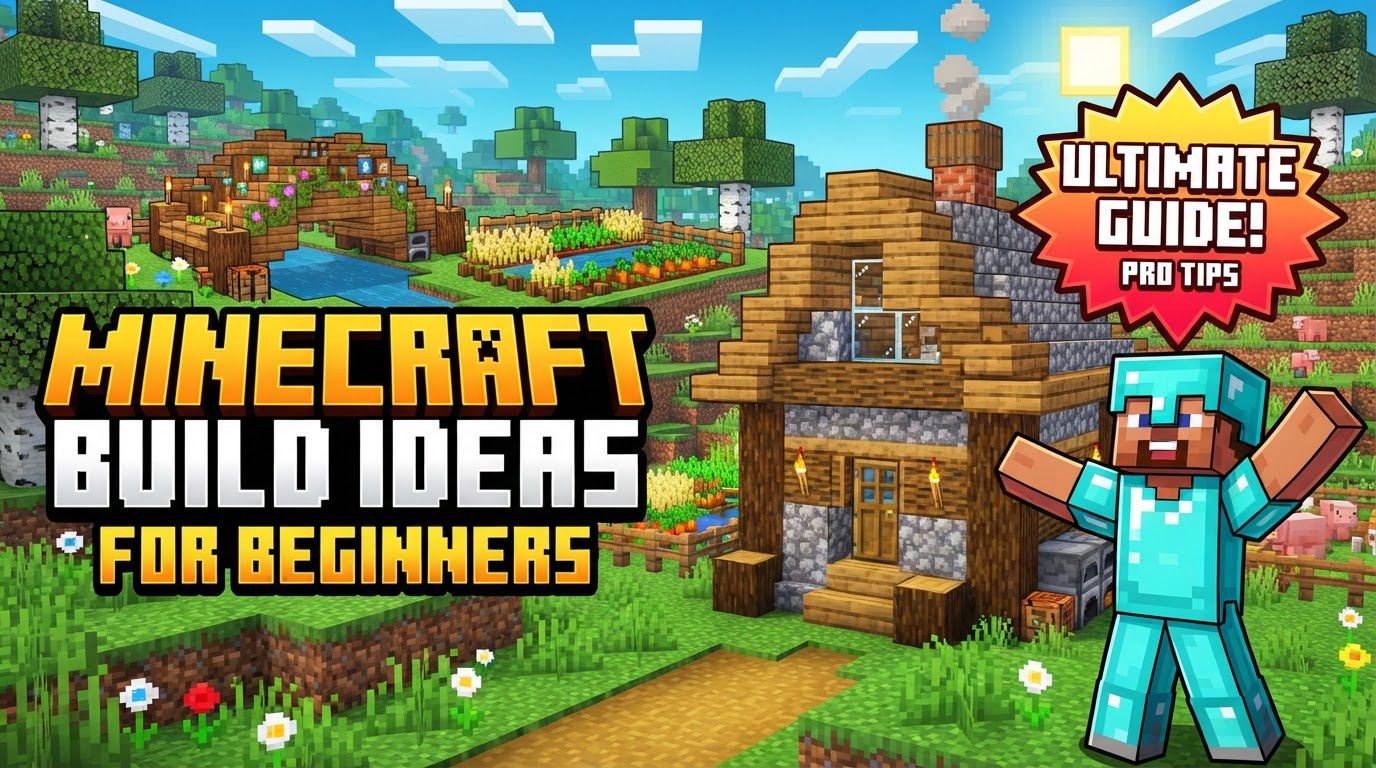
Your First Sanctuary: Building a Functional Starter Home
Every great adventure needs a safe haven, and in Minecraft, that begins with your first shelter. This isn’t just about protection from nocturnal monsters; it’s your respawn point, your storage hub, and your crafting station. For beginners, simplicity and efficiency are key.
- Gathering Materials: Start with readily available resources. Wood logs and planks (from trees) are excellent for walls and roofs, while cobblestone (mined from stone) offers better blast resistance and a different aesthetic. Dirt is an emergency material – quick to place, but easily broken and unsightly.
- Basic Design Principles:
- The Cube: While often mocked, a simple 5×5 or 7×7 cube is a perfect starting point. It’s easy to build and secure.
- Essential Features: Ensure your home has a reliable door (wooden doors are cheap), at least one window (glass panes or blocks), adequate lighting (torches prevent mob spawns inside), and a roof.
- Interior Layout: Inside, place a crafting table, a furnace, a bed (to set your respawn point and skip nights), and at least one chest for storage.
- Adding Depth and Detail: Even a simple house can look better with minor tweaks. Try extending the roof by one block for an overhang, adding a small porch with a fence, or using different wood types for trim around windows or corners. These small changes break up the monotonous flat surfaces.
Expanding Your Horizons: Essential Early-Game Infrastructure
Once your basic shelter is secure, it’s time to build structures that support your survival and progression. These aren’t just practical; they lay the groundwork for a more organized and efficient playstyle.
- The Productive Farm: Food is paramount. A simple farm for wheat, carrots, or potatoes is easy to construct.
- Design: Dig a 1-block deep trench, fill it with water (a single water source block can hydrate a 9×9 area), and surround it with tilled dirt. Plant your seeds.
- Lighting: Ensure plenty of light (torches or sunlight) for crops to grow.
- Accessibility: Build fences or walls around it to keep passive mobs in and hostile mobs out.
- Organized Storage System: As you gather more items, chests will quickly fill up. A dedicated storage room is invaluable.
- Layout: Designate a room or an area within your base. Place double chests side-by-side or stacked.
- Labeling: Use item frames or signs above chests to indicate their contents (e.g., “Stone,” “Wood,” “Ores,” “Food”). This saves immense time later.
- A Secure Mine Entrance: Mining is crucial for resources. A safe, well-lit entrance near your base is vital.
- Safety First: Enclose the entrance with walls and a door. Light the path down to prevent mob spawns.
- Branch Mining: Consider digging a main shaft down to diamond level (Y-coordinate 11-12) and then creating long, straight tunnels (branches) off the main shaft.
- Animal Pens: For a steady supply of wool, leather, meat, and eggs, building pens for passive mobs like sheep, cows, pigs, and chickens is a smart move. Use fences and gates to contain them.
Beyond Utility: Adding Aesthetics and Flow
Minecraft isn’t just about survival; it’s about creation. Once your basic needs are met, you can start making your world more visually appealing and cohesive.
- Pathways and Roads: Connect your various builds with distinct paths.
- Materials: Dirt paths (created by right-clicking dirt with a shovel), cobblestone, gravel, or different wood planks.
- Lighting: Place lanterns or torches along paths to prevent mob spawns and provide ambiance.
- Bridges: Span gaps or rivers with simple wooden or stone bridges. Add railings for safety and aesthetics.
- Small Decorative Elements: These details elevate your builds.
- Fountains: A simple 3×3 pool with a central water source block can be a charming addition.
- Gardens/Flower Beds: Use various flowers, grass blocks, and fences to create small, colorful patches.
- Signposts: Mark directions to different areas of your base or world.
- Custom Trees: Plant saplings in specific patterns or use bone meal to grow a small grove.
- Varying Light Sources: Move beyond just torches. Lanterns, glowstone, sea lanterns, and even jack o’lanterns offer different light levels and visual styles. Consider how light interacts with your build.
Mastering the Basics: Fundamental Building Principles
To truly unlock your creative potential, understanding a few core building concepts will make a huge difference, even for simple builds.
- Material Palette: Don’t just use one type of block. Experiment with combining different textures and colors. For instance, combine cobblestone with regular stone, or various wood types (oak, spruce, birch, dark oak) for walls and roofs. Think about contrasting colors for trim or accents.
- Adding Depth: Flat walls look dull. Push blocks in or pull them out by one layer. Add pillars at corners, create window sills, or build an overhanging roof. This simple trick adds realism and visual interest.
- Shape and Form: Move beyond perfect squares. Experiment with L-shapes, T-shapes, octagons, or even circular bases (approximated with blocks). A varied silhouette is far more engaging.
- Scale and Proportion: Ensure your builds feel appropriately sized. A tiny door on a massive wall looks out of place. Leave enough interior space for functionality without making rooms feel cavernous or claustrophobic.
- Roofing Techniques: Don’t just use flat roofs. Experiment with stairs and slabs to create pitched roofs, gables, or even domed structures. Different roof materials (wood, stone, terracotta) can dramatically change a build’s character.
Overcoming the Blank Canvas: Finding Inspiration
The biggest hurdle for many beginners is simply not knowing what to build. Inspiration is everywhere!
- Real-World Architecture: Look at pictures of houses, castles, modern buildings, or even simple sheds. Pay attention to how different materials are used, how roofs are shaped, and how windows and doors are placed.
- Other Minecraft Builders: Explore YouTube channels dedicated to Minecraft building tutorials, browse build showcases on Reddit (r/Minecraftbuilds), or visit public servers. Don’t be afraid to take ideas and adapt them to your style.
- Themes and Biomes: Let your biome inspire you. Build a cozy log cabin in a forest, a desert temple in a mesa, or an underwater base in the ocean.
- Start Small, Iterate: Don’t aim for a mega-base on your first try. Build a small house, then a barn, then a pathway. Each build teaches you new techniques and helps you develop your personal style. You can always expand, renovate, or even tear down and rebuild.
Building in Minecraft is a continuous learning process. Every block you place is a step towards mastering your craft. Don’t be afraid to experiment, make mistakes, and most importantly, have fun. Your blocky world is your canvas; go forth and create something amazing!
Tags:
YOU MAY ALSO LIKE...


