

Minecraft How to Craft Lead
The most common pitfall when attempting to craft a lead in Minecraft often involves a missing ingredient: the elusive slimeball. While string is relatively easy to acquire, many players overlook the sticky component essential for tethering their favorite mobs. Understanding this crucial detail is the first step to mastering lead creation and expanding your animal husbandry and transportation options within the game.
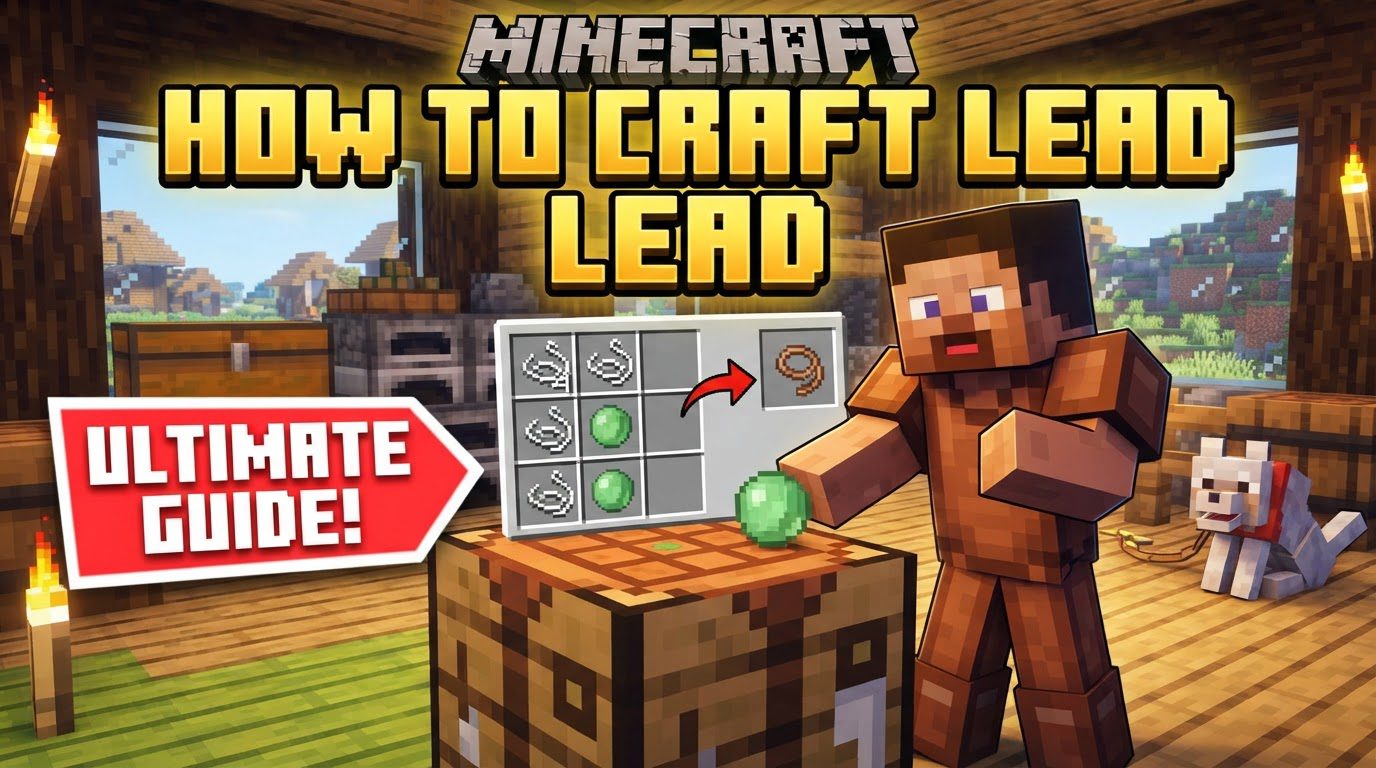
The Indispensable Lead: What It Does and Why You Need One
A lead is a surprisingly versatile and incredibly useful item in Minecraft. Primarily, it serves as a tool to tether and transport most passive mobs, such as cows, pigs, sheep, chickens, and even villagers, allowing you to guide them across vast distances or secure them within enclosures. Beyond animals, leads can also be used to move some hostile mobs under specific circumstances and, perhaps most surprisingly, even boats. This makes them invaluable for setting up farms, relocating rare creatures, or simply moving your aquatic transport to a more convenient location. Each successful crafting attempt generously yields two leads, making it efficient to stock up once you have the necessary materials.
Gathering Your Components: The Essential Ingredients for Lead Crafting
Crafting a lead is a straightforward process, but it hinges on acquiring two distinct materials: string and a slimeball. Neither is particularly difficult to obtain, but each has its own method of acquisition.
String: The Versatile Fiber
You will need four pieces of string for each lead crafting session. String is one of the most common and easily acquired resources in Minecraft, making it less of a bottleneck for lead production. Here’s how to get it:
- Killing Spiders: This is by far the most common and reliable method. Spiders, found commonly at night or in dark caves, drop 0-2 string upon defeat. Spider spawners in dungeons can be an excellent source for large quantities.
- Killing Striders: These passive mobs found in the Nether, specifically in lava lakes, also drop 2-5 string when killed.
- Breaking Cobwebs: Cobwebs, often found in abandoned mineshafts, strongholds, and occasionally in villages, yield one string when broken with a sword. Shears can also collect the cobweb block itself.
- Looting Chests: String can sometimes be found in chests within various generated structures like dungeons, mineshafts, or desert temples.
Slimeball: The Sticky Core
The second and often more challenging ingredient to acquire is a single slimeball. This sticky component is what gives the lead its unique properties. Slimeballs are exclusively dropped by slimes, which have specific spawning conditions:
- Swamp Biomes: Slimes commonly spawn in swamp biomes during the night, especially during a full moon. Look for them near sea level.
- Slime Chunks: Certain chunks in the Minecraft world are designated as “slime chunks.” Within these chunks, slimes can spawn at any light level below Y-level 40, regardless of the time of day. Players often build elaborate slime farms in these chunks to automate slimeball collection.
- Pillager Outposts: Occasionally, a single “Slime” can be found caged within a Pillager Outpost, offering a guaranteed (though often dangerous) source.
Given that each crafting attempt yields two leads, securing a consistent source of slimeballs is usually the bigger hurdle for mass production.
Step-by-Step Lead Creation: Your Crafting Guide
Once you have your four string and one slimeball, the crafting process is simple and takes place within a crafting table.
Accessing Your Crafting Table
First, you’ll need to open your crafting table. This will present you with the familiar 3×3 crafting grid, which is essential for arranging the lead recipe.
The Precise Recipe Arrangement
The arrangement of materials in the crafting grid is crucial. If placed incorrectly, the lead will not appear in the output slot. Follow these steps carefully:
- Place one String in the top-left slot of the 3×3 grid.
- Place one String in the top-middle slot.
- Place one String in the middle-left slot.
- Place the one Slimeball directly in the center slot of the grid.
- Finally, place the remaining one String in the bottom-right slot.
This creates a distinct diagonal pattern with an ‘L’ shape of string and the slimeball in the middle. There is an alternative, visually similar pattern that also works: place the slimeball in the center, one string in the bottom-right, and the remaining three strings forming an ‘L’ shape in the top-left corner (top-left, top-middle, middle-left).
Claiming Your New Leads
Upon correctly arranging the materials, two Leads will appear in the output slot on the right side of the crafting interface. Simply drag these into your inventory to complete the crafting process. Remember, you always get two leads per craft, maximizing your resource efficiency.
Mastering Lead Mechanics: Beyond the Craft
Crafting a lead is only the first step; understanding its behavior in the game is equally important. Leads are designed for convenience but have certain limitations.
Tethering Creatures and Conveyances
To use a lead, simply hold it in your hand and right-click on the desired mob or boat. A lead line will appear, connecting you to the entity. You can then walk, and the leashed entity will follow. To attach a lead to a fence post, right-click the fence post while holding a leashed mob. This will secure the mob to the post, preventing it from wandering off.
Understanding Lead Limitations
Leads can sometimes be a bit “finicky.” They are not unbreakable and can snap under certain conditions:
- Excessive Distance: If you move too far away from the leashed mob, the lead will break.
- Obstructions: Leads can break if the line of sight between you and the mob is severely obstructed or if the mob struggles with difficult terrain, such as steep inclines or dense foliage.
- Hostile Damage: If the leashed mob takes damage from a hostile source (e.g., a zombie attack), the lead may break.
Always be mindful of your surroundings and the distance to your leashed entity to prevent unexpected disconnections.
Avoiding Common Crafting Calamities
Even seasoned players can make simple mistakes. Being aware of these pitfalls can save you time and resources.
The Immutable Recipe
There is no alternative recipe for a lead that excludes the slimeball. If you are missing this crucial ingredient, the lead simply won’t craft. Ensure you have the correct count of four string and one slimeball before attempting to craft.
Navigating Lead Breakage
As mentioned, leads are not infallible. Many players get frustrated when leads snap unexpectedly. This is often due to moving too quickly, traversing challenging terrain, or allowing too much distance to accumulate between the player and the leashed entity. Practice patience and careful movement, especially when transporting valuable or difficult-to-find mobs.
Historical Recipe Shifts
Minecraft’s recipes can occasionally change with updates. For instance, the lead recipe has seen minor adjustments in the past (e.g., briefly requiring five string). While the current stable recipe is four string and one slimeball, it’s always good practice to quickly verify recipes if you’re returning to the game after a long break or playing on a version you’re unfamiliar with.
Advanced Tips for Resource Acquisition and Efficiency
To become a true lead-crafting master, consider these practical tips.
Double-Checking Your Work
Always take a moment to double-check your item placement in the crafting grid. A misplaced string or slimeball will result in no output, wasting your time and potentially causing frustration.
Spider Hunting for String
For consistent string acquisition, consider creating a simple spider farm or regularly exploring caves at night. Spiders are abundant, and their string drops are reliable.
The Slimeball Hunt
The slimeball is typically the harder ingredient to obtain. If you’re struggling, prioritize finding a swamp biome at night or, for a more permanent solution, locating a slime chunk and constructing a basic farm. Knowing the Y-level (below 40) is key for slime chunk hunting.
Maximizing Your Crafting Output
Since each crafting attempt yields two leads, you can efficiently stock up. Once you have a reliable source of both string and slimeballs, consider crafting in bulk to ensure you always have leads available for your transportation and tethering needs.
With these comprehensive instructions and tips, you’re now equipped to craft leads like a seasoned Minecraft veteran, bringing order and mobility to your blocky world.
Tags:
YOU MAY ALSO LIKE...


