

Minecraft How Does Enchanting Work
One of the most common pitfalls new Minecraft players encounter when trying to unlock powerful enchantments is a simple setup error: failing to correctly arrange the 15 bookshelves required to reach the highest enchantment levels. Understanding how this intricate system works is crucial for anyone looking to truly master their gear and dominate the blocky world around them.
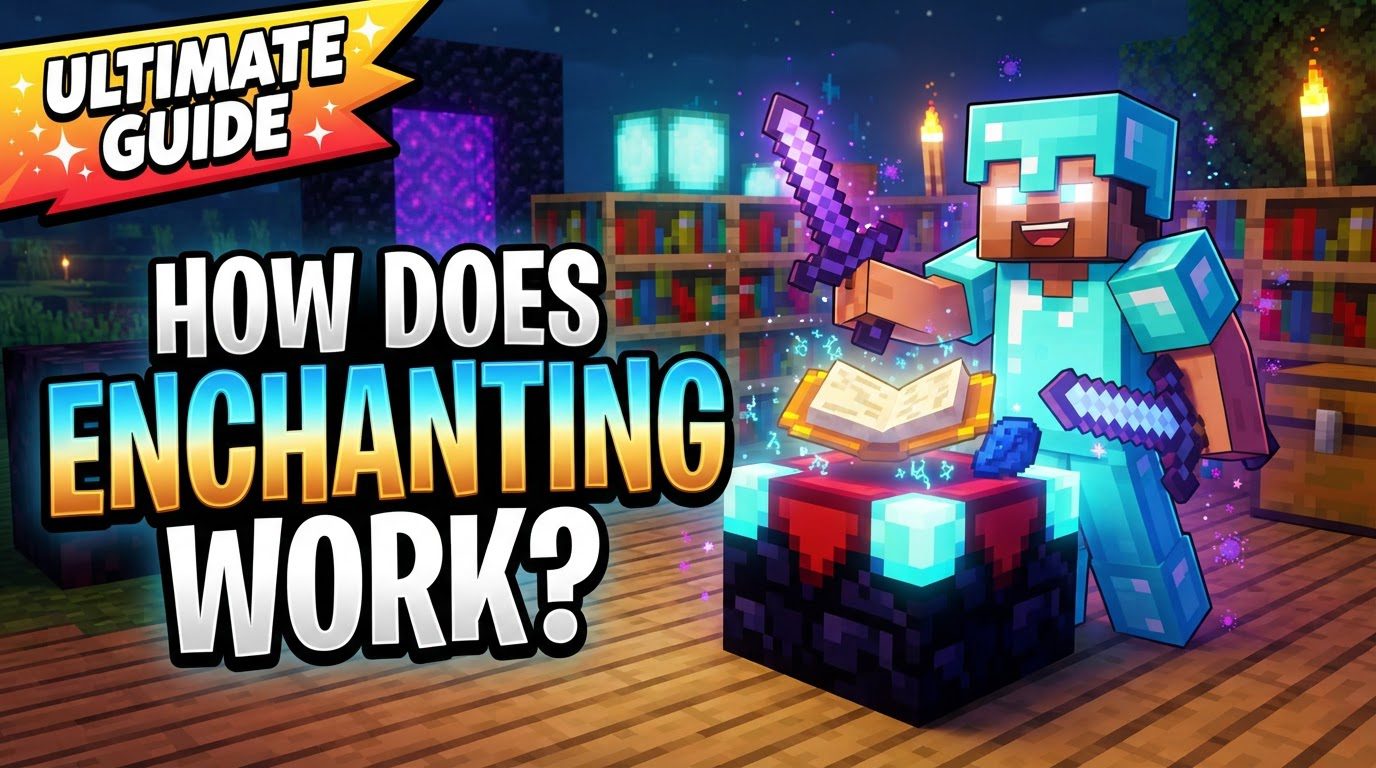
Minecraft enchanting allows players to imbue their tools, weapons, and armor with special abilities, transforming ordinary items into formidable assets. These enhancements range from increased durability and mining speed to extra damage against foes and protection from various hazards. Mastering the mechanics behind this system is not just about luck; it’s about strategic setup, resource management, and a clear understanding of the tools at your disposal.
The Core of Enchanting: The Enchanting Table
At the heart of all enchanting operations lies the enchanting table. This mystical block is where the magic truly happens. However, its full potential isn’t realized in isolation. To access more powerful and higher-level enchantments, the enchanting table needs to be surrounded by bookshelves. A maximum of 15 bookshelves are required to unlock the coveted Level 30 enchantments. These bookshelves must be placed one block away from the enchanting table, creating a 5×5 square with the table at its center, and crucially, a one-block air gap between the table and the surrounding bookshelves. Any other blocks, such as torches or carpets, placed within this air gap will obstruct the bookshelves’ effect, preventing you from accessing the highest enchantment tiers.
Beyond the physical setup, enchanting also comes with a cost. Each enchantment consumes a certain amount of your accumulated experience levels (XP) and Lapis Lazuli. Higher-level enchantments demand more XP, often requiring up to 30 levels for the most potent effects. Lapis Lazuli is also a non-negotiable component, with three pieces consumed for each enchantment applied. The enchantments themselves are pseudo-randomly generated, meaning while there’s an element of chance, the specific options presented are influenced by the number of surrounding bookshelves and your current XP level. This interaction ensures that while you can’t pick exactly what you want, you can influence the quality of the options.
The Anvil: Your Enchanting Companion
While the enchanting table is where new enchantments are first applied, the anvil serves as an indispensable tool for managing and refining your enchanted gear. Anvils are primarily used for three key functions that complement the enchanting table’s role:
- Combining Enchanted Items: You can merge two enchanted items of the same type (e.g., two enchanted pickaxes) to combine their enchantments, often resulting in a single item with higher-level or more diverse abilities.
- Applying Enchanted Books: Enchanted books, found in various game structures or created by enchanting books at an enchanting table, can be applied to eligible items using an anvil. This is a common way to add specific, desired enchantments without relying on the enchanting table’s randomness.
- Repairing Enchanted Gear: Anvils allow you to repair damaged enchanted items using raw materials (e.g., iron ingots for an iron pickaxe) while crucially retaining all their existing enchantments. This is vital for maintaining your valuable enchanted tools and armor. Additionally, renaming items on an anvil can prevent the repair cost from increasing infinitely, a common issue for frequently repaired items.
A Step-by-Step Guide to Enchanting
Embarking on your enchanting journey is straightforward once you understand the process:
- Gather Your Materials: Begin by collecting an enchanting table, at least 15 bookshelves, a supply of Lapis Lazuli, and sufficient experience levels. Remember, for the best enchantments, aiming for 30 XP levels is ideal.
- Set Up Your Enchanting Area: Place your enchanting table. Then, arrange all 15 bookshelves around it, ensuring there is a one-block air gap between the table and the bookshelves. Crucially, verify that no other blocks (like torches, carpets, or even stray blocks of dirt) are occupying this air gap, as they will block the magical flow from the bookshelves.
- Place Item and Lapis: Right-click the enchanting table to open its interface. Place the item you wish to enchant into the left-hand slot and your Lapis Lazuli into the right-hand slot.
- Choose Your Enchantment: Once the item and Lapis Lazuli are in place, three randomized enchantment options will appear on the right side of the interface. Each option will display its XP cost and a cryptic, unreadable description that hints at the enchantment’s nature.
- Confirm and Enchant: Select the desired enchantment by clicking on it. Once chosen, the item will be magically imbued with the enchantment, and the corresponding XP levels and Lapis Lazuli will be consumed from your inventory.
Strategic Enchanting: Tips for Maximizing Your Gear
Enchanting isn’t just about applying a random effect; it’s about making smart choices to build powerful, efficient gear:
- Prioritize Key Enchantments: Focus on acquiring essential enchantments early. For weapons, think Sharpness or Power (for bows). For tools, Efficiency and Unbreaking are invaluable. For armor, Protection is a must-have. Mending and Infinity (for bows) are game-changers, but be aware that Mending and Infinity are mutually exclusive on bows. Applying less useful enchantments initially can lead to very expensive anvil combinations later.
- Utilize Low-Level Enchants: Early in the game, don’t shy away from lower-level enchantments. They cost less XP and can still provide significant benefits, especially for disposable tools. An Efficiency I pickaxe is still better than a plain one.
- Master Anvil Usage: The anvil is key to long-term enchanting success. Use it to combine weaker enchantments from multiple books or items into stronger, higher-level ones. Crucially, it’s how you repair your valuable enchanted gear without losing those hard-earned abilities.
Common Mistakes to Avoid
Even seasoned players can make mistakes when enchanting. Be mindful of these common pitfalls:
- Incorrect Bookshelf Setup: This is perhaps the most frequent error. Not having exactly 15 bookshelves, placing them too close or too far, or having obstructing blocks in the one-block air gap will prevent you from accessing the highest-level enchantments. Always double-check your setup.
- Insufficient XP: Don’t expect to get high-level enchantments if you don’t have enough experience. Many powerful enchantments require a minimum of 30 experience levels to appear as an option. Grind those mobs or smelt those ores!
- Not Prioritizing Enchantments: Applying less important enchantments to an item before its truly valuable ones can lead to an anvil cost that becomes “Too Expensive!” This happens because each time you combine items or books on an anvil, the “prior work penalty” increases, eventually making further combinations impossible. Plan your enchantment strategy.
- Incompatible Enchantments: Some enchantments simply cannot coexist on the same item. The most common example is Mending and Infinity on a bow; you can only have one. Attempting to combine incompatible enchantments will not work.
- Regretting Thorns on Armor: While it sounds appealing, the Thorns enchantment is often regretted. It causes your armor to take damage faster when you are hit, significantly reducing its durability, while only reflecting a small amount of damage back to attackers. For most players, the trade-off isn’t worth it.
By understanding these mechanics, carefully setting up your enchanting station, and making strategic choices with your experience and Lapis Lazuli, you’ll be well on your way to creating legendary gear that will serve you through countless Minecraft adventures.
Tags:
YOU MAY ALSO LIKE...


