

Kaleidoscope Cookery Mod How to Get Oil
One of the most common oversights for new chefs in the Kaleidoscope Cookery mod is attempting to extract oil from mobs without the proper tool. Forgetting a crucial piece of equipment can leave you with plenty of raw meat but no precious liquid fat. This guide will ensure you never make that mistake, detailing every method to acquire oil, a fundamental ingredient for many advanced culinary creations in your Minecraft world.
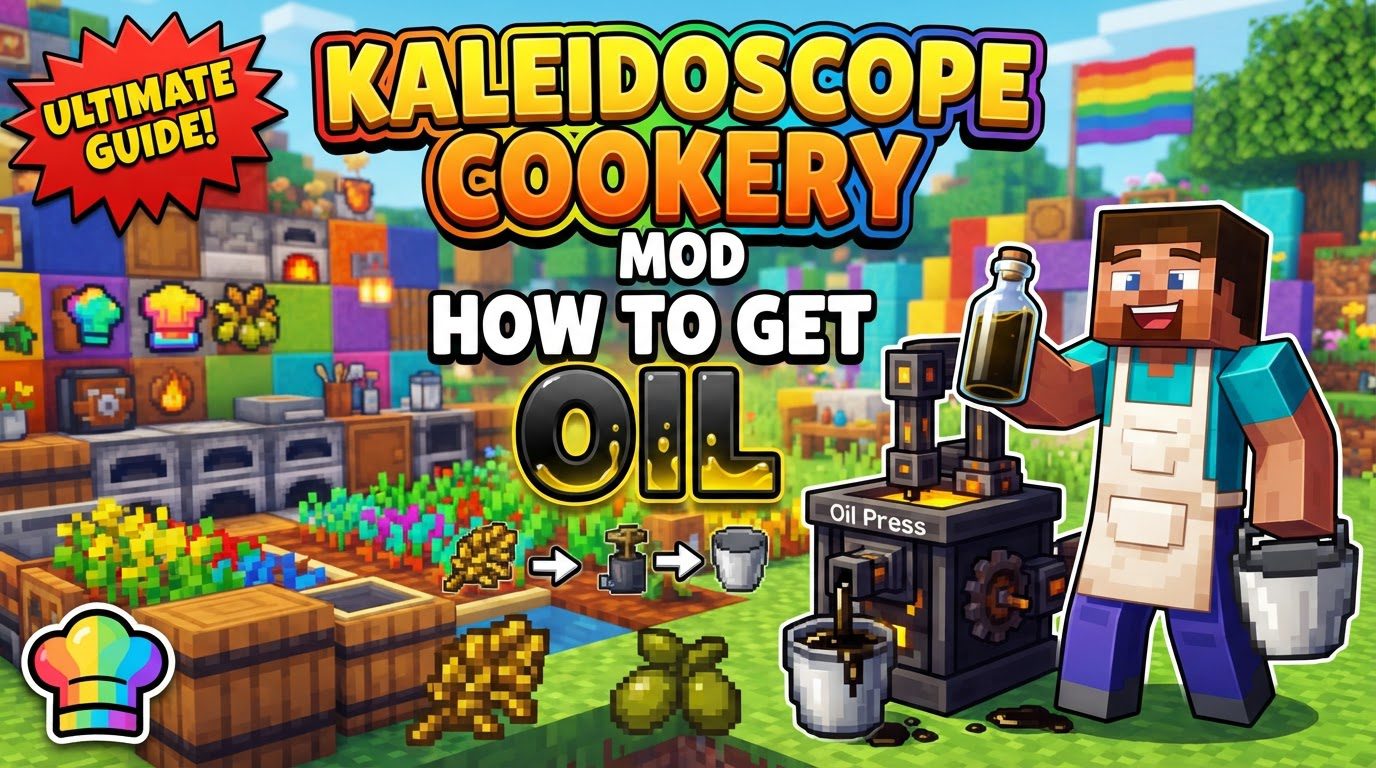
The Kaleidoscope Cookery mod transforms Minecraft’s culinary landscape, introducing a myriad of new ingredients, tools, and recipes. Among the most versatile and essential resources is oil, which comes in various forms, each serving unique purposes in your kitchen. Whether you’re frying up a feast or crafting specialized ingredients, understanding the dual paths to oil acquisition – from the bounty of the earth and the creatures that roam it – is paramount to becoming a master chef.
The Dual Paths to Liquid Gold: Plant-Based & Animal-Derived Oils
In Kaleidoscope Cookery, oil isn’t a singular entity; it’s a category encompassing both vegetable and animal fats. This distinction is vital, as each type has a unique origin and, in some cases, specific applications, especially when integrating with addons like Kaleidoscope Grilling, which introduces specialized oils such as Canola Oil, Chili Oil, and even Magma Chili Oil. Regardless of its final form, oil serves as a cornerstone for many recipes, from simple cooking to more complex culinary endeavors.
Your journey to oil abundance will lead you down two distinct paths: cultivating seeds for their rich vegetable oils or venturing into the wilds (or your farm) to harvest animal fats from various mobs. Both methods are efficient once mastered and can be integrated into automated systems for a steady supply.
Harnessing the Harvest: Extracting Vegetable Oils
For those who prefer a more agricultural approach, vegetable oil is a readily renewable resource, primarily sourced from seeds. This method is often favored for its sustainability and predictability, relying on farming rather than hunting.
The Millstone: Your Seed-Pressing Powerhouse
The cornerstone of vegetable oil production is the Millstone. This specialized block is designed to process plant matter, and for seeds, it performs the crucial task of extraction. Here’s how to set up your seed-to-oil operation:
- Gather Your Seeds: The most common and easily acquired source is wheat seeds, but the mod allows for processing of various other seed types. Accumulate a substantial quantity, as each seed yields a small but valuable amount of oil.
- Process with the Millstone: Place your collected seeds into the Millstone’s input slot. The Millstone will then grind them down, directly producing pure vegetable oil. This streamlined process means you don’t need intermediate steps; the seeds go in, and the oil comes out.
- Optimized Output: Recent revisions to the Millstone system have optimized its output mechanisms, making the process of extracting oil from seeds more efficient and user-friendly. This means less hassle and more oil flowing into your storage.
The beauty of the Millstone method lies in its simplicity and the readily available nature of its primary ingredient. A well-maintained wheat farm can provide an endless supply of seeds, ensuring a continuous flow of vegetable oil for all your cooking needs.
The Butcher’s Bounty: Acquiring Animal Fats
For a different kind of oil, one derived from the animal kingdom, you’ll need to embrace the role of a hunter. Animal fats, often referred to as “original grease” in the mod, are obtained by dispatching specific mobs with a particular tool. This method can be incredibly efficient, especially if you have a mob farm or frequent the Nether.
The Indispensable Kitchen Knife
This is where that crucial common mistake comes into play: to obtain animal oil from mobs, you absolutely must use a Kitchen Knife. Using any other weapon, such as a sword or an axe, will simply result in regular mob drops, and you will miss out on the valuable oil. The Kitchen Knife is explicitly designed for this purpose, making it an essential tool for any aspiring chef.
Once you have your Kitchen Knife, here’s how to proceed:
- Target Specific Mobs: Not all creatures in Minecraft yield oil. Focus your efforts on the following:
- Pigs: A common source in the Overworld, easy to find and farm.
- Piglins: Found in the Nether, these aggressive humanoids will drop oil when defeated with a kitchen knife.
- Hoglins: Also native to the Nether, these formidable beasts are another excellent source of animal fat.
- Zombie Pigmen / Zombified Piglins: These ubiquitous Nether inhabitants are particularly generous. Zombie Pigmen (now Zombified Piglins) will drop 1-2 units of oil, while their zombified piglin counterparts can drop 2-4 units, making them a highly lucrative target for oil harvesting.
- Defeat with the Knife: Engage your chosen mob and defeat it using only your Kitchen Knife. Upon its demise, the mob will drop oil directly into your inventory or onto the ground.
Establishing a reliable source of animal fat often involves setting up a mob farm or making regular excursions into the Nether. With the right setup, you can quickly accumulate large quantities of animal oil, which is invaluable for a different set of recipes.
Essential Equipment for Oil Management
Once you’ve started producing oil, you’ll need efficient ways to store and manage it. Kaleidoscope Cookery provides specialized blocks for this purpose, designed with automation in mind.
The Oil Pot: Your Automated Liquid Reservoir
The Oil Pot is the primary storage unit for both processed seed oil and collected animal fat. It’s an incredibly versatile block, designed for both manual and automated interaction:
- Generous Capacity: The Oil Pot boasts a substantial capacity of 256 units of oil, allowing you to store a significant amount before needing to empty it.
- Automated Integration: This is where the Oil Pot truly shines. It fully supports automation with hoppers and pipes. You can feed oil directly into it from your Millstone or mob drops, and extract it for use in crafting or cooking stations.
- Redstone Compatibility: For advanced automation setups, the Oil Pot offers full Redstone automation. This means you can control its input and output mechanisms with Redstone signals, creating complex, hands-off oil processing lines.
- Manual Interaction: For quick access, the Oil Pot also supports empty-handed extraction and insertion, making it convenient for small-scale operations or topping off personal supplies.
The Oil Basin: A Smaller, Handy Alternative
While the Oil Pot is excellent for bulk storage and automation, the Oil Basin offers a more compact solution. It has a capacity of 32 units, making it suitable for smaller batches or as an intermediate storage point in a processing chain. It’s a useful block to have when you don’t need the massive capacity of the Oil Pot but still require a dedicated liquid storage solution.
Refining Your Process: Advanced Tips and Automation
To truly master oil production in Kaleidoscope Cookery, consider these tips for efficiency and convenience:
- Automate Your Millstone: Connect hoppers to your Millstone’s input for seeds and its output for oil, leading directly into an Oil Pot. This creates a continuous loop, turning your harvested seeds into oil without manual intervention.
- Mob Farm Integration: If you have a mob farm that targets pigs or zombified piglins, consider how you can integrate the Kitchen Knife mechanic. While direct automation of mob killing with a knife can be tricky, you can design collection systems that funnel mobs to a specific point where you can easily dispatch them with your knife.
- Redstone Control for Oil Pots: Leverage Redstone to manage oil flow. For instance, you can set up a system that only extracts oil from the Oil Pot when a certain cooking machine requires it, preventing overflow or unnecessary processing.
- Consult the In-Game Guidebook: The Kaleidoscope Cookery mod includes a comprehensive Guidebook. This invaluable resource provides detailed information on all recipes, ingredients, and equipment within the mod, including further nuances of oil production and its many uses. If you’re ever unsure about a recipe or a specific mechanic, the Guidebook is your first port of call.
Avoiding Costly Errors: Key Considerations
As highlighted at the outset, a single oversight can derail your oil production efforts. Always remember:
- The Kitchen Knife is Non-Negotiable for Mob Oil: This cannot be stressed enough. If you’re hunting pigs, piglins, or hoglins for oil, ensure the Kitchen Knife is in hand. Any other weapon will simply not yield the desired drops.
- Understand Oil Types: While the mod generally refers to “oil,” be aware that certain recipes might call for specific vegetable oils (like Canola) or animal fats. Knowing your source helps you plan your production.
- Millstone Evolution: Older versions of Kaleidoscope Cookery might have had achievements tied to millstone oil extraction. These have since been removed due to significant changes in the mechanism, so focus on the current, direct seed-to-oil grinding process.
With these comprehensive strategies, you are now well-equipped to produce a steady supply of oil for all your Kaleidoscope Cookery adventures. From the verdant fields yielding vegetable oils to the perilous Nether providing rich animal fats, the path to culinary mastery is now clearer. Happy cooking!
Tags:
YOU MAY ALSO LIKE...


