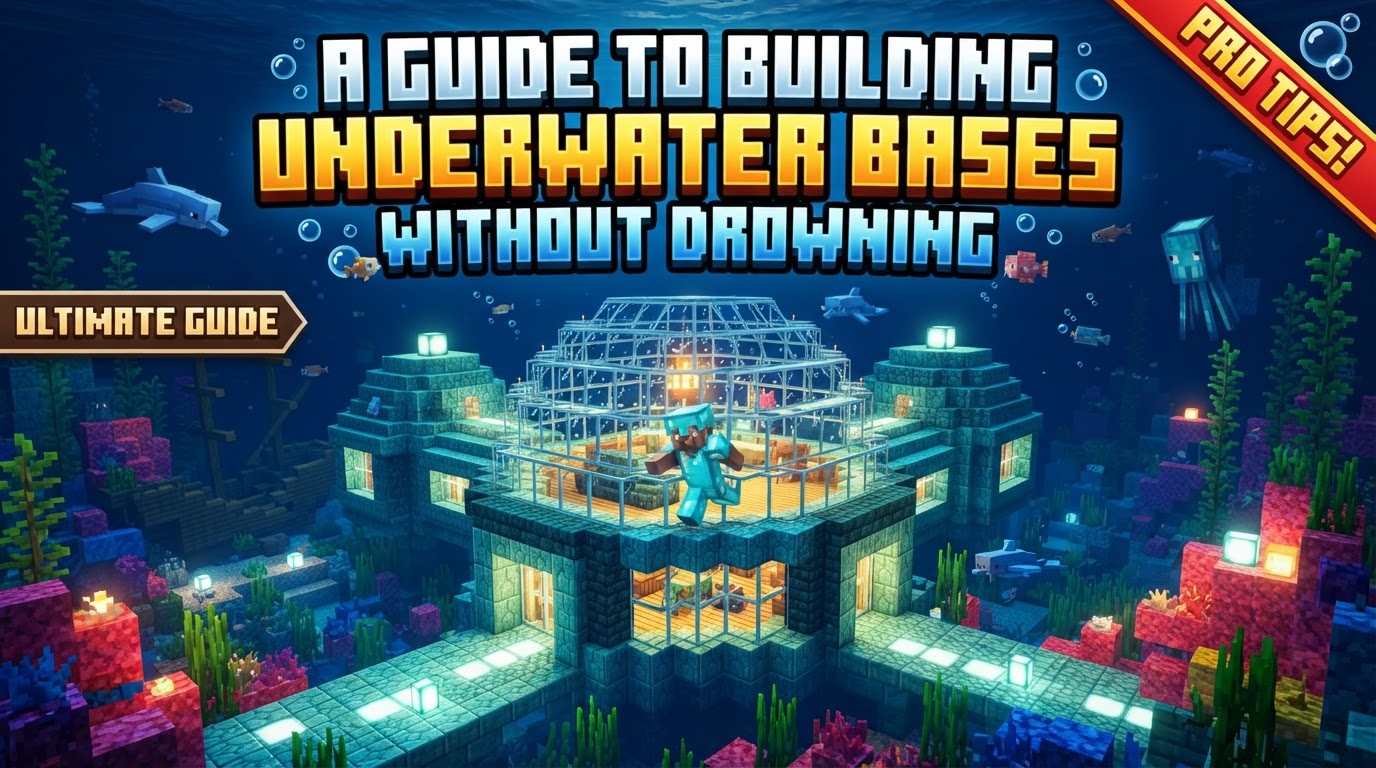
A Guide to Building Underwater Bases Without Drowning
Many aspiring architects plunge headfirst into the ocean depths, only to find their grand underwater base plans quickly dissolved by a familiar, suffocating sensation: drowning. Building a functional, aesthetically pleasing base beneath the waves in Minecraft is a rewarding endeavor, but it demands meticulous preparation and an understanding of aquatic mechanics far beyond surface-level construction. The ocean biome, with its unique challenges and hidden resources, offers an unparalleled canvas for creative expression, provided you can master the art of breathing where fish swim.
Essential Tools for Aquatic Survival
Before even placing your first block underwater, arming yourself with the right gear and knowledge of key mechanics is paramount. These tools will transform a perilous construction site into a manageable workspace.
- Conduit Power: The ultimate solution for underwater living, a Conduit provides infinite underwater breathing, grants night vision, increases mining speed, and even attacks hostile mobs within its impressive 32-block radius. To craft one, you’ll need eight Nautilus Shells (obtained by fishing or as rare drops from Drowned) and one Heart of the Sea (found in buried treasure chests, indicated by treasure maps). Activating a Conduit requires placing it within a 3x3x3 frame of prismarine, dark prismarine, or prismarine bricks, with at least 16 blocks forming the frame for its full power. This should be a long-term goal for any serious underwater builder.
- Water Breathing Potions: For temporary relief and early-game construction, Water Breathing Potions are indispensable. Brewed using Nether Wart and a Pufferfish, these potions provide several minutes of uninterrupted breathing underwater. Keep a ready supply on hand to extend your work sessions and provide a crucial lifeline when your oxygen bar dwindles.
- Enchantments: Specialized enchantments can significantly ease the burden of underwater construction:
- Respiration (Helmet): This enchantment extends your underwater breathing time, allowing you to stay submerged for longer periods before needing air. Higher levels provide greater duration.
- Aqua Affinity (Helmet): Normally, mining underwater is significantly slower. Aqua Affinity negates this penalty, allowing you to mine at normal speed, which is critical for efficient block placement and removal.
- Depth Strider (Boots): Navigating the ocean floor can be sluggish. Depth Strider increases your underwater movement speed, making exploration and construction much more efficient.
- Water Elevators: Essential for efficient vertical travel to and from your base, water elevators utilize the unique properties of two Nether-found blocks:
- Magma Blocks: When placed underwater, Magma Blocks create a downward current, pulling players and items towards them. Ideal for quick descents.
- Soul Sand: Conversely, Soul Sand creates an upward current, pushing players and items towards the surface. Perfect for rapid ascents.
Both require a column of water source blocks above them to function correctly.
- Air Pockets: In a pinch, or for quick, temporary relief, certain blocks can create air pockets underwater. Placing a door, sign, or ladder underwater will displace the water block it occupies, creating a breathable space. This is particularly useful for initial water clearing or when you’re caught off guard without potions or enchantments.
Constructing Your Subaquatic Sanctuary
With your survival tools in hand, it’s time to lay the groundwork for your underwater haven. This process involves strategic planning and careful execution.
- Select a Location: Your choice of location impacts aesthetics, resource access, and building difficulty. Look for a spot that offers captivating views, is reasonably close to land for easier resource transport, and potentially near valuable resources. Coral Reefs, for instance, offer vibrant aesthetics, while deeper ocean biomes might provide more challenge and space.
- Clear the Water: This is often the most tedious part of underwater construction, but essential for creating a dry interior.
- Sponges: The most efficient method. Sponges absorb water blocks in a spherical radius around them. Obtained by defeating Elder Guardians in Ocean Monuments, they can be dried out in a furnace or the Nether to be reused. Gather as many as you can.
- Sand/Gravel: For early-game builders without access to sponges, gravity-affected blocks like sand or gravel are a viable alternative. Build the outer shell of your base, then fill the entire interior with these blocks. Once sealed, remove the sand/gravel from the bottom up, and the water above will be displaced, leaving a dry space.
- Construct the Structure: With the water cleared, begin building the outer shell of your base. Glass is a popular choice for walls and windows, offering unparalleled views of the ocean life and allowing natural light to flood your interior. For foundational support and structural integrity, consider durable blocks like stone bricks, concrete, or prismarine. Don’t be afraid to experiment with different shapes beyond simple cubes.
- Create Entrances and Exits: Design secure and efficient access points. Glass tubes containing water elevators (using Magma Blocks for descent and Soul Sand for ascent) are ideal. Crucially, place doors at both the top and bottom of these tubes to prevent water from leaking into your main base area when players pass through, maintaining a dry environment.
- Illuminate the Interior: Light sources are not just for aesthetics; they prevent hostile mobs from spawning within your base. Sea Lanterns (crafted from Prismarine Shards and Prismarine Crystals, often found in Ocean Monuments) are perfect for underwater builds, offering bright light and a thematic look. Glowstone or Shroomlights are also excellent alternatives.
- Outfit Your Base: Once the structure is complete and illuminated, furnish your base with all the necessities. Dedicate areas for crafting tables, furnaces, enchanting tables, and ample storage. Consider integrating an in-base farm using dirt and water for a sustainable food supply, reducing the need to constantly return to the surface.
- Implement Airlocks: For larger or more complex bases, an airlock system is highly recommended. This typically involves a small, sealable room between your dry base and the water elevator or main entrance. By closing one door before opening another, you can control water flow, preventing accidental flooding and maintaining the integrity of your dry habitat.
Mastering the Depths: Advanced Tips and Tricks
Beyond the basics, these strategies will refine your underwater base construction and enhance your overall experience.
- Prioritize Gear: Before you even think about diving deep, ensure you have a stack of Water Breathing Potions, and ideally, a helmet enchanted with Respiration and boots with Depth Strider. This preparation will make the initial phases of construction significantly less stressful and far more efficient.
- Strategic Placement: Building near an Ocean Monument offers immense advantages. Not only does it provide a direct source of sponges (after defeating the Elder Guardians), but also prismarine blocks for construction and often a good supply of gold blocks within its structure.
- Aesthetic Variety: While glass offers fantastic views, an entire base made solely of glass can look monotonous. Incorporate different block types like prismarine, concrete, stone bricks, or even polished blackstone to add texture, depth, and visual interest. Experiment with curves, domes, and multi-level designs to move beyond simple square structures.
- Concealment: If playing on a multiplayer server or simply wanting a hidden retreat, kelp can be your ally. Growing kelp around the exterior of your base can help camouflage it, making it harder for other players to spot from a distance.
- Sustainability Features: To truly make your underwater base a self-sufficient home, integrate farms for food (wheat, carrots, potatoes) and other resources. Consider building a Nether Portal within a sealed section of your base. This provides quick access to Nether resources like Nether Wart and quartz, and also serves as an emergency escape route if things go wrong underwater.
Navigating Perils: Pitfalls to Avoid
Even with thorough preparation, certain mistakes can quickly derail your underwater base project. Learn from common errors to ensure a smooth build.
- Underestimating Drowning Risk: The most obvious danger, yet often overlooked. Starting construction without sufficient water breathing aids, whether potions, enchantments, or a Conduit, will lead to constant interruptions, loss of items, and immense frustration. Always prioritize your oxygen supply.
- Ignoring Water Flow: Minecraft’s water physics can be tricky. Failing to properly seal your base perimeter, neglecting to use doors in water elevator tubes, or not implementing airlocks can result in constant flooding, requiring tedious re-clearing of water. Understand how water source blocks and flowing water interact.
- Lack of Lighting: A dark interior is an invitation for hostile mobs like Drowned, Guardians, and even zombies or skeletons if near the ocean floor. Ensure every accessible space within your base is adequately lit to prevent unwanted spawns and maintain safety.
- Poor Location Choice: Selecting a location that is too deep might make construction more difficult and require more resources for vertical travel. A spot too shallow might limit design possibilities or be less concealed. Being too far from land or essential resources will make resupplying a chore. Balance aesthetics with practicality.
- Kelp in Java Edition: Be aware that in Minecraft Java Edition, constantly growing kelp can inadvertently reveal the location of a hidden base by extending upwards through water blocks. In Bedrock Edition, this can be mitigated by placing string on top of kelp to stop its growth, preventing it from reaching the surface and giving away your position.
With careful planning, the right tools, and a dash of creativity, your dream of an underwater sanctuary is well within reach. Dive in, build bold, and enjoy the unique perspective an oceanic home provides.
Tags:
YOU MAY ALSO LIKE...