A Deep Dive Into Campfire Smoke Particle Physics
Did you know a simple bale of hay can nearly triple the height of your Minecraft campfire’s smoke plume? The seemingly straightforward visual effect of campfire smoke in Minecraft harbors a surprising depth of physics and utility, offering players more than just aesthetic appeal. Far from a mere visual flourish, understanding how campfire smoke particles behave can unlock new possibilities for signaling, decoration, and even practical gameplay mechanics.
The Fundamentals of Smoke Generation
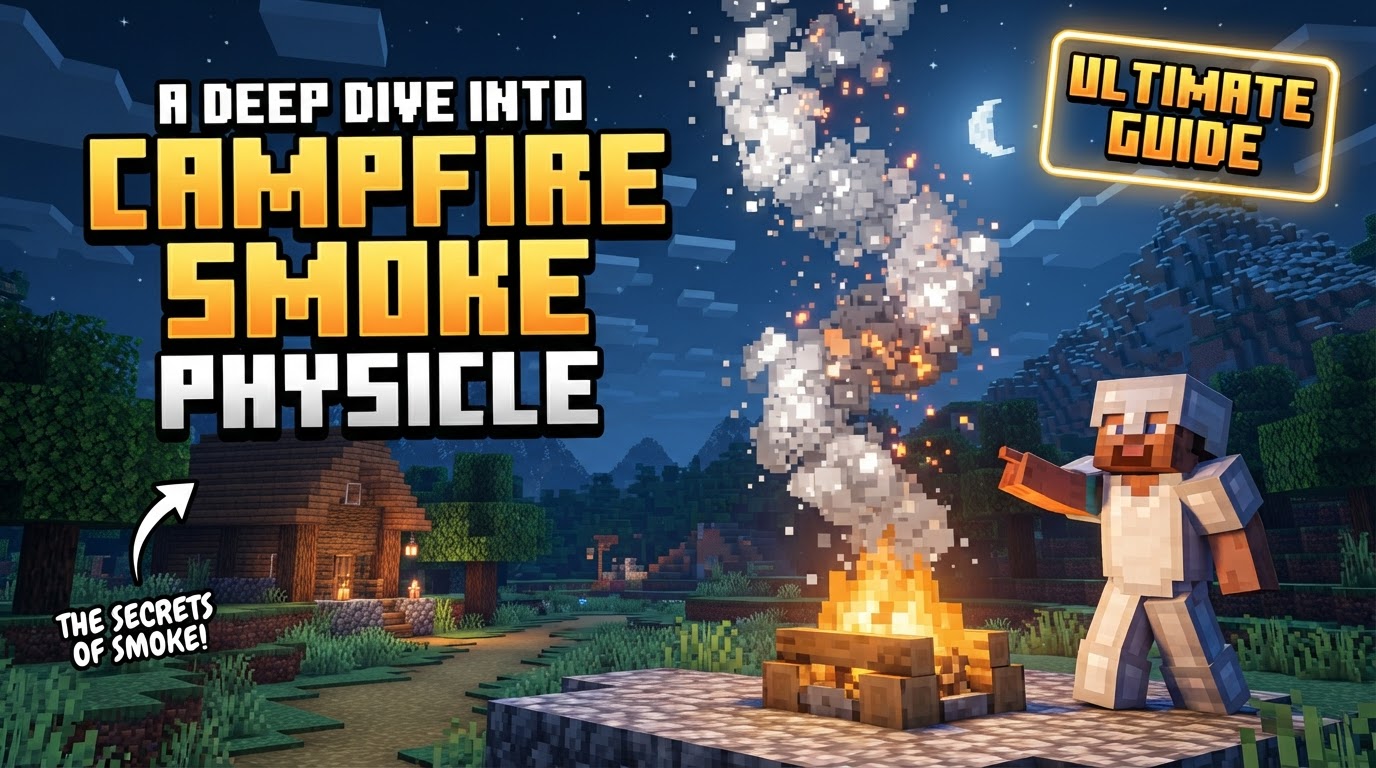
At its core, Minecraft’s campfire smoke is a dynamic particle effect governed by specific rules. A standard campfire, whether regular or a soul campfire, will reliably produce a column of smoke. This smoke typically ascends approximately 10 blocks high before dissipating into the virtual atmosphere. However, the characteristics of this smoke can vary significantly based on the campfire type and surrounding conditions.
- Regular Campfires: These produce a light gray smoke, accompanied by small, flickering ember particles that add to their warm glow.
- Soul Campfires: Distinct from their regular counterparts, soul campfires emit a slightly darker smoke. As this smoke rises, it acquires a subtle blue tint, a visual cue aligning with the soul fire aesthetic. Notably, soul campfires do not emit ember particles.
- Cooking on Campfires: When food items are placed directly on a campfire to cook, small, localized smoke particles will appear specifically on the food itself, indicating the cooking process is underway.
- Rain’s Influence: Interestingly, rain does not extinguish campfires in Minecraft. Instead, when exposed to rainfall, campfires will emit an increased number of smoke particles, creating a denser plume.
Elevating Your Signal: The Hay Bale Effect
One of the most impactful ways to manipulate campfire smoke is by altering its vertical reach. For players looking to create highly visible markers or long-distance signals, the solution is remarkably simple: a hay bale. Placing a hay bale block directly underneath a campfire dramatically increases the smoke column’s height. This enhancement causes the smoke to rise up to 24 blocks high, a trajectory often described as being “three times higher” than the smoke from a normal campfire. This significant boost in visibility makes hay bale-enhanced campfires invaluable as beacons or smoke signals, allowing players to mark waypoints or communicate across vast distances in their Minecraft worlds.
Interacting with the Environment: Blocking and Permeability
The interaction of campfire smoke with various blocks is crucial for both decorative and functional designs. Smoke particles are not entirely ethereal; they react to the solidity and presence of blocks in their path:
- Passing Through Non-Solid Blocks: Smoke particles possess a unique property that allows them to flow freely through non-solid blocks. This includes transparent blocks like glass panes, as well as functional blocks such as fences, iron bars, and even open trapdoors. This permeability is key for creating enclosed yet smoky environments without completely obstructing the visual effect.
- Blocked by Solid Blocks: Conversely, solid blocks act as impenetrable barriers to campfire smoke. Blocks like dirt, stone, wood planks, and concrete will completely prevent smoke from passing through them. If a solid block is placed directly above a campfire, it will effectively block or significantly reduce the smoke signal’s height, often containing it entirely.
- Strategic Block Placement:
- Placing any solid block directly above a campfire is the most straightforward method to prevent smoke from rising. This can be useful for containing smoke indoors or for creating specific visual effects.
- Trapdoors: These versatile blocks offer dynamic control. A trapdoor placed above a campfire can completely block all smoke. When combined with redstone circuitry, trapdoors allow players to toggle smoke visibility on or off, creating dynamic signaling systems or decorative effects.
- Pressure Plates (Bedrock Edition): In the Bedrock Edition of Minecraft, a pressure plate placed directly above a campfire can also block smoke. However, it’s important to note that this specific interaction does not work in the Java Edition, highlighting a key difference between the two game versions.
- Subtle Penetration: Under certain, less common circumstances, smoke can sometimes subtly go through two solid blocks, though this behavior is not consistent or reliable for intentional design.
Advanced Control and Creative Applications
Beyond basic signaling, understanding smoke physics opens a plethora of creative and practical applications:
- Decorative Uses: Campfire smoke is a fantastic tool for aesthetic builders. It can be artfully incorporated into structures to simulate chimneys emitting smoke from houses, create smoldering effects for lava or magma blocks, or even mimic steam rising from waterfalls or hot springs. The visual texture and dynamic movement of the smoke add realism and atmosphere to builds.
- Calming Bees: One of the most practical and widely used applications of campfire smoke is its ability to calm bees. By placing campfires directly underneath beehives or bee nests, the smoke emitted will pacify the bees, allowing players to safely harvest honey or honeycomb without provoking the entire swarm. This is an essential technique for efficient beekeeping.
- Redstone Control for Dynamic Effects: As mentioned, integrating redstone-controlled trapdoors above campfires allows for on-demand smoke manipulation. This can be used for elaborate signaling systems, timed decorative effects, or even for creating hidden passages that are only revealed when the smoke is cleared.
- Command Control (Java Edition): For Java Edition players seeking even finer control or unique visual displays, the
/particle minecraft:campfire_smoke_particlecommand is available. This command allows for the generation of specific smoke particle effects at precise locations, offering unparalleled customization for map makers and elaborate builds.
Pitfalls and Platform Peculiarities
While campfire smoke offers immense utility, there are a few considerations and potential pitfalls to be aware of:
- Unintentional Blocking: A common mistake for new players is inadvertently placing a solid block directly above a campfire, thus obstructing the smoke. If your intention is for the smoke to rise, always ensure the space above the campfire is clear or occupied only by non-solid blocks.
- Java vs. Bedrock Differences: As highlighted with the pressure plate mechanic, some methods for blocking or interacting with smoke may differ between the Java and Bedrock editions of Minecraft. Always verify specific mechanics for the version you are playing to avoid frustration.
- Performance Considerations: In scenarios involving a large number of campfires or dense smoke particles, particularly in complex builds or PvP maps, the sheer volume of particle effects can potentially impact game performance. For players experiencing lag or those who prefer clearer visibility in competitive settings, resource packs are available that can reduce or entirely remove campfire smoke particles.
From simple beacons to intricate redstone contraptions and atmospheric decorations, the humble campfire’s smoke particles offer a surprisingly rich layer of interaction within Minecraft. Mastering these subtle physics allows players to infuse their worlds with greater functionality, aesthetic depth, and strategic advantage.
Tags:
YOU MAY ALSO LIKE...