

Understanding Armor Durability Consumption Patterns
Believing all damage affects armor durability is a common misconception among Minecraft players, leading to unnecessary wear and frustration. In reality, your trusty protective gear only takes a hit to its lifespan under specific circumstances. Understanding these patterns is crucial for maximizing your armor’s utility and minimizing resource expenditure in your adventures.
The Core Mechanics of Armor Durability
Before diving into the specifics of consumption, it’s essential to grasp how armor durability is represented and influenced within the game.
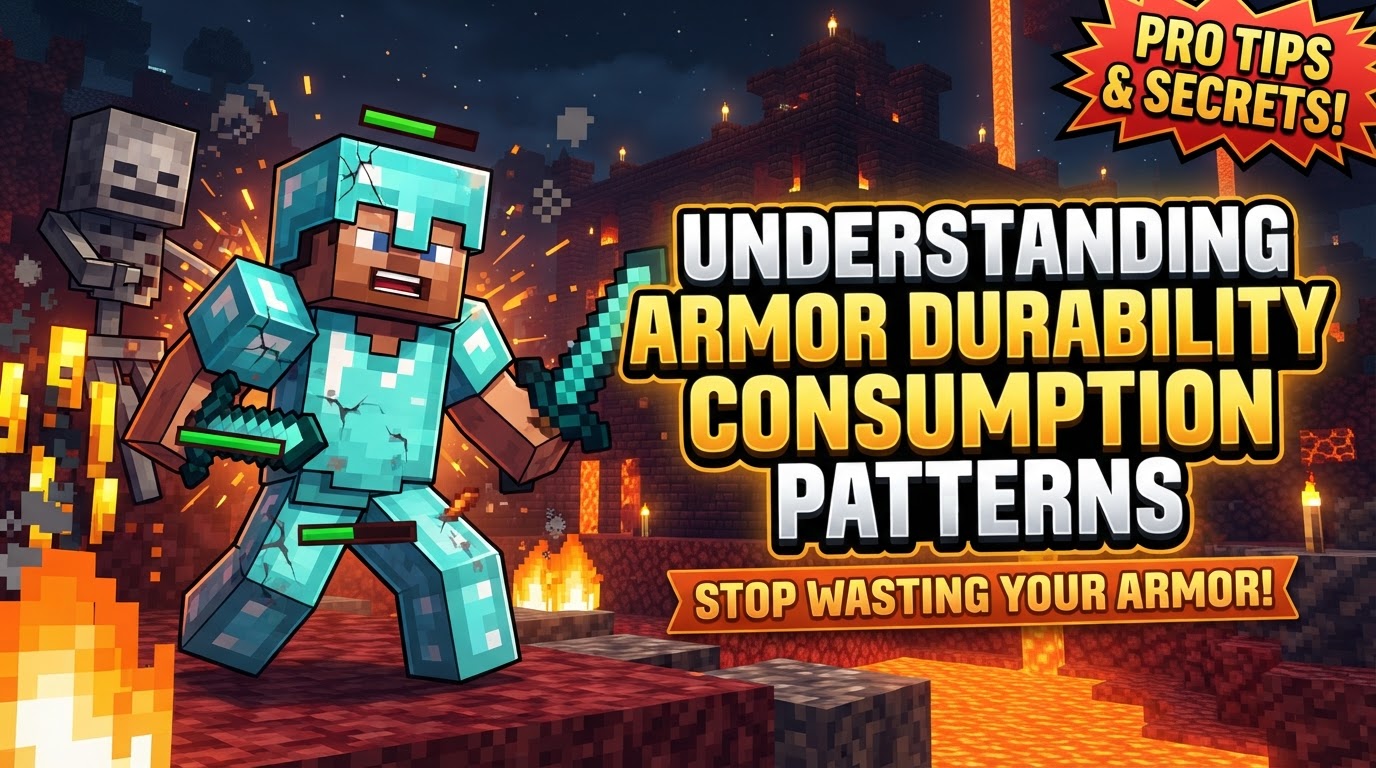
- Visual Representation: Armor’s remaining durability is clearly indicated by a green bar positioned beneath its icon in your inventory or hotbar. As the armor takes damage, this bar progressively shortens and shifts in color, eventually turning red when the item is on the verge of breaking completely.
- Material Matters: The inherent durability of an armor piece is fundamentally tied to its crafting material. Netherite armor stands as the undisputed champion in terms of longevity, far surpassing Diamond, which itself is superior to Iron, Chainmail, Gold, and Leather in descending order. Generally, higher-tier materials also provide a greater number of defense points, offering better protection.
- Defense Points and Damage Mitigation: Armor contributes “defense points,” visually represented by small chestplate icons. A full bar of 20 defense points can reduce certain types of incoming damage by a substantial amount, up to 80%, making proper armor vital for survival.
- Armor Toughness Explained: A more recent addition to the armor system is “armor toughness.” This stat specifically reduces the impact of powerful, penetrating attacks. Diamond armor provides 2 toughness points per piece, while the superior Netherite armor offers 3 toughness points per piece, significantly bolstering your resilience against strong damage sources.
- The Unbreaking Enchantment: This invaluable enchantment offers a chance for your armor piece to entirely bypass durability loss when it would normally occur. Unbreaking I effectively doubles the lifespan of an item, Unbreaking II triples it, and Unbreaking III quadruples it on average, though the underlying mechanics involve a more complex calculation.
- The Mending Enchantment: A highly sought-after treasure enchantment, Mending provides automatic repairs. When equipped, the armor piece will consume experience orbs collected by the player to mend itself, potentially granting it an indefinite lifespan if experience is consistently gathered.
How Your Armor Takes a Hit: Durability Consumption in Detail
Armor loses durability only when the player sustains specific types of damage that the armor is designed to mitigate. This is a critical distinction for efficient gameplay.
- The Durability Equation: For every four hearts (equivalent to eight health points) of damage received by the player, each equipped armor piece loses one durability point. It’s worth noting that some sources suggest an older or alternative rule where each armor piece loses one durability point for every two hearts of damage received, but the four-heart rule is the more commonly observed pattern.
- Damage Sources That Consume Durability: Your armor will bravely take the brunt of damage from a variety of sources, including:
- Melee attacks delivered by hostile mobs or other players.
- Projectile impacts, such as arrows, shulker bullets, or tridents.
- The piercing laser beams fired by Guardians.
- Direct lightning strikes.
- Impact from falling anvils or pointed stalactites.
- Direct contact with fire, lava, or magma blocks (Netherite armor uniquely resists lava damage, but other materials will lose durability).
- Brushing against cacti.
- Explosions from TNT, Creepers, or Ghast fireballs.
- Movement through the thorny branches of a sweet berry bush.
- When the Thorns enchantment on your armor damages an attacking entity.
- Touching a pointed dripstone block.
- Damage Sources That Spare Your Armor: Crucially, not all damage types affect your armor’s durability. Being aware of these can save you precious resources:
- Sustained fire damage over time (after the initial contact damage that might consume durability).
- Suffocation when trapped inside blocks.
- Colliding with the world border.
- Drowning in water or other liquids.
- Fall damage from great heights.
- Hitting a block while gliding with elytra.
- Magic damage from various sources.
- Being inside a powder snow block.
- Falling into the void.
- The use of the
/killcommand. - Starvation damage.
- The Warden’s powerful ranged sonic attacks.
- The Annoyance of Uneven Wear: Players often observe that helmets and boots seem to break faster than chestplates and leggings. This isn’t due to different consumption rates, but rather because helmets and boots typically possess lower maximum durability values compared to their larger counterparts, leading to a quicker depletion of their lifespans in active combat or exploration.
Strategic Management: Prolonging Your Armor’s Lifespan
Effective durability management is a cornerstone of long-term survival and efficiency in Minecraft. Here’s how to master it:
- Prioritize High-Tier Armor: Always aim to equip Diamond and, ultimately, Netherite armor. Their superior base durability and protection values significantly reduce the frequency of repairs or replacements. Netherite, crafted by combining Netherite ingots with Diamond gear at a smithing table, offers unmatched resilience.
- Embrace Unbreaking: The Unbreaking enchantment is your first line of defense against rapid wear. Applying Unbreaking III to all your armor pieces will drastically extend their service life, making your adventures far less resource-intensive.
- Seek Out Mending: Mending is the ultimate solution for armor longevity. Once you’ve enchanted your gear with Mending, any experience you gain – whether from mining, killing mobs, or smelting – will automatically repair your equipped and damaged armor pieces. Mending books are rare treasures, found in dungeon chests, through fishing, or by trading with expert-level librarian villagers.
- Anvil Repair with Materials: For enchanted armor, an anvil is your best friend. You can repair damaged pieces by combining them with their base crafting material (e.g., diamonds for diamond armor, iron ingots for iron armor). Each unit of material restores 25% of the armor’s maximum durability, and crucially, this method preserves all existing enchantments, though it does incur an experience cost.
- Anvil Repair by Combining Items: Another anvil-based repair method involves combining two damaged pieces of the exact same armor type. This merges their remaining durabilities into one item and preserves enchantments, also at the cost of experience levels.
- Grindstone Repair (with Caution): A grindstone can combine two damaged, unenchanted armor pieces of the same type, merging their durability and even adding a small 5% bonus. However, it is vital to remember that using a grindstone will irrevocably remove all enchantments from the items involved, making it suitable only for unenchanted gear or when enchantments are not a concern.
Avoiding Common Durability Pitfalls
Even seasoned players can fall into traps that prematurely wear down their armor or waste valuable enchantments.
- Losing Precious Enchantments: A significant mistake is using a grindstone or the crafting grid to combine two damaged, enchanted armor pieces. Both methods will strip away all enchantments, effectively undoing hours of enchanting effort. Always use an anvil for enchanted item repairs.
- Underestimating Mending’s Value: Neglecting to prioritize the Mending enchantment can lead to a constant drain on your resources. Without Mending, you’ll either be frequently crafting new armor, spending materials and XP on anvil repairs, or risking your life with broken gear.
- Misinterpreting Damage Types: As highlighted earlier, not all damage affects armor durability. Believing that fall damage, drowning, or magic attacks wear down your armor can lead to unnecessary worry or misdirected repair efforts. Understanding which damage types matter and which do not allows for more strategic gameplay and resource conservation.
By understanding these intricate patterns of durability consumption and repair, you can become a more efficient and effective survivor in the challenging world of Minecraft. Arm yourself with knowledge, and your gear will serve you faithfully for countless adventures.
Tags:
YOU MAY ALSO LIKE...


