The Complete Mechanics of Falling Block Suffocation
Many a seasoned Minecraft adventurer has met an untimely end not by a creeper’s explosive embrace or a fiery lava bath, but by the seemingly innocuous act of digging. The culprit? Falling block suffocation, a surprisingly common and often lethal hazard that traps players within the very blocks they seek to harvest or build with. Understanding this mechanic is crucial for survival, especially when exploring caves, deserts, or any area with loose, gravity-affected blocks.
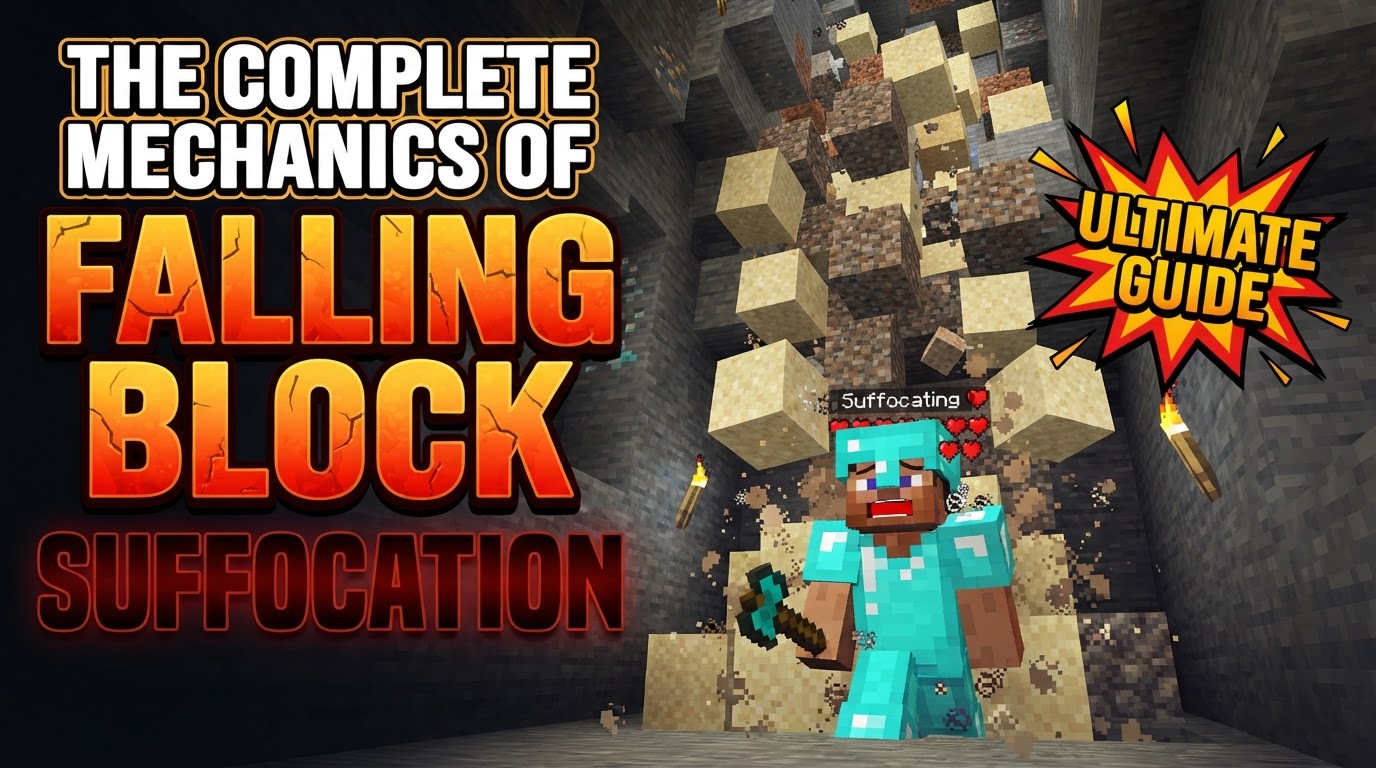
Falling block suffocation occurs when a player’s hitbox becomes fully encompassed by a solid block, leading to continuous damage until the player escapes, dies, or the block is removed. This isn’t just about being trapped in a wall; it’s particularly insidious when gravity-affected blocks come crashing down from above, often without warning, making an escape route critical.
The Fundamental Mechanics of Falling Blocks
At the heart of falling block suffocation lies Minecraft’s physics engine, specifically how it treats certain blocks. Unlike the vast majority of blocks that remain suspended indefinitely without support, a select few are beholden to gravity. These blocks will fall if there is no solid block directly beneath them, creating a dynamic and sometimes dangerous environment.
- Gravity-Affected Blocks: The primary culprits are sand and gravel, found abundantly in deserts, beaches, rivers, and caves. Other blocks include red sand, a variant of sand found in badlands biomes; anvils, which are crafted for repairing items and are unique in that they also deal fall damage to entities they land on; activated TNT, which falls only after being primed; concrete powder, a building material that sets into solid concrete when it touches water; and the rare dragon egg, which teleports upon interaction but also falls. Most other blocks, such as dirt, stone, wood, or obsidian, are not affected by gravity and will float in mid-air if their support is removed.
- Suffocation Trigger: Suffocation damage initiates when a player’s character model, specifically their hitbox, is entirely within the bounds of a solid block. This typically happens when a block occupies the same space as the player. The game registers this overlap as a “suffocation” event, and the player begins to take damage at a steady rate until the collision is resolved.
- Falling Action: When a gravity-affected block loses its support, it enters a falling state. It will continue to fall downwards until it either hits a solid block, lands on another entity (like a player or mob), or reaches the void. This descent can be rapid and relentless, especially with long columns of blocks.
The Step-by-Step Peril
The process of falling block suffocation often unfolds rapidly, turning a routine mining expedition into a desperate struggle for survival:
- Initial Placement or Movement: A player might be standing directly beneath a gravity-affected block that loses its support, or a block might be mechanically pushed into their space. A common scenario is mining the block directly below a column of sand or gravel, causing the entire stack above to collapse.
- Block Descent/Occupation: The gravity-affected block falls or is moved into the player’s occupied space. For a brief moment, the player might still be able to move, but if the block fully occupies their position, they become trapped.
- Suffocation Damage: Once the player’s hitbox is completely encased by the solid block, they begin to take continuous suffocation damage. This damage can quickly deplete health, especially if the player is ill-equipped or caught completely off guard. The damage continues until the player is no longer inside the block (by moving, breaking the block, or dying).
Unintentional encounters with this mechanic are most frequent when exploring caves with gravel veins or digging in deserts. A single pickaxe swing can trigger a cascading collapse, burying the unwary adventurer.
Essential Tips for Avoiding and Mitigating Falling Block Suffocation
While the threat of falling blocks is ever-present, several strategies can help players avoid or escape this deadly trap:
- Place Torches Strategically: This is perhaps the most famous and effective countermeasure. If you are mining a column of sand or gravel, place a torch on the ground block where the falling blocks would land. When the gravity-affected blocks fall onto the torch (which is a non-full block), they will instantly break into their item form, allowing for safe collection. This method is incredibly useful for clearing large quantities of sand or gravel quickly.
- Wield a Shovel for Speed: If you find yourself trapped by falling sand or gravel, speed is of the essence. A shovel is the correct tool for mining these blocks and will break them significantly faster than a pickaxe or your bare hand. Keeping a shovel handy, especially in sandy or gravelly biomes, can be a lifesaver.
- Water Breathing Potion or Turtle Shell (Bedrock Edition): In Bedrock Edition, a unique interaction allows players under the effects of a Water Breathing potion or wearing a Turtle Shell helmet to negate suffocation damage. This means you could theoretically remain trapped indefinitely without taking damage, providing ample time to dig yourself out or for a friend to assist. This is a critical distinction for Bedrock players.
- Quickly Place a Button: If you’re caught and the blocks are still falling, breaking the block directly above you and immediately placing a button in its place can offer a momentary reprieve. Like torches, buttons are non-full blocks, causing subsequent falling blocks to break upon impact, potentially giving you enough time to escape.
- Mine Mindfully: Prevention is always better than cure. Before mining directly beneath large overhangs or columns of gravity-affected blocks, take a moment to assess the situation. Create a safe path, shore up unstable areas, or simply avoid mining directly underneath if possible. Always consider an escape route.
Common Mistakes and Advanced Considerations
Understanding the nuances of falling block suffocation extends beyond basic avoidance:
- Mining Blindly: The most frequent mistake players make is to tunnel directly downwards or mine the block beneath a tall column of sand or gravel without first securing the area or having an immediate exit strategy. This often leads to being instantly buried with no time to react. Always “pillar up” or dig around when dealing with suspicious overhead blocks.
- The “Suffocated in a Wall” Death Message: This often-seen death message is not exclusive to being literally trapped within a constructed wall. It is the generic message for any instance where a player’s hitbox is fully inside a solid block, which commonly includes incidents with falling blocks. If you see this message, it’s highly likely falling sand, gravel, or another block was the cause.
- Bedrock Edition Glitches: Players on Bedrock Edition sometimes report taking unexpected suffocation damage in situations not directly involving falling blocks. This can occur when placing blocks while jumping, experiencing server lag, or due to other desynchronization issues that briefly cause the player’s hitbox to overlap with a solid block, even if visually they appear clear. While not falling block suffocation, it highlights the engine’s sensitivity to hitbox overlap.
- Redstone Traps: For those with nefarious intentions or a flair for engineering, falling block suffocation can be intentionally induced. Redstone mechanisms can be designed to use pistons to push blocks into a player’s space, or to trigger a delayed release of falling blocks above a target area, creating deadly traps that are difficult to escape.
Mastering the mechanics of falling block suffocation is more than just learning to avoid a specific death; it’s about understanding a fundamental aspect of Minecraft’s physics. By recognizing the blocks that pose a threat, employing smart mining techniques, and utilizing clever workarounds, players can transform a common hazard into a manageable challenge, ensuring their adventures continue uninterrupted by an untimely burial.
Tags:
YOU MAY ALSO LIKE...