

Determining Trade Price Changes Based on Villager Demand — A Quick Guide
Understanding the intricate economics of villager trading is crucial for any seasoned Minecraft player looking to optimize their resource acquisition. Unlike a simple fixed price system, villager trade prices are dynamic, constantly shifting based on a complex interplay of supply and demand. Mastering these mechanics allows players to secure the best deals and manage their villager-based farms effectively.
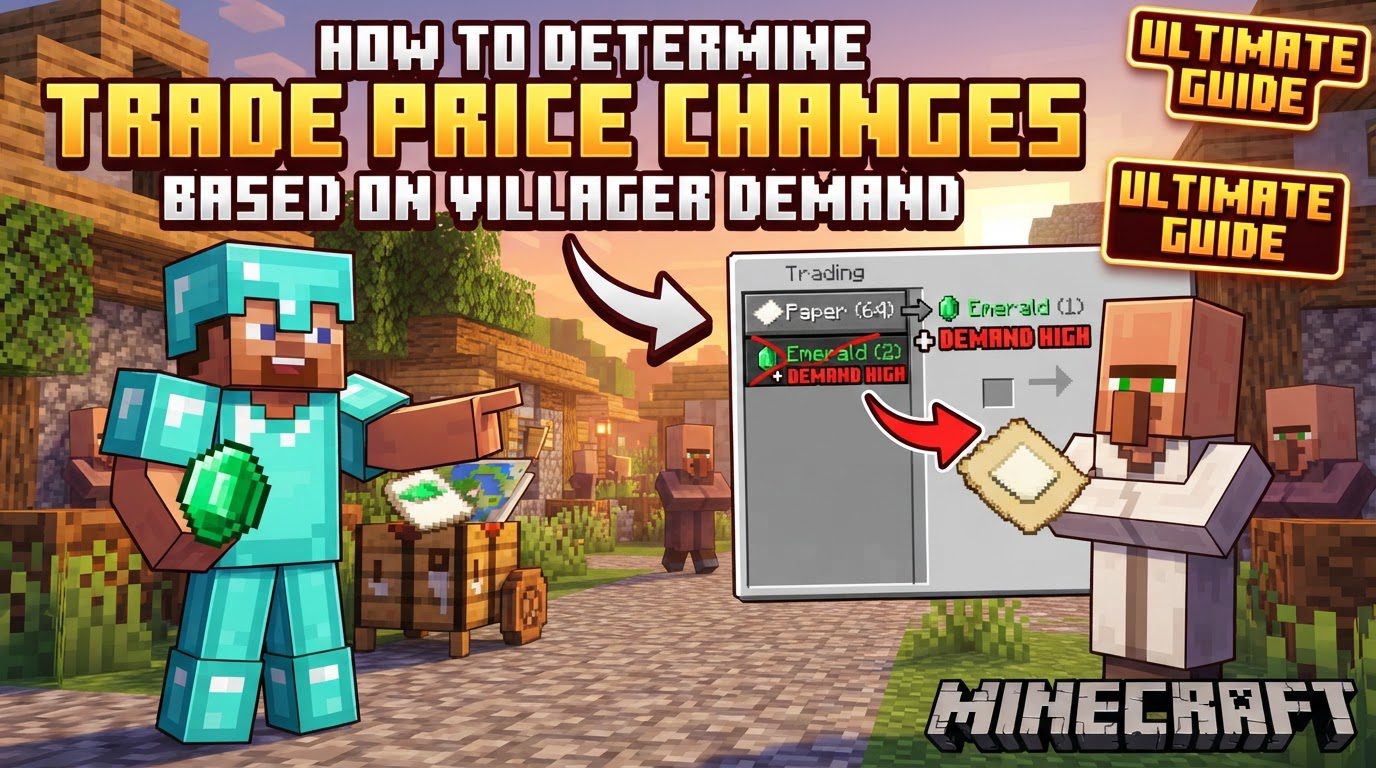
Key Mechanics of Villager Trade Prices
At the heart of villager economics is the principle of supply and demand, which dictates how prices fluctuate. It’s important to note that this demand is tracked per item, not per individual villager. This means that if you repeatedly trade for a specific item, such as emeralds for wheat, the price of wheat will increase for all players when that villager restocks, regardless of whether you’re the only one trading with them or if multiple players are involved on a server.
- Price Increases with Frequent Trading: When a particular item is traded frequently, the villager perceives a high demand for it. Consequently, when the villager next resupplies their trades, the price for that item will be higher. This mechanism prevents players from endlessly exploiting a single lucrative trade without consequence.
- Price Decreases with Inactivity: Conversely, if an item is not traded for a certain period, the villager interprets this as low demand. When they resupply their trades after this period of inactivity, the price for that item will gradually decrease. This offers a natural reset mechanism, rewarding patience and strategic trading.
- The Role of Job Site Blocks: For any of these price adjustments to occur, villagers must be able to access their designated job site block. This block is essential for them to resupply their trades. Without access, they cannot restock their inventory, and crucially, they cannot reset or adjust their prices based on demand fluctuations. Ensuring unobstructed access to their job site is therefore paramount for price management.
- Trades Unaffected by Demand: Not all trades are subject to these demand-based price changes. Any trade that has a price multiplier of 0 will remain constant, irrespective of how often it’s used or ignored. These trades offer a stable source of goods or emeralds, though they are typically less common.
- Limited Stock and Maximum Uses: Each trade offered by a villager has a limited stock. Once this stock is depleted, the trade becomes temporarily unavailable until the villager resupplies. Furthermore, each trade also has a maximum number of uses before it becomes permanently disabled for that villager, regardless of restocks. This reinforces the need for diversification and an understanding of villager trade cycles.
Step-by-Step Process to Determine Price Changes
To effectively manage and predict villager trade price changes, a systematic approach is required. By following these steps, you can gain a better understanding of the dynamic economy within your villager trading hall.
- Observe Current Prices: Begin by carefully noting the initial cost of any item you intend to trade. This baseline price is your starting point for monitoring changes. For example, if a Fletcher is selling 32 sticks for 1 emerald, remember this initial ratio.
- Monitor Trade Frequency: Keep a meticulous record of how many times you complete a specific trade. This doesn’t necessarily mean writing it down; often, simply being aware of your trading habits for a particular item is sufficient. If you’re spamming a trade, you’re building up demand.
- Identify Price Increases: If you find yourself frequently trading for a particular item, anticipate a price hike. After the villager has had a chance to access their job site block and resupply, check the trade again. You will likely see the cost for that item has risen. For instance, those 32 sticks might now cost 2 emeralds, or perhaps the quantity of sticks offered for 1 emerald has decreased.
- Identify Price Decreases: Conversely, if you decide to stop trading for a specific item for a period, observe its price over time. After a few in-game days, allow the villager to resupply. When you check the trade again, you should notice the price gradually lowering, returning towards its original value, or even below it if other discounts are applied.
- Utilize Job Sites: This step is critical for both price increases and decreases. Always ensure that your villagers have unimpeded access to their job site blocks. Without this access, they cannot resupply their trades, which means prices will not reset or adjust according to the demand you’ve created or alleviated. A villager stuck without their job site will keep their current prices indefinitely until they can reconnect.
Important Tips for Price Management
Beyond simply observing price changes, there are several strategies and tips that can help you manipulate and manage villager prices to your advantage, ensuring a more sustainable and cost-effective trading experience.
- Diversify Trades: Instead of repeatedly trading for the same item with one villager, try to diversify your trading activities. This means either alternating between different trades offered by the same villager (e.g., buying wheat, then buying bread, then selling emeralds for something else) or trading with multiple villagers of the same profession. By spreading out your demand, you prevent rapid price inflation on a single item, keeping overall costs lower.
- Cure Zombie Villagers: This is arguably one of the most powerful discount mechanisms in Minecraft. Curing a zombie villager by throwing a Splash Potion of Weakness at it and then feeding it a Golden Apple provides a significant, permanent discount on all of that villager’s trades. Repeatedly curing the same villager (though challenging in survival) can stack these discounts, potentially lowering prices to an absolute minimum of one emerald per item or one item for one emerald, depending on the trade direction.
- Earn “Hero of the Village”: Participating in and successfully defeating a raid grants all players involved the “Hero of the Village” effect. This beneficial status effect temporarily reduces trade prices with all villagers in the village where the raid was defeated. While temporary, this can be an excellent opportunity to make many trades at a reduced cost.
- Maintain Good Reputation: Your actions within a village directly impact your standing, or “reputation,” with its inhabitants. Attacking villagers or, even worse, harming their protective iron golems, will negatively impact your reputation. A poor reputation translates directly into higher trade prices, making transactions more expensive. Always strive to be a good neighbor to keep prices favorable.
- Allow Cool-Down Periods: If you find that the price for a specific item has become prohibitively high due to over-trading, the best course of action is to simply stop trading that item for a while. Allow a few in-game days to pass. During this cool-down period, the villager will register the lack of demand, and upon resupplying, the price for that item should begin to decrease, making it more affordable again.
Common Mistakes to Avoid
Navigating villager economics effectively also means being aware of common pitfalls that can inadvertently drive up prices or hinder your trading efficiency.
- Over-trading a Single Item Repeatedly: This is perhaps the most common mistake. Continuously buying or selling the same item from a villager without diversification will inevitably cause its price to skyrocket. What started as a cheap source of resources can quickly become unaffordable, disrupting your supply chain and requiring a lengthy cool-down period.
- Not Allowing Villagers to Restock: A villager’s ability to restock their trades is intrinsically linked to their access to their job site block. If you enclose a villager in a way that prevents them from reaching their workstation, their trades will not reset, their stock will remain depleted, and crucially, their prices will not decrease. Always ensure a clear path to their profession block.
- Aggravating Villagers: Hitting or killing villagers, or even their iron golems, will severely damage your reputation within the village. This negative reputation directly translates to increased trade prices across the board, making all transactions more expensive. Treat your villagers with respect to maintain favorable trading conditions.
- Assuming Price Changes are Per Villager: A frequent misconception among players is that demand-based price changes are tied to an individual villager. However, as established, demand is tracked per item. This means that a single villager can simultaneously have very high prices for an item you’ve traded heavily and very low prices for another item you’ve ignored, all at the same time. Understanding this distinction is key to managing your trading strategy effectively.
By internalizing these mechanics, employing smart trading strategies, and avoiding common errors, you can transform your villager trading experience from a frustrating guessing game into a predictable and highly profitable endeavor within your Minecraft world.
Tags:
YOU MAY ALSO LIKE...


