

Hatching a Turtle Egg Safely
119
views ❘
July 13, 2026
To safely hatch turtle eggs in Minecraft, understanding their unique mechanics and taking preventative measures against environmental hazards and hostile mobs is crucial. This guide will provide all the necessary information to ensure your turtle eggs hatch successfully and your baby turtles thrive.
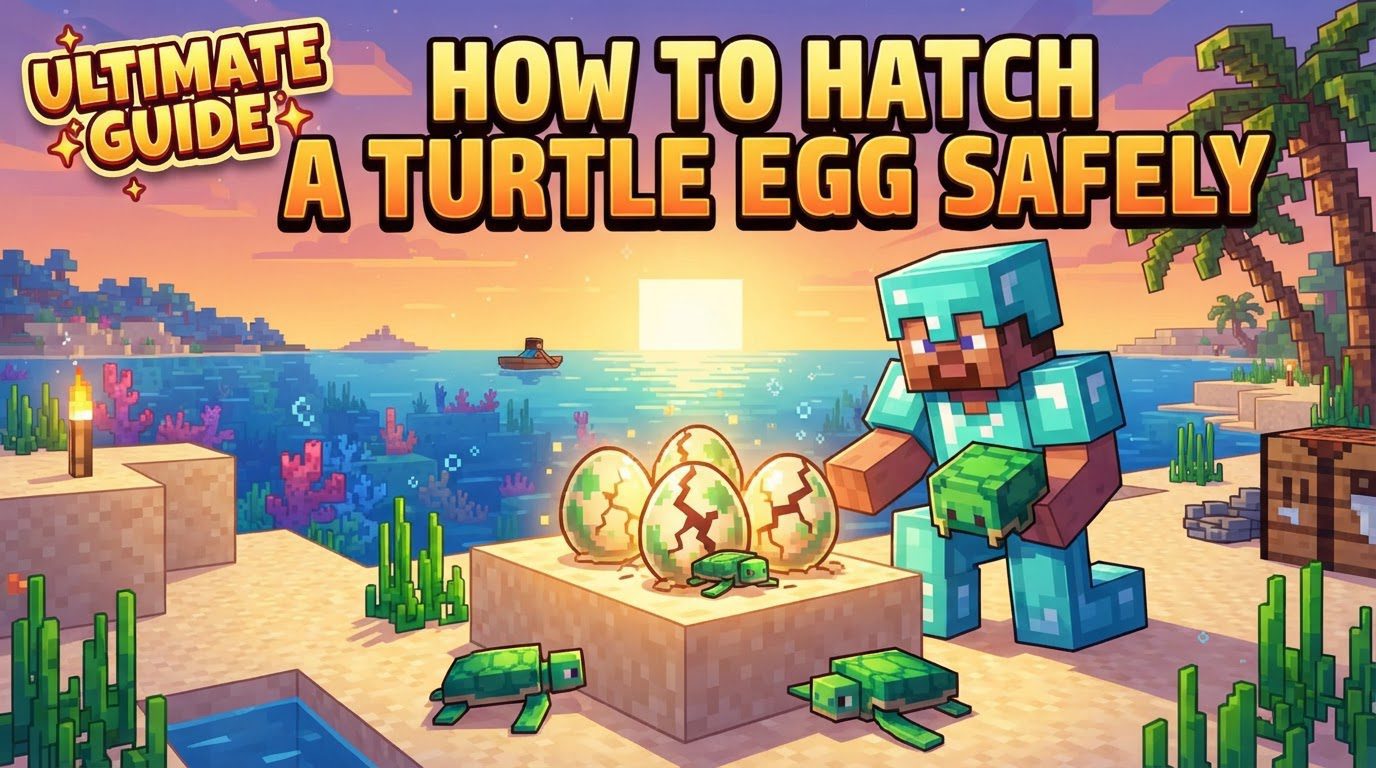
Understanding Turtle Egg Mechanics
- Hatching Surface Requirements: Turtle eggs will only hatch when placed on regular sand, red sand, or suspicious sand blocks. They will not hatch on other block types, making correct placement fundamental.
- Hatching Progression and Time: Eggs progress through three distinct cracking stages before ultimately hatching. This process typically takes approximately 7 in-game days. However, this timeframe can vary, with specific conditions influencing the rate of progress.
- Nighttime Acceleration: Hatching occurs significantly faster during nighttime hours. There is a particularly high chance of an egg cracking or fully hatching between 3:36 AM and 4:33 AM in-game time. Utilizing these hours is key for efficient hatching.
- Player Proximity for Progression: For the eggs to continue their developmental stages and progress toward hatching, a player must be within a 128-block spherical radius of the eggs. If no player is within this proximity, the eggs’ hatching progress will halt until a player returns.
- Simultaneous Hatching of Multiple Eggs: An advantageous mechanic is that if multiple eggs are placed within a single block space, they will all hatch simultaneously. Once the block’s overall hatching process is complete, all eggs present in that block will spawn their respective baby turtles at once.
- The “Home Beach” Concept: Upon hatching, baby turtles instinctively remember their exact hatching location. This spot becomes their designated “home beach.” As these baby turtles mature into adult turtles, they will instinctively return to this specific home beach to lay their own eggs, perpetuating the turtle life cycle in that area.
Step-by-Step Guide to Safe Turtle Egg Hatching
Follow these detailed steps to ensure a safe and successful hatching of your turtle eggs, from acquisition to the emergence of your new baby turtles.
- 1. Obtain Turtle Eggs: The process begins by acquiring the eggs. To do this, you must breed two adult turtles by feeding them seagrass. One of the turtles will become pregnant and subsequently return to its original “home beach” – the location where it hatched – to lay a clutch of 1 to 4 eggs.
- 2. Move Eggs (Optional): Once the eggs are laid, you have the option to move them. This step is crucial if you wish to relocate the hatching site or establish a new “home beach” for the future baby turtles. To move eggs safely, you must use a tool enchanted with Silk Touch. Attempting to break turtle eggs with any other tool or without Silk Touch will result in their immediate destruction. Moving them with Silk Touch allows you to pick them up as an item and place them elsewhere.
- 3. Place Eggs: With your collected turtle eggs (obtained directly or moved via Silk Touch), the next step is to place them in your chosen hatching location. Remember the strict requirement: eggs must be placed on a regular sand block, red sand block, or suspicious sand block.
- 4. Protect the Eggs: This is one of the most critical steps for safe hatching. Turtle eggs are incredibly vulnerable. Construct a robust enclosure around your placed eggs, using fences, walls, or other sturdy blocks to prevent unwanted access. Crucially, ensure there are no two empty blocks directly above the eggs, as certain hostile mobs are programmed to pathfind and trample them from above.
- 5. Stay Nearby: As previously mentioned, the hatching process only progresses when a player is within 128 blocks of the eggs. Therefore, after placing and protecting your eggs, make sure to remain within this proximity. Venturing too far will halt the eggs’ development.
- 6. Wait for Hatching: With all preparations in place, it’s now a waiting game. The eggs will gradually crack over the course of several in-game nights. To maximize the speed of hatching, it is highly recommended that you do not sleep through the night, as sleeping skips the crucial nighttime hours when eggs make the most progress.
Crucial Tips for Success
Beyond the basic steps, these tips will help you optimize your turtle egg hatching process and ensure the maximum chance of success.
- Nighttime Acceleration: Always prioritize staying awake and near your eggs during the night. As the research notes indicate, nighttime is when eggs make the most significant progress towards hatching, especially between 3:36 AM and 4:33 AM. Maximizing exposure to these hours will drastically reduce the overall waiting time.
- Comprehensive Mob Protection: Turtle eggs and newly hatched baby turtles are extremely vulnerable to a wide array of hostile creatures. It is imperative to construct a well-lit and secure enclosure that completely isolates them. Mobs known to be hostile and capable of trampling or destroying eggs/babies include: Zombies, Zombie Villagers, Husks, Drowned, Skeletons, Strays, Wither Skeletons, Wild Ocelots, Wild Wolves, Stray Cats, Foxes, Zoglins, Johnny Vindicators (Vindicators named “Johnny”), and Wardens.
- Silk Touch is Essential: This cannot be stressed enough. If you intend to move turtle eggs from their initial laying spot, a tool enchanted with Silk Touch is the only way to do so without destroying them. Always double-check your tool before attempting to mine eggs.
- Maintain Player Proximity: Consistently ensure that you or another player remains within the 128-block radius of the eggs. If the area becomes unloaded due to player distance, the hatching timer will pause, prolonging the waiting period unnecessarily.
- Utilize Multiple Eggs per Block: To make the most of your space and time, place up to four turtle eggs within a single sand block. Since all eggs in a given block will hatch simultaneously once the block’s hatching timer is complete, this method is highly efficient for producing multiple baby turtles from one spot.
- Understand the Home Beach Significance: The location where your eggs hatch will forever be the “home beach” for those specific baby turtles once they grow into adults. Plan your hatching location strategically if you wish to create a centralized turtle farm or a specific area for adult turtles to return to for future egg-laying.
Common Mistakes to Avoid
Being aware of these common pitfalls will help you prevent unnecessary setbacks and ensure a smooth hatching process for your turtle eggs.
- Incorrect Block Placement: A frequent mistake is placing turtle eggs on inappropriate blocks. Remember, only regular sand, red sand, or suspicious sand blocks will allow eggs to hatch. Placing them on dirt, stone, grass, or any other block type will completely prevent any hatching progress.
- Trampling: Both players and certain mobs can accidentally (or intentionally, in the case of hostile mobs) destroy turtle eggs by walking or jumping on them. Always be mindful of your steps around an egg clutch, and ensure your protective enclosure prevents any mob from pathfinding over the eggs.
- Breaking Without Silk Touch: Attempting to harvest or move turtle eggs without a Silk Touch enchanted tool will result in their destruction. This is a common and frustrating mistake that wastes the effort put into breeding and egg laying. Always use Silk Touch.
- Insufficient Player Distance: Forgetting the 128-block player proximity rule can lead to confusion when eggs don’t seem to be hatching. If you move too far away, the chunks containing the eggs will unload, pausing their development. Always stay relatively close to keep the timer active.
- Sleeping Through the Night: While sleeping through the night is convenient for skipping hostile mob spawns, it directly counteracts efficient turtle egg hatching. Sleeping skips the crucial nighttime hours when eggs make the most progress. If you want fast hatching, avoid sleeping.
- Lack of Protection: Leaving turtle eggs exposed to the open world is a recipe for disaster. Numerous hostile mobs actively seek out and destroy turtle eggs and baby turtles. Without a secure, well-lit enclosure, your eggs are almost guaranteed to be trampled or attacked, leading to a complete loss of your efforts.
Click to rate this post!
[Total: 0 Average: 0]
Tags:
YOU MAY ALSO LIKE...

Lightning Rod Redstone Signal Output
53
views
A powerful, yet fleeting, burst of Redstone energy is precisely what the Minecraft Lightning Rod…

List of all enchantments and their max levels
34
views
With over 40 distinct enchantments available in Minecraft, mastering their effects and understanding their maximum…

List of all Minecraft advancements and how to earn them
36
views
Over 100 distinct challenges and milestones define a player's journey through the blocky worlds of…

List of all Minecraft biomes and their unique features
27
views
Over 60 distinct ecological regions define the sprawling landscapes of Minecraft's three dimensions, each presenting…

List of all Minecraft structures and where to find them
92
views
Only three structures in all of Minecraft are absolutely essential to "completing" the game's main…

List of all mob drops and their rarity
67
views
A mere 2.5% base chance stands between you and some of Minecraft's most coveted treasures…

List of all ore types and their smelting requirements
84
views
Over a dozen distinct ore types exist within the blocky world of Minecraft, each offering…

List of all potion effects and durations
51
views
Over 20 distinct potion effects exist within Minecraft, each offering unique temporary enhancements or detriments…

List of all stone variants and their uses
99
views
Twenty-four distinct stone types, each with unique properties and aesthetic appeal, form the very bedrock…