Crafting Cinnabar Stairs, Slabs, and Walls — A Quick Guide
Cinnabar, a distinctive reddish-hued block, is set to become a valuable and aesthetically pleasing addition to the Minecraft world. These unique blocks, along with their various crafted forms such as stairs, slabs, and walls, are not yet available in the current stable vanilla game. Instead, they are an upcoming feature slated for release in the “Chaos Cubed” update, specifically Minecraft 26.2. For players on Bedrock Edition, Cinnabar and its variants can be accessed through experimental gameplay settings, offering an early glimpse into its potential.
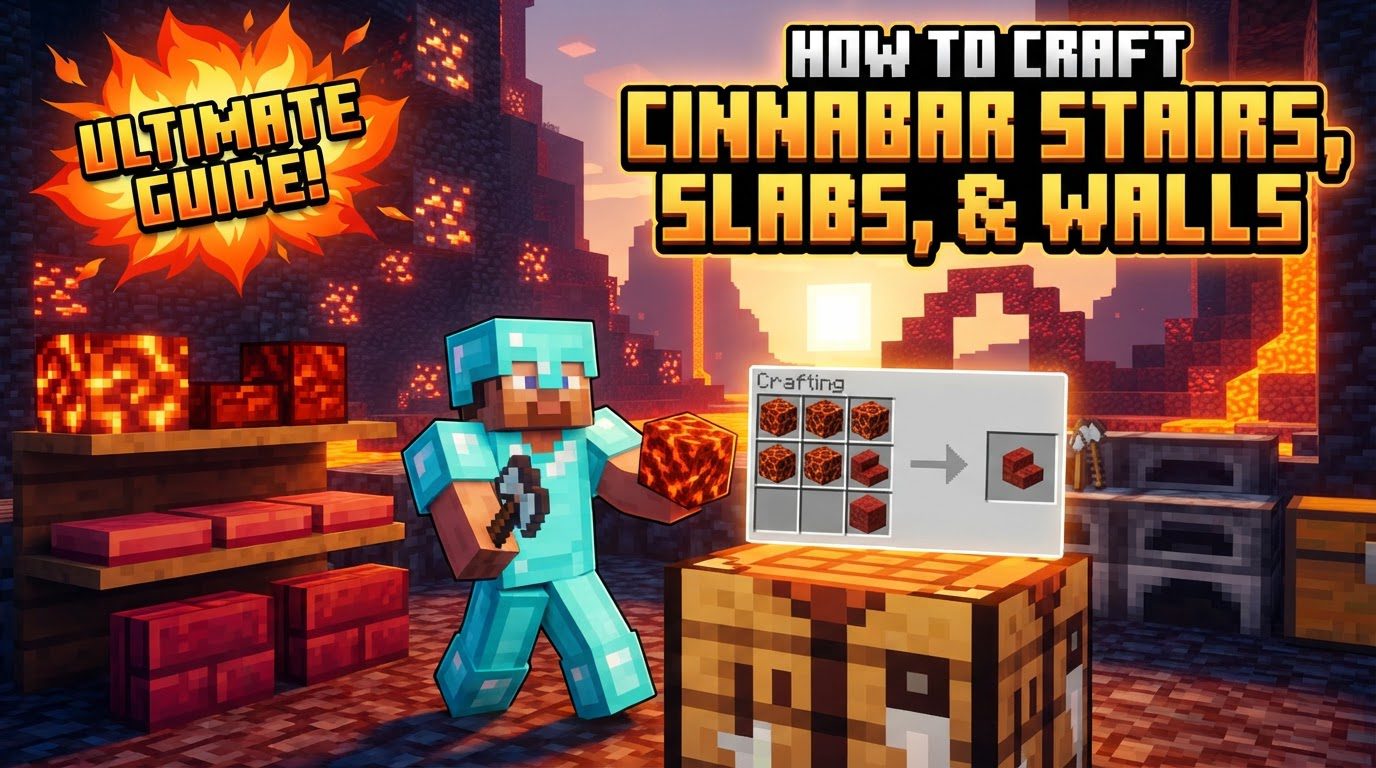
Understanding the intricacies of Cinnabar, from its natural generation to its diverse crafting possibilities, is essential for any player looking to incorporate this vibrant material into their builds and designs. This guide will walk you through every step, ensuring you can efficiently obtain, process, and utilize Cinnabar to create stunning stairs, slabs, and walls, as well as its polished, brick, and chiseled counterparts.
Understanding Cinnabar Blocks and Their Properties
Cinnabar blocks are characterized by their striking reddish hue, making them easily identifiable in the environments where they naturally generate. These blocks are a key component of the upcoming “Chaos Cubed” update, enriching the game’s underground biomes and surface features. To successfully acquire and work with Cinnabar, it’s crucial to understand its unique properties and how it interacts with the game world.
Natural Generation: Cinnabar primarily generates in specific geological formations. Players will find these reddish blocks naturally occurring within Sulfur Caves, which are subterranean biomes characterized by their distinctive features. Additionally, Cinnabar can be found in and around Sulfur Springs, which are surface manifestations often indicating the presence of Sulfur Caves below. Locating these areas is the first and most critical step in beginning your Cinnabar collection.
Mining Requirements: When it comes to harvesting Cinnabar, precision and the correct tool are paramount. Cinnabar blocks, along with all their variants, can only be successfully mined using a pickaxe. This is a non-negotiable requirement; attempting to mine Cinnabar with any other tool, or by hand, will result in the block dropping nothing. Fortunately, the type of pickaxe does not matter for initial collection. Any pickaxe, from a basic wooden one to a more advanced netherite tool, will suffice to break Cinnabar and add it to your inventory.
Block Variants: Cinnabar is not just a single type of block; it comes in a variety of forms, each offering distinct aesthetic and crafting possibilities. The default Cinnabar block can be processed into more refined versions. These include polished Cinnabar, which offers a smoother texture; Cinnabar bricks, providing a classic building block appearance; and chiseled Cinnabar, featuring intricate designs. Each of these variants can then be further crafted into functional and decorative building components: slabs, stairs, and walls, allowing for extensive architectural flexibility.
Step-by-Step Process: From Raw Cinnabar to Crafted Structures
The journey to crafting Cinnabar stairs, slabs, and walls begins with finding the raw material and progresses through various crafting stages. Following these steps will ensure you efficiently transform raw Cinnabar into the desired building blocks.
Phase 1: Obtaining Raw Cinnabar
The very first step is to venture into the world and locate the source of Cinnabar. As mentioned, Cinnabar is exclusive to specific biomes introduced in the “Chaos Cubed” update.
- Locate Sulfur Caves or Sulfur Springs: Begin by exploring the surface for Sulfur Springs. These visible surface features often act as indicators for the extensive Sulfur Caves found beneath them. Alternatively, if exploring underground, keep an eye out for caves that feature distinct yellow sulfur blocks alongside the red Cinnabar blocks. These specific biomes are the only places where Cinnabar naturally generates.
- Mine Cinnabar Blocks: Once you’ve identified a Cinnabar deposit, equip any pickaxe. Approach the red Cinnabar blocks and mine them. Remember, using a pickaxe is crucial; any other tool will destroy the block without yielding any drops, wasting your effort. Gather a sufficient quantity of raw Cinnabar to begin your crafting projects.
Phase 2: Crafting Basic Cinnabar Stairs, Slabs, and Walls
With a supply of raw Cinnabar blocks, you can now begin crafting the fundamental structural components. These initial crafting recipes utilize a crafting table.
- Cinnabar Stairs: To craft Cinnabar stairs, open your crafting table. Place Cinnabar blocks in a 3×2 stair shape. Specifically, this usually means placing three blocks along the bottom row, two blocks in the middle row (left two slots), and one block in the top-left slot. This arrangement will yield multiple Cinnabar stair blocks, perfect for creating ascending paths and decorative steps.
- Cinnabar Slabs: For Cinnabar slabs, arrange three Cinnabar blocks horizontally across any single row in your crafting table grid. This pattern is consistent for all slab types in Minecraft, providing a half-block height useful for aesthetic detailing, roof construction, or creating smoother transitions.
- Cinnabar Walls: To construct Cinnabar walls, place Cinnabar blocks in a 2×3 wall shape within the crafting grid. This typically involves placing three blocks in the bottom row, and then three blocks directly above them in the middle row. Cinnabar walls are excellent for creating decorative barriers, fortifications, or outlining specific areas with a distinct look.
Phase 3: Creating Advanced Cinnabar Block Variants
Beyond the basic Cinnabar block, there are several refined versions that offer different textures and appearances. These variants are also crafted using a crafting table.
- Crafting Polished Cinnabar: To achieve a smoother, more refined look, you’ll want to craft polished Cinnabar. Place four regular Cinnabar blocks in a 2×2 square pattern within your crafting table. This will yield polished Cinnabar blocks, which have a cleaner surface texture compared to their raw counterparts.
- Crafting Cinnabar Bricks: For a more traditional, structured appearance, Cinnabar bricks are an excellent choice. Once you have polished Cinnabar, place four polished Cinnabar blocks in a 2×2 square pattern in your crafting table. This will transform them into Cinnabar bricks, ideal for constructing robust and visually appealing structures.
- Crafting Chiseled Cinnabar: Chiseled Cinnabar offers a decorative block with unique patterns. One method to craft it involves placing two Cinnabar slabs directly one on top of the other in a crafting table. However, it’s important to note that while this method works, a more efficient approach for crafting chiseled blocks, and indeed all Cinnabar variants, is to utilize a Stonecutter, which we will discuss further in the tips section.
Phase 4: Crafting Polished/Brick Stairs, Slabs, and Walls
Once you have created polished Cinnabar or Cinnabar bricks, you can then transform these refined blocks into their respective stair, slab, and wall forms. The crafting patterns for these variants are identical to those used for basic Cinnabar.
- Polished Cinnabar Stairs, Slabs, and Walls: Use polished Cinnabar blocks in the exact same 3×2 stair shape, three-block horizontal slab pattern, or 2×3 wall shape in your crafting table to create polished Cinnabar stairs, slabs, and walls, respectively.
- Cinnabar Brick Stairs, Slabs, and Walls: Similarly, use Cinnabar brick blocks in the same crafting table patterns to produce Cinnabar brick stairs, slabs, and walls. This consistency in recipes makes it easy to transition between different Cinnabar aesthetic styles while maintaining structural integrity.
Important Tips for Efficiency and Success
To maximize your Cinnabar collection and crafting efficiency, keep the following crucial tips in mind:
- Location Specifics: Cinnabar is exclusively found in Sulfur Caves, which are often indicated by Sulfur Springs on the surface. When you enter a Sulfur Cave, you’ll notice a distinctive environment. Look for prominent yellow sulfur blocks alongside the red Cinnabar blocks. This unique combination of colors will confirm you are in the correct biome for Cinnabar mining. Being aware of these visual cues will save you time and effort in your search.
- Stonecutter Efficiency: While the crafting table is versatile for all Cinnabar recipes, for crafting all Cinnabar variants-including slabs, stairs, walls, polished, bricks, and even chiseled forms-the Stonecutter is by far the most efficient tool. A Stonecutter allows for direct conversion of Cinnabar blocks into any desired shape or variant with a 1:1 ratio for many items (e.g., one block into two slabs), often yielding more items per block than a crafting table, and simplifying the process by eliminating the need for specific grid patterns. If you plan on doing extensive Cinnabar crafting, investing in a Stonecutter is highly recommended for its speed and resource optimization.
Common Mistakes to Avoid
As Cinnabar is an upcoming feature, there are a few common pitfalls that players might encounter. Being aware of these can save you frustration and wasted time.
- Expectation in Current Versions: The most significant mistake is expecting to find Cinnabar blocks in current stable versions of Minecraft. Cinnabar is not part of the game yet; it is slated for the upcoming “Chaos Cubed” update (version 26.2) or is accessible only through experimental gameplay settings in Bedrock Edition. Searching for it in older or standard versions will be fruitless.
- Improper Mining: As reiterated, attempting to mine Cinnabar without a pickaxe will result in no drops whatsoever. Always ensure you have a pickaxe equipped, regardless of its material tier, when harvesting Cinnabar to avoid losing valuable resources.
By following this comprehensive guide, you will be well-prepared to integrate Cinnabar into your Minecraft world once the “Chaos Cubed” update arrives or if you are experimenting with Bedrock Edition’s features. Its vibrant color and diverse variants promise to add a new layer of creativity to your building endeavors.