Difference between a shared and dedicated Minecraft server plan
Deciding between a shared and dedicated Minecraft server plan is one of the most crucial choices a prospective server owner will make, directly impacting everything from performance to long-term costs. While both options allow you to host your own blocky world, the underlying infrastructure and capabilities are fundamentally different, catering to distinct needs and budgets.
Understanding the Core Difference: Resource Allocation
The most significant distinction between shared and dedicated Minecraft server plans lies in how resources are allocated. This single factor cascades into almost every other aspect of your server’s operation.
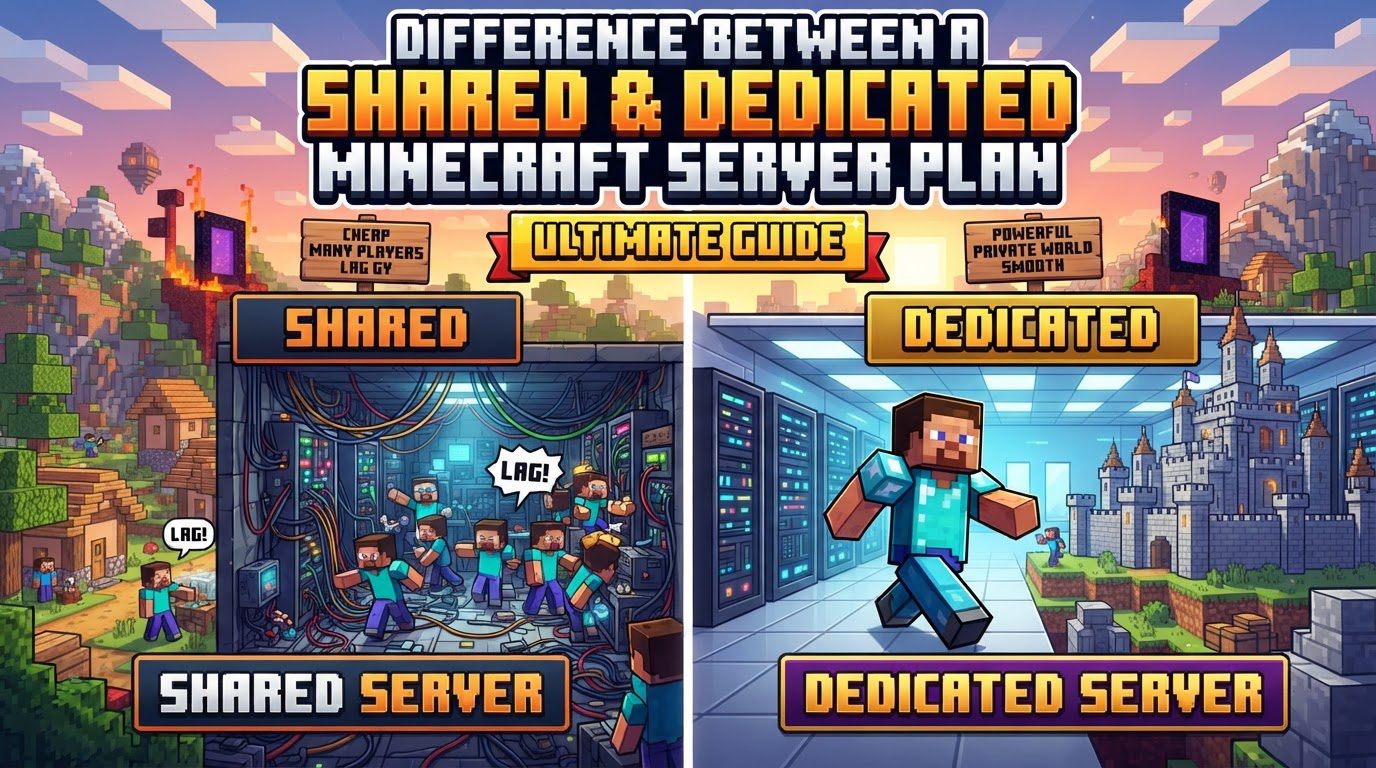
- Shared Hosting: When you opt for a shared Minecraft server plan, your server is placed alongside many others on a single physical machine. This means your server shares critical resources like CPU processing power, RAM (Random Access Memory), and disk space with other customers’ servers. While this model allows providers to offer very low prices, it inherently introduces limitations. Performance can be a gamble, as the activity of a “noisy neighbor” – another resource-intensive server on the same machine – can directly impact your server’s stability and speed.
- Dedicated Hosting: In stark contrast, a dedicated Minecraft server plan grants your server exclusive access to an entire physical machine. All of its resources – every CPU core, every gigabyte of RAM, and all the storage – are solely for your use. This exclusivity eliminates the “noisy neighbor effect” and provides a predictable, high-performance environment tailored specifically for your Minecraft world.
Performance: Consistency Versus Compromise
The difference in resource allocation directly translates to a vast chasm in performance capabilities.
- Shared Server Performance: Shared servers often experience performance throttling, especially during peak usage times. Typical RAM allocations are modest, ranging from 4-8 GB, which can quickly become insufficient for even moderately modded servers or those with a consistent player base. You might encounter inconsistent 20 TPS (ticks per second), leading to noticeable lag spikes, slow chunk loading, and a generally less fluid gameplay experience. This can be particularly frustrating for players and server administrators alike.
- Dedicated Server Performance: Dedicated servers, by nature of their exclusive resources, offer unparalleled performance. They consistently maintain a smooth 20 TPS, ensuring accurate game mechanics and responsive interactions. Chunk generation is swift, and the overall gameplay is reliable, even under heavy load. This is often bolstered by high-performance hardware, such as NVMe SSDs for rapid data access and ample RAM, typically ranging from 32-128 GB, providing a robust foundation for even the most ambitious modpacks and large communities.
Control, Customization, and Management Responsibility
Your level of control over the server environment varies significantly between the two plans.
- Shared Server Control: Shared hosting environments typically offer limited administrative control. You’ll usually have access to a web-based control panel, which simplifies basic server management (starting/stopping, installing plugins/mods from a curated list). However, you’ll have limited control over the underlying software stack, kernel parameters, or advanced network configurations. Some hosts might even restrict the number or type of plugins and mods you can install. The hosting provider handles hardware maintenance, operating system updates, and core network configurations, simplifying management for less technical users.
- Dedicated Server Control: A dedicated server provides full administrative control. You gain root access to the entire operating system, allowing you to configure every aspect of your server. This includes choosing your preferred software stack, fine-tuning kernel parameters, customizing firewall rules, and optimizing network configurations. This level of control is essential for advanced optimizations, installing highly specific mods or server types, and implementing unique security measures. However, this power comes with greater technical responsibility; you are accountable for managing server configurations, applying security patches, performing regular backups, and optimizing the software stack yourself.
Cost and Scalability: Investing in Your Community
The financial commitment and potential for growth are also key differentiating factors.
- Shared Server Cost & Scalability: Shared hosting is significantly more affordable, with plans often starting from just $2–$5 per month. This makes it an excellent, budget-friendly option for testing concepts, hosting small private servers, or running temporary events. However, shared plans often come with capped player slots, and while you can upgrade to higher tiers, these upgrades still operate within the constraints of a shared environment and may not provide the desired performance boost for significant growth.
- Dedicated Server Cost & Scalability: Dedicated servers have a higher upfront and ongoing cost. However, for serious communities or servers aiming for long-term growth and monetization, they often offer better long-term value due to their superior performance and features. Dedicated plans are highly scalable; as your community grows, you can easily allocate more RAM, upgrade CPU cores, or expand storage without the need to migrate to a new host, ensuring your infrastructure can keep pace with demand.
Security Posture and Reliability
The security and uptime of your server are paramount, especially for public communities.
- Shared Server Security: In a shared environment, your security options are often limited to what the hosting provider offers. Root access is typically restricted, and custom firewall rules or advanced port configurations may not be possible. While providers implement general security measures, the shared nature can sometimes present a larger attack surface, potentially exposing servers to exploits if other tenants are compromised.
- Dedicated Server Security: With full administrative control, a dedicated server allows you to implement a robust and hardened security posture. You can configure custom firewall rules, install specific security software, and deploy advanced DDoS mitigation strategies tailored to your server’s unique needs. This level of control provides peace of mind and significantly enhances the reliability and protection of your Minecraft world.
Guiding Your Choice: When to Opt for Each Plan
Making the right decision hinges on your specific requirements, technical expertise, and long-term vision for your server.
Choose Shared Hosting If:
- You have a small community, typically fewer than 10-20 players.
- You plan to run vanilla Minecraft or a lightly modded server with under 20 plugins or mods.
- Your budget is severely constrained, and performance is a secondary concern.
- You are testing a concept, setting up a temporary event server, or just playing casually with friends.
- Technical management and advanced optimization are beyond your current skill level or time commitment.
Choose Dedicated Hosting If:
- Your server regularly hosts 15+ concurrent players or aims for a large community of 30+ players.
- You plan to deploy heavy modpacks with 50+ mods or resource-intensive plugins that demand significant resources.
- You need reliable, scalable infrastructure to support community growth and ensure consistent performance.
- You plan to monetize your server and require maximum uptime (99.9%+ SLA) and a professional experience.
- You desire full control over software, configurations, and performance tuning to create a truly unique server.
Avoiding Pitfalls: Common Mistakes to Sidestep
Regardless of your choice, being aware of common errors can save you headaches down the line.
With Shared Hosting:
- Underestimating Performance Limitations: Many server owners overload a small shared plan with too many players or complex mods, leading to inevitable lag and frustration. Always align your server’s ambition with the plan’s capabilities.
- Ignoring the “Noisy Neighbor Effect”: Unexpected lag spikes or server instability can often be attributed to other resource-intensive servers on the same node. This is a risk inherent to shared hosting that cannot be fully mitigated by the server owner.
With Dedicated Hosting:
- Underestimating Technical Knowledge: A dedicated server demands significant technical expertise and time for proper administration, security, and maintenance. Neglecting these responsibilities can lead to vulnerabilities or poor performance.
- Overpaying for Unused Resources: If your server needs are small or casual, opting for a high-end dedicated server can lead to significant overspending on resources that are not fully utilized.
- Neglecting Backups and Maintenance: With full control comes full responsibility. Failing to perform regular backups, apply security patches, or conduct routine maintenance can lead to data loss, server instability, or security breaches.
In conclusion, the choice between shared and dedicated Minecraft server hosting boils down to a careful evaluation of your community size, resource demands, budget, and technical comfort level. While shared hosting offers an accessible entry point, dedicated hosting provides the power, control, and reliability necessary for serious, growing Minecraft communities.
Tags:
YOU MAY ALSO LIKE...