

Why Minecraft removed the original combat update test
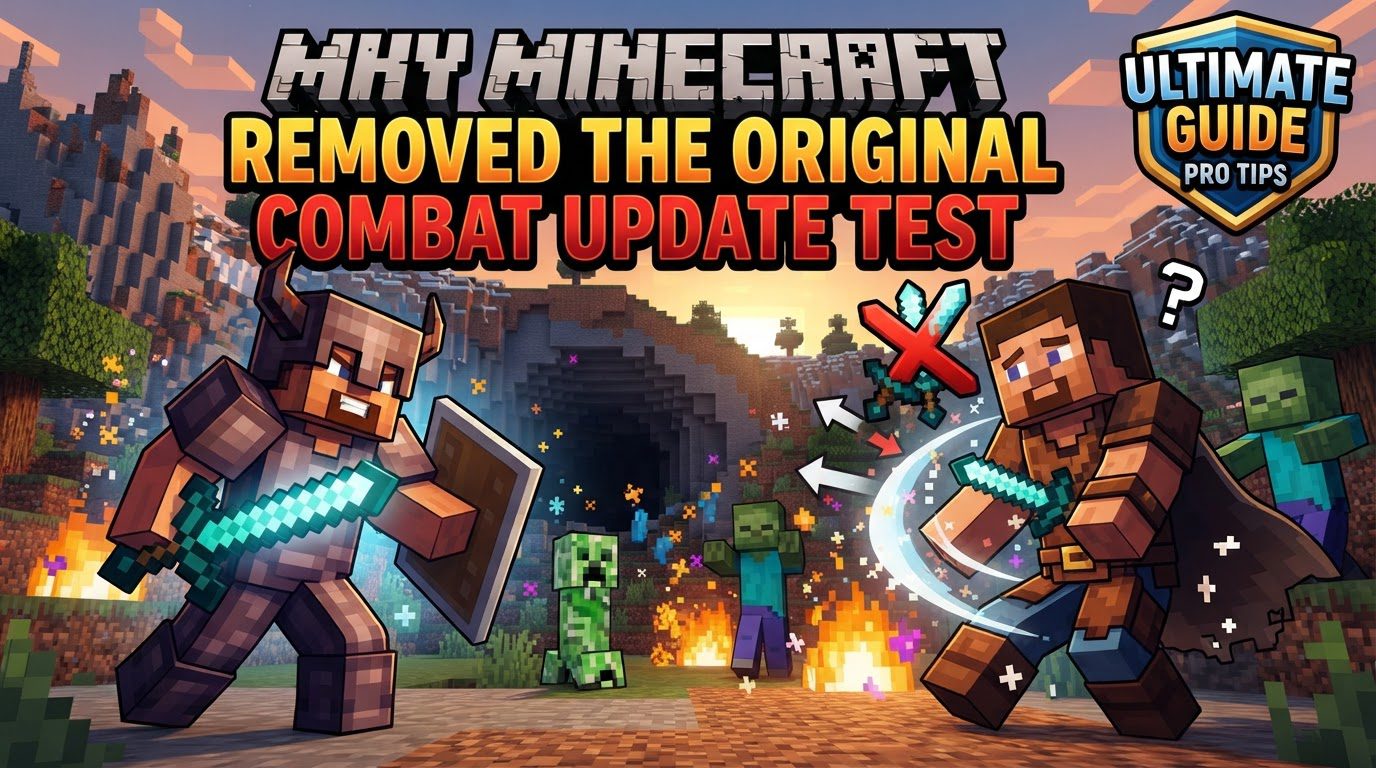
It’s a common misconception that Minecraft developers simply gave up on improving combat, or that a single “bad update” was the sole reason for its current state. The truth is far more nuanced, involving years of player feedback, ambitious experimental features, and the inherent challenges of balancing a game as diverse as Minecraft. This complex journey began with the highly controversial 1.9 “Combat Update” and culminated in a series of experimental “Combat Test Snapshots” that, despite their potential and iterative development, were ultimately not integrated into the main game. Understanding why these tests were effectively “removed” requires delving into the mechanics, the community’s reaction, and the inherent difficulties of game development.
The Genesis of Change: The 1.9 Combat Update
The story of Minecraft’s experimental combat changes truly begins with the 1.9 “Combat Update,” released in February 2016. This update fundamentally altered the rhythm of combat by introducing a weapon cooldown system. Prior to 1.9, combat was largely a matter of “spam clicking”-rapidly left-clicking to deal continuous damage. The 1.9 update aimed to make combat more strategic, requiring players to time their attacks for maximum damage. Each weapon was given a unique attack speed, and attacking before the cooldown was complete would result in significantly reduced damage.
Mojang’s intent was clear: to foster a more thoughtful and strategic combat experience, moving away from the often frantic and less skill-based spam-clicking. However, this radical shift was met with immediate and substantial backlash, particularly from the established PvP (Player vs. Player) community. Many players felt that the new system slowed down combat unnecessarily, making it feel clunky and less responsive. The change created a lasting divide, with some players adapting to and even preferring the new “timed hit” system, while a large segment continued to advocate for the return of the pre-1.9 combat style.
The Call for Refinement: Combat Test Snapshots Emerge
In response to the ongoing player concerns and a desire to further refine combat mechanics, Mojang initiated a new experimental phase. Starting in 2019, they began releasing “Combat Test Snapshots.” These were not official game updates but rather standalone experimental versions of the game designed specifically for players to test proposed changes and provide feedback. The goal was to iterate on combat mechanics in a more open and collaborative manner, hoping to find a system that could satisfy a broader range of players.
These snapshots represented a dedicated effort to bridge the gap between developer vision and player preference, building upon the foundation laid by 1.9 while attempting to address its perceived shortcomings. Players were encouraged to download these versions, experiment with the new features, and report their findings, leading to multiple revisions and even the removal of certain experimental mechanics within the tests themselves.
Unpacking the Experimental Mechanics
The Combat Test Snapshots introduced a variety of features and adjustments, some of which were quite ambitious:
- New Attack Speeds and Reach: While 1.9 introduced cooldowns, the snapshots further experimented with faster attack speeds across all weapons, alongside variable weapon reach. This aimed to make combat feel more fluid while retaining strategic depth.
- Shield Overhauls: Shields, which gained prominence in 1.9, also saw significant experimental changes. These included reducing their damage blocking capability, decreasing the arc of protection they offered, and removing the warm-up delay. The intention was likely to make shields less dominant and encourage more offensive play.
- The Rise and Fall of “Coyote Time”: One particularly notable experimental feature was “coyote time.” This auto-aim feature was designed to assist players in hitting smaller or more elusive targets. However, it proved highly unpopular, especially within the PvP community, where precise aim is paramount. Recognizing the negative feedback, “coyote time” was removed from later combat test versions.
- Enchantment and Axe Revisions: Axes, which had received a damage buff against shields in 1.9, also saw their enchantments streamlined in the tests (e.g., renaming “Chopping” to “Cleaving”). Additionally, the powerful Sweeping Edge enchantment, which allowed swords to hit multiple enemies, was nerfed in the experimental snapshots.
The Complexities of Non-Implementation
Despite the iterative testing and Mojang’s efforts, development of the Combat Test Snapshots ceased around August 2020 with version 8C. They were never officially integrated into the main game, effectively being “removed” or abandoned as a potential future update. Several factors contributed to this outcome:
- Community Chasm: Old vs. New Combat: The most significant hurdle was the persistent and deep division within the player base. The combat changes created a lasting split between those who preferred the pre-1.9 “spam clicking” style and those who adapted to or favored the new “timed hit” system. Mojang aimed to create a more strategic system, but this clashed directly with established playstyles, making it incredibly difficult to find a solution that satisfied both camps.
- Developer Intent vs. Player Reality: While Mojang’s intent was to create a more strategic and potentially “healthier” combat system by reducing excessive clicking, the initial implementation and subsequent tests often felt unintuitive or simply not as enjoyable for a large portion of players. This disconnect between developer vision and player reception proved challenging to overcome.
- The Bedrock-Java Divide: A Cross-Platform Conundrum: A major practical difficulty was finding a combat system that could consistently work across different input devices and platforms. The differing combat systems between Java (PC) and Bedrock (consoles, mobile) already contributed to a fractured experience. Implementing complex, timed combat mechanics consistently, especially for mobile controls on Bedrock Edition, presented a significant technical and design challenge.
- The Burden of Integration: As new game versions and features were released, the Combat Test Snapshots became increasingly outdated. Integrating these experimental changes into the main game would have required substantial effort to update them to current game standards, making the process more challenging and resource-intensive over time. The longer the tests remained separate, the harder they were to merge.
- Balancing Act: PvE and PvP: A critical difficulty was finding a combat system that could satisfy both the single-player PvE (Player vs. Environment) experience and the highly competitive multiplayer PvP environment. Features that might enhance PvE (like “coyote time” for easier mob targeting) were often detrimental to PvP, and vice-versa. Striking this balance proved elusive.
The Legacy of Unfinished Business
The “removal” of the original combat update test, specifically the abandonment of the Combat Test Snapshots, wasn’t a sudden cancellation but rather a gradual cessation of development. It highlights the immense difficulty of fundamentally altering core gameplay mechanics in a game with a massive, diverse, and deeply invested player base. Mojang faced the challenge of trying to innovate while respecting years of established gameplay, ultimately discovering that some changes were too disruptive or too contentious to integrate universally.
While the experimental snapshots may not have made it into the main game, the lessons learned from their development and the invaluable player feedback gathered undoubtedly continue to inform Mojang’s approach to game design. The quest for a perfect combat system in Minecraft remains an ongoing discussion within the community, a testament to the passion players have for every aspect of the blocky world.
Tags:
YOU MAY ALSO LIKE...


