

Creating Lottery Winnings Distribution Systems
Many aspiring Minecraft server owners or Redstone engineers underestimate the intricate balance required to create a fair and functional lottery system. Crafting a rewarding and engaging lottery in Minecraft demands careful consideration of randomness, security, and distribution, whether you’re meticulously wiring Redstone contraptions or configuring powerful server plugins.
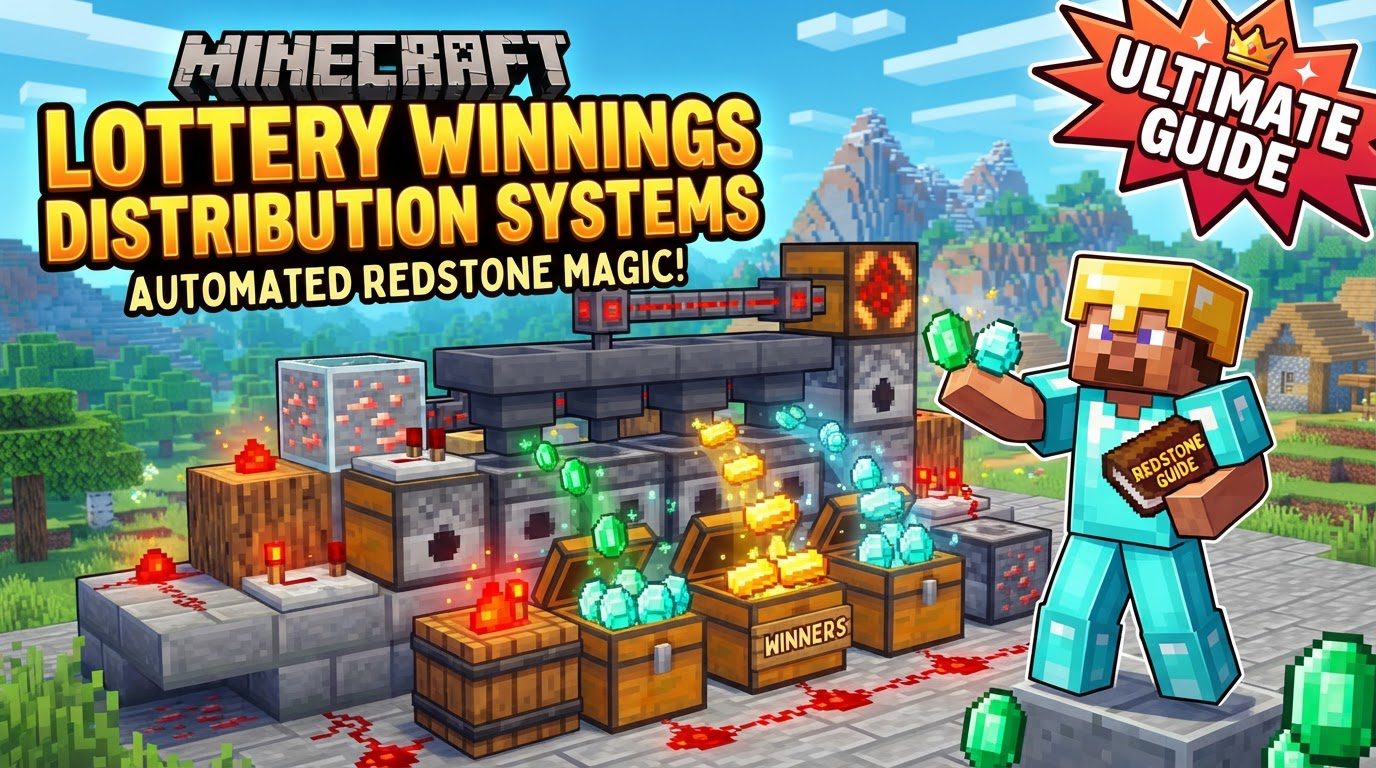
A successful lottery system enhances player engagement, offering exciting opportunities for in-game rewards. This guide explores the two primary methodologies for implementing such systems: the hands-on, mechanical approach using Redstone, and the streamlined, feature-rich solution provided by server plugins.
The Core Mechanics of Minecraft Lotteries
Regardless of whether you choose Redstone or plugins, several fundamental mechanics underpin any effective lottery system. Understanding these principles is crucial for designing a robust and enjoyable experience for players.
- Randomization: At the heart of any lottery is true randomness. In Redstone, this often involves ingenious setups with droppers, hoppers, and comparators. The game’s inherent Random Number Generator (RNG) can be leveraged, particularly by observing how it favors non-stackable items when picked from a dropper. More advanced Redstone techniques might include bat-based randomizers or binary systems using droppers/dispensers with varying signal strengths. Server plugins, conversely, typically utilize their own highly optimized and configurable internal RNGs, ensuring reliable and unbiased outcomes.
- Item Filtering: To manage player participation and prize distribution, systems need to identify specific items. Redstone contraptions frequently employ hopper filters to detect “ticket” items or a designated currency like diamonds, which then trigger the lottery mechanism. Naming items allows for unique tickets that can be sorted and processed by these filters. Plugin-based systems handle this digitally, allowing players to purchase tickets with in-game currency, which are then tracked by the plugin itself.
- Prize Distribution: Once a winner is determined, the prize must be delivered. In Redstone, prizes are typically pre-loaded into chests or droppers, which are then activated by a winning signal. Some Redstone designs can even incorporate a “jackpot” feature, where unclaimed prizes roll over to the next draw, accumulating until a winner emerges. Plugins automate this entirely, drawing from configurable prize pools and instantly transferring items or currency to the winner’s inventory.
- Configurable Odds: The ability to adjust the probability of winning is vital for balancing the lottery. For Redstone lotteries, this means carefully arranging “winning” items versus “losing” items within a randomizer, or by altering the ratio of stackable to non-stackable items in a dropper-based system. Plugins offer user-friendly configuration options, allowing administrators to set precise winning probabilities through simple commands or configuration files.
- Ticket Systems (Plugins): Exclusive to server plugins, these systems allow players to purchase tickets using in-game currency. These tickets can be assigned randomly generated numbers, or players might even be able to select their own numbers, adding a layer of personal choice to the lottery experience.
- Automated Draws (Plugins): Plugins excel at automation. They can be configured to schedule draws at specific intervals-daily, weekly, or at custom times-automatically selecting winners and distributing prizes without any manual intervention from server staff.
- Partial Prizes (Plugins): Some advanced plugin-based lotteries offer partial prizes. This feature rewards players who match a certain number of digits on their ticket, even if they don’t achieve a full match for the grand jackpot, increasing player satisfaction and participation.
Crafting a Redstone-Powered Lottery: A Step-by-Step Guide
Building a Redstone lottery is a rewarding challenge that showcases your engineering prowess. Here’s a typical process for creating a functional system:
- Input Mechanism: Begin by designing how players will enter the lottery. This usually involves a dropper or hopper system where players insert their “ticket” item or a specific currency. This input then leads to an item filter that verifies the entry.
- Randomizer Core: Construct your randomizer. A common design involves a chain of droppers feeding into each other, with a comparator detecting when an item is dispensed. By filling these droppers with a mix of stackable and non-stackable items (e.g., 63 cobblestone and 1 diamond), you can manipulate the odds. The item that ultimately exits the randomizer determines the outcome.
- Win Detection: Connect comparators to the output of your randomizer. These comparators are set up to detect specific outputs-for instance, a specific item or signal strength-that signify a winning condition. This “win signal” is the crucial trigger for the prize distribution.
- Prize Dispenser: Route the win detection signal to a dispenser or dropper that contains the prize items. It’s critical to ensure that the hoppers feeding the prize dispenser are locked (e.g., by a Redstone torch powering the hopper) until a win is detected, preventing accidental or premature payouts.
- Reset Mechanism: Implement a system to reset the randomizer and input mechanism after each play. This can be a simple button press or an automated circuit that clears the randomizer and prepares it for the next participant.
- Visual Feedback: Enhance the player experience with Redstone lamps or other indicators. These can light up to show the system’s status (e.g., “ready,” “drawing,” “winner!”) or provide a clear announcement of a win.
Optimizing Your Lottery System and Player Experience
Whether you’re using Redstone or plugins, several considerations can significantly improve your lottery’s functionality and appeal:
- Adjusting Difficulty: For Redstone droppers, fine-tune the odds by changing the ratio of stackable to non-stackable items. More non-stackable items relative to stackable ones will generally increase winning chances. For plugins, this is typically a simple configuration setting.
- Scalability: Design your Redstone lotteries with future expansion in mind. Can you easily add more prize tiers or accommodate more players? Plugin-based systems are inherently more scalable, designed to handle many concurrent players.
- Accessibility: If you’re building a physical Redstone machine, ensure that vital components are accessible for maintenance, refilling prizes, or troubleshooting without dismantling the entire structure.
- Clarity for Players: Crucially, communicate the rules, entry cost, and potential winnings clearly to your players. Use signs, holograms, or in-game messaging (especially with plugins) to avoid confusion and build trust.
- Server Performance Considerations: While Redstone is fun, overly complex or rapidly updating Redstone builds can contribute to server lag. For large-scale or high-frequency lotteries on a server, plugins are often the superior choice due as they are typically optimized for performance and stability.
Avoiding Common Pitfalls in Lottery Design
Even the most experienced builders can stumble. Being aware of common mistakes can save you significant time and frustration:
- Redstone Complexity: Over-engineering Redstone circuits can lead to a maze of wires that are difficult to debug, maintain, and expand. Strive for compact and clear designs, focusing on efficient signal flow.
- Unintended Payouts and Lack of Security: One of the most critical errors is a system that can be accidentally or maliciously exploited to trigger payouts without a legitimate win. Ensure prize distribution is tightly coupled to the win condition. Manual or less automated systems are particularly vulnerable to player manipulation or false claims. Fully automated Redstone or robust plugin systems greatly mitigate these risks.
- Imbalance of Odds: Incorrectly configuring your randomizer can lead to unintended winning probabilities. The lottery might become too easy, devaluing prizes, or too difficult, discouraging participation. Test your odds thoroughly.
- Insufficient Prize Storage: Failing to account for a sufficient supply of prize items can lead to your lottery running dry. Always have ample stock, especially for popular systems. Plugins often allow for virtual prize pools that don’t rely on physical inventory.
- Ignoring Server Performance: As mentioned, complex Redstone can strain server resources. If your lottery is causing lag, consider simplifying the Redstone or switching to a more optimized plugin solution, especially on public servers.
By carefully planning your randomization, ensuring secure distribution, and transparently communicating the rules, you can create an engaging and fair lottery system that adds an exciting dimension to any Minecraft world or server.
Tags:
YOU MAY ALSO LIKE...


