Getting Started With Immersive Engineering Power Systems
The Tangible Flow: Getting Started With Immersive Engineering Power Systems
Unlike many tech mods, where power flows invisibly through blocks and conduits, Immersive Engineering forces you to confront the very real, tangible infrastructure of electricity. This mod transforms power generation and distribution into an engaging, industrial puzzle, demanding careful planning and a keen eye for aesthetics. If you’re ready to embrace the challenge of building sprawling, visible power grids, understanding the core mechanics is your first, crucial step.
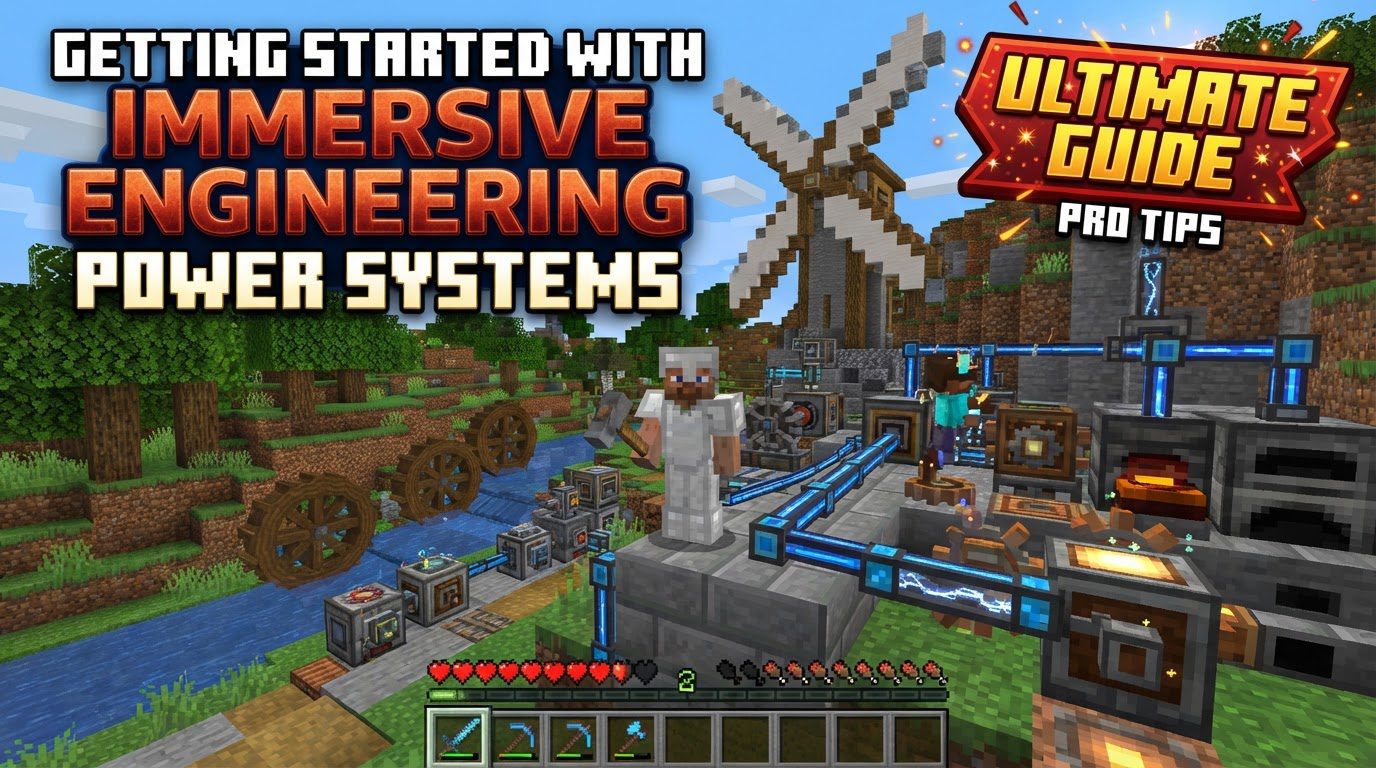
The Core Principles of Immersive Flux
At the heart of Immersive Engineering’s power system lies Immersive Flux (IF). Conveniently, IF is fully compatible with Forge Energy (FE) and Redstone Flux (RF) from other popular mods, operating on a seamless 1:1 ratio. This means you can integrate Immersive Engineering generators and machines into existing power networks or use its power to fuel other modded devices without conversion headaches.
- Visible Wiring: The most striking feature is the visible nature of power transfer. Wires are strung between connectors, creating a dynamic, industrial look that encourages thoughtful layout and design.
- Voltage Tiers: Power isn’t just power; it comes in three distinct voltage tiers: Low Voltage (LV), Medium Voltage (MV), and High Voltage (HV). Crucially, wires and connectors of different tiers are incompatible and cannot be directly mixed. Attempting to do so will simply not work.
- Multiblocks: Many of Immersive Engineering’s powerful generators and intricate machines are not single blocks, but rather multiblock structures. These require specific arrangements of blocks and are “formed” by right-clicking the central block with an Engineer’s Hammer once all components are in place.
- Connectors & Relays: To get power flowing, you’ll use Connectors to hook machines into your grid. Each connector can typically only handle one incoming or outgoing wire. For branching lines or complex junctions, Relays are essential, acting as junction points for multiple wires.
- Capacitors: These are your batteries, storing valuable IF/FE/RF. Available in LV, MV, and HV tiers, higher-tier capacitors boast significantly greater storage capacity. Beyond simple storage, capacitors can also double as a more cost-effective alternative to dedicated transformers for converting power between different voltage tiers.
- Wires Can Melt: While your machines won’t suffer catastrophic damage, a single wire can melt if too much power attempts to pass through it. This usually happens when many supply lines draw full power through a single connector. Careful planning of your power distribution is key to preventing these minor but annoying failures.
- Essential Materials: Your industrial journey will heavily rely on two fundamental processed materials: Treated Wood (made by soaking planks in Creosote Oil) and Steel (produced in a Blast Furnace using Coal Coke). These are the building blocks for nearly all Immersive Engineering machinery.
Your First Steps: The Water Wheel
The early game in Immersive Engineering often begins with the humble but reliable Water Wheel. Here’s a step-by-step guide to getting your first power system online:
- Acquire Your Tools: Begin by crafting the Engineer’s Manual (your in-game guidebook) and the Engineer’s Workbench. The workbench is invaluable, allowing for cheaper crafting of many Immersive Engineering items.
- Build a Coke Oven: This is a crucial early-game multiblock. Construct a 3x3x3 structure using Coke Bricks. Once built, right-click the center block with your Engineer’s Hammer to form the oven. Load it with Coal to produce Coal Coke (a superior fuel) and Creosote Oil.
- Produce Treated Wood: With Creosote Oil in hand, you can now craft Treated Wood by soaking regular planks. This material is indispensable for most Immersive Engineering constructions.
- Acquire Steel (Recommended Early): While optional for your first Water Wheel, starting steel production early is highly recommended. Construct a Blast Furnace (another multiblock). Feed it Iron and Coal Coke to smelt iron into Steel, a material vital for more advanced machines.
- Craft Water Wheel Components: You’ll need a Kinetic Dynamo and several Waterwheel Segments to assemble your generator.
- Construct the Water Wheel: Build a 3×3 wheel using the Waterwheel Segments and attach it to a Kinetic Dynamo. For optimal power generation, ensure flowing water touches the wheel segments. A single Water Wheel can generate around 30 IF/t, and you can attach up to three Water Wheels to one Kinetic Dynamo for increased output.
- Craft LV Connectors & LV Wire Coils: These are your basic components for power transmission.
- Connect to Storage: Place an LV Capacitor nearby to store the power generated by your Water Wheel. Use LV Connectors on both the Kinetic Dynamo and the LV Capacitor, then string an LV Wire Coil between them to complete the circuit. You now have a functioning power supply!
Mastering Your Grid: Advanced Tips
As your industrial empire grows, these tips will help you manage your power infrastructure efficiently:
- Plan Your Layout: Always plan your factory layout in advance. Multiblocks are large, and wiring needs space. Providing more room than you initially think you’ll need prevents frustrating rebuilds.
- Organize Wiring: Cluttered wires are inefficient and unsightly. Use Wooden Posts and Relays to hang wires from the ceiling, keeping them organized, out of the way, and aesthetically pleasing.
- Scale Up: Don’t settle for just one of each machine. For true industrial output, construct dedicated factories with multiple machines working in parallel.
- Power Control: Implement Breaker Switches for manual control over power flow, allowing you to selectively shut off parts of your grid. For automated control, use Redstone Breakers.
- Monitor Power: To understand your power consumption and generation, use Current Transformers in conjunction with a Voltmeter. This helps you identify bottlenecks or power-hungry machines.
- Voltage Conversion: When connecting machines or generators that operate on different voltage tiers, use Transformers (or capacitors with built-in transforming capabilities) to convert power between LV, MV, and HV.
- Wires Through Walls: To route wires through solid blocks, place connectors on both sides of a block and then right-click the block with an Engineer’s Hammer. This creates a “feed-through insulator,” allowing wires to pass seamlessly.
Common Pitfalls to Avoid
Even seasoned engineers make mistakes. Here are some common blunders to watch out for:
- Directly Mixing Voltage Tiers: This is a classic beginner mistake. Connecting LV wires or connectors directly to MV or HV components will simply not work. Always use a transformer or a compatible capacitor for voltage conversion.
- Overloading Wires: While machines are safe, a single wire can melt if it’s forced to carry too much power. Distribute your load across multiple wires or use higher-tier wires capable of handling more current.
- Not Forming Multiblocks: Many players forget to right-click the correct block of a multiblock structure with the Engineer’s Hammer. Without this step, the structure won’t function.
- Insufficient Water for Water Wheels: Your Water Wheel needs enough flowing water blocks touching its segments to generate optimal power. Ensure a consistent and ample water source.
- Contact with Uninsulated Wires: Uninsulated wires, especially higher voltage ones, can damage players who touch them. HV wires inflict significantly more damage than LV wires. Build safely!
- Underestimating Early Game Power Needs: Machines like Fermenters and Squeezers can be surprisingly power-intensive. Don’t assume a single Water Wheel will suffice; plan for multiple generators or a robust early-game setup.
- Using Connectors for Junctions: Remember that regular connectors are designed for a single wire connection. If you need multiple wires to converge or diverge from a single point, always use a Relay.
Immersive Engineering offers a deeply rewarding experience for players who enjoy the intricacies of industrial design and power management. By understanding these fundamentals, you’re well on your way to building impressive, efficient, and visually stunning power systems that will fuel your entire Minecraft world.
Tags:
YOU MAY ALSO LIKE...