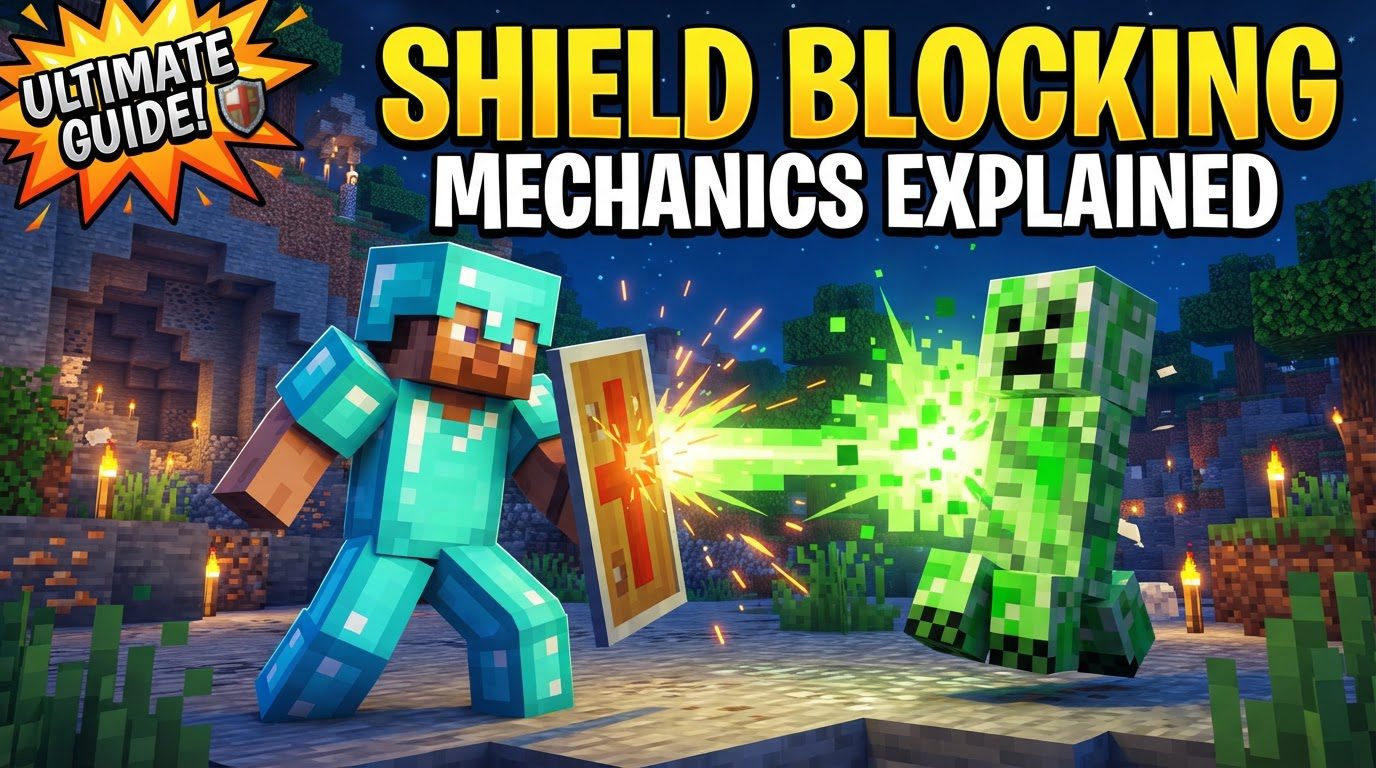
Shield Blocking Mechanics Explained
One of the most frequent errors new Minecraft players make is assuming a shield grants invincibility. While incredibly powerful, shields are not a magical barrier against all threats. Understanding their precise mechanics, limitations, and optimal usage is paramount to surviving the blocky world’s myriad dangers, turning a simple wooden plank into a formidable defensive tool.
The Shield’s Core Purpose: Damage Mitigation
Minecraft shields serve as a crucial defensive item, allowing players to significantly reduce or entirely negate incoming damage and knockback from a wide array of sources. Once activated, they create a protective barrier that can be the difference between life and death in intense combat scenarios or unexpected mob encounters. This defensive posture, however, comes with specific activation timings and coverage limitations that every aspiring adventurer must master.
Unraveling Damage Absorption and Knockback Prevention
At its heart, a shield provides a robust defense. When successfully activated and facing the threat, shields block a full 100% of damage and knockback from most frontal attacks. This instantaneous negation is incredibly valuable, turning potentially lethal blows into harmless deflections. There is a brief activation time of 0.25 seconds (or 5 game ticks) before the shield fully engages its protective properties, meaning precise timing is occasionally necessary to avoid damage. Beyond direct damage, shields are also excellent at preventing knockback from most melee attacks and projectiles. They even significantly reduce the forceful push from more powerful entities like Hoglins and Ravagers, and most explosions, helping you maintain your ground in chaotic situations.
Blockable and Unblockable Threats
Knowing what your shield can and cannot defend against is critical. Shields are highly effective against a broad spectrum of attacks:
- Melee Attacks: Most close-quarters strikes from creatures like Zombies, Skeletons, Spiders, and even Endermen can be completely blocked. Notable exceptions include attacks from the formidable Warden and sprinting axe-wielding mobs, which can bypass or disable your shield.
- Projectiles: Arrows, Tridents, Snowballs, Fireballs from Ghasts or Blazes, and even Shulker bullets are all blockable. This makes ranged combat significantly safer.
- Environmental Damage: Damage from the Thorns enchantment, often found on enemy armor, can also be negated by a raised shield.
- Explosions: Shields are surprisingly effective against many explosive threats. This includes Creeper explosions and TNT lit by another player, significantly reducing their impact.
However, shields are not a universal panacea. Several types of damage will completely bypass your defense:
- Magical & Environmental Effects: Splash and lingering potion effects, Evoker Fangs, and the Ender Dragon’s breath attack cannot be blocked.
- Specific Explosions: Explosions without an “owner,” such as beds detonated in the Nether or End, or End crystals, are unblockable. Similarly, a Wither’s skull explosion will also bypass your shield.
- Special Mob Attacks: As mentioned, the Warden’s sonic boom and the powerful strikes from a sprinting axe-wielder will pierce or temporarily disable your shield.
Protective Arc and Projectile Deflection
A shield’s protection is not omnidirectional. It covers a hemisphere directly in front of the player. This means attacks coming from your sides, above, or below will not be blocked. Maintaining proper positioning and situational awareness is therefore crucial. An interesting side effect of blocking projectiles is their potential for deflection. Arrows and tridents, for instance, can ricochet off your shield, potentially redirecting them towards other targets, including the attacker themselves or nearby mobs, adding an element of tactical surprise to your defense.
The Axe’s Bane: Shield Disabling
One of the most significant vulnerabilities of the shield mechanic is its susceptibility to axe attacks. If you are struck by an axe, there’s a chance your shield will be disabled for a duration of 5 seconds. This leaves you completely exposed during that period, making axe-wielding enemies, particularly Pillage Captains or Vindicators, especially dangerous. Recognizing this threat and adapting your strategy-either by evading or quickly counter-attacking-is vital when facing such foes.
Activating and Maintaining Your Defense
Employing a shield effectively involves more than just knowing its capabilities; it requires understanding the mechanics of its activation and upkeep.
Equipping and Engaging Your Shield
Before you can block, you need to equip your shield. It can be placed in your off-hand inventory slot, allowing you to wield a weapon or tool in your main hand simultaneously. Alternatively, it can be held in your main hand hotbar slot. Activating the shield differs slightly between game editions:
- Java Edition: Simply hold down the right mouse button.
- Bedrock Edition: Crouch (sneak) to raise your shield. Interestingly, in Bedrock, shields also automatically activate when you are riding a mob, offering passive protection.
Once activated, be aware that your movement speed will be significantly reduced to a sneaking pace. This trade-off between mobility and defense is a core aspect of shield combat.
Durability and Repair for Longevity
Shields, like most tools and armor, possess durability. They don’t take damage from every blocked hit, but they do suffer wear and tear when blocking strong attacks – specifically, those that deal three or more damage. This means repeated blocking against powerful foes will eventually deplete your shield’s integrity. Fortunately, shields are repairable. You can restore their durability by combining them with planks (of any wood type) or iron ingots at an anvil. Alternatively, combining two damaged shields will merge their remaining durability, plus a small bonus, into a single shield.
Enhancing Your Shield with Enchantments
To extend your shield’s lifespan and utility, consider enchanting it. The primary beneficial enchantments are:
- Unbreaking: This enchantment increases your shield’s effective durability, making it last much longer by reducing the chance of durability loss with each blocked strong attack.
- Mending: When you gain experience orbs while holding a Mending-enchanted shield (or having it in your off-hand), the orbs will repair the shield’s durability instead of adding to your experience level. This is incredibly useful for passive repairs during exploration or combat.
Be aware that the Curse of Vanishing enchantment can also be applied to shields, causing them to disappear upon your death, which can be a significant setback.
Strategic Defensive Play: Tips and Pitfalls
Mastering shield usage goes beyond basic mechanics; it involves strategic thinking and avoiding common mistakes.
Tips for Effective Shield Use
- Face Your Opponent Directly: Always ensure you are oriented straight towards the incoming threat. Since the shield protects a frontal hemisphere, even a slight angle can result in an attack bypassing your defense.
- Mind Your Positioning: Be acutely aware of your surroundings. Being flanked or attacked from above or below will negate your shield’s protection. Utilize corners, walls, and terrain to limit attack angles.
- Combine Defense with Offense: Don’t just block; counter-attack! After successfully blocking an enemy’s strike, quickly release your block and deliver your own blow. In some versions, rapidly equipping and unequipping an axe can perform a “shield bash” that briefly stuns opponents, though this isn’t a standard shield mechanic.
- Proactive Maintenance: Don’t wait for your shield to be on the verge of breaking. Regularly repair it using planks at an anvil, especially before venturing into dangerous areas.
- Enchant for Longevity: Prioritize obtaining Unbreaking and Mending enchantments. They are game-changers for shield durability, allowing you to rely on your defense for much longer periods.
- Practice Makes Perfect: The best way to improve your shield skills is through practice. Engage various mobs, learn their attack patterns, and refine your reaction time and positioning.
Common Pitfalls to Avoid
- Incorrect Facing: The most common mistake. If the enemy is not directly in your shield’s line of sight, their attack will connect.
- Being Overwhelmed: A single shield cannot protect against multiple attackers coming from different directions. If surrounded, reposition or prioritize targets.
- Ignoring Axe-Wielders: Underestimating an axe attack can lead to your shield being disabled, leaving you defenseless. Prioritize these enemies or use ranged attacks.
- Poor Timing: The 0.25-second activation delay means blocking too late will still result in taking damage. Anticipate attacks rather than reacting solely.
- Assuming Universal Protection: Remember the list of unblockable damage types. Don’t rely on your shield against splash potions, Evoker fangs, or unowned explosions.
- Over-reliance on Explosions: While shields block many explosions, they still take durability damage. Powerful, unblockable explosions (like Nether beds) demand evasion, not blocking.
The shield in Minecraft is a deceptively simple item that offers profound strategic depth. By mastering its mechanics, understanding its strengths and weaknesses, and practicing its application in combat, you transform from a vulnerable adventurer into a resilient survivor, ready to face whatever the blocky world throws your way.
Tags:
YOU MAY ALSO LIKE...