

Master the Art of Compact Designs
One of the most common errors in Minecraft building is creating structures that lack three-dimensional depth, resulting in uninteresting and unrealistic builds. Mastering the art of compact design directly addresses this and many other pitfalls, transforming your creations from simple boxes into intricate, efficient marvels.
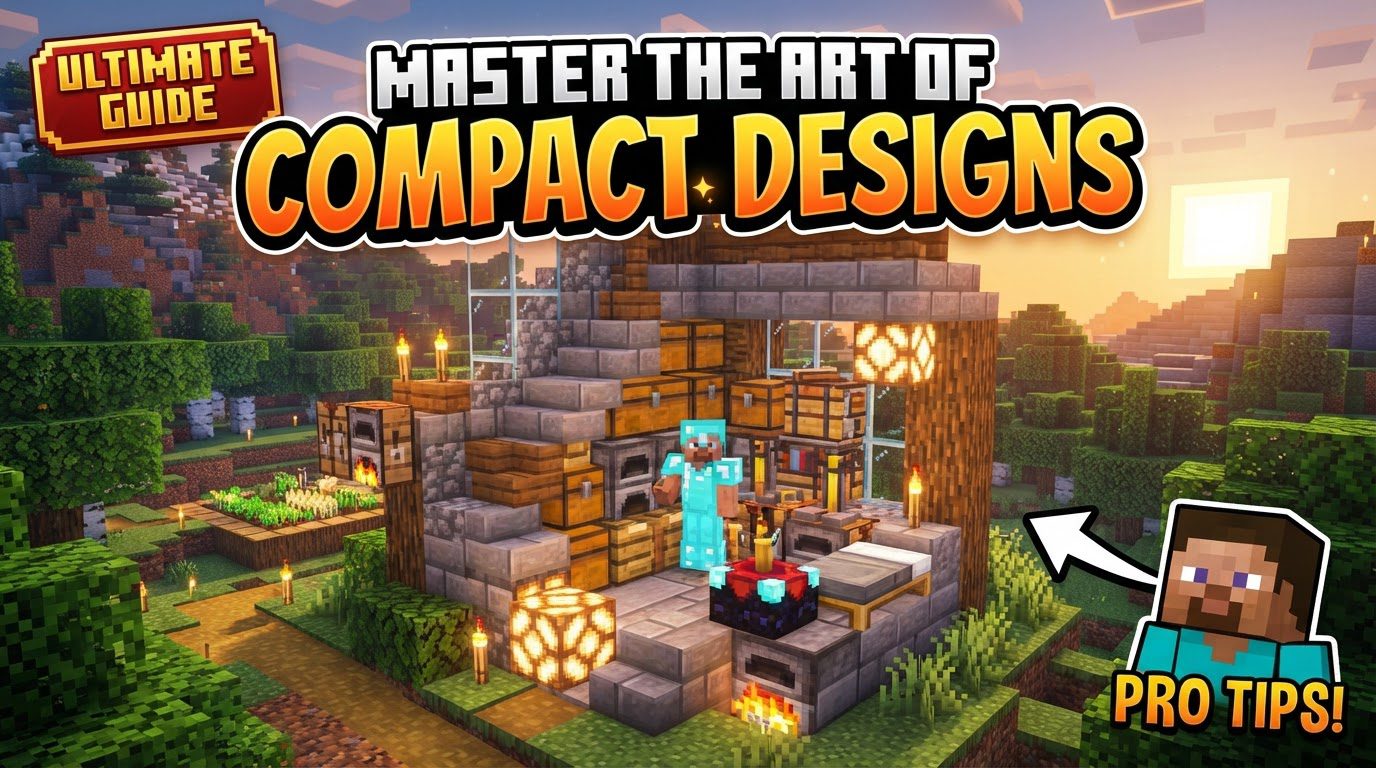
Compact design in Minecraft isn’t merely about shrinking builds; it’s a sophisticated approach to maximizing utility and aesthetics within minimal space. This discipline demands creative use of blocks, strategic placement of functional items, and a deep understanding of game mechanics to optimize efficiency in every dimension. Whether you’re constructing a starter base, an automated farm, or an elaborate redstone contraption, the principles of compactness will elevate your game.
The Core Principles of Compact Efficiency
At the heart of compact design lies a set of fundamental mechanics that, when understood and applied, allow players to achieve remarkable density and functionality.
- Space Optimization: Every block in a compact design is precious. This principle advocates for integrating multiple functionalities into the smallest possible footprint. A prime example is the ability to fit various automated systems within a 3x3x3 space. For players utilizing mods, a “Compact Machine” block can effectively house builds that would otherwise consume vast areas in the overworld, providing an interdimensional space for complex systems.
- Vertical Integration: The ground plane is not your only canvas. Utilizing vertical space – digging downwards or building upwards – is crucial for fitting more elements. This can manifest as multi-story compact structures that house different functions on each level or even as entirely underground starter bases that efficiently use subterranean real estate.
- Redstone Ingenuity: Many compact designs, particularly those involving automation, hinge on highly efficient redstone wiring. This includes the use of compact redstone components like silent BUD (Block Update Detector) switches, which trigger without audible clicks, or one-way piston mechanisms that allow for precise, space-saving actions. Such techniques minimize the sprawling redstone circuits often associated with automation.
- Multi-Purpose Blocks: Ingenuity in block selection significantly contributes to compactness. Employing blocks that serve dual purposes or seamlessly integrate into both function and form is key. Stairs, for instance, can provide both ascent and aesthetic detail, while trapdoors can function as compact doors or decorative elements that add texture and depth without occupying much space.
- Chunk Loading Considerations (for Modded Play): For players venturing into modded Minecraft with tools like “Compact Machines,” understanding chunk loading is vital. The internal dimension of a compact machine is inherently chunk-loaded, meaning its processes continue regardless of player proximity. However, for the machine to interact with the outside world, the overworld chunk where it is placed must also be actively loaded.
A Structured Approach to Compact Building
Achieving a truly compact and efficient design requires a methodical process, moving from conception to refinement.
- Envisioning Your Design: Before placing a single block, clarity is paramount. Plan the overall style, the desired size, and the specific features you intend to include. Crucially, define the exact functions the compact design needs to serve, whether it’s a self-sufficient starter home or an intricate item sorter.
- Resource Procurement: With a plan in hand, gather the necessary materials. The resource list will vary significantly; a compact house might primarily require wood, stone, and cobblestone, whereas a complex redstone contraption will demand redstone dust, pistons, repeaters, and observers.
- Establishing Stability: For structures like houses, a solid foundation is not just aesthetic; it’s essential for structural integrity and stability. Durable materials like cobblestone or stone are ideal choices for this groundwork.
- Constructing the Framework: Begin building the main framework, always keeping the compact dimensions in mind. For redstone builds, this involves strategically placing the key components such as pistons, dispensers, or observers that form the core mechanism.
- Integrating Practicality: Once the basic structure is up, incorporate the desired functions within the allocated compact space. For a starter house, this means fitting a furnace, crafting table, and a bed into a small, accessible area. For a farm, it means positioning water sources, crop plots, and collection systems efficiently.
- The Art of Refinement: The final stage involves enhancing both the aesthetic appeal and usability. This includes adding details like effective lighting, functional furniture, and decorative elements. In compact designs, every detail should ideally contribute to both form and function, avoiding mere clutter.
Refining Your Compact Creations: Expert Tips
Beyond the fundamental steps, several techniques can elevate a compact build from merely functional to truly masterful.
- Adding Visual Depth: Combat the common mistake of flat, two-dimensional builds. Introduce depth by varying block placements, incorporating overhangs, and creating recessed sections. Even small structures benefit immensely from this, appearing more interesting and realistic.
- Diverse Block Palettes: Avoid monotonous designs by utilizing a variety of blocks that complement each other. Experiment with different textures and colors. A single material can make a build look bland; a thoughtful combination adds richness and visual appeal.
- Embracing Unique Shapes: Break free from simple cuboid forms. Adding extensions, varying roof heights, or creating irregular outlines can dramatically enhance the visual appeal of a compact design and provide more opportunities for intricate detailing.
- Environmental Harmony: Resist the urge to flatten the terrain excessively. Integrating your compact build into the natural landscape makes it appear more organic, cohesive, and visually pleasing, as if it belongs there.
- The Charm of Mini-Builds: Small, decorative touches can significantly elevate a compact design without demanding much space. Consider potted plants, custom trees crafted from dripstone, or even picnic baskets fashioned from composters and trapdoors to add character.
- Interior Design Prowess: Even in the most compact external shell, a well-designed interior is paramount. Prioritize functionality and comfort, ensuring that the internal space is not only usable but also aesthetically pleasing, complementing the external compactness.
Common Pitfalls in Compact Construction
Awareness of common mistakes is as crucial as knowing the best practices. Avoiding these errors will prevent your compact designs from falling short.
- The Flat Aesthetic: Building structures without any three-dimensional depth is a prevalent error, leading to uninspired and unrealistic appearances.
- Monochromatic Builds: Over-reliance on a single type of block for an entire structure results in a bland and uninspired look, failing to capitalize on Minecraft’s diverse block palette.
- The Box Syndrome: While compact, simple box-like shapes often lack visual interest. Varying the shape and adding extensions can significantly improve the design and make it more engaging.
- Ostentatious Overuse of Rare Blocks: Employing excessive amounts of rare materials like iron, gold, or diamond blocks can make a build appear gaudy and detract from its overall appeal, rather than making it impressive.
- Neglecting the Roof: Flat roofs or poorly designed roofs can ruin an otherwise good build. Roofs should have overhangs and be thoughtfully integrated into the overall design, adding character and protection.
- Interior Design Oversight: Builders often focus intensely on external compactness but neglect the interior, leaving it empty, unfunctional, or poorly organized. A compact exterior needs an equally functional and comfortable interior.
- Over-detailing Small Spaces: Attempting to cram too much detail onto every surface of a small build can make it appear cluttered and chaotic, counteracting the goal of efficient and elegant compactness.
By internalizing these principles, following a structured approach, and avoiding common pitfalls, you can truly master the art of compact designs in Minecraft. This mastery allows you to create highly efficient, aesthetically pleasing, and remarkably functional structures that maximize every block in your world.
Tags:
YOU MAY ALSO LIKE...


