

Minecraft How to Breed Axolotl
Many aspiring Minecraft zoologists make a crucial error when attempting to breed Axolotls: offering them the wrong meal. Unlike many other aquatic creatures in the game, these adorable amphibians have a very particular palate when it comes to romance. Successfully breeding Axolotls requires precision, preparation, and an understanding of their unique needs, ensuring you can expand your collection of these charming underwater companions.
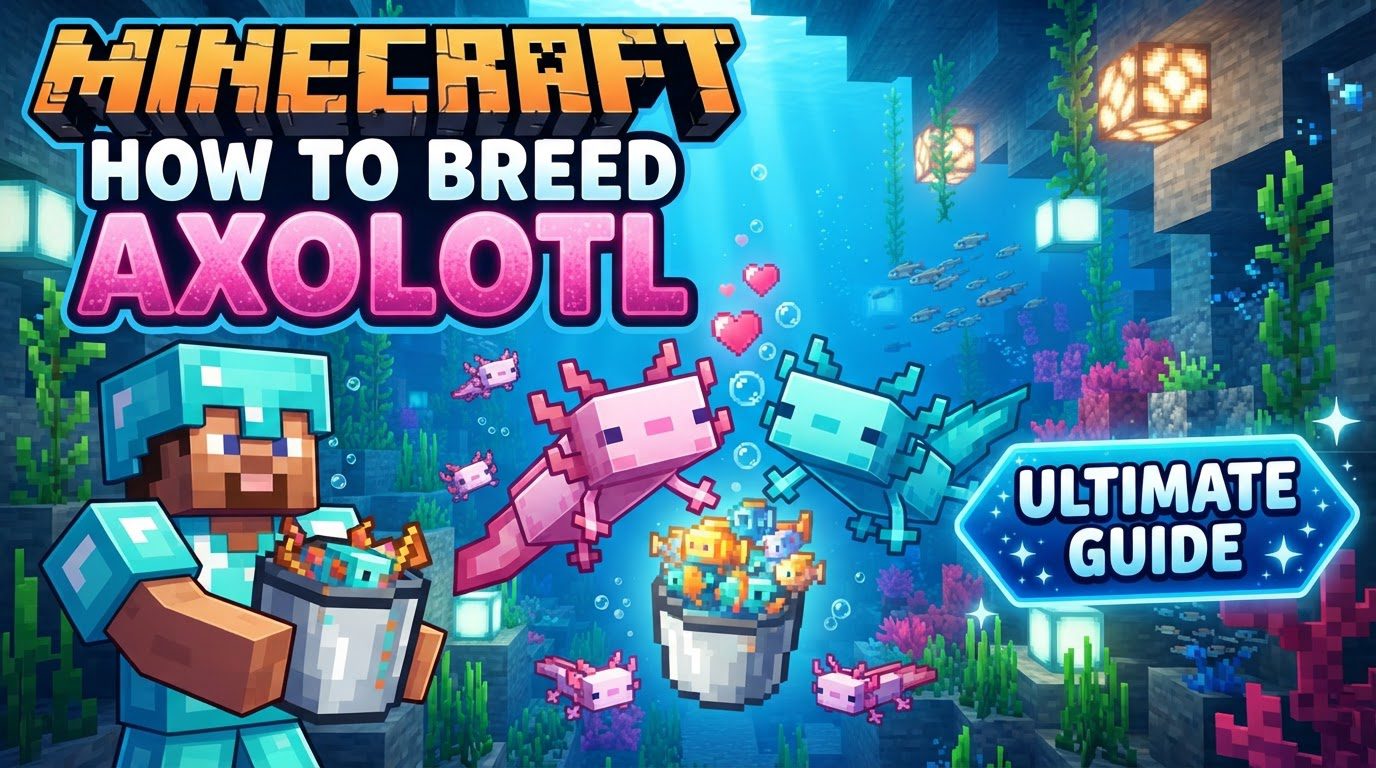
The Fundamentals of Axolotl Procreation
Before you can welcome a new generation of Axolotls into your Minecraft world, it’s essential to grasp the core mechanics that govern their breeding process. These unique creatures operate under a specific set of rules that, once understood, make breeding a straightforward endeavor.
- Two Adults are Required: To initiate breeding, you must have at least two adult Axolotls. They cannot breed with themselves or with baby Axolotls.
- Exclusive Diet for Breeding: The only food item that will trigger breeding in Axolotls is a bucket of tropical fish. It is crucial to note that raw tropical fish, or any other type of raw fish like cod or salmon, will not work. Axolotls might consume raw fish, but it will not put them into “love mode.”
- Dual Feeding for Love Mode: Both adult Axolotls intended for breeding must be fed a bucket of tropical fish. Once fed, heart particles will appear above them, indicating they have entered “love mode.”
- Instant Offspring: Upon successful breeding, a baby Axolotl will spawn immediately in the water. There’s no egg-laying or waiting period for the initial birth.
- Breeding Cooldown: After breeding, parent Axolotls will enter a five-minute cooldown period. During this time, they cannot be bred again. You’ll need to wait for this timer to expire before attempting another breeding session with the same pair.
- Growth to Adulthood: Baby Axolotls take approximately 20 minutes of in-game time to grow into adults. This growth process can be significantly accelerated by feeding them additional buckets of tropical fish.
- Color Inheritance and Rarity: Baby Axolotls typically inherit the color of one of their parents. However, there is a very rare chance, specifically 0.083% (or 1 in 1200), for a baby Axolotl to be the highly sought-after blue variant, regardless of the parents’ colors.
Preparing for Parenthood: Gathering Your Resources
Successful Axolotl breeding begins with proper preparation. This involves locating and securing the Axolotls themselves, as well as gathering their very specific dietary requirement.
- Acquire Your Axolotls: Your first step is to find two adult Axolotls. These fascinating creatures naturally spawn in Lush Caves, which are identifiable on the surface by Azalea trees and moss blocks. Once you locate them, you’ll need to capture them. Equip an empty water bucket and right-click on an Axolotl to pick it up, creating a “bucket of Axolotl.” Repeat this for a second adult.
- Gather Tropical Fish: The most critical component for breeding is the “bucket of tropical fish.” Tropical fish can be found in various aquatic biomes, including warm ocean biomes, lukewarm ocean biomes, mangrove swamps, and even within Lush Caves themselves. To obtain a “bucket of tropical fish,” simply equip an empty bucket and right-click on any tropical fish swimming in the water. You will need at least two such buckets for a single breeding attempt, one for each parent. It’s always wise to gather a few extra, both for subsequent breeding sessions and for accelerating the growth of your baby Axolotls.
Setting Up the Nursery: Creating an Ideal Breeding Environment
Axolotls are aquatic creatures, and their breeding environment must reflect this. A properly constructed breeding area is vital for their safety and successful reproduction.
- Build a Water-Filled Enclosure: Designate an area for your Axolotls that is entirely filled with water. This can be a simple pool or a more elaborate habitat.
- Ensure Sufficient Depth: The enclosure should be at least two blocks deep. This depth provides ample space for the Axolotls to swim and prevents them from easily becoming beached.
- Enclose the Area: Axolotls have a tendency to wander, and if they leave the water for too long, they will perish. Use solid blocks, fences, or glass to create walls around your breeding pool. This ensures your adult Axolotls remain safely submerged and prevents newly spawned baby Axolotls from accidentally escaping the water.
- Full Submersion is Key: For breeding to occur, both Axolotls must be fully submerged in water blocks. They cannot breed if they are partially out of water or stranded on dry land.
A Detailed Breeding Procedure
With your Axolotls acquired, tropical fish buckets in hand, and a suitable breeding enclosure prepared, you’re ready to initiate the breeding process. Follow these steps carefully:
- Introduce Your Axolotls: Place your two adult Axolotls into the prepared water enclosure. You can do this by right-clicking with their respective “bucket of Axolotl” items.
- Feed the First Parent: Hold a “bucket of tropical fish” in your hand. Look at one of the adult Axolotls and right-click on it. You should see heart particles appear above its head, signifying it has entered “love mode.”
- Feed the Second Parent: Quickly switch to another “bucket of tropical fish” (or use the second one you prepared) and right-click on the second adult Axolotl. It, too, should display heart particles.
- Witness the Birth: Almost immediately after both parents enter love mode, a baby Axolotl will spawn directly in the water beside them.
- Observe Cooldown: The parent Axolotls will now have a five-minute cooldown period before they can breed again.
Nurturing Your Offspring: Growth and Care
Once your baby Axolotl has arrived, you’ll want to ensure it grows into a healthy adult. While they will mature on their own, you can speed up the process.
- Natural Growth: A baby Axolotl will naturally grow into an adult over approximately 20 minutes of in-game time.
- Accelerated Growth: To significantly reduce this waiting period, you can feed the baby Axolotl additional buckets of tropical fish. Each bucket fed will shave off a portion of its remaining growth time, allowing it to reach adulthood much faster.
Pitfalls to Avoid in Axolotl Breeding
Even with a clear understanding of the mechanics, it’s easy to make common mistakes that can hinder your breeding efforts or endanger your Axolotls. Being aware of these pitfalls will save you time and resources.
- Using the Wrong Food: This is perhaps the most frequent error. Axolotls will only breed when fed a bucket of tropical fish. Offering raw tropical fish, raw cod, raw salmon, or any other fish item directly from your inventory will not work. While they might consume raw fish, it will not initiate breeding mode.
- Insufficient Water: Axolotls are purely aquatic for breeding purposes. If they are not fully submerged in water blocks, they will not breed. Ensure your breeding pool is consistently filled with water.
- Leaving on Land: Axolotls are vulnerable out of water. If they wander onto land and remain there for too long, they will begin to take damage and eventually die. Always ensure your breeding area is secure and keeps them in the water.
- Shallow or Open Enclosures: A breeding pool that is too shallow (less than two blocks deep) increases the risk of Axolotls beaching themselves. An enclosure that isn’t fully sealed can allow adult Axolotls to escape or, even worse, a newly spawned baby Axolotl to get stranded outside the water, leading to its demise.
Optimizing Your Axolotl Breeding Efforts
To make your Axolotl breeding as efficient and successful as possible, keep these practical tips in mind:
- Prepare Multiple Buckets: Always have at least two buckets of tropical fish ready for each breeding attempt. It ensures a smooth process and prevents one Axolotl from exiting love mode before the other is fed.
- Design a Secure Pool: A breeding pool that is at least two blocks deep and fully enclosed with walls or fences is paramount. This design prevents escapes and keeps all Axolotls, especially the vulnerable babies, safely within the water.
- Speed Up Growth: Don’t hesitate to feed your baby Axolotls extra tropical fish. It’s an efficient way to get them to adulthood faster, allowing them to join the breeding pool sooner.
- Verify Submersion: Before attempting to feed, quickly check that both Axolotls are completely within water blocks. Even a slight protrusion onto a block edge can prevent breeding.
With these guidelines, you’re well-equipped to become a successful Axolotl breeder in Minecraft, expanding your collection of these charming and useful underwater allies.
Tags:
YOU MAY ALSO LIKE...


