Create Big Cannons Recipes
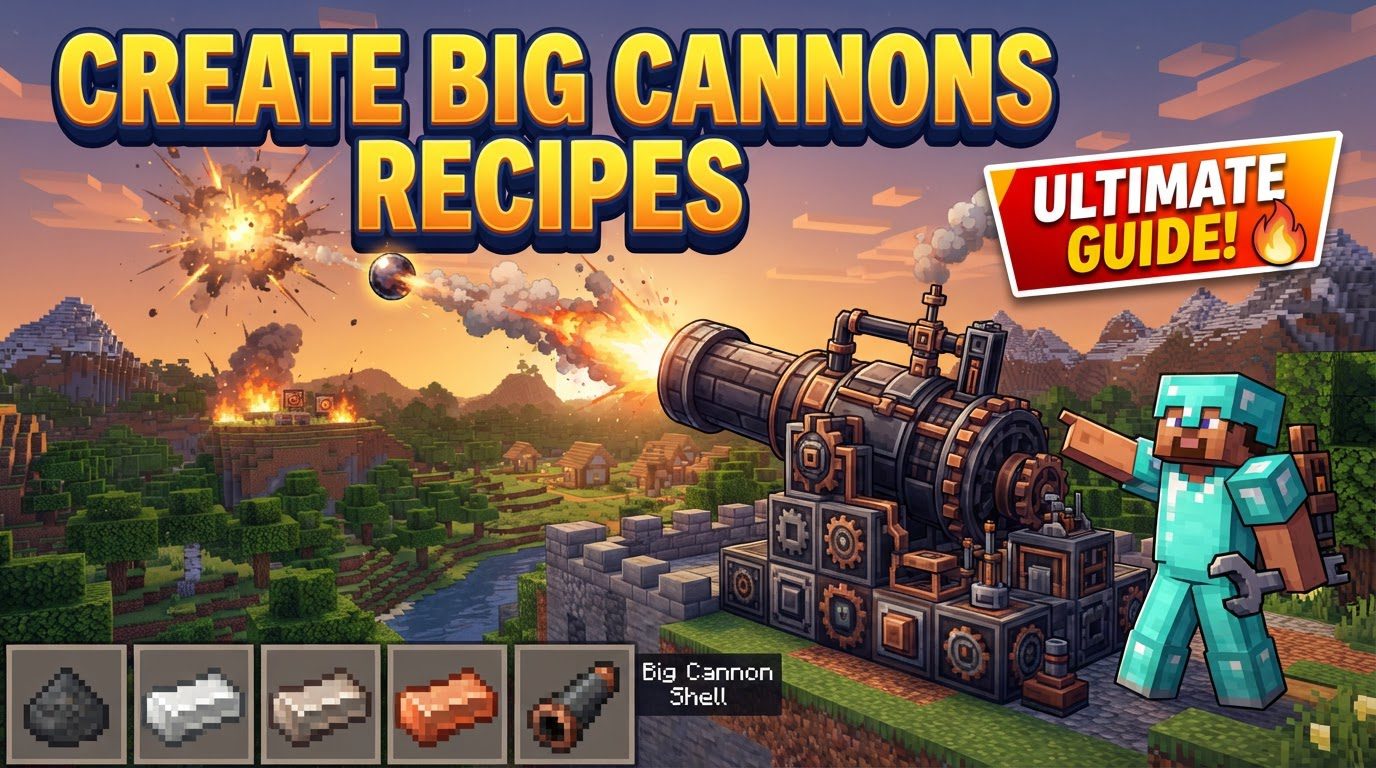
Building a powerful cannon in Minecraft’s “Create: Big Cannons” mod isn’t about tossing ingredients into a crafting grid; it’s a multi-stage, industrial ballet involving heavy machinery, molten metals, and precise engineering. Forget traditional crafting recipes; this mod introduces a complex, mechanical pipeline that demands patience, an understanding of physics, and a keen eye for detail.
The Industrial Art of Cannon Component Creation
The “recipes” within Create: Big Cannons are less about fixed ingredient lists and more about sequential mechanical processes. Each major component of your future siege engine must undergo a series of transformations, beginning with raw materials and culminating in a precisely engineered part. Understanding these core mechanics is fundamental to success.
Casting: Forging the Foundation
-
Molten Beginnings: Many cannon components commence their life as molten metal. This hot liquid is carefully poured into molds, setting the initial shape of your part. This step requires a controlled environment and the right infrastructure to melt and transport your chosen metal.
-
Sand Casting Nuances: A common method, sand casting, has its own quirks. Users have reported instances where casts might not assemble correctly, leading to frustrating setbacks. Furthermore, the cooling process for these casts can be unexpectedly lengthy, demanding patience and proper setup to avoid delays in your production line.
Precision Shaping: Boring and Drilling
Once cast, the rough components are far from ready. The next crucial step involves precision machining: boring and drilling. This process carves out the internal structure of barrels, refines component dimensions, and ensures that parts will fit together seamlessly. This stage often utilizes rotating drills and bores, characteristic of the Create mod’s mechanical philosophy.
Structural Integrity: Layering, Blasting, and Welding
-
Layering Components: Cannon pieces are not monolithic; they are often constructed from multiple layers. This layering process adds strength and allows for complex internal designs.
-
Bulk Blasting: After layering, components are bulk blasted together. This mechanical action fuses or tightly integrates the layers, creating a robust, unified structure capable of withstanding the immense pressures of firing.
-
Welding for Strength: Welding is another essential step in fortifying your cannon. This process permanently joins metal parts, ensuring the structural integrity of your creation. Properly welded joints are critical for the cannon’s longevity and safe operation.
Final Assembly: Bringing the Parts Together
With individual components cast, bored, layered, blasted, and welded, the final stage for the cannon itself is assembly. This involves sliding the various processed pieces together, often in a specific sequence, to form the complete cannon structure. This is where your vision truly begins to take shape, transforming a collection of parts into a formidable weapon.
Crafting Your Ammunition: Munitions Production
A cannon is useless without ammunition. The creation of shells and other munitions is a distinct, yet equally intricate, process. This involves its own set of mechanical steps, often mirroring the precision required for cannon parts. From shaping projectiles to packing propellants, each munition requires careful attention to detail to ensure proper function and maximum impact.
Navigating the Battlefield: Common Missteps in Cannon Construction
The complexity of Create: Big Cannons means there are ample opportunities for missteps. Understanding these common pitfalls can save you countless hours of frustration and wasted resources.
Misunderstanding Multi-Step Processes
Perhaps the most frequent error stems from the very nature of the mod’s “recipes.” Unlike the instant gratification of a traditional crafting table, Create: Big Cannons demands an appreciation for multi-step mechanical assembly. Players often struggle when they expect a simple input-output, rather than a chain of interconnected processes that each transform a component incrementally. This fundamental misunderstanding can lead to bottlenecks and confusion in production.
Issues with Sand Casting
As noted, sand casting can be a particular headache. If casts aren’t assembling correctly, or if they’re taking an inordinate amount of time to cool, it’s crucial to re-evaluate your setup. Ensure proper material flow, temperature control, and mold integrity. Small errors here can halt your entire production line.
The Peril of Breaking Components Without Silk Touch
A costly mistake often made by newcomers is attempting to break down a cannon component without the aid of a Silk Touch tool. Without Silk Touch, any carefully crafted cannon piece will instantly revert into mere scrap nuggets. This effectively destroys your work, forcing you to restart the entire multi-step process for that component. Always remember: Silk Touch is non-negotiable for salvaging cannon parts.
Cannon Loading Errors
Once your cannon is built, loading it presents its own set of challenges. Incorrect loading procedures can lead to several problems:
-
Stuck Powder Charges: A powder charge can remain stubbornly in the chamber after a barrel is broken, complicating future loading attempts.
-
Stuck Shells: If insufficient powder is used for a given shell, the projectile might not clear the barrel and can become stuck, rendering the cannon temporarily inoperable.
Proper powder-to-shell ratios and understanding your cannon’s specific requirements are vital to avoid these loading mishaps.
Lack of Communication on Stress Limits
The mod, while brilliant, doesn’t always explicitly communicate the power and stress limits for each individual cannon piece. This ambiguity can lead to difficulties in determining optimal loading procedures and firing pressures. Experimentation and consulting community resources are often necessary to understand these hidden thresholds and prevent cannon damage or misfires.
Underestimating Time and Effort
Finally, a common oversight is simply underestimating the sheer time and effort required. Crafting even a modest cannon, let alone a large, powerful one, involves numerous components, each demanding its own multi-step process. This is not a project for a casual afternoon; it requires significant dedication, planning, and resource management.
Strategic Insights for Aspiring Artillerists
To master Create: Big Cannons, leverage these practical tips:
The Discord Community: Your Lifeline
The official Create: Big Cannons Discord server is an invaluable resource. For any questions, troubleshooting, or just seeking advice, the community and developers there are often quick to provide assistance. It’s the best place to get real-time help with complex issues.
Beginner-Friendly Tutorials
Start small and smart. Seek out beginner-friendly tutorials that focus on the essential steps of cannon construction. Many guides deliberately omit advanced concepts like worming, cannon resistance, or intricate cannon carriages. Master the basics first, then gradually introduce more complex mechanics.
Embrace Silk Touch
Reiterating its importance: Always use Silk Touch when breaking cannon pieces. This tool is your insurance against losing valuable, hard-won components and having to restart their intricate production process. Treat it as an essential part of your cannon-building toolkit.
Mastering “Create: Big Cannons” is a journey of mechanical engineering and problem-solving. By understanding its unique multi-step “recipes,” anticipating common pitfalls, and leveraging community resources, you can transform complex processes into devastating artillery.
Tags:
YOU MAY ALSO LIKE...