Electric Blast Furnace Modern Industrialization
The Electric Blast Furnace (EBF) is not merely another machine in Modern Industrialization; it is the beating heart of high-tier material processing, fundamentally altering your progression path and unlocking a new era of industrial capabilities. Without it, many advanced crafting recipes and crucial components remain out of reach, making its construction and mastery an indispensable milestone for any serious industrialist in Minecraft.
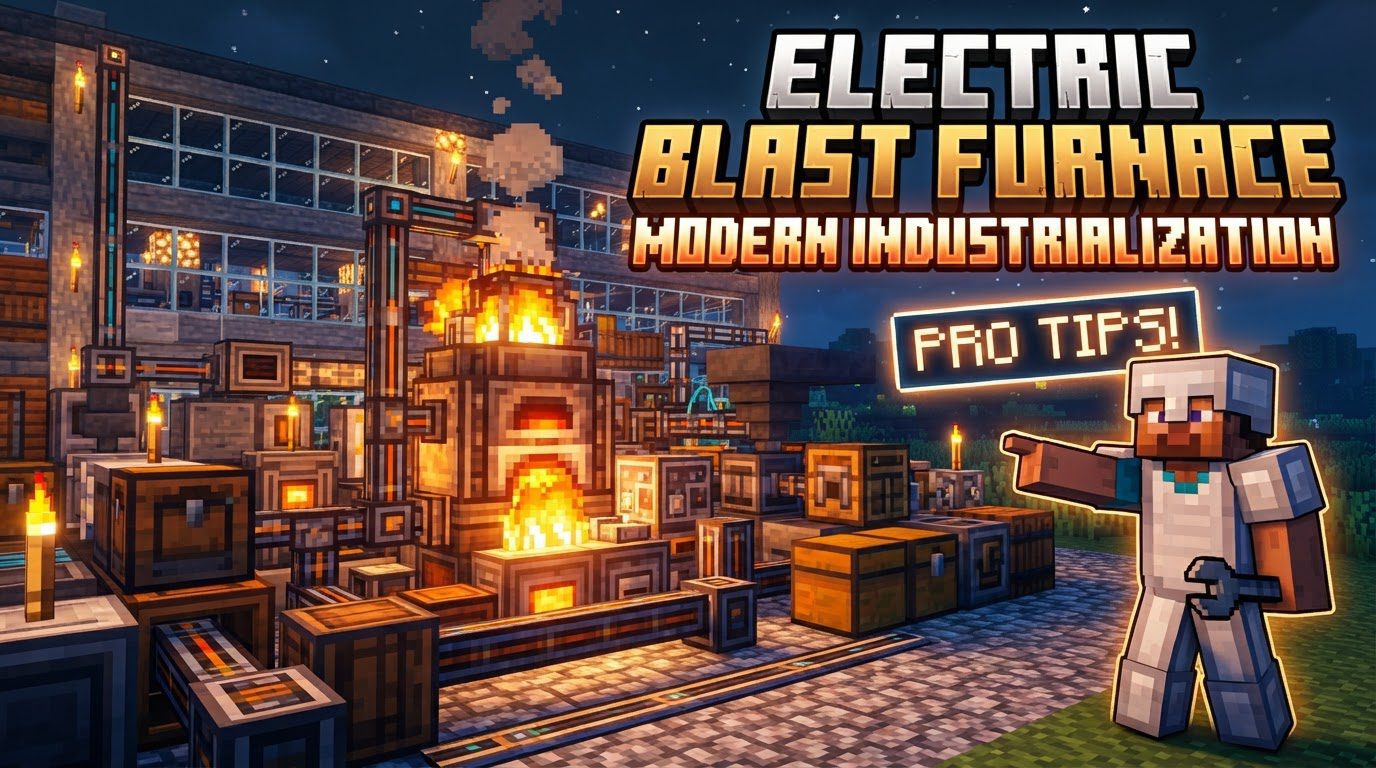
The Gateway to Advanced Industrialization
At its core, the Electric Blast Furnace is a sophisticated multi-block structure designed for advanced refining. Unlike simpler furnaces, the EBF handles materials that demand extreme heat and precise conditions, paving the way for technologies that define the mid-to-late game of Modern Industrialization. Its ability to refine materials efficiently is directly tied to your capacity to scale up production, automate complex processes, and ultimately achieve a truly modern factory setup.
Understanding the EBF begins with recognizing its fundamental characteristics:
- Advanced Refining Capabilities: The EBF processes raw materials into higher-tier ingots, alloys, and other components, many of which are prerequisites for crafting advanced machinery, tools, and even entire energy generation systems. It’s the bottleneck for many powerful recipes.
- Multi-block Structure: This isn’t a single block you place; it’s a carefully assembled machine requiring specific components arranged in a precise configuration. Its size, typically a 4-block high hollow 3×3, demands dedicated space and planning within your factory layout.
- Significant Power Requirement: Operating an EBF is energy-intensive. It demands a substantial and consistent power input, meaning your energy generation infrastructure must be robust and reliable to keep it running efficiently.
- Component-Based Construction: Its assembly involves a variety of specialized blocks, each serving a critical function. These include structural elements like Heat Proof Machine Casings, heat-generating components such as Heating Coils, and various hatches for input, output, energy transfer, and control.
- Fluid Input for Specific Recipes: Beyond solid materials, some advanced recipes within the EBF necessitate fluid input, most commonly gases like oxygen. This adds another layer of complexity, requiring fluid transportation and storage systems.
- Tier Progression Catalyst: Successfully building and operating an EBF marks a significant leap in your technological progression. It unlocks access to higher tiers of electricity, allows for the creation of essential chemicals, and is a prerequisite for many subsequent industrial advancements.
Crafting the Core Components
Before you can begin assembling your Electric Blast Furnace, you must first gather and craft its specialized constituents. Precision in crafting these blocks is paramount, as incorrect types or insufficient quantities will halt your construction before it even begins. The components you’ll need include:
- Heat Proof Machine Casings: These form the exterior shell and structural integrity of the EBF, designed to withstand the extreme temperatures generated within. You will need a minimum of 8 for the top layer, plus 0-4 for the bottom layer.
- Heating Coils: These are the heart of the EBF’s heat generation. They are placed in the middle layers and are responsible for bringing the furnace to the necessary operational temperature. The specific type of coil used can affect performance and operational level. You will need 16 Heating Coils.
- Electric Blast Furnace Control Block: This is the central brain of your EBF, allowing you to interface with the machine, monitor its status, and initiate recipes. It must be placed in a specific location on the bottom layer.
- Maintenance Hatch: This component is crucial for accessing the EBF’s internal workings for potential repairs or upgrades, though its primary role in assembly is as a required structural piece.
- Input Buses: These are where you feed solid materials into the EBF for processing. You will likely need one or more depending on your automation setup and the complexity of your recipes.
- Output Buses: Once materials are processed, they exit through these hatches. Planning for efficient output automation is key to continuous operation. You will need one or more.
- Energy Hatches: These are the conduits through which power is supplied to the EBF. Adequate power input is non-negotiable for operation. The EBF can benefit from two energy hatches for overclocking, significantly speeding up processing times.
- Input Hatch (for Fluids): For recipes requiring fluid inputs, such as oxygen gas, a dedicated Input Hatch is necessary. This is distinct from Input Buses for solid items.
- Muffler Hatch: This often-overlooked component is critical for the EBF’s completion and proper function, specifically placed on the top layer.
Step-by-Step Construction Guide
Assembling the Electric Blast Furnace requires meticulous attention to detail. Any misplacement of blocks will prevent the multi-block structure from forming, rendering it inert. Follow these steps precisely:
- Prepare the Base: Identify a 3×3 area for your EBF. This structure will rise 4 blocks high, so ensure adequate vertical clearance.
- Construct the Bottom Layer: This is the most crucial layer for component placement.
- Place the Electric Blast Furnace control block in the middle of one of the 3×3 sides. It cannot be in a corner or the very center.
- Place a Maintenance Hatch on this layer.
- Integrate one or more Input Buses to handle your raw materials.
- Add one or more Output Buses for collecting processed items.
- Install one or more Energy Hatches to connect your power grid. Consider two for overclocking benefits.
- If your planned recipes require fluid input (e.g., oxygen), place an Input Hatch on this layer.
- Fill any remaining empty spaces (0-4 blocks) on this 3×3 bottom layer with Heat Proof Machine Casings.
- Build the Middle Layers (2nd and 3rd blocks high): These two layers are entirely dedicated to heat generation.
- For both the second and third layers, construct a hollow 3×3 square using Heating Coils. This means you will use 8 Heating Coils per layer, leaving the center block empty. This accounts for all 16 Heating Coils mentioned earlier.
- Complete the Top Layer: This layer seals the EBF and includes a critical exhaust component.
- Form a 3×3 square using 8 Heat Proof Machine Casings.
- In the exact center of this top 3×3 layer, place the Muffler Hatch. Crucially, the Muffler Hatch must face upwards into an air block. This allows for proper venting and completion of the multi-block structure.
Once all blocks are correctly placed, the multi-block structure should form, indicated by visual cues or a message from the control block. If it doesn’t, meticulously re-check every block’s placement against these instructions.
Powering Up and Operational Workflow
With your EBF assembled, the next steps involve supplying power, feeding materials, and collecting products.
- Power Up: Connect your energy generation system to the Energy Hatches on the bottom layer. The EBF demands significant power, so ensure your generators, batteries, and cabling are sufficient to meet its demands. Two energy hatches allow for overclocking, which means faster processing but also higher power consumption.
- Input Materials: Place the required raw materials into the Input Buses. For recipes requiring fluid inputs, ensure the necessary fluid (e.g., oxygen) is piped into the designated Input Hatch.
- Circuit Management: Some advanced recipes require a specific circuit number to be present in an Input Bus. If a recipe specifies a circuit, ensure one of your Input Buses is configured to that exact circuit number. This is often done by placing the circuit item into a slot of the Input Bus and locking it.
- Output Products: As materials are processed, the finished products will appear in the Output Buses. These can then be manually collected or, ideally, automatically piped out to storage systems, crafting interfaces, or further processing lines.
Optimizing Performance and Automation
A manually operated EBF is a bottleneck. To truly leverage its power, integration and automation are key.
- Automate Input and Output: Use item conduits, pipes, or logistics systems to automatically feed raw materials into Input Buses and extract finished products from Output Buses. This ensures continuous operation without manual intervention.
- Integrate into Your Factory: Plan your EBF’s location within your broader factory layout. Position it strategically to minimize travel distance for inputs and outputs, connecting seamlessly with your resource generation, storage, and subsequent crafting stations.
- Maximize Efficiency with Overclocking: If your power infrastructure can handle it, utilize two Energy Hatches to overclock the EBF. This significantly reduces processing time for recipes, boosting your overall production rate.
- Storage Solutions: Ensure you have ample storage connected to your Output Buses. Advanced EBF recipes often yield valuable but sometimes small quantities of items, which can quickly fill limited inventory space if not properly managed. Consider connecting to a main network pattern provider, interface, or import bus for automated storage and crafting integration.
Troubleshooting Common EBF Issues
Even with careful construction, you might encounter issues. Here’s how to diagnose and resolve common problems:
- “Machine Not Formed” or Inactive: This is almost always due to improper multi-block assembly.
- Check every block: Ensure all Heat Proof Machine Casings, Heating Coils, hatches, and the control block are in their exact specified positions.
- Muffler Hatch Orientation: Verify the Muffler Hatch on the top layer is facing upwards into an air block.
- Hollow Middle Layers: Confirm the two middle layers of Heating Coils are indeed hollow (empty in the center).
- Control Block Placement: Ensure the Electric Blast Furnace control block is on the bottom layer, in the middle of a side, not a corner or the center.
- Insufficient Power: If the EBF is formed but not processing or is running very slowly, it likely lacks adequate power.
- Check Energy Hatches: Ensure they are connected to a power source and are receiving energy.
- Power Generation: Verify your power generators are producing enough energy to meet the EBF’s demands, especially if overclocking.
- Cabling and Conversion: Check your power cables for breaks or bottlenecks, and ensure any energy converters are functioning correctly and providing the right voltage/type of energy.
- Missing Ingredients or Incorrect Circuit: The EBF won’t start a recipe if it doesn’t have everything it needs.
- Double-Check Recipe Requirements: Compare the items in your Input Buses and fluids in your Input Hatch against the recipe in the EBF interface.
- Circuit Configuration: If the recipe requires a specific circuit number, ensure one of your Input Buses is correctly configured to that circuit number. A common mistake is forgetting to set the circuit or setting the wrong one.
- Incorrect Coils or Operational Level: Some recipes require the EBF to be at a certain “operational level,” which is influenced by the type of Heating Coils used.
- Verify Coil Type: Ensure you are using the correct tier of Heating Coils for the recipes you intend to run. Higher-tier coils allow for higher operational levels.
- Recipe Requirements: Check if the recipe demands a higher operational level than your current coil setup can provide.
Mastering Advanced Refinement
The Electric Blast Furnace is more than just a machine; it’s a testament to your progress in Modern Industrialization. Mastering its construction, operation, and automation is a critical step towards unlocking the full potential of high-tier industrial processes. By meticulously following these guidelines, you will transform raw resources into the advanced components necessary to build a truly formidable and efficient industrial empire.
Tags:
YOU MAY ALSO LIKE...