Everything About Pufferfish Inflation Animation Timing
Eating a raw pufferfish is one of the worst culinary decisions you can make in Minecraft, a fact that quickly teaches new players about this peculiar creature’s defensive nature. Beyond its inedibility, the pufferfish is a fascinating mob, primarily known for its unique inflation animation. Understanding the nuances of this transformation – from its triggers to its various stages and the effects it unleashes – is crucial for both survival and creative application within the game world.
The Core Mechanics of Pufferfish Transformation
At its heart, the pufferfish’s inflation is a sophisticated defensive mechanism. Unlike many passive mobs, it doesn’t flee when threatened; instead, it confronts danger head-on by rapidly altering its physical form. This transformation is initiated when a player, another mob, or even an armor stand ventures too close. The detection radius for this threat response is quite precise: a 5x5x5 block area centered on the pufferfish. Once triggered, the pufferfish doesn’t just instantly become a spiky menace; it undergoes a distinct, multi-stage animation sequence, culminating in its most dangerous form.
A Three-Stage Evolution: From Normal to Full Inflation
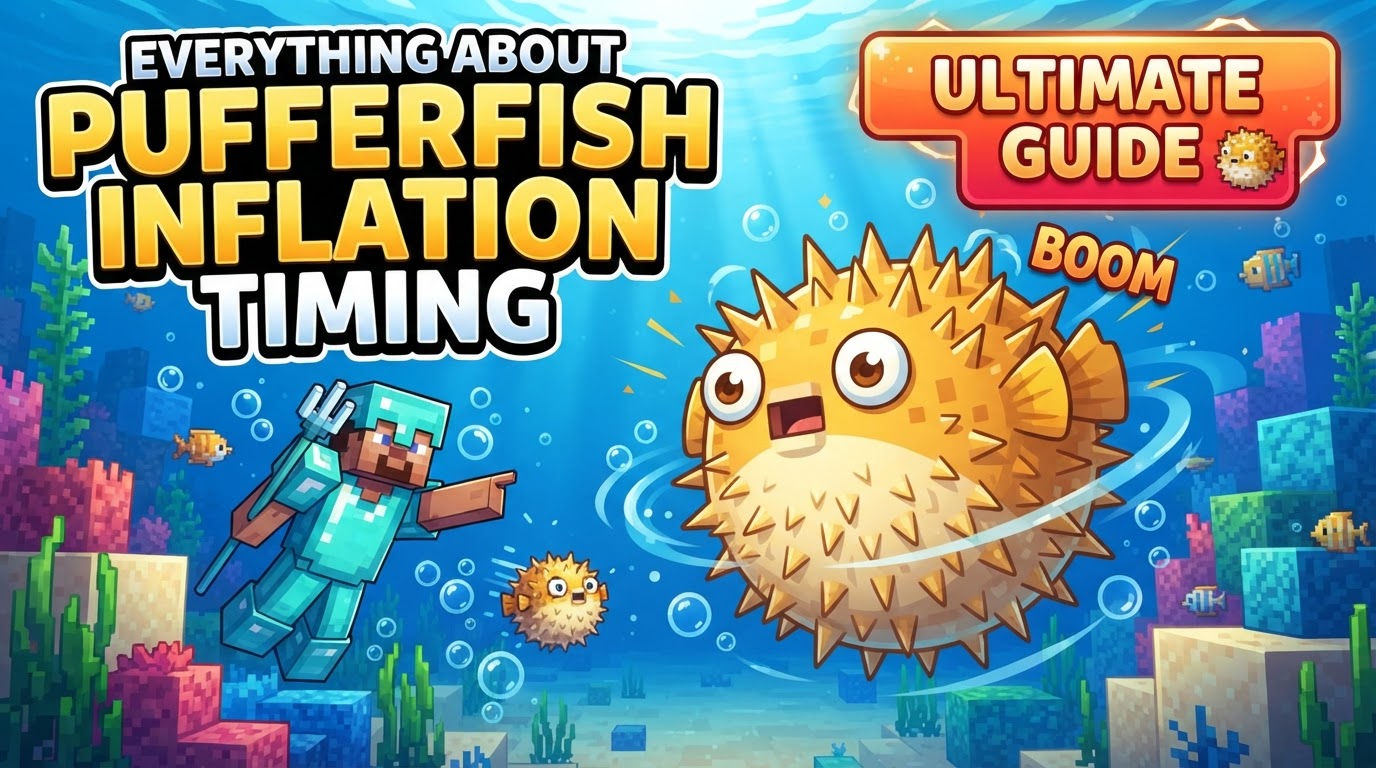
The pufferfish’s defensive posture isn’t a single, monolithic state but rather a dynamic process involving three clearly observable stages, each with its own visual characteristics and implications:
- Normal State: This is the pufferfish’s default, passive form. Small, unassuming, and swimming placidly in warm or lukewarm ocean biomes, it appears harmless. In this state, it poses no threat and can be safely approached or even caught with a water bucket.
- Half-Inflated State: Upon detecting a threat, the pufferfish begins its transformation. It visibly swells, appearing noticeably larger than its normal state. This is an intermediate phase, a clear visual warning that the creature is reacting to its environment. While not yet fully dangerous, it signals an impending threat.
- Fully Inflated State: The culmination of its defensive mechanism, the fully inflated pufferfish is an unmistakable sight. It reaches its maximum size, its body covered in sharp-looking spines, and it often appears to have a “nasty look” about it. This is where the pufferfish becomes truly hazardous. Any entity that comes into direct contact with it, or remains within its immediate vicinity while it’s in this state, will be inflicted with a poison effect.
While the exact, frame-by-frame timing of these inflation and deflation animations isn’t precisely detailed within the game’s publicly available mechanics, the sequence is consistent and rapid enough to be an immediate visual cue for players. The transition from normal to fully inflated occurs swiftly once a threat is detected, giving little time for careless approaches.
The Potent Aftermath: Poison and Gradual Deflation
The primary purpose of the pufferfish’s full inflation is to inflict poison. When an entity is too close to a fully inflated pufferfish, it receives a poison effect that typically lasts for 7 seconds. This might seem like a minor inconvenience, but underwater, or for players with low health, this sustained damage can be surprisingly dangerous. It’s particularly annoying when trying to navigate tight underwater spaces or collect resources, as the repeated poison applications can quickly deplete health or drain precious food supplies needed for regeneration.
An important exception to this rule is undead mobs. Skeletons, zombies, drowned, and other undead creatures are completely immune to the pufferfish’s poison, making them safe from this particular defense. This distinction can be a useful piece of knowledge for players designing mob farms or traps.
Once the threat is no longer within the 5x5x5 detection radius, the pufferfish doesn’t immediately shrink back to its normal size. Instead, it begins a slow, deliberate deflation process. This gradual return to its passive state adds to the realism of its animation and means there’s a brief window where it remains partially inflated even after the immediate danger has passed. This slow deflation also implies a certain “cooldown” period before it’s ready to fully inflate again if a new threat appears too quickly.
Strategic Applications: Beyond Mere Survival
The unique behavior and predictable inflation timing of pufferfish open up several creative and strategic possibilities for resourceful Minecraft players:
- Automated Traps: Their defensive poisoning mechanism makes pufferfish excellent components for automated traps. By placing them strategically in small water-filled holes or within redstone contraptions, players can create areas that automatically poison hostile mobs or even unsuspecting players. The 5x5x5 detection range is key here, allowing for precise trap design.
- Dynamic Decorative Elements: For builders and designers, the pufferfish’s distinct inflation animation offers a unique aesthetic. Placing them in aquariums or underwater builds provides a dynamic element, as they inflate and deflate in response to observers or other nearby entities, adding life and movement to aquatic scenes.
- Permanent Installations: Unlike many wild mobs, pufferfish collected with a water bucket and then placed in the world will not naturally despawn. This crucial detail means they can be used for permanent installations without the need for nametags, making them a reliable choice for long-term traps or decorative features.
- Forcing Perpetual Inflation: An interesting exploit of their detection mechanic involves armor stands. Placing an armor stand within a pufferfish’s 5x5x5 detection radius will cause the pufferfish to perpetually remain in its fully inflated state. This can be used for specific contraptions where a constant poison source is needed, or simply for an unusual visual effect. In some complex redstone mechanisms or mob farms, this forced inflation can also help correct hitbox misalignment issues, ensuring consistent interaction with other game elements.
Avoiding Common Pitfalls with Pufferfish
While their mechanics are fascinating, pufferfish also present a few common traps for the unwary:
- The Perils of Raw Consumption: As mentioned, eating a raw pufferfish is a recipe for disaster. It inflicts a staggering 1 minute of poison, 15 seconds of nausea, and 15 seconds of hunger. It is unequivocally not a viable food source and should be avoided at all costs unless you have a specific, perhaps ill-advised, reason to consume it.
- Underestimating the Poison: Especially for new players or those exploring underwater without proper gear, carelessly approaching a fully inflated pufferfish can lead to unexpected and significant health loss. The 7-second poison duration can chip away at health quickly, and multiple applications can be fatal, particularly when combined with drowning damage or attacks from other aquatic mobs. Always approach with caution or ensure you have a Water Breathing potion active.
Beyond the Animation: A Brewer’s Best Friend
Despite their defensive nature and culinary hazards, pufferfish hold immense value in another crucial aspect of Minecraft: potion brewing. They are the primary ingredient required to brew a Potion of Water Breathing. This makes them an essential resource for any player planning extensive underwater exploration, building projects beneath the waves, or combating guardians in ocean monuments. Their practical utility in brewing elevates them from a mere environmental hazard to a valuable and sought-after commodity.
From their subtle initial swelling to their full, spiky glory and the subsequent gradual deflation, the pufferfish’s animation timing is a masterclass in environmental storytelling and practical game mechanics. While precise frame data remains elusive, the clear stages of inflation, the 5x5x5 detection radius, and the consistent poison effect provide all the “timing” information a player needs to interact with these unique creatures effectively. Whether you’re building a trap, decorating an aquarium, or brewing essential potions, understanding the pufferfish’s behavior is key to mastering the aquatic world of Minecraft.
Tags:
YOU MAY ALSO LIKE...