Understanding Why Bees Sometimes Refuse to Breed
Your attempts to expand your buzzing empire in Minecraft might sometimes hit a snag when your bees simply won’t cooperate and breed. The most common culprits are often simple oversights: not feeding both bees, their proximity, or the absence of flowers. Understanding the precise mechanics of vanilla Minecraft bee breeding is crucial to successfully growing your apiary and maximizing your honey production. This guide will delve into the core reasons why your industrious insects might be feeling less than amorous, ensuring you can quickly get your bee farm back on track.
The Fundamental Mechanics of Vanilla Bee Breeding
Before we explore the reasons for breeding refusal, it’s essential to grasp the basic, straightforward process of bee breeding in vanilla Minecraft. Bees are neutral mobs primarily valued for their ability to produce honey and pollinate crops. Each bee nest or player-crafted beehive can comfortably house up to three bees, making population management a key aspect of their utility.
The Simple Steps to Successful Bee Procreation
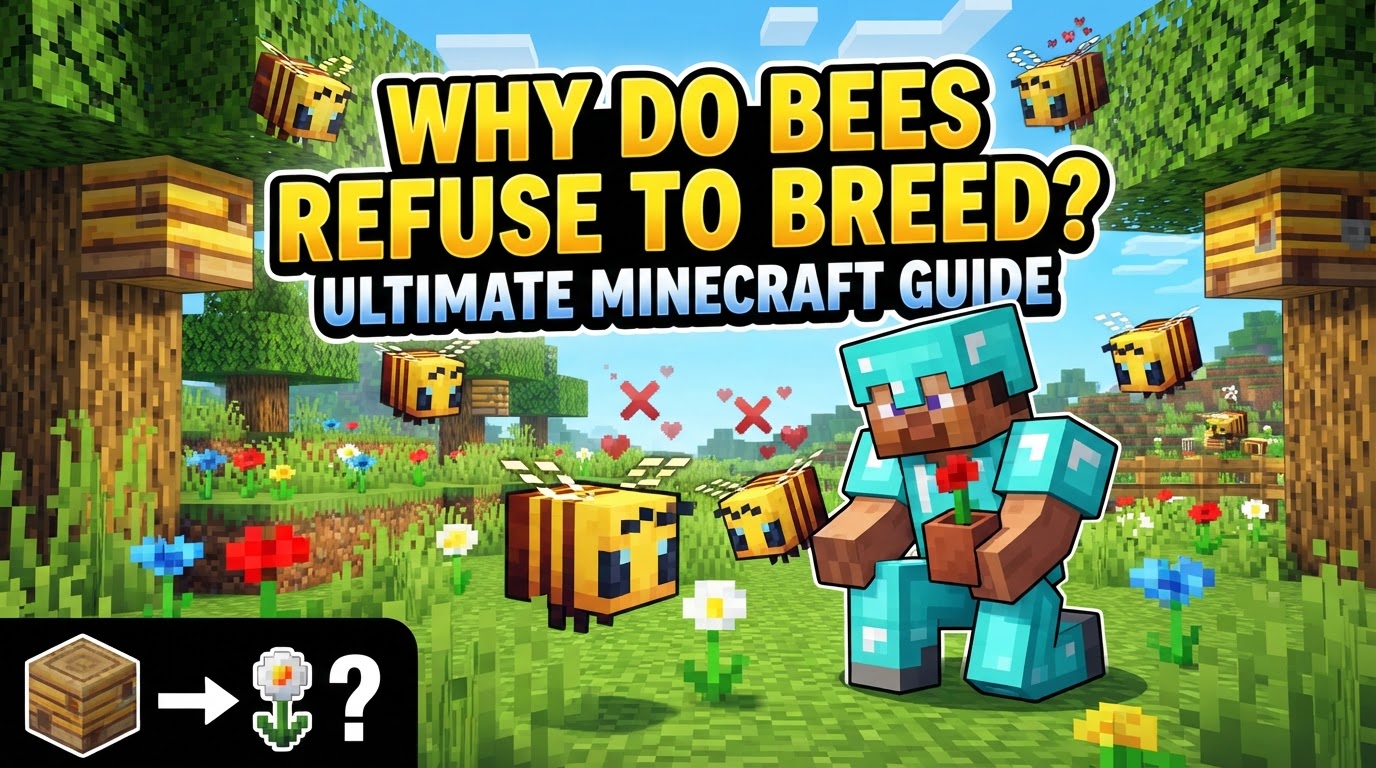
Breeding bees in Minecraft is a relatively simple affair, requiring just one core item: flowers. Any type of flower found in the game will suffice, from classic Poppies to vibrant Sunflowers. Here’s the step-by-step process:
- Acquire Flowers: Gather any type of flower. You’ll need at least two.
- Locate Two Bees: Find two bees you wish to breed. They need to be relatively close to each other.
- Feed Each Bee: With a flower in your hand, right-click on the first bee. You’ll see hearts appear around it, indicating it has entered “love mode.” Immediately repeat this process for the second bee.
- Witness the Magic: If done correctly, both bees will enter love mode, gravitate towards each other, and within a few seconds, a baby bee will spawn.
- Experience Gain: Successfully breeding bees will also reward you with 1-7 experience points, a small bonus for your efforts.
- Maturation: The newly spawned baby bee will take one full Minecraft day (equivalent to 20 minutes of real-world time) to mature into an adult bee, ready to contribute to your honey collection and, eventually, participate in breeding themselves.
Why Your Bees Are Stubborn: Common Reasons for Breeding Refusal
Despite the simplicity, several common issues can prevent your bees from breeding. These are often easy to overlook but equally simple to rectify.
Failure to Feed Both Bees
This is arguably the most frequent cause of breeding failure. Just like most other breedable mobs in Minecraft, bees require two parents to initiate the process. If you’ve fed a flower to one bee and it enters love mode, but you forget or fail to feed a second bee, no baby will be produced. The first bee will eventually exit love mode without having bred. Always ensure you’ve right-clicked on both intended parent bees with a flower in hand.
Bees Are Too Far Apart
Proximity is key. While the exact block distance isn’t explicitly defined, bees, like other mobs, need to be within a close range of each other for the breeding animation to trigger and for a baby to spawn. If you’ve fed two bees flowers but they are on opposite sides of a large enclosure, they might not be able to “find” each other to breed. Try to gather them in a smaller area, perhaps with the use of leads, before attempting to breed them.
Lack of Available Flowers
This might seem obvious, but it’s a fundamental requirement. Bees cannot breed without being fed flowers. If you’re attempting to breed but don’t have any flowers in your inventory, or you’re running low and can only feed one bee, breeding won’t occur. Always ensure you have a healthy supply of flowers on hand when planning a breeding session.
The Breeding Cooldown Period
Like almost all breedable mobs in Minecraft, bees are subject to a cooldown period after they have successfully bred. While the research notes don’t explicitly state the cooldown duration for bees, it’s safe to assume it follows the general pattern for other mobs, which is typically around 5 minutes (300 game ticks). If you’ve just bred a pair of bees, those same two bees will not be able to breed again immediately. You’ll need to wait for this cooldown to expire before they can re-enter love mode. This prevents players from rapidly overpopulating their worlds with animals.
Confusing Vanilla Mechanics with Modded Gameplay
A significant source of confusion for many players comes from the vast world of Minecraft mods. Information regarding complex bee genetics, specialized apiaries, advanced breeding tools, or specific environmental requirements (beyond flowers) often pertains to popular mod packs like Forestry, Productive Bees, or Complicated Bees. It is crucial to understand that vanilla Minecraft bee breeding is far simpler. If you’re playing a purely vanilla game, disregard any complex breeding charts or advanced machinery you might have seen – they simply don’t apply, and trying to implement them will only lead to frustration.
Indirect Factors Affecting Bee Breeding Efforts
While the above points directly address why bees might refuse to breed when given flowers, certain environmental and behavioral quirks can indirectly impact your ability to breed them by affecting their presence or movement.
- Dimension-Specific Behavior: Bees, when first placed or spawned in the Nether and End dimensions, may not leave their nests or hives. This can make them unavailable for breeding.
- Weather Changes in Specific Dimensions: Similarly, if the weather in the Nether or End changes from rain (though rain doesn’t visually appear as such in these dimensions) to clear, bees might also exhibit this reluctance to leave their homes.
- World Reloading as a Fix: In cases where bees are stuck in their hives in these dimensions, reloading the world can often resolve the issue, allowing them to resume normal behavior and become available for breeding.
These behavioral issues don’t directly prevent breeding *when initiated*, but they can make it difficult to gather bees for breeding in the first place, or manage your population effectively in non-overworld dimensions.
Optimizing Your Bee Breeding Setup
To ensure a smooth and continuous breeding operation, consider these helpful tips:
- Strategic Flower Placement: Bees are naturally attracted to flowers. To encourage natural bee nest spawns, place flowers on the same Y-coordinate level and within two blocks of oak or birch saplings. Using bone meal on these saplings can then sometimes generate a tree with a bee nest attached.
- Transporting Bees: For moving bees to a dedicated breeding area, such as a greenhouse or a contained farm, leads are invaluable. You can attach a lead to a bee and gently guide it to your desired location.
- Player-Made Hives: Don’t rely solely on natural nests. Crafting beehives allows you to expand your apiary beyond naturally generated nests, providing more homes for your growing bee population. New bees, whether wild or bred, will adopt these player-made hives.
By understanding these core mechanics, common pitfalls, and helpful tips, you’ll be well-equipped to manage your Minecraft bee population effectively, ensuring a steady supply of honey and a thriving apiary.
Tags:
YOU MAY ALSO LIKE...