

Aquaculture 2 Worm
Many a Minecraft angler, eager to cast their line, overlooks a fundamental truth of the Aquaculture 2 mod: the simple act of using bait can transform a leisurely pastime into a highly efficient resource-gathering endeavor. While exotic fish and rare drops often capture attention, the humble worm stands as the foundational element for any serious fisher’s toolkit within this expansive mod.
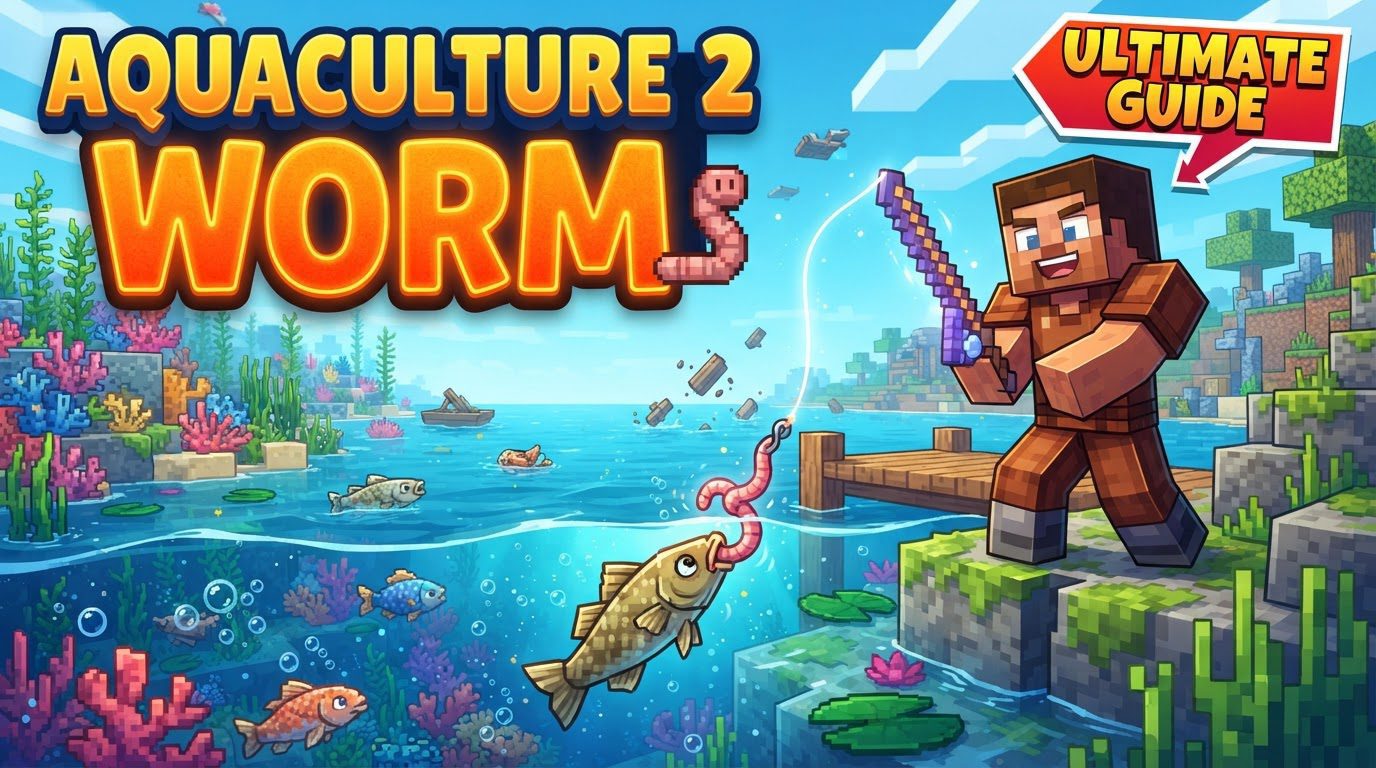
Understanding the Aquaculture 2 Worm
The worm, in the context of the Aquaculture 2 mod, is not just another creature; it is your entry-level ticket to more productive fishing. These unassuming invertebrates serve as a basic but highly effective bait type, designed to significantly enhance your fishing experience. Unlike the vanilla game’s passive fishing mechanics, Aquaculture 2 introduces a layer of strategic depth, and bait is at its core.
Each individual worm, when placed into your Tackle Box, offers a respectable 20 uses before it is consumed. While this might seem modest compared to its more advanced counterparts like Leeches (which provide 35 uses) or Minnows (boasting a generous 50 uses), the worm’s primary advantage lies in its accessibility and renewability. Its purpose is clear: to increase both your fishing speed and the overall success rate of catching fish and other aquatic treasures. Without any bait, your fishing efforts will be noticeably slower and less rewarding, making the worm an indispensable item even for beginners.
The Heart of Bait Production: Crafting and Operating a Worm Farm
The beauty of the Aquaculture 2 worm lies in its sustainable production method. You don’t hunt for them in dark caves or net them from rivers; instead, you cultivate them. The dedicated structure for this purpose is the Worm Farm, which is the sole and primary method for generating these essential bait items.
The process of establishing a thriving worm supply is straightforward:
- Craft a Worm Farm: Your first step is to construct this vital block. Once placed in your world, it becomes the central hub for all your worm-related activities.
- Add Compostable Items: The Worm Farm isn’t self-sufficient; it requires sustenance. To begin the worm generation process, you need to feed it. This involves placing various compostable materials into its interface. Think of items such as seeds (from wheat, pumpkins, melons, etc.), various vegetables (carrots, potatoes, beetroot), or other organic matter that would naturally decompose. The more you feed it, the more efficiently it will work.
- Generate Worms Over Time: Once supplied with compostable items, the Worm Farm begins its work. It will process these materials, slowly but surely generating worms. This isn’t an instantaneous process; it requires patience as the farm simulates natural decomposition and reproduction. The rate of generation is tied to the amount and type of compostable material supplied, making consistent replenishment key.
- Collect Your Bounty: As the Worm Farm processes items, it will accumulate worms internally. When the farm is full or whenever you need bait, simply right-click the Worm Farm block with an empty hand. This action will transfer the generated worms directly into your inventory. This mechanism ensures a fully renewable source of bait, meaning you’ll never truly run out as long as you keep your farm supplied.
Establishing and maintaining a Worm Farm eliminates the need to constantly search for other bait types, providing a reliable and steady stream of basic fishing fuel.
Integrating Worms into Your Fishing Setup
Once you’ve harvested your worms, the next step is to prepare them for action. The Aquaculture 2 mod introduces the Tackle Box, a crucial inventory extension for any serious angler.
Here’s how to get your worms ready for the catch:
- Access the Tackle Box: Place your Tackle Box in your inventory or hotbar and open its interface. You’ll notice various slots dedicated to different fishing components.
- Attach Worms to the Bait Slot: Within the Tackle Box interface, there is a specific slot designated for bait. Simply drag and drop your collected worms into this slot. Once placed, your fishing rod, when held, will automatically recognize and utilize this bait.
- Go Fishing: With worms attached via your Tackle Box, you are now ready to cast your line. You will immediately notice the benefits: your fishing bobber will attract fish more quickly, and your overall chances of a successful catch will increase significantly compared to fishing without any bait.
A useful tip for extended fishing sessions is to keep extra worms in the general storage slots of your Tackle Box. This allows for quick swapping or replenishment of bait without needing to open your main inventory, ensuring uninterrupted fishing enjoyment.
Maximizing Durability: The Role of Hooks
While worms provide 20 uses, smart anglers can make them last even longer by integrating specific hooks into their Tackle Box setup. Aquaculture 2 introduces various hooks that offer unique benefits, and some are specifically designed to preserve bait durability.
Hooks such as the Diamond Hook or the incredibly potent Nether Star Hook are game-changers for bait management. When equipped in your Tackle Box alongside your worms, these hooks work by providing a chance to prevent bait consumption upon a successful catch. For instance, the Diamond Hook offers a 50% chance to not consume bait durability. This means that every other time you reel in a fish, your worm might not lose one of its 20 uses.
The implications of this are significant. By pairing your basic worms with a durability-preserving hook, you effectively extend the lifespan of each worm. This translates into fewer worms consumed per fishing trip, less frequent trips back to your Worm Farm, and ultimately, more time spent fishing and less time managing resources. It’s an essential strategy for optimizing your bait usage and maximizing your haul, even with the most basic bait type.
Common Pitfalls and How to Avoid Them
Even with the straightforward mechanics of Aquaculture 2 worms, players can fall into several common traps that hinder their fishing efficiency. Being aware of these mistakes can save you time and frustration:
- Not Using Bait at All: This is arguably the biggest oversight. Many players, accustomed to vanilla Minecraft fishing, might neglect to use bait entirely. As a result, their fishing speed will be dramatically slower, and their success rate will be significantly lower compared to those who utilize even basic worms. Always use bait!
- Ignoring Bait Durability: Each worm has 20 uses. It’s easy to get engrossed in fishing and forget this limit. Not paying attention to your bait’s remaining durability in the Tackle Box can lead to unexpectedly running out of bait mid-fishing session, forcing an inconvenient return to your base or Worm Farm. Regularly check your bait’s status.
- Not Utilizing Durability-Preserving Hooks: Overlooking the benefits of hooks like the Diamond Hook or Nether Star Hook is a missed opportunity for efficiency. These hooks are designed to make your bait last longer. Failing to equip them means you’ll be consuming worms at their default rate, leading to faster depletion and more frequent bait replenishment. Invest in good hooks to make your worms go further.
- Under-Stocking the Worm Farm: The Worm Farm is a renewable source, but it’s not magic. It requires a consistent supply of compostable items to generate worms. If you forget to regularly add seeds, vegetables, or other organic materials, your Worm Farm will eventually cease production, leading to a shortage of worms precisely when you need them most for your fishing expeditions. Make feeding your Worm Farm a routine chore.
The Enduring Value of the Aquaculture 2 Worm
The Aquaculture 2 worm, despite being the most basic bait option, is a cornerstone of efficient fishing within the mod. Its renewable nature, ease of production through the Worm Farm, and significant impact on fishing speed and success rates make it indispensable. By understanding its mechanics, utilizing the Worm Farm effectively, pairing it with durability-enhancing hooks, and avoiding common mistakes, you can ensure a consistent supply of this vital resource. The worm proves that sometimes, the simplest tools are the most powerful, laying the groundwork for a truly abundant fishing experience in Minecraft’s Aquaculture 2 mod.
Tags:
YOU MAY ALSO LIKE...


