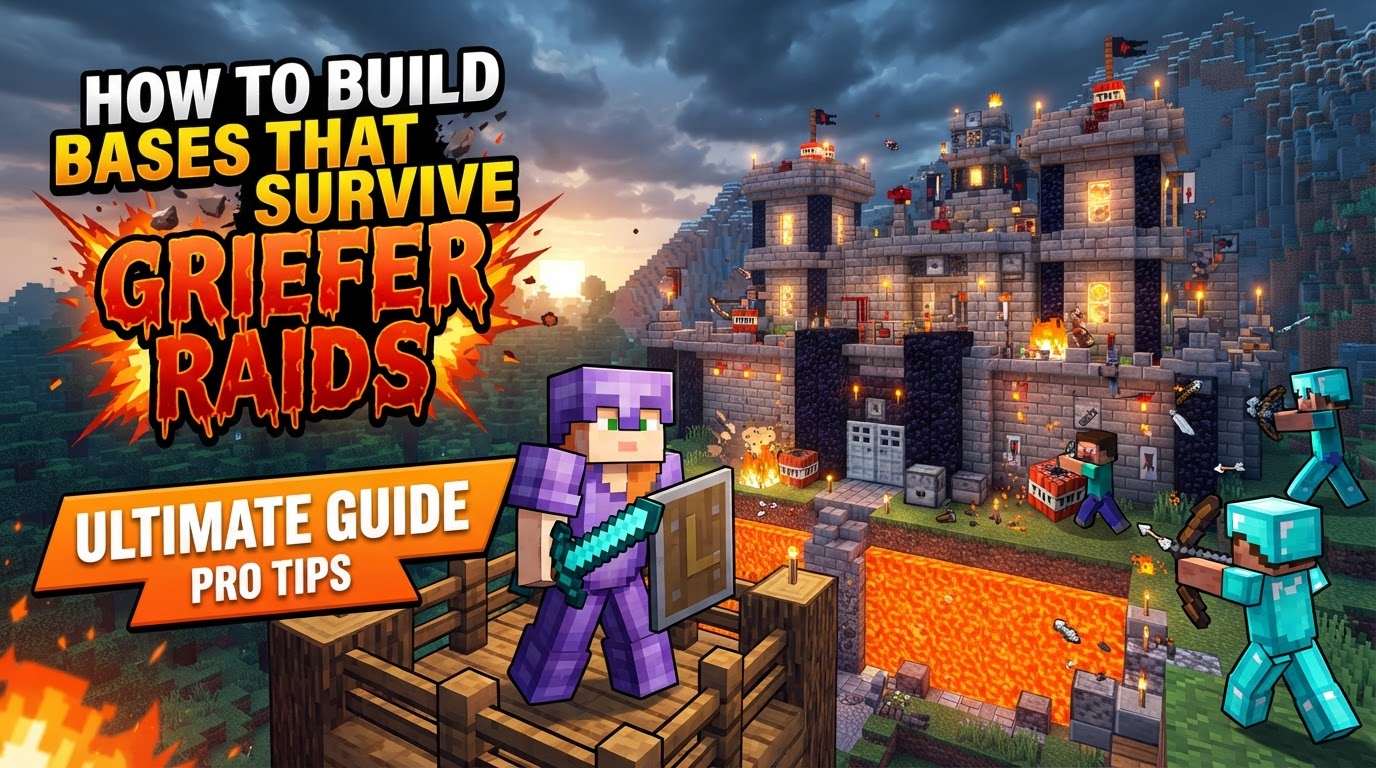
How to Build Bases That Survive Griefer Raids
A common mistake often leads to the swift demise of a beautifully crafted Minecraft base: underestimating the destructive power of griefers and hostile mobs. Many players invest countless hours into elaborate structures, only to find them reduced to rubble or looted by malicious individuals or environmental threats. Building a truly resilient base requires more than just good aesthetics; it demands a strategic understanding of game mechanics, proactive defense planning, and smart utilization of available tools.
Understanding the Threat: The Many Faces of Griefing
Before you can defend your base, you must understand what you’re defending it from. Griefing is defined as the intentional destruction, vandalism, or sabotage of other players’ builds, items, or progress. Its primary goal is often to cause frustration rather than fair gameplay. However, players aren’t the only threat; the very world of Minecraft contains elements that can wreak havoc on your creations, known as mob griefing.
- Creepers: These iconic green foes explode when close to a player, destroying blocks in a small radius. A single creeper can punch a significant hole in your wall.
- Endermen: While generally passive, Endermen can pick up and move certain blocks, including dirt, sand, gravel, and some natural blocks. While seemingly minor, a persistent Enderman can create unwanted openings or alter your landscape.
- Withers: One of Minecraft’s most formidable bosses, Withers are incredibly destructive. Their Wither skulls explode on impact, destroying almost all block types, including notoriously tough obsidian. They can chew through defenses with terrifying efficiency.
- Ghasts: Native to the Nether, Ghasts shoot explosive fireballs that can destroy most Nether blocks, making them a significant threat if you choose to build there.
- Zombies: On Hard difficulty, zombies gain the ability to break down wooden doors, creating a vulnerability in otherwise secure entrances.
- Ravagers: During village raids, Ravagers can destroy crops and leaves, impacting farms and decorative elements around your base.
Beyond these, environmental factors like fire spread (if enabled) and water/lava flow can also cause unintended damage. Knowing these threats is the first step in designing effective countermeasures.
Strategic Foundations: Location and Server Protections
The best defense often begins before the first block is even placed. Your base’s location and your immediate actions upon settling can dramatically impact its survivability.
Choose a Remote Location: The less visible your base, the less likely it is to be discovered and targeted. Build far away from known spawn points, major roads, or highly trafficked areas. The deeper into unexplored territory you venture, the safer your initial build will be from casual discovery.
Utilize Server Protections: If you’re playing on a multiplayer server, this is arguably your most critical defense. Most reputable servers offer plugins designed to combat griefing:
- Land Claim Plugins (e.g., GriefPrevention, Factions): These tools allow you to designate an area of land where only you (and players you explicitly trust) can build or break blocks. Claiming your land immediately upon finding a suitable spot is paramount.
- Lockette or Deadbolt: These plugins enable you to lock chests, doors, furnaces, and other interactable blocks. This prevents unauthorized players from stealing your items or gaining entry to your base, even if they manage to bypass your physical defenses.
- CoreProtect: While not a direct player protection tool, CoreProtect is invaluable for server administrators. It tracks every block change, allowing admins to identify griefers, see what damage was done, and often “roll back” the affected areas to their previous state, effectively undoing the griefing.
Always check a server’s rules and available commands to understand what protections are at your disposal.
Building an Impenetrable Fortress: Materials and Layered Design
Once your location is secure, the physical construction of your base becomes the next critical layer of defense.
Construct with Blast-Resistant Materials: When choosing blocks for your base’s structure, especially outer walls and critical areas, prioritize materials with high blast resistance. Obsidian is the gold standard, virtually impervious to explosions. Other strong choices include various forms of concrete, stone bricks, and cobblestone. Avoid easily destructible or flammable materials like wood, wool, or dirt for your main defenses. A clever trick to further enhance blast resistance is to add a layer of water along your walls. Water significantly dampens the destructive power of TNT and Creeper explosions, often rendering them harmless to your primary structure.
Implement Layered Defenses: Never rely on a single wall or barrier. A truly grief-resistant base incorporates multiple layers of protection. Imagine an onion, with each layer designed to slow down or deter an intruder. This could mean:
- Multiple concentric walls, each separated by a small gap or even a trench.
- Maze-like corridors within your base’s exterior, forcing intruders to navigate complex paths rather than a straight line.
- False walls or hidden passages that lead to dead ends, wasting a griefer’s time and resources.
The goal is to make breaching your base so time-consuming and resource-intensive that most griefers give up before reaching anything valuable.
Comprehensive Security: Mob-Proofing and Valuables Protection
Beyond player threats, your base needs to be secure against the environment and hostile mobs.
Mob-Proof Your Base:
- Lighting: Adequately light up all interior and exterior areas with torches, glowstone, sea lanterns, or other light sources. Hostile mobs, including Creepers, cannot spawn in well-lit areas.
- Creeper Deterrents: Use blocks like slabs, stairs, fences, or walls around your base’s perimeter. Creepers cannot pathfind effectively over these obstacles, preventing them from getting close enough to explode against your main structure.
- Enderman Protection: Endermen cannot pick up blocks if there is a block directly above them. Placing slabs, carpets, or water features around areas you want to protect from Enderman manipulation can be effective.
- Zombie Defense: On Hard difficulty, replace all wooden doors with iron doors, which zombies cannot break. Consider airlock-style entrances (two doors with a small chamber in between) for added security.
- Server-Wide Mob Griefing: If you are the server owner or have operator permissions, consider setting the game rule
/gamerule mobGriefing false. This command disables most mob-block interactions globally, preventing Creepers from exploding, Endermen from moving blocks, and Withers from destroying terrain. Note that this command does not prevent player actions, fire spread, water flow, or villagers from trampling crops.
Secure Valuables: Your most precious items deserve the highest level of security. Ender Chests are invaluable for this purpose, as their inventory is unique to each player and cannot be accessed by others. Keep your most irreplaceable gear and resources in Ender Chests. For other valuables, ensure they are in locked containers within the most secure, innermost parts of your base.
Consider Decoy or Hidden Bases: A classic tactic is to build an unimpressive, “noob-friendly” dirt house or small wooden shack on the surface. This serves as a decoy, drawing the attention of casual griefers. Your actual valuable storage and main base can then be hidden underground, deep within a mountain, or in a less obvious, remote location, accessible only through a hidden entrance.
Beyond the Walls: Advanced Tactics and Ongoing Vigilance
True base security is an ongoing process that extends beyond initial construction.
- Employ Mob Defenders: Iron Golems are excellent guardians, attacking hostile mobs and players who attack you or them. Tamed wolves (dogs) can also provide defense, attacking anything you hit or that attacks you. Station these defenders strategically around your base.
- Strategic Traps: While requiring more advanced redstone knowledge, incorporating traps can deter or even capture griefers. Pitfall traps, lava traps, or elaborate piston traps can be effective, but ensure they don’t accidentally harm you or your trusted allies.
- Community Engagement and Reporting: If griefing occurs, immediately gather evidence (screenshots, videos) and report it to server administrators. Most admins take griefing seriously and can roll back damage, ban offenders, and restore lost items.
- Regular Backups: If you have control over the world files (e.g., single-player or server owner), regularly back up your world. This is your ultimate insurance policy, allowing you to recover from any major griefing incident.
- Limit Information Sharing: Be extremely cautious about sharing your base’s coordinates, design details, or even its general location with anyone you don’t fully trust. The more people who know about your base, the higher the risk.
- Trust Wisely: This cannot be stressed enough. Be very cautious when granting building permissions to other players, even friends. Many griefers exploit trust. If you absolutely must grant permissions, consider doing so for a limited time and make a backup of your base beforehand.
Avoiding the Traps: Common Pitfalls to Sidestep
Many bases fall victim to griefing due to predictable errors. By understanding and avoiding these common mistakes, you significantly increase your base’s chances of survival.
- Building in Exposed or Popular Areas: Bases built near spawn, major server routes, or easily discoverable landmarks are prime targets. Visibility equals vulnerability.
- Using Weak, Flammable Materials: Relying on wood, wool, or dirt for your main structure makes your base easy to destroy with fire or explosions.
- Lack of Redundancy: A single layer of defense is no defense at all. If a griefer can breach one wall and immediately access your valuables, your base design has failed.
- Leaving Storage Unlocked: Unlocked chests, barrels, and other containers are an open invitation for item theft. Always lock them with server plugins if available.
- Underestimating Mob Griefing: Failing to account for Creepers, Endermen, Withers, and other destructive mobs can lead to unexpected and frustrating damage.
- Blind Trust: Giving unrestricted building access or “pro tools” to unfamiliar players, or even new acquaintances, is a significant security risk that often ends in betrayal.
- Ignoring Server Protections: Not utilizing available land claiming or locking plugins is a critical oversight that leaves your base needlessly vulnerable. These tools are often your strongest line of defense.
- Creating an “Attractive” Target: A highly visible, elaborate, and undefended base might signal to griefers that it contains valuable resources and is an easy target, making it more likely to be raided.
By integrating these strategies into your Minecraft building philosophy, you can construct bases that not only look impressive but also stand the test of time, weathering the storms of both environmental hazards and malicious players.
Tags:
YOU MAY ALSO LIKE...