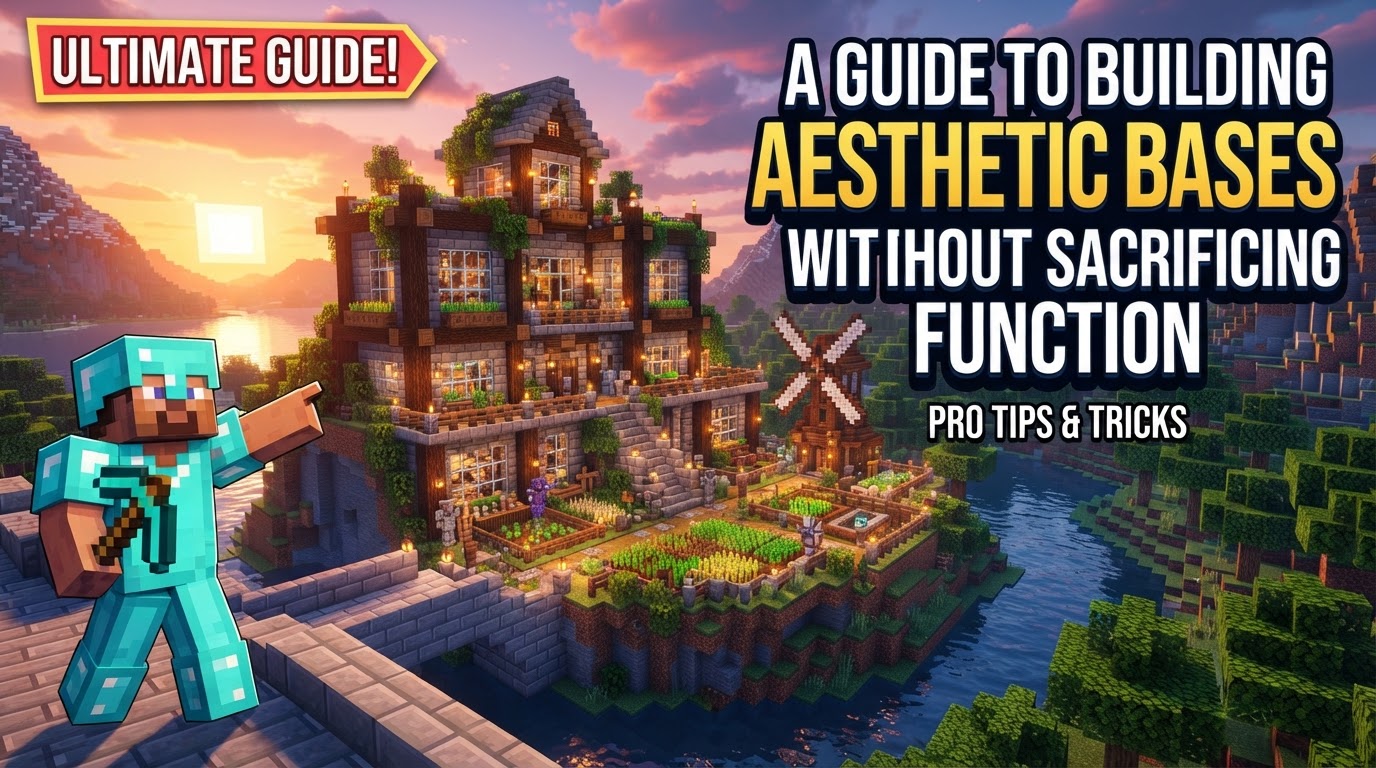
A Guide to Building Aesthetic Bases Without Sacrificing Function
Creating a truly effective and beautiful Minecraft base isn’t about choosing one over the other; it’s about seamlessly blending both. Many players start their adventures with simple, functional shelters, only to find them lacking visual appeal, or they meticulously craft stunning structures that prove impractical for daily survival. The key lies in understanding how to integrate aesthetic principles with practical design from the ground up, ensuring your base is not just a place to store items, but a home that inspires and functions flawlessly.
Foundational Principles for a Functional Fortress
Before placing your first block, consider these core mechanics that underpin every successful base:
- Strategic Location: The very first decision can shape your entire game. Choose a base location with easy access to vital resources like water, wood, and stone. Forests and plains are often ideal for beginners due to their flat terrain and abundance of materials, offering ample space for expansion. Alternatively, mountains or caves can offer natural protection, reducing the initial effort required for defense and providing unique architectural opportunities.
- Mob Safety: Your base is your sanctuary, and hostile mobs pose the primary threat. Adequate lighting throughout your base and surrounding areas is crucial to prevent hostile mob spawns, ensuring your safety and the integrity of your structures. Torches, glowstone, sea lanterns, or even strategically placed light blocks hidden within walls can keep your space mob-free.
- Modular Design: Planning for growth and organization is paramount. Employing a modular system, such as a repeating 7×7 grid, can ensure coherence in your base’s layout, both horizontally and vertically. This approach allows for efficient placement of functional areas like storage and crafting, while simultaneously maintaining proper lighting levels and a sense of order. Each module can serve a specific purpose, making expansion straightforward.
- Block Palette Selection: A cohesive aesthetic relies heavily on a well-chosen, limited block palette. Typically, this consists of 3-4 primary materials that form the bulk of your structure and 1-3 accent blocks to add visual interest and detail. Overusing too many different block types can lead to a chaotic appearance. Online tools and community-made palettes can offer invaluable inspiration and help you discover harmonious combinations.
- Depth and Detail: To avoid a flat or “boxy” appearance, which is a common pitfall, it’s essential to incorporate variety and depth into your builds. This can be achieved through simple techniques like slopes, curves, overhangs, pillars, and varying wall thicknesses. Pushing and pulling sections of walls, adding eaves to roofs, or creating multi-layered facades instantly elevates a structure from a simple box to an interesting piece of architecture.
- Functional Zoning: Organization is key to efficiency. Organize your base into distinct, themed sections for different purposes. This could include a dedicated storage room, a cozy bedroom, an enchanting/brewing station, or expansive farming areas. Clear zoning improves navigation, reduces clutter, and makes your base much more efficient to use.
- Connected Pathways: Good flow enhances both accessibility and appearance. Design clear and aesthetically pleasing pathways to connect different parts of your base. Mixing materials like wood planks, gravel, and stone bricks can create visual interest, while proper lighting along these paths prevents mob spawns and guides you safely through your domain.
Crafting Your Vision: A Step-by-Step Approach
Building a truly integrated base is an iterative process, best approached with a clear plan:
- Select Your Site: Begin by choosing a suitable location that provides easy access to necessary resources, such as water for farming or specific biomes for unique blocks. Ensure it aligns with your preferred biome or build style, whether that’s a sprawling plains village or a fortified mountain retreat.
- Plan the Layout: Before placing any permanent blocks, plan your base’s overall layout. Separate functional areas into logical sections, considering traffic flow and future expansion. For larger projects, sketching out designs on paper or creating wool outlines directly in-game can be incredibly beneficial for visualizing the space.
- Define Your Block Palette: With your layout in mind, choose a harmonious set of primary and accent blocks to use consistently throughout your construction. This decision will dictate the overall mood and style of your base.
- Construct the Basic Structure: Build the main shell of your base, focusing on varying dimensions and avoiding overly simplistic, box-like forms. Incorporate initial ideas for depth, such as recessed windows or protruding sections, even at this early stage.
- Add Architectural Details: Once the basic structure is up, enhance your base’s aesthetic by incorporating details and depth into both the interior and exterior. Utilize slabs, stairs, and trapdoors creatively to add texture, create intricate patterns, and introduce visual interest that breaks up flat surfaces.
- Integrate Functional Elements: Now, install essential amenities. This includes setting up organized storage systems, crafting stations, dedicated farming plots for food and materials, and a secure bedroom to set your spawn point. Ensure these elements are placed according to your functional zoning plan.
- Build Pathways: Construct well-designed and lit pathways to link different parts of your base. These paths should not only be functional, improving flow and navigation, but also aesthetically pleasing, contributing to the overall design and preventing mob spawns in transition areas.
- Ensure Illumination: As a final, crucial step, thoroughly light all interior and exterior areas of your base. Double-check every corner and shadow to prevent hostile mobs from spawning, securing your hard work and peace of mind.
Mastering the Art: Essential Building Tips
To truly excel in base building, keep these tips in mind as you construct and refine your sanctuary:
- Break the Box: This cannot be stressed enough. Actively work to avoid creating plain, square structures. Instead, use varied shapes, curves, and verticality to add significant visual interest. Think about L-shapes, T-shapes, octagons, or even combining multiple smaller structures.
- Consistent Palette: Stick to your chosen block palette to maintain a unified and coherent design throughout your base. This creates a professional and polished look, preventing your build from looking haphazard.
- Think Modularity: Designing in modules can help manage the scale of larger builds and ensure efficiency. It allows you to tackle your base in manageable chunks and expand seamlessly as needed.
- Zone for Function: Dedicate specific areas for different functions to keep your base organized and easy to navigate. A well-zoned base feels intuitive and reduces time spent searching for items or facilities.
- Detailing is Key: Even small details, like using different block textures, slabs, and stairs for trim, windowsills, or roof accents, can significantly elevate the aesthetic appeal of your base from good to great.
- Start Small, Expand Later: If you’re new to building or survival, begin with a compact and practical starter base. This can be easily expanded and refined into a larger, more complex structure as your resources grow and your needs evolve.
- Seek Inspiration: Don’t be afraid to draw ideas from real-world architecture, other Minecraft builds, or online galleries. Inspiration can spark your creativity and help you discover new techniques and styles.
Pitfalls to Avoid: Common Base-Building Blunders
Even experienced players can fall into common traps. Be aware of these to ensure your base remains both beautiful and practical:
- “Boxy” Builds: The most common mistake, resulting in simple, one-dimensional, square structures that utterly lack depth and visual appeal. This makes your base feel uninspired and generic.
- Cluttered Layouts: Cramming all functional elements into a single space without clear organization leads to inefficiency and an unappealing, messy look. This hinders navigation and makes your base frustrating to use.
- Insufficient Lighting: Failing to adequately light up your base, both inside and out, is a critical security flaw. This allows hostile mobs to spawn within your supposedly safe zones, leading to constant threats and damage.
- Overuse of Materials: Employing too many different block types without a cohesive palette results in a chaotic or “noisy” design. The base loses its identity and appears jumbled rather than harmonious.
- Mining Straight Down: While not directly base-building, this dangerous habit is a common mistake for new players. It can lead to unexpected encounters with hazards like lava or large caves, potentially losing valuable items or even your life far from your base.
- Poor Inventory Management: Carrying valuable items into dangerous areas without adequate preparation or having disorganized, unlabeled chests within your base can lead to frustration and loss. An efficient base includes an efficient storage system.
- Weak Building Materials: Constructing critical parts of your base from blocks that can be easily destroyed by Endermen or explosions (like dirt, sand, or cobblestone in exposed areas) is a functional compromise. Especially if aesthetic choices lead to structural fragility, your base’s integrity is at risk.
Building an aesthetic and functional base in Minecraft is a rewarding challenge that combines creativity with strategic thinking. By adhering to these principles, planning carefully, and avoiding common pitfalls, you can create a base that not only serves all your survival needs but also stands as a testament to your architectural prowess in the blocky world.
Tags:
YOU MAY ALSO LIKE...