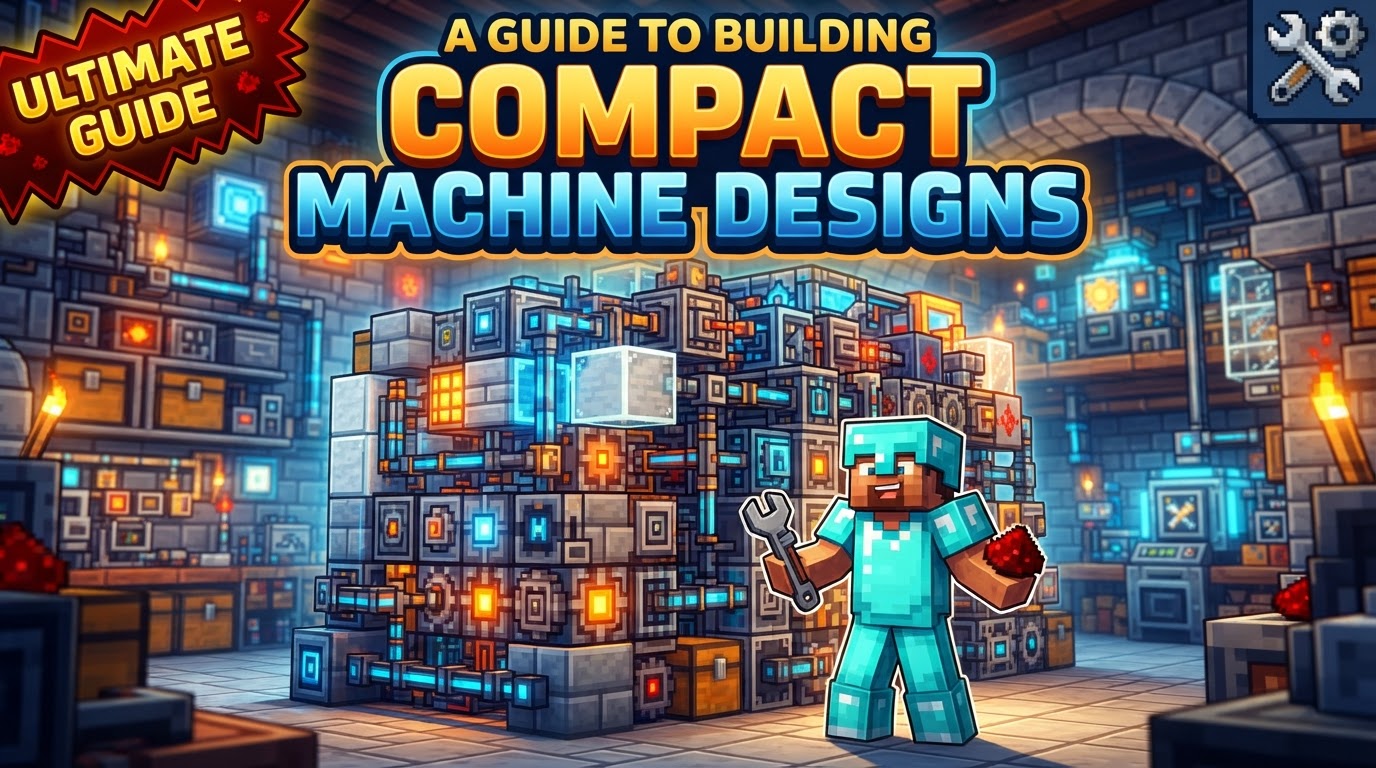
A Guide to Building Compact Machine Designs
Many aspiring Minecraft engineers make a crucial error: they attempt to build a perfectly compact and complex machine from scratch without first understanding its basic functionality or the underlying Redstone principles. This approach often leads to frustration, wasted resources, and ultimately, a non-functional contraption that takes up far more space than necessary. Instead, the path to true compactness is an iterative journey, built on a solid foundation of understanding and careful refinement.
The Essence of Compact Design in Minecraft
Minecraft’s blocky world presents unique challenges and opportunities for automation. Building compact machine designs is not merely about aesthetics; it’s about maximizing efficiency, conserving precious in-game resources, and creating streamlined systems that perform tasks reliably within a minimal footprint. Whether you’re crafting an automatic farm, an intricate sorting system, or a complex logic gate, mastering the art of compactness will elevate your engineering prowess.
Core Mechanics for Efficiency
At the heart of every compact Redstone contraption lies a deep understanding of how various blocks and items interact. These key mechanics are your toolkit for space-saving innovation:
- Redstone: The lifeblood of automation, Redstone dust acts as a conduit, transmitting power across distances. Its versatility extends to Redstone torches, which are indispensable for inverting signals – a critical function for advanced logic gates and achieving compactness by flipping states. Furthermore, Redstone signals possess the unique ability to pass through solid blocks when a repeater is correctly positioned adjacent to or even through the block, offering invaluable vertical and horizontal routing solutions that save space.
- Pistons: These dynamic blocks are fundamental for moving other blocks, making them essential for creating automatic farms that harvest crops or trees, as well as for constructing dynamic structures like hidden doors or bridge extenders. Their ability to push and pull blocks is a cornerstone of many compact designs.
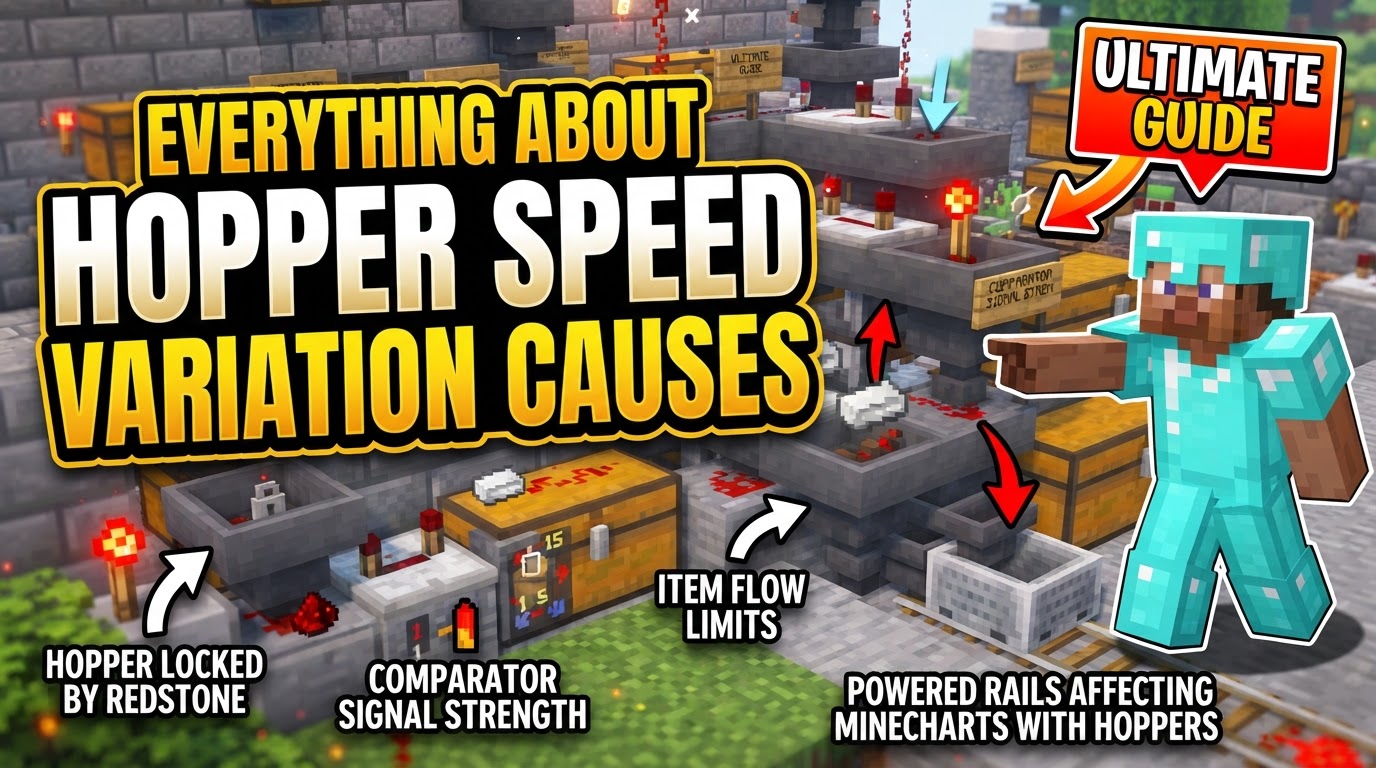
- Hoppers: For any automated system involving item transfer, hoppers are indispensable. They automatically collect and transfer items from their inventory into containers below them or into other hoppers they are facing. This seamless item flow forms the backbone of efficient sorting systems, automatic crafting setups, and item transportation networks, reducing the need for manual intervention and saving space by integrating collection directly into the machine.
- Observers: These ingenious blocks detect block changes directly in front of them and emit a brief, one-tick Redstone pulse. This makes them incredibly powerful for highly efficient automation, such as detecting crop growth for automatic harvesting, noticing piston movements, or even sensing when a block is placed or broken. Their immediate and compact signal generation is a game-changer for responsive systems.
- Comparators: Redstone comparators offer two primary compacting functions. Firstly, they can measure the fullness of containers (like chests, dispensers, or hoppers) and emit a Redstone signal strength proportional to their contents. This is vital for intelligent item sorters and storage management. Secondly, they can be configured to create Redstone clocks or pulse extenders, allowing for precise timing mechanisms within a minimal area.
- Entity Cramming: While seemingly a bug, this game mechanic can be cleverly exploited for compact animal farms. When more than 24 entities (such as animals or villagers) occupy a single block space, they will begin to take suffocation damage and eventually die. This can be used to create highly efficient, automatic meat or resource farms within a tiny footprint.
- Non-Solid Blocks for Vertical Redstone: Traditional Redstone routing can be bulky, especially when moving signals upwards. Certain “non-solid” blocks offer compact vertical Redstone transmission. Examples include upside-down stairs, top-half slabs, and glowstone. These blocks allow Redstone dust placed on top of them to power components on an adjacent block above, enabling multi-layered, space-saving designs.
- Compact Machines Mod (Modded Minecraft): For players venturing into modded Minecraft, the “Compact Machines” mod provides the ultimate solution for extreme compactness. It allows players to construct sprawling, complex contraptions inside a single block. These internal spaces, which are always chunk-loaded, effectively contain large machines within a tiny external footprint, making it ideal for server builds or resource-intensive setups.
The Iterative Path to Compactness
Building a compact machine is rarely a one-shot process. It requires a methodical, step-by-step approach:
- Build Functionality First: Before you even think about squeezing components, construct your machine to ensure it works as intended. Focus solely on the logic and mechanics, without immediate concern for its size. A functional, albeit sprawling, design is the necessary blueprint.
- Iterative Compaction: Once your machine is fully functional, begin the process of refinement. Analyze the build critically, identifying specific components or sections that can be made smaller, moved closer, or re-routed more efficiently. Repeat this process of analysis and reduction until you are satisfied with the compactness.
- Narrow One Dimension: A highly effective strategy is to concentrate on reducing the size along a single dimension first. For instance, aim to make the width of your machine as small as possible, optimizing all components within that constraint. Once you’ve achieved maximum reduction in one dimension, move on to the next, such as height or length.
- Resource Gathering: With a clear understanding of your functional design and potential compact iterations, gather all the necessary Redstone components and building materials. Accurate estimation prevents mid-build interruptions.
- Careful Placement: When assembling your compact design, place components with meticulous attention to detail. Every block and piece of Redstone matters. Pay close attention to Redstone signal paths, ensuring they connect correctly without interfering with unintended components, and observe how different interactions occur in tight spaces.
Mastering the Art: Key Tips for Compact Builders
To truly excel in compact Redstone engineering, keep these tips in mind:
- Understand Redstone Deeply: A profound and thorough understanding of how Redstone components interact, how signals are transmitted, inverted, and delayed, and the nuances of power mechanics is absolutely paramount. The more you know, the more creative and compact your solutions will be.
- Start Simple: Don’t jump into building a massive, compact sorting system immediately. Begin with small, basic Redstone contraptions like simple doors or light switches to grasp the fundamental principles of compactness before tackling larger, more complex machines.
- Experiment and Adapt: The best compact designs often come from trial and error. Don’t be afraid to try different layouts, component configurations, and Redstone routing methods. Often, the most creative and space-saving solutions arise from persistent experimentation and adaptation.
- Learn from Tutorials: Leverage the vast community knowledge available. Study existing compact designs and tutorials from experienced builders. Deconstruct their methods to understand the underlying logic and compacting techniques, then adapt them to your own builds.
- Optimize Signal Routing: Efficient planning of Redstone paths is crucial. Utilize vertical solutions, such as Redstone passing through non-solid blocks or using Redstone blocks for compact power sources, and exploit signal transmission through solid blocks where possible to minimize horizontal spread.
- Know Inputs and Outputs: Clearly identify where Redstone signals enter and exit components. Streamlining these connections and minimizing unnecessary detours is vital for reducing overall size and preventing signal interference.
Pitfalls to Avoid
Even seasoned builders can fall prey to common mistakes when striving for compactness:
- Over-complicating Early: As mentioned, attempting to build a highly compact and complex machine from scratch without first ensuring its basic functionality or understanding the core Redstone principles is a recipe for failure and frustration. Build big, then shrink.
- Incorrect Redstone Placement: Misaligning Redstone dust, repeaters, or torches by even one block can break entire circuits. In compact designs, every placement is critical, and incorrect positioning leads to frustrating troubleshooting and wasted space from repeated adjustments.
- Using Non-Solid Blocks Incorrectly: Not all “non-solid” blocks transmit Redstone signals in the same way. Attempting to transmit Redstone signals through transparent or inappropriate non-solid blocks (like glass panes or fences) where it’s not supported by game mechanics will lead to failed circuits and wasted effort.
- Ignoring Item Flow: For automated farms or storage systems, failing to design an efficient collection, transportation, and storage system for harvested items is a common oversight. A compact Redstone circuit is useless if the items it produces are scattered or inaccessible.
- Not Iterating: Sticking to the first functional design without actively looking for opportunities to reduce its size is a missed opportunity. Compacting is an ongoing process of refinement; rarely is the first functional design the most compact.
By understanding these mechanics, following a disciplined process, and learning from both successes and failures, you will master the art of compact machine design, transforming your Minecraft world into a marvel of efficiency and ingenuity.
Tags:
YOU MAY ALSO LIKE...