Bronze Boiler Modern Industrialization
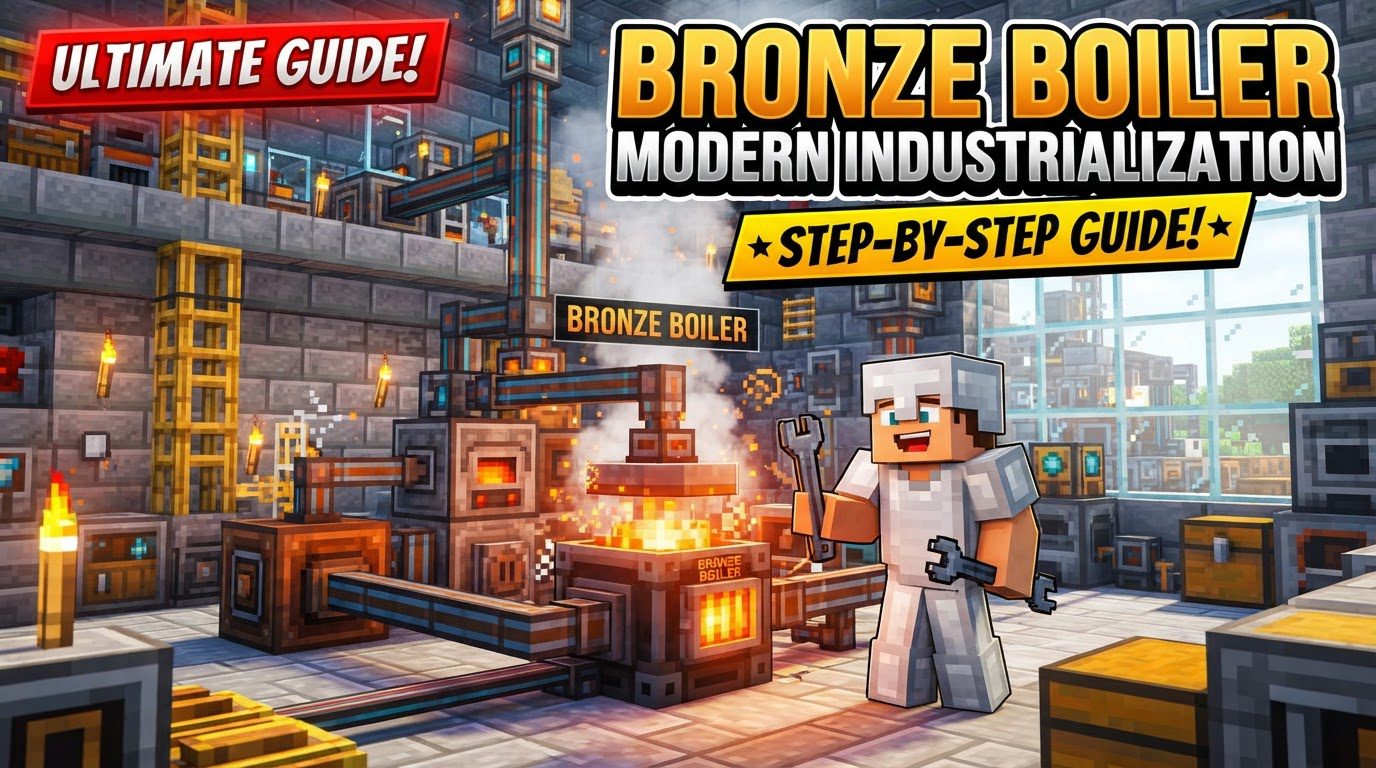
The Bronze Boiler: Forging the Steam Age in Modern Industrialization
Many aspiring industrialists in Modern Industrialization often hit an early roadblock: the need for automated water supply to their primary steam generator. While a Bronze Water Pump seems like the obvious solution, it too requires steam to operate, creating a classic chicken-and-egg dilemma. Fortunately, a clever workaround involving a simple “steam bucket” bridges this gap, allowing you to kickstart your steam-powered empire. This guide will delve into the Bronze Boiler, the cornerstone of your early industrial endeavors, ensuring you master its setup, operation, and maintenance.
The Heart of Early Industry: Understanding the Bronze Boiler
The Bronze Boiler is not merely another machine; it is the foundational engine of the “Steam Age” within the Modern Industrialization mod. Its singular, crucial purpose is to convert water into steam, the vital energy source that propels a range of essential bronze-tier machinery. Without a functioning boiler, progression into more complex automation and resource processing is severely limited. It’s the first step from manual labor to true industrial might.
Core Mechanics of Steam Generation
- Primary Purpose: The boiler’s sole function is to transform water into usable steam. This steam then powers machines such as the Bronze Macerator, Compressor, Mixer, and Furnace, significantly improving processing speeds and efficiency over manual methods.
- Fuel Consumption: Like any heat engine, the Bronze Boiler demands a constant fuel source. Standard furnace fuels like coal, charcoal, coke, or even lava are acceptable. The rate of fuel consumption is directly tied to the amount of steam being produced.
- Water Input: A continuous supply of water is non-negotiable. Initially, this can be done manually with buckets, but for any sustainable operation, an automated system, typically involving a Bronze Water Pump, is essential.
- Steam Output: Once heated and supplied with water, the boiler generates steam, which is then available for use. This steam can power adjacent machines directly or be transported over distances via fluid pipes.
- Capacity & Power: A single Bronze Boiler is quite capable for early-game needs. When operating at peak efficiency, it can comfortably power up to four bronze machines simultaneously, making it a robust central power unit for your initial factory.
- Temperature Requirement: The boiler must reach and maintain a sufficient internal temperature before it can begin producing steam. This means there’s a brief startup period after fueling before steam output commences.
Forging Your Future: Crafting the Bronze Boiler
Before you can harness the power of steam, you must first construct its generator. The Bronze Boiler requires several intermediate components, pushing you to engage with early-game metallurgy.
To craft a Bronze Boiler, you will need:
- Bronze Plates: These are fundamental. Bronze itself is an alloy made by combining copper dust and tin dust, which are then processed in a Forge Hammer to create bronze ingots. These ingots are then shaped into plates, often with the same Forge Hammer or an early machine.
- Bronze Tank: This component forms the main body and water reservoir of the boiler. It also involves bronze ingots and plates in its construction.
- Fire Clay Bricks: These specialized bricks are crucial for the boiler’s heat-resistant internal structure. Fire clay bricks are made from fire clay dust, which itself is a mixture of clay and crushed bricks (obtained by crushing regular bricks). This process introduces you to basic crushing mechanics.
From Still Water to Steaming Power: Setting Up Your Boiler
Once crafted, deploying your Bronze Boiler effectively involves more than just placing it down. A systematic approach ensures a smooth transition to automated steam production.
- Strategic Placement: Select a suitable location for your boiler. Proximity to a water source is beneficial for initial manual filling, and consider where your steam-powered machines will be located for efficient pipe routing.
- Initial Water Supply: Before any steam can be made, the boiler needs water. Manually fill the boiler by right-clicking it with water buckets until its internal reservoir is sufficiently stocked.
- Igniting the Flames: Insert your chosen furnace fuel (e.g., coal, charcoal) into the boiler’s fuel slot. It will begin to heat up, indicated by visual cues or internal UI.
The Automated Flow: Water Pumping & Pipework
Manual water filling is unsustainable. The next critical step is automating your water supply using the Bronze Water Pump.
- Crafting the Bronze Water Pump: Assemble this crucial component, which also requires bronze materials.
- Pump Placement: Place the Bronze Water Pump horizontally adjacent to water blocks. An ideal setup is within a 3×3 water source, with the pump positioned in the center, ensuring it has ample water to draw from.
- The Steam Bucket Kickstart: This is where the initial dilemma is solved. The Bronze Water Pump requires steam to operate. To provide this initial boost, smelt a water bucket in a regular Minecraft furnace. This process yields a “steam bucket.” Use this steam bucket on your Bronze Water Pump to provide it with the necessary steam to begin functioning. This one-time action unlocks continuous water flow.
- Connecting the Water Supply: Once the pump is running, connect it to your Bronze Boiler using fluid pipes. Ensure the pipes are correctly configured (using a wrench) to extract water from the pump and input it into the boiler.
Harnessing the Steam: Connecting Your Machines
With steam now being produced, it’s time to put it to work.
- Adjacent Placement: The simplest method is to place your bronze machines (like the Macerator or Compressor) directly adjacent to the Bronze Boiler. Steam will automatically transfer.
- Fluid Pipe Distribution: For machines located further away, or for a more organized factory layout, use fluid pipes to transport steam. Pipes can be connected and configured using a wrench to specify input and output sides, allowing for flexible routing.
Maximizing Your Output: Efficiency and Smart Practices
To get the most out of your early industrial setup, consider these tips:
- Early Automation with Steam Bucket: Always remember the “steam bucket” trick for starting your Bronze Water Pump. It’s a common oversight that can halt progress.
- Mastering Pipe Management: Fluid pipes offer surprising versatility. You can fit up to three pipes within a single block space, allowing for compact designs. Different colored pipes will not connect to each other, which is invaluable for separating fluid networks (e.g., water from steam). A wrench is your best friend for configuring pipe connections, changing input/output sides, or disconnecting segments.
- Embrace Machine Efficiency: Bronze machines are a significant upgrade over the Forge Hammer for resource processing. For example, a Bronze Compressor uses half the bronze ingots to produce a plate compared to manual forging, saving valuable resources.
- Monitor Fuel Usage: Be aware that the boiler’s fuel consumption is dynamic. While it might seem low when only one machine is running, it will increase proportionally as more machines draw steam, requiring a more robust fuel supply plan.
Beyond Bronze: Looking Ahead to Upgrades
The Bronze Boiler is a stepping stone. As your industrial demands grow, you’ll eventually need more power. The next tier is the Steel Boiler, which offers double the steam production rate and overall faster operation. Similarly, your bronze processing machines can be upgraded to their steel counterparts for enhanced speed and efficiency, creating a powerful synergy.
Troubleshooting Your Steamworks: Common Pitfalls and Solutions
Even experienced players can stumble. Here are common issues and how to resolve them:
- No Water Supply: The boiler requires a constant influx of water. If steam production stops, first check if the Bronze Water Pump is running and if pipes are correctly delivering water.
- Insufficient Fuel: An empty fuel slot means no heat, no temperature, and no steam. Ensure a steady supply of coal or other fuel.
- Incorrect Pipe Connections: Pipes can be finicky. Use your wrench to verify that water pipes are set to input into the boiler and steam pipes are set to output from it and input into machines.
- Water Pump Dependency: A frequent mistake is forgetting that the Bronze Water Pump itself needs steam. If your automated water isn’t flowing, re-check if you provided the initial steam from a steam bucket to the pump.
- Overloading the Boiler: While powerful, a single Bronze Boiler has limits. If you connect too many machines (beyond the recommended four at full capacity) and they are all running simultaneously, you might experience steam shortages, causing machines to stall. Consider adding another boiler or upgrading.
Mastering the Bronze Boiler is your first major step into the fascinating world of Modern Industrialization. With careful setup and attention to detail, you’ll soon have a thriving, steam-powered factory humming with efficiency.
Tags:
YOU MAY ALSO LIKE...