Create New Age Power
Many aspiring engineers in Minecraft overlook a crucial detail when first diving into the Create mod: its power system isn’t measured in the familiar ticks of Forge Energy (FE/t), but in something entirely different. This fundamental shift requires a new way of thinking about automation and energy generation. The Create mod introduces a unique rotational power system, a fascinating mechanical challenge that forms the backbone of its intricate contraptions.
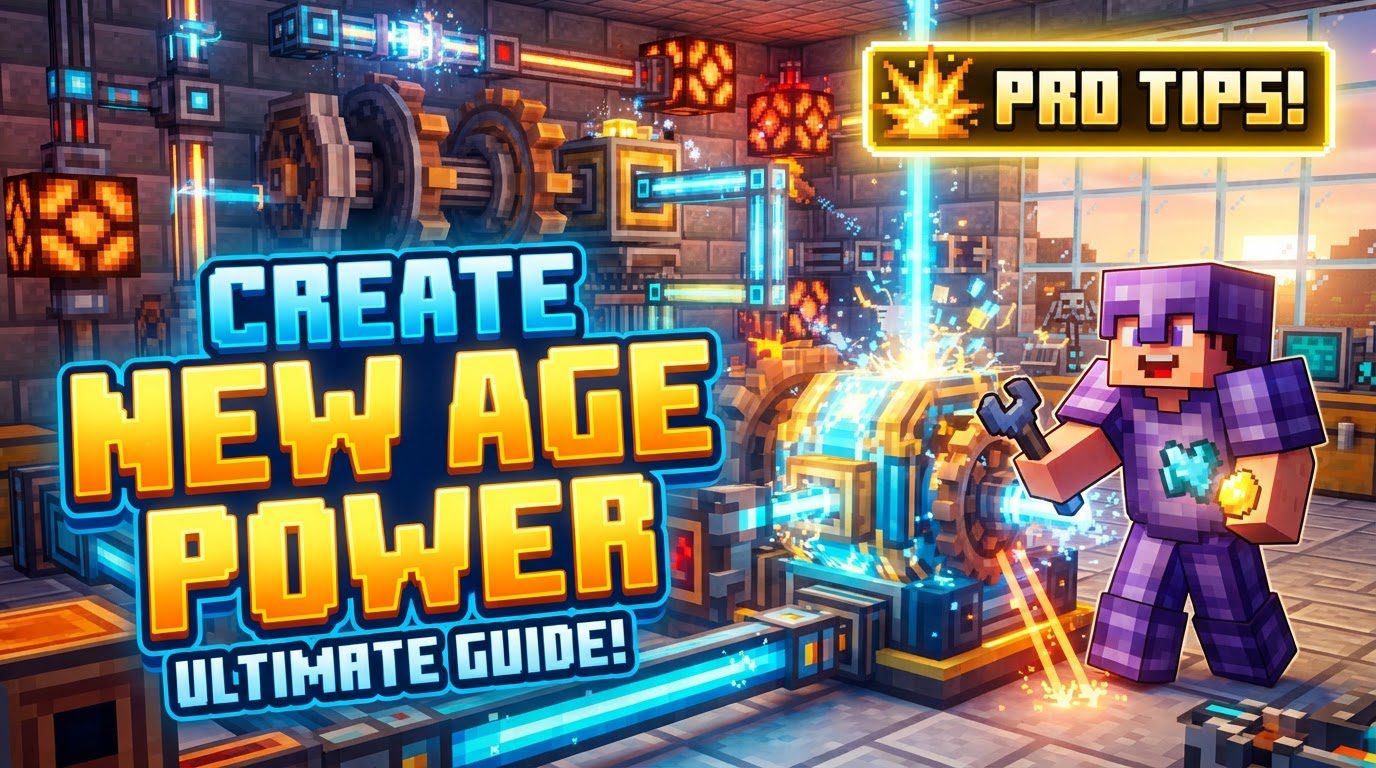
Understanding the Core Principles of Rotational Power
At the heart of the Create mod’s power system lies Rotational Force, universally measured in Stress Units (SU). Unlike electrical energy, SU represents the raw mechanical effort consumed by kinetic contraptions and produced by generators. Every machine in the Create mod has a specific SU requirement, and for your system to function without a hitch, the total SU you generate must consistently meet or exceed the total SU consumed. This constant balancing act is paramount to successful automation.
- Speed (RPM): Beyond sheer force, the speed at which components operate is critical. Measured in Revolutions Per Minute (RPM), higher RPM generally translates to faster operation or increased output for your machines. Managing RPMs effectively is key to optimizing your setups.
- Gears and Gearboxes: These are the fundamental tools for manipulating rotational power. Gears transmit force across distances, while gearboxes can alter the direction of rotation. By strategically combining large and small gears, you can precisely increase or decrease rotational speed, tailoring it to the specific needs of your contraptions.
- Stress Capacity: Every single rotational component, from simple shafts to complex gearboxes, possesses an inherent stress capacity. This is a crucial limit; exceeding it will lead to severe consequences, such as components breaking outright or the entire mechanical system seizing up, bringing your factory to a grinding halt.
- Inter-Mod Power Conversion: When integrating Create with other technology-focused mods that rely on Forge Energy (FE/t) – for instance, those hinted at by “Crafts & Additions” or “The Factory Must Grow” – a deliberate design choice introduces an efficiency penalty. Converting rotational force (SU) to electricity (FE/t) and vice-versa incurs a significant 75% efficiency loss. This intentional inefficiency prevents players from bypassing Create’s unique power challenges by simply converting to another mod’s power system for easier transmission or generation.
The Engineer’s Journey: Power Progression
Mastering Create’s power system is a journey of scaling and sophistication, starting with simple manual efforts and culminating in complex, automated industrial behemoths.
- Early Game – Manual & Basic Generators:
- Hand Crank: Your very first foray into rotational power will likely involve a Hand Crank. This manual device provides a small amount of rotational force, perfect for getting initial machines like a Millstone or Mechanical Mixer running as you gather resources.
- Water Wheels: Soon after, you’ll graduate to Water Wheels. These simple generators produce SU when placed in flowing water. For increased power output, craft and deploy Large Water Wheels, which offer a substantial boost to your early-game SU generation.
- Windmills: Another early-game staple, Windmills generate SU using Windmill Bearings and Sail blocks. The more sails you add to your windmill structure, the greater its rotational strength and, consequently, its SU production.
- Mid-Game – Steam Engines & More Complex Setups:
- Steam Engines: As your factory grows, Steam Engines become your primary mid-game power source. These robust generators produce significant SU by consuming water and heat. They demand a steady supply of fuel (like coal or lava) and water, often necessitating automated delivery systems built with other Create contraptions.
- Encased Fan Heating/Cooling: For advanced steam engine setups, Encased Fans play a vital role in managing heat. They can be strategically used with lava for efficient heating or with ice/water for cooling, contributing to automated fuel delivery or precise temperature regulation for optimal steam production.
- Late Game – Automated and Efficient Systems:
- Diesel Generators (from Add-ons): For players venturing into specific add-on mods like “The Factory Must Grow” (TFMG), diesel generators represent the pinnacle of power generation. These machines can produce immense amounts of power but demand a stable and automated supply chain for resources such as crude oil, gasoline, or Liquefied Petroleum Gas (LPG).
- Optimized Layouts: Regardless of your generator choice, the late game is defined by highly optimized layouts. This involves designing compact and efficient gear ratios across your factory to maximize SU transmission and minimize any potential losses, ensuring every machine receives the power it needs without waste.
Maximizing Efficiency and Reliability
Building a successful Create factory isn’t just about generating power; it’s about making that power work smarter, not harder.
- Understand SU Consumption: Always be acutely aware of how much SU each of your machines consumes. The in-game “Stressometer” tool and the detailed ponder scenes for each block are invaluable resources for understanding individual component requirements.
- Prioritize Rotational Power: Whenever possible, utilize Create’s native rotational power (SU) directly for Create machines. This circumvents the substantial efficiency losses associated with converting SU to FE/t and back again.
- Scale Up Gradually: Resist the urge to build enormous power setups from the outset. Start small, verify functionality, and incrementally expand your systems as your factory’s demands grow. This approach helps you identify and rectify bottlenecks early on.
- Automate Fuel Production: For any generator requiring consumables, such as steam engines or diesel generators, invest time in creating automated systems for producing and delivering their fuel (be it lava, coal, crude oil, etc.). This ensures continuous, uninterrupted operation.
- Use Speed Controllers: For precise control over machine operation and effective stress management, employ speed controllers. These devices allow you to fine-tune RPMs, ensuring machines run at their optimal speed without overloading.
- Configuration File Adjustments: If the built-in 75% inter-mod power conversion efficiency loss proves too restrictive for your playstyle or modpack, remember that this value can often be adjusted within the mod’s configuration file, offering a degree of customization.
Avoiding Common Pitfalls
Even seasoned engineers can stumble. Be aware of these frequent mistakes to ensure your Create contraptions run smoothly.
- Insufficient Power Generation: A common beginner’s error is constructing machines without generating enough SU to power them adequately. This inevitably leads to slow operation or complete system shutdown. Always cross-reference your total SU production against your total SU consumption.
- Overloading Stress Capacity: Connecting too many high-SU-consuming machines to a single shaft or an inadequately rated gearbox can quickly exceed its stress capacity, causing components to break and forcing costly repairs.
- Ignoring Gear Ratios: Improperly configured gear combinations can result in either agonizingly slow machine operation or, conversely, excessive stress on the system. Experimentation and careful calculation are key to achieving desired RPMs within safe stress limits.
- Inefficient FE/t Conversion: As highlighted, converting Create’s SU to FE/t and then back, especially using alternators and motors from add-on mods, incurs a 75% power loss. This makes it an extremely inefficient method for transmitting or powering Create machines that could otherwise use direct SU. Avoid it where possible.
- Neglecting Maintenance for Add-on Generators: Complex generators from add-on mods, like diesel generators, often have specific resource requirements beyond basic fuel, such as heavy oil or lubricants. Neglecting these can lead to system failures and widespread power outages.
- Incorrect Voltage/Amperage with TFMG: If you’re utilizing “The Factory Must Grow” (TFMG), be mindful that simply having a high quantity of power (FE/t) isn’t always enough. Your power source must also provide the correct voltage and amperage to effectively transmit power across cables, preventing issues where power exists but cannot be delivered.
By understanding these core mechanics, following a logical progression, implementing smart design choices, and learning from common mistakes, you’ll be well on your way to mastering “Create New Age Power” and building truly magnificent, automated factories.
Tags:
YOU MAY ALSO LIKE...