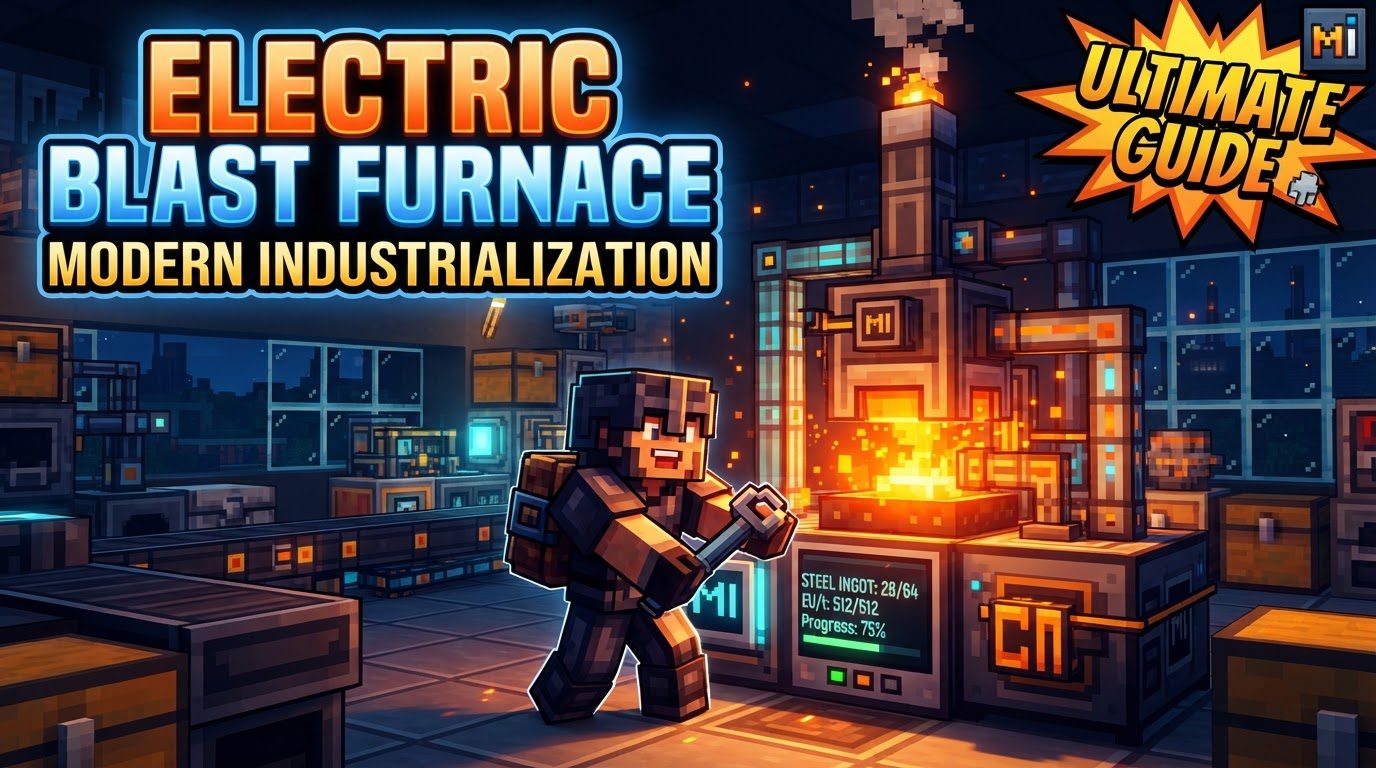
Electric Blast Furnace Modern Industrialization
One of the most frequently encountered frustrations for aspiring industrialists in Modern Industrialization is the dreaded “invalid multi-block structure” message when attempting to activate their Electric Blast Furnace. This often stems from a seemingly minor oversight: an incorrect height. The Electric Blast Furnace (EBF) is not a 5-block tall behemoth, nor is it a stubby 3-block unit; it demands precisely four blocks of vertical space to function correctly.
The Cornerstone of Advanced Refining: Understanding the EBF
The Electric Blast Furnace stands as a pivotal multi-block structure within the Modern Industrialization mod, marking a significant leap in your industrial journey. Its primary purpose transcends simple smelting; it is an advanced machine engineered for the sophisticated refining of materials, a process absolutely critical for unlocking higher technology tiers. Without a functional EBF, progression to more complex machinery, essential chemicals, and advanced components remains locked away. Furthermore, it is instrumental in advancing through the mod’s electricity tiers, signifying its role as a bottleneck and a gateway to true industrial might.
Unveiling the Electric Blast Furnace’s Core Principles
At its heart, the EBF operates on a few fundamental principles that dictate its construction and operation:
- Multi-block Structure: Unlike single-block machines, the EBF requires meticulous assembly of multiple specific blocks in a precise configuration. Any deviation will prevent it from forming and operating.
- Power Consumption: This powerful unit demands a substantial and consistent supply of electricity. Energy Hatches are the designated interface for all power input, and their proper integration and fueling are paramount for continuous operation.
- Recipe Specificity: Many of the EBF’s advanced recipes come with unique requirements. Some processes necessitate additional fluid inputs, such as Oxygen gas, which must be supplied via a dedicated Input Hatch. Other recipes might require a specific circuit number to be configured on an Input Bus, adding another layer of complexity to its operation and automation.
Architectural Blueprint: Assembling Your EBF
Building an Electric Blast Furnace is a precise endeavor, demanding attention to detail. The structure is a hollow 3×3 box, exactly 4 blocks high. Here’s a step-by-step guide to its construction:
The Foundation: Bottom Layer Components
The very first layer, the base of your EBF, is a mixed bag of essential components. It defines the operational interfaces of the furnace. This 3×3 layer must include:
- Electric Blast Furnace Control Block: This is the brain of the operation. It must be placed in the middle of any one of the four sides of the 3×3 base.
- Maintenance Hatch: Crucial for future repairs and adjustments, this hatch is also part of the multi-block structure.
- Input Buses: You’ll need one or more Input Buses to feed raw materials into the EBF. These can be placed in any remaining spots on this layer.
- Output Buses: Similarly, one or more Output Buses are needed to extract processed materials. Position them strategically for your factory layout.
- Energy Hatches: These are your power conduits. Include one or more Energy Hatches to supply the EBF with the necessary electrical current.
- Optional Input Hatch (for Oxygen): For recipes requiring fluid Oxygen gas, a dedicated Input Hatch must be present on this layer. Plan its placement if you intend to process such materials.
- Heat Proof Machine Casings: Any remaining empty slots on this 3×3 bottom layer, not occupied by the above components, can be filled with Heat Proof Machine Casings. You can have anywhere from zero to four of these on this layer, depending on how many hatches and buses you’ve placed.
The Heart: Heating Coil Layers
The two layers directly above the bottom foundation form the core heating element of the EBF. These are crucial for generating the extreme temperatures required for advanced refining:
- Layer 2 and Layer 3: Both of these layers must be constructed entirely from Heating Coils. Each layer will be a hollow 3×3 square, meaning you will need 8 Heating Coils per layer, totaling 16 Heating Coils for these two middle sections. Ensure these are correctly placed and of the appropriate type.
The Apex: Top Layer and Exhaust
The final layer completes the EBF structure and includes its exhaust system:
- Top Layer Construction: This 3×3 layer is primarily composed of 8 Heat Proof Machine Casings.
- Muffler Hatch: The central block of the top layer must be a Muffler Hatch. Crucially, this hatch must face upwards and be positioned into an air block directly above it. This allows for the proper venting of exhaust gases, a critical component of the multi-block’s validation.
Finalizing the Structure
Once all components are meticulously placed according to these specifications, the EBF should form its multi-block structure. If correctly assembled, you will typically see a visual confirmation in-game, and the control block will indicate it’s ready for operation.
Optimizing Performance and Power Flow
Simply building the EBF is only the first step; maximizing its output requires thoughtful planning and execution. Optimization is key to efficient production. This primarily involves ensuring a consistent and sufficient power supply. The EBF is a power-hungry beast, so robust power generation, efficient energy conversion, and adequate cabling are non-negotiable. Plan your power infrastructure to not only meet the EBF’s demands but also to accommodate future expansion.
Furthermore, consider the EBF’s integration into your broader factory setup. A well-integrated EBF minimizes manual intervention and maximizes throughput. Think about automated input lines for raw materials and fluid Oxygen, and automated output lines for refined products. This streamlined operation will be vital as your industrial empire grows.
Navigating Recipe Complexities and Special Inputs
The EBF’s versatility comes with specific recipe requirements. Recipe awareness is paramount. Many advanced recipes will demand more than just solid inputs. As mentioned, some processes require a constant supply of fluid Oxygen gas, delivered through a dedicated Input Hatch. Others mandate a specific circuit number to be set on an Input Bus. This circuit number acts as a “recipe selector,” telling the EBF which specific process to undertake. Always consult the in-game recipe book or JEI (Just Enough Items) to understand the full requirements for each material you wish to refine.
Troubleshooting Common EBF Construction and Operation Issues
Even experienced players can stumble when setting up an EBF. Here are the most common pitfalls and how to avoid them:
- Incorrect Structure Height: As highlighted at the start, the EBF must be exactly 4 blocks tall. A 5-block tall structure is a common error, often resulting from an extra casing layer. It requires one layer of heat-proof casing on the top and bottom, and two layers of coils in the middle.
- Improper Hatch Placement: All hatches (energy, input, output, muffler, maintenance) must be correctly positioned and recognized by the EBF multi-block. An incorrectly oriented Muffler Hatch (not facing upwards into an air block) or a misplaced Energy Hatch will prevent formation.
- Insufficient Power: A newly formed EBF that refuses to operate or operates sporadically almost always points to a power issue. Ensure your energy hatches are receiving power, and that your generation, conversion, and cabling infrastructure can handle the substantial energy draw.
- Missing or Incorrect Coils: The two middle layers are non-negotiable; they must be composed of the correct type and number of heating coils (16 in total). Using the wrong coil type or having gaps will prevent the EBF from forming.
- Circuit Requirements Overlooked: If a recipe isn’t starting, and you’ve checked power and materials, verify if a specific circuit number is required. If so, ensure the input bus feeding the recipe is correctly set to that number.
Beyond the Basics: Glimpses into EBF Automation
While this guide focuses on construction and basic operation, it’s worth noting that automating the EBF can be a complex but rewarding challenge. It involves setting up intricate item and fluid transfer networks, potentially utilizing sub-networks, to ensure a continuous flow of raw materials, fluids like oxygen, and the extraction of refined products. Planning for automation from the outset, even if you implement it later, will save considerable effort.
Mastering the Modern Industrialization EBF
The Electric Blast Furnace is more than just another machine; it’s a testament to your growing industrial prowess in Minecraft. By understanding its precise construction, catering to its significant power demands, and being mindful of its specific recipe requirements, you will unlock a new realm of advanced material processing. Master the EBF, and you will undoubtedly propel your Modern Industrialization factory to unprecedented heights of technological advancement.
Tags:
YOU MAY ALSO LIKE...