Garden Cloche Immersive Engineering
A single, unassuming block in Minecraft can revolutionize your agricultural endeavors, turning tedious manual farming into a fully automated, high-yield operation. The Immersive Engineering Garden Cloche stands as a testament to efficient automation, providing a compact solution for cultivating a vast array of crops with minimal player intervention.
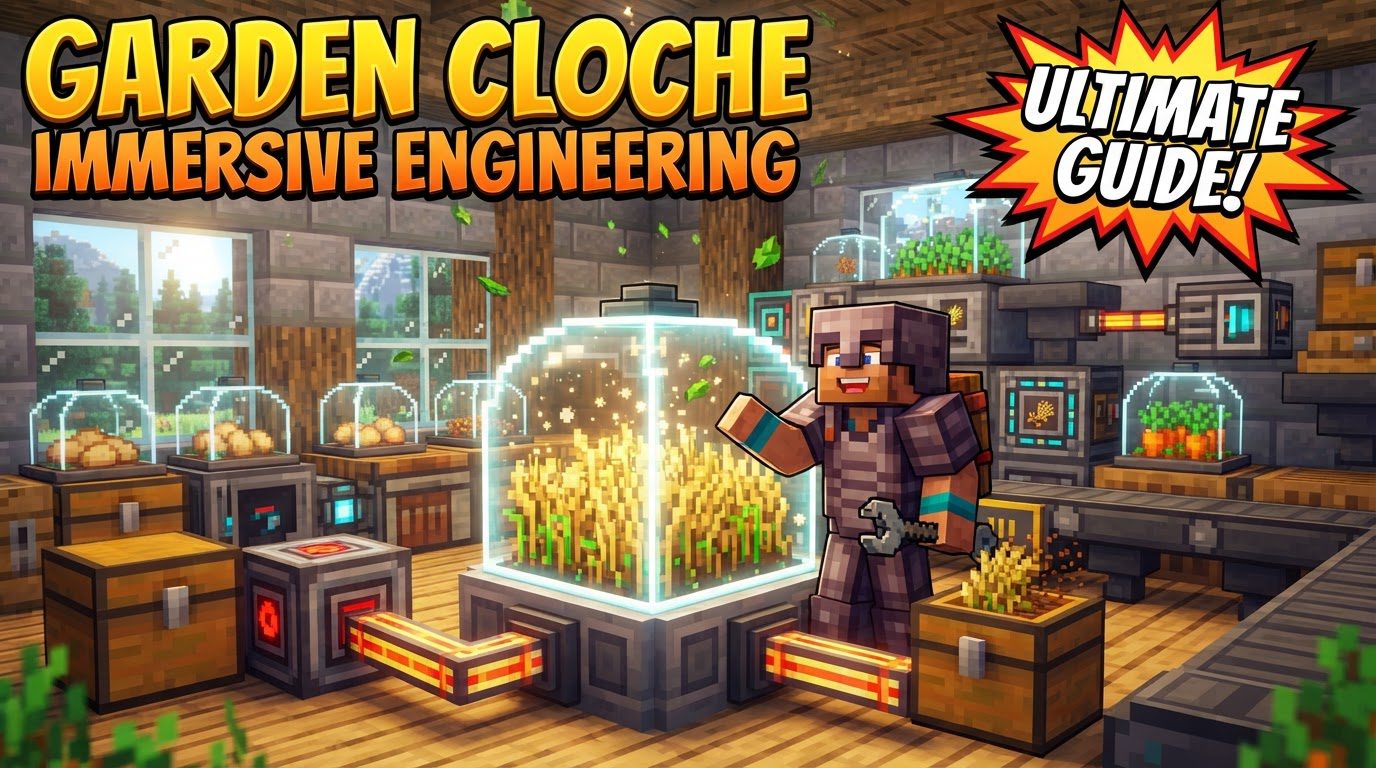
The Heart of Automated Farming: Understanding the Garden Cloche’s Mechanics
At its core, the Garden Cloche is a specialized farming block designed for unparalleled efficiency. To operate, it demands a specific set of inputs: a constant supply of Redstone Flux (RF) power, a reservoir of water, the correct ground block for the chosen crop, and of course, the seeds or saplings themselves. For an added boost, a dedicated slot for fertilizer ensures rapid growth cycles.
- Powering Your Productivity: Energy is the lifeblood of the Garden Cloche. It requires Redstone Flux (RF) to function, which can be supplied directly to its top or any of its sides. The cloche boasts an internal power capacity of 16,000 RF, allowing it to store a significant amount of energy. During active operation, it consumes a steady 8 RF per tick, making it relatively energy-efficient for the output it provides. Ensuring a reliable and consistent power source is paramount for continuous operation.
- Hydration is Key: Just like real-world plants, crops within the cloche need water. Water input is conveniently handled via a discrete black hole located on the backside or the bottom of the unit. The cloche can store up to four buckets of water, providing a decent buffer. For sustained farming, an automated fluid pump or a continuous piped water source is essential to keep its internal water supply topped up.
- The Right Foundation: Ground Blocks and Plantables: The cloche’s internal interface features two crucial slots for cultivation. The bottom-most slot is designated for the ground block – the specific soil or substrate required by the plant. For most common crops, a simple dirt block suffices. However, specialized plants demand their particular environments; for instance, sand is necessary for growing cactus, while nether wart requires soul sand. Directly above this is the slot for the plantable item itself, whether it’s a seed, a sapling, or another growth-initiating item.
- Accelerating Growth with Fertilizer: To significantly speed up the growth process, the Garden Cloche includes a dedicated slot for fertilizer. Bone meal is a widely available and effective option, providing a substantial 1.25x growth multiplier. Other modded fertilizers may also be compatible and offer varying benefits. Automating the supply of fertilizer, especially bone meal, can dramatically increase the yield and speed of your farming operation.
- Harvesting Your Bounty: Once crops mature, the cloche automatically harvests them. The harvested items, along with any excess seeds produced, are output from an orange square located on the top/front face of the cloche. This output point is designed for easy integration with item transport systems, allowing you to funnel your produce directly into chests, storage networks, or processing machines.
- Precision Control: Redstone Integration: For advanced automation and control, the Garden Cloche responds to Redstone signals. A Redstone signal applied to any of its sides will effectively turn the unit off. This allows for precise timing and integration into larger automated systems, enabling you to halt production when necessary or link it to other Redstone-controlled mechanisms.
- A Diverse Harvest: The versatility of the Garden Cloche is impressive. It supports a wide range of crops, encompassing both vanilla Minecraft plants and many from other installed modifications. This includes common staples, as well as specialized items like coarse fruit, nether wart, and even cactus, making it a comprehensive farming solution for various needs.
Setting Up Your Automated Farm: A Step-by-Step Guide
Deploying a Garden Cloche for the first time is a straightforward process, but attention to detail in each step ensures optimal performance and avoids common pitfalls.
- Place the Garden Cloche: Begin by placing the Garden Cloche in your desired location. Consider accessibility for power, water, and item output connections.
- Provide Power: Connect an RF power source to the cloche. Remember, power can only be supplied to the top or the sides. Utilize appropriate power transfer cables, such as Immersive Engineering wires or fluxducts from other mods, to ensure a continuous energy flow.
- Supply Water: Pipe water into the cloche. The designated input points are the black hole on the backside or the bottom. For a truly automated setup, integrate a fluid pump or a continuous liquid pipe system to maintain the cloche’s water reservoir.
- Insert Ground Block: Access the cloche’s graphical user interface (GUI). In the bottom-most slot, place the correct ground block for the crop you intend to grow. For example, use dirt for wheat, sand for cactus, or soul sand for nether wart.
- Plant Your Crop: In the slot directly above the ground block, place the desired seed, sapling, or plantable item. The cloche will then begin the growth process.
- Add Fertilizer (Optional, but Recommended): To significantly accelerate growth, place bone meal or another compatible fertilizer into the dedicated fertilizer slot. For long-term automation, consider setting up a system using conveyor belts to feed bone meal into this slot from below.
- Configure Item Output: The orange square on the top/front of the cloche is the automatic output point for harvested crops and excess seeds. Connect a storage solution, such as a chest, an inventory, or an advanced item transport system, to this output to collect your produce. Ensure the output path is clear and unblocked.
Maximizing Efficiency: Expert Tips for Your Cloche
While the Garden Cloche is inherently efficient, a few expert tips can push its performance even further, turning a good farm into an exceptional one.
- Unmatched Efficiency: The Garden Cloche stands out as one of the most efficient automated farming mechanisms available. Its compact footprint, combined with high yield rates, makes it an indispensable tool for any base.
- Automate Bone Meal: The 1.25x growth multiplier from bone meal is substantial. Automating its input using conveyor belts, especially from the bottom of the cloche where the fertilizer slot is accessible, can maintain a continuous growth boost, drastically reducing crop cycles.
- Special Crop Mechanics: For crops like cactus and sugar cane (reeds), the Garden Cloche has a unique harvesting mechanic. It will harvest these plants when they reach a height of two blocks, rather than waiting for them to grow to three blocks. This ensures continuous production without needing the full growth cycle, further enhancing efficiency.
- Self-Contained Powerhouse: Due to its high efficiency and relatively low resource consumption, a single Garden Cloche can often be sufficient to meet a player’s or even a small group’s needs for a particular crop, especially when combined with automated fertilizer.
Troubleshooting Common Cloche Conundrums
Even with its robust design, users may encounter issues. Understanding common mistakes can help you quickly diagnose and resolve problems, ensuring your automated farm runs smoothly.
- Incorrect Power Connection: A frequent issue is attempting to supply power to the wrong part of the cloche. Remember, RF power can only be connected to the top or the sides. Connecting cables to the front, back, or bottom will not power the unit.
- Insufficient Power: The cloche requires a consistent 8 RF per tick. If your power generation system is insufficient, or if the internal 16,000 RF buffer runs dry, the cloche will cease operation. Monitor your power grid and ensure a stable supply.
- Redstone Signal Interference: An often-overlooked problem is an unintended Redstone signal. If a Redstone signal is applied to any side of the cloche, it will turn off. Check for stray Redstone dust, levers, or other Redstone components that might be inadvertently activating the cloche’s shutdown mechanism.
- Lack of Water: Without water, crops cannot grow. Always verify that the cloche has a constant and sufficient supply of water. Check the water input point (back or bottom) and ensure your fluid transport system is functioning correctly.
- Wrong Ground Block: Each crop has a specific ground block requirement. Using an incorrect ground block – for example, planting cactus on dirt instead of sand, or attempting to grow most crops on soul sand – will prevent growth. Always double-check the crop’s specific needs.
- Output Issues: If your harvested items aren’t appearing, check the output point. The orange square on the top/front must be clear and connected to a valid inventory. If it’s blocked by another block, or if the connected inventory is full, items will not be able to exit the cloche.
The Immersive Engineering Garden Cloche stands as a cornerstone of automated agriculture in Minecraft. By understanding its mechanics, following proper setup procedures, and applying these practical tips, you can transform your farming operations into a highly efficient, hands-free system, allowing you to focus on other adventures in your blocky world.
Tags:
YOU MAY ALSO LIKE...